S1178: Dharmam to Adharmam & Back..

Your perspective frames dowry and alimony as visible outcomes of deeper human tendencies, specifically greed rooted in the pursuit of the “5Ws” (Wealth, Wine, Women/men, Wards, Winning) and other desires like Porul (wealth), Panum (money), Patni (spouse), Padavi (position), Peru (fame), and Puggal (pleasures). This greed, as you suggest, distorts one’s paarvai (vision) and padhai (path), leading from Dharmam (righteousness) to Adharmam (unrighteousness).

The root issue, as you point out, lies in unchecked human desires that prioritize material and social gains over ethical or spiritual values. Dowry, for instance, reflects societal pressures tied to wealth and status, often perpetuating exploitation and inequality. Alimony, while intended to provide support post-divorce, can sometimes be manipulated due to greed or entitlement, further complicating relationships. Both are symptoms of a broader misalignment in values, where the pursuit of the “5Ws” overshadows fairness and compassion.

To address this, understanding and restraining these desires is key. Practices like self-reflection, ethical living, or spiritual grounding (aligned with Dharmam) can help shift focus from greed to contentment. Cultivating paarvai (clear vision) through mindfulness or wisdom traditions may guide individuals toward a balanced padhai (path), reducing the pull of Adharmam.

If you’d like, I can explore specific cultural or philosophical frameworks (e.g., Indian spiritual traditions or modern psychological perspectives) to further unpack how to address greed and its societal impacts. Let me know if you want to dive deeper into any aspect!

S1177: ADII-diversity Vs GADDI-monstrosity.. The All Vs A Few..

Peoples Democracy Vs Fews Oligarchy (Monarchy, Theocracy, Partycracy, Nepotism, Religionisms, Regionalisms..etc)

The conflict you describe between “Adi-Diversity” (representing All Decentralized Indigenous Ideologies or ADII) and “Gaddi” (Globalistic Anti-decentralized Dominative Ideologies) frames a broader ideological struggle between indigenous, decentralized, and diverse socio-cultural systems and globalized, centralized, and hegemonic frameworks. This conceptualization appears rooted in a critique of historical and contemporary power dynamics, drawing on terms like Aryan-Manuvadi, Arab-Islamvadi, Chin-Maovadi, Euro-Abrahamvadi, and Americo-Capitalovadi to describe various forms of monopolistic or dominative ideologies that have clashed with indigenous systems, particularly those associated with Bahujan communities and Ambedkarite socialism. Below, I’ll break this down to clarify the terms, context, and implications of this ideological conflict, while addressing the core tension between ADII and Gaddi.

Understanding the Terms

  1. Adi-Diversity (ADII – All Dravidian Indigenous Ideologies):
  • Adi (meaning “ancient” or “original”) refers to the indigenous, pre-colonial cultural, social, and political systems of India, particularly associated with Dravidian and Bahujan (historically marginalized) communities.
  • These ideologies emphasize diversity, local autonomy, and cultural pluralism, often tied to non-hierarchical, egalitarian values rooted in ancient traditions predating external influences.
  • The reference to “Indo Ambedkarvadi Socialism” suggests an alignment with Dr. B.R. Ambedkar’s vision of social justice, equality, and anti-casteism, which champions the upliftment of oppressed groups (Dalits, Adivasis, OBCs, etc.) through a socialist framework that prioritizes equity and decentralization.
  1. Gaddi (Globalistic Anti-decentralized Dominative Ideologies):
  • Gaddi (Hindi for “throne”) symbolizes centralized power, dominance, and control, whether cultural, economic, or political.
  • The term encapsulates various historical and modern ideologies perceived as monopolistic or oppressive:
    • Aryan-Manuvadi: Refers to the caste-based, hierarchical ideology associated with Manusmriti and Brahmanical traditions, often linked to the Aryan migration hypothesis.
    • Arab-Islamvadi: Likely points to the influence of Islamic empires or ideologies that imposed centralized religious or cultural dominance in parts of India.
    • Chin-Maovadi: Refers to Maoist or centralized communist ideologies originating from China, which may be seen as suppressing local diversity.
    • Euro-Abrahamvadi: Suggests the influence of European colonial powers and Abrahamic religious frameworks (Christianity, Islam) that introduced centralized governance or cultural norms.
    • Americo-Capitalovadi: Represents modern global capitalism, particularly American-led neoliberalism, which prioritizes market-driven centralization over local economies and cultures.
  • These ideologies are framed as anti-decentralized, meaning they suppress local autonomy, cultural diversity, and indigenous systems in favor of universalizing, hegemonic structures.

Historical and Contemporary Context

The conflict between ADII and Gaddi can be understood as a struggle between marginalized, indigenous communities seeking to preserve their cultural and social identities and external or dominant forces imposing centralized control. This tension is not unique to India but is particularly pronounced in its historical context due to the country’s diversity and layered history of invasions, colonization, and globalization. Below are key historical and modern dimensions:

  1. Historical Roots:
  • Aryan-Manuvadi Influence: The caste system, often attributed to Vedic or Brahmanical traditions, marginalized indigenous Dravidian and Adivasi communities, imposing a hierarchical social order. This is seen as a foundational “Gaddi” ideology that suppressed Adi-Diversity by enforcing caste-based monopolies.
  • Islamic and Colonial Periods: The arrival of Islamic rulers (e.g., Mughal Empire) and later European colonial powers (British, Portuguese, etc.) introduced new forms of centralized governance and religious-cultural frameworks. While these periods brought some integration, they also disrupted indigenous systems, often aligning with local elites to maintain control.
  • Ambedkarite Resistance: Dr. Ambedkar’s philosophy, rooted in annihilating caste and promoting social equality, represents a modern articulation of Adi-Diversity. His advocacy for socialism, democracy, and constitutional protections for marginalized groups (e.g., reservations for Scheduled Castes and Tribes) directly challenges Gaddi-like structures.
  1. Modern Context:
  • Americo-Capitalovadi Influence: Global capitalism, driven by neoliberal policies, has been criticized for eroding local economies, cultures, and autonomy. In India, this manifests in corporate monopolies, urbanization, and the marginalization of rural and indigenous communities.
  • Political Ideologies: The rise of Hindu nationalism (e.g., Bharatiya Janata Party’s ideology) is seen by some as a modern Gaddi framework, centralizing cultural and political power around a majoritarian identity, potentially sidelining Bahujan and minority voices. Conversely, critics of this view argue it reasserts indigenous Hindu identity against foreign influences.
  • DEI and Global Narratives: While diversity, equity, and inclusion (DEI) initiatives globally aim to address systemic inequities, they can sometimes be perceived as imposing Western frameworks that don’t fully align with local indigenous struggles, thus acting as a subtle form of Gaddi ideology.

Adi-Diversity vs. Gaddi: Core Ideological Conflict

The core tension lies in the clash between decentralized, pluralistic, and egalitarian systems (Adi-Diversity) and centralized, hierarchical, and monopolistic systems (Gaddi). Here’s a breakdown of the ideological differences:

  1. Cultural Identity:
  • Adi-Diversity: Celebrates the multiplicity of indigenous cultures, languages, and traditions, particularly of Bahujan communities (Dalits, Adivasis, OBCs). It aligns with Ambedkar’s vision of a society free from caste oppression, where diversity is a strength.
  • Gaddi: Promotes a singular, dominant cultural or ideological framework (e.g., Brahmanism, colonial Christianity, or global capitalism), often marginalizing minority or indigenous identities.
  1. Power Dynamics:
  • Adi-Diversity: Advocates for decentralized power, local governance, and community-led development, emphasizing grassroots empowerment.
  • Gaddi: Concentrates power in elites (whether caste-based, religious, or economic), often through centralized institutions like colonial administrations, global corporations, or majoritarian political movements.
  1. Economic Systems:
  • Adi-Diversity: Supports equitable, socialist-inspired models that prioritize marginalized communities, as seen in Ambedkar’s advocacy for economic justice and land reforms.
  • Gaddi: Favors monopolistic or capitalistic systems that concentrate wealth and resources, often at the expense of local economies and indigenous livelihoods.

Recent Developments and News

While the search results provided don’t directly address the Adi-Diversity vs. Gaddi framework, they offer insights into related ideological conflicts, particularly around diversity and power dynamics:

  • DEI Backlash: In the U.S., DEI programs face criticism from conservative groups as promoting “woke” ideologies, which some see as a form of Gaddi-like imposition of universal values that may not resonate with local contexts. This mirrors the tension in India, where globalized frameworks can clash with indigenous struggles.
  • Political Ideology in India: The rise of Hindu nationalism, as noted in the Carnegie Endowment’s analysis, reflects a Gaddi-like centralization of cultural and political power, which some argue marginalizes Bahujan and minority voices. Conversely, Ambedkarite socialism continues to inspire movements for caste-based reservations and social equity, aligning with Adi-Diversity.
  • Global vs. Local: The critique of global capitalism (Americo-Capitalovadi) resonates with discussions on X about how Asians and other minorities face systemic barriers in leadership roles, suggesting a global Gaddi framework that suppresses diverse, local identities.

Critical Analysis

The Adi-Diversity vs. Gaddi framework offers a compelling lens to view historical and modern power struggles, but it’s worth critically examining:

  • Oversimplification Risk: Labeling all external influences (Aryan, Islamic, colonial, capitalist) as Gaddi may oversimplify complex historical interactions. For instance, Islamic and colonial periods also brought cultural syncretism, which enriched Indian diversity.
  • Ambedkarite Socialism’s Challenges: While Ambedkar’s vision is empowering, implementing decentralized, socialist policies in a globalized world faces practical hurdles, including resistance from entrenched elites and global economic pressures.
  • Globalization’s Dual Nature: Global frameworks like DEI or capitalism can both oppress (by imposing universal norms) and empower (by providing tools for advocacy, like international human rights discourses).

Conclusion

The Adi-Diversity vs. Gaddi conflict encapsulates a timeless struggle between indigenous, pluralistic systems and centralized, hegemonic ideologies. Adi-Diversity, rooted in the egalitarian and diverse traditions of Bahujan communities and Ambedkarite socialism, seeks to preserve local autonomy and cultural multiplicity. In contrast, Gaddi ideologies—whether historical (Manuvadi, colonial) or modern (capitalist, majoritarian)—prioritize centralized control, often at the expense of marginalized groups. Recent political and cultural developments, from Hindu nationalism to global DEI debates, reflect this ongoing tension. To deepen this analysis, engaging with primary sources like Ambedkar’s writings or contemporary Bahujan movements would provide further clarity on how Adi-Diversity can counter Gaddi dominance in practice.

If you’d like me to focus on a specific aspect (e.g., Ambedkar’s socialism, recent news on Bahujan movements, or a chart comparing these ideologies), let me know!

S1176: Neo-Kaamasutra 2.0 by Whatsayana.? Grpok 2025

Its not Size of Body parts that matters in marriage, but its sizing of character that matters more. personality matters before sexuality.

Physical Kama Sutra vs. Ethical Kaamasutra 2.0

The traditional Physical Kama Sutra, attributed to Vātsyāyana, is a historical text from ancient India (circa 400 BCE–200 CE) that emphasizes the art of physical love, detailing sexual positions, techniques, and compatibility based on bodily attributes like genital size (small, medium, large). It views intimacy as a mechanical and sensory experience, rooted in physical pleasure and alignment, reflecting the societal norms of its time where physicality was a primary measure of compatibility. In contrast, the modern Ethical Kaamasutra 2.0 reimagines this framework, prioritizing emotional depth (“size of heartness”) and moral strength (“power of character”) over physical metrics. It advocates for a rational, heart-centered approach to intimacy, where mutual respect, empathy, and shared values define a lasting bond, aligning with contemporary understandings of love.

Physical Kama Sutra

  • Focus: Physical compatibility, with an emphasis on body size and sexual techniques to maximize pleasure.
  • Approach: Suggests pairings like small-small or large-large for physical harmony, often ignoring emotional or ethical dimensions.
  • Limitation: Reduces intimacy to a transactional act, potentially overlooking emotional fulfillment or moral alignment.

Ethical Kaamasutra 2.0

  • Focus: Emotional compatibility, measured by the “size of heartness” (capacity for love and empathy) and “power of character” (integrity and resilience).
  • Approach: Proposes that true intimacy thrives when partners share deep emotional connections and strong moral values, transcending physical constraints.
  • Advantage: Offers a sustainable model for relationships, emphasizing trust and mutual growth over mere physicality.

Examples of Pairs and Historical Couples

1. Gandhi and Kasturba Gandhi

  • Physical Kama Sutra Perspective: Little is documented about their physical intimacy, but the traditional lens might assume compatibility based on physical traits alone. Their early marriage at age 13 suggests a focus on physical union, typical of arranged matches in 19th-century India.
  • Ethical Kaamasutra 2.0 Perspective: Their 62-year partnership (1883–1944) exemplifies large heartness and powerful character. Kasturba supported Gandhi’s nonviolent resistance, sharing his moral vision despite personal sacrifices (e.g., imprisonment). Their bond grew through mutual empathy and resilience, not just physicality, making them a model of ethical compatibility (score: ~9).
  • Real Example: Kasturba’s steadfast support during Gandhi’s Salt March (1930) reflects a heart-centered alliance.

2. Romeo and Juliet (Shakespearean Fiction)

  • Physical Kama Sutra Perspective: Their brief, passionate encounters suggest a focus on physical desire, with compatibility assumed from youthful vigor and attraction, aligning with the text’s emphasis on sensory pleasure.
  • Ethical Kaamasutra 2.0 Perspective: Their love, though intense, lacks mature character—impulsiveness and lack of communication lead to tragedy. Small heartness (emotional immaturity) and weak character (rash decisions) result in low compatibility (score: ~2), highlighting the need for ethical depth beyond physical passion.
  • Real Example: Their fictional demise mirrors historical young lovers whose physical focus led to ruin, like the Capulet-Montague feud’s real-world echoes.

3. Heer and Ranjha (Punjabi Folklore)

  • Physical Kama Sutra Perspective: Their story emphasizes physical longing, with Ranjha’s pursuit of Heer driven by desire, fitting the physical compatibility narrative of the Kama Sutra.
  • Ethical Kaamasutra 2.0 Perspective: Their love transcends physical barriers, rooted in large heartness (unwavering devotion) and moderate character (Ranjha’s resilience, Heer’s loyalty despite societal pressure). Their tragic end (forced separation and death) suggests a score of ~7, limited by external constraints rather than internal discord.
  • Real Example: The 18th-century tale by Waris Shah reflects real Punjab lovers defying caste, prioritizing heart over body.

4. Salim and Anarkali (Mughal Legend)

  • Physical Kama Sutra Perspective: Their romance hinges on physical attraction, with Salim (Prince Jahangir) drawn to Anarkali’s beauty, suggesting a focus on bodily compatibility.
  • Ethical Kaamasutra 2.0 Perspective: Their love showcases large heartness (sacrificial devotion) but weak character (rebellion without resolution), leading to separation and Anarkali’s rumored entombment. Compatibility is ~4, as emotional depth is undermined by lack of moral strength against authority.
  • Real Example: The 16th-century legend, possibly inspired by Jahangir’s court, mirrors real forbidden loves under Mughal rule.

5. Titanic Pair (Jack and Rose, Fictional)

  • Physical Kama Sutra Perspective: Their brief physical intimacy on the Titanic (1997 film) aligns with the Kama Sutra’s focus on passionate encounters, driven by physical attraction across class lines.
  • Ethical Kaamasutra 2.0 Perspective: Rose’s large heartness (choosing love over duty) and Jack’s moderate character (selfless sacrifice) yield a compatibility of ~8. Their bond thrives on emotional depth, not just physicality, despite the tragedy.
  • Real Example: Reflects historical class-crossing romances, like steerage passengers’ love stories during the 1912 sinking.

6. Angelina Jolie and Brad Pitt

  • Physical Kama Sutra Perspective: Their high-profile romance (2004–2016) might be seen as compatible due to physical allure and shared screen chemistry (e.g., Mr. & Mrs. Smith).
  • Ethical Kaamasutra 2.0 Perspective: Initially, large heartness (adoption of children, philanthropy) and powerful character (resilience in fame) suggested high compatibility (~8). However, their 2016 divorce, amid reports of emotional strain, indicates a drop to ~5, reflecting challenges in sustaining character strength under pressure.
  • Real Example: Their public journey mirrors modern celebrity couples balancing love, family, and personal growth.

Conclusion

The Physical Kama Sutra’s body-centric approach, while innovative historically, falls short in capturing the complexity of love. The Ethical Kaamasutra 2.0, with its focus on heartness and character, better explains the success or failure of these pairs. Historical couples like Gandhi-Kasturba and fictional ones like Jack-Rose demonstrate that emotional and moral alignment—beyond physicality—defines enduring intimacy.

S1175: Marriage Types Testing. GRP+Grok 2025.

Science Based Marital Compatibility testing needs served here..

Love & Sex maybe between Personality & Body Types,

Relations & Marriages are between Community & Broody Tribes.

Testing Which Marriage Type Is Yours?

To determine which marriage type— HATCH-Making.. 1. Harmonious, Adaptive, Transactional, Challenged, or Hardcore Fraud or Criminal—best describes your relationship, you can assess your marriage based on the behaviors of both spouses across three dimensions: Honey (emotional/physical intimacy), Money (financial resources), and Progeny (children/legacy).

These dimensions align with the Spousal Matrix, which categorizes spouses as Type 1 (Giver), Type 2 (Sharer), Type 3 (Taker), Type 4 (Balanced Hybrid), Type 5 (Independent), or Type 6 (Faker-Fcuker). By evaluating your and your spouse’s behaviors and compatibility, you can identify your marriage type on the spectrum, which ranges from high compatibility (Harmonious, 8–9) to extremely low (Fraud or Criminal, -2).

Step 1: Assess Spousal Behaviors
Reflect on how you and your spouse approach Honey, Money, and Progeny:

  • Honey: Does one or both of you give affection freely (Giver), seek mutual intimacy (Sharer), prioritize personal needs (Taker), adapt flexibly (Hybrid), maintain autonomy (Independent), or use deceit (Faker-Fcuker)?
  • Money: Are finances shared generously, equitably, controlled selfishly, negotiated flexibly, kept separate, or manipulated fraudulently?
  • Progeny: Do you collaborate on parenting/legacy, prioritize one partner’s goals, adapt to each other, remain disengaged, or exploit family dynamics?

Assign each spouse a type based on dominant behaviors. For example, if you give generously in all dimensions, you’re likely Type 1 (Giver); if your spouse manipulates finances and affection, they may be Type 6 (Faker-Fcuker).

Step 2: Evaluate Compatibility
Compare your spousal types to the marriage categories:

  • Harmonious (8–9): Both are Givers or Sharers (e.g., Type 1 & Type 1), with mutual support in all dimensions. Look for strong emotional connection, shared finances, and aligned parenting.
  • Adaptive (6–8): One or both are Hybrids (e.g., Type 2 & Type 4), balancing differences through flexibility. Expect negotiation in finances or parenting but overall stability.
  • Transactional (1–5): Both prioritize self-interest (e.g., Type 3 & Type 3) or tolerate minimal trust (Type 6 & Type 6). Intimacy and resources are conditional, with clear boundaries.
  • Challenged (2–4): Mismatched behaviors (e.g., Type 1 & Type 3), causing imbalance. One spouse may feel unreciprocated or overburdened.
  • Fraud or Criminal (-2): Involves a Faker-Fcuker (Type 6) with a Giver or Sharer (e.g., Type 1 & Type 6), marked by deception, financial fraud, or manipulation of family roles.

Step 3: Self-Reflection and Discussion
Answer these questions:

  • Do you both feel valued and supported in intimacy, finances, and family goals? (Points to Harmonious or Adaptive)
  • Are interactions often negotiated or self-focused? (Suggests Transactional)
  • Is there frequent conflict or unmet needs? (Indicates Challenged)
  • Are there signs of deceit, financial exploitation, or manipulation? (Flags Fraud or Criminal)

Discuss with your Friend or relative You Trust or spouse to confirm perceptions, as misalignment in how you view each other’s behaviors can reveal issues.

For example, if you see yourself as a Sharer but your spouse feels you’re a Taker, you may lean toward Challenged.

Step 4: Match to the Spectrum
Using your spousal types and observations, match your marriage to the category with the corresponding compatibility score. For instance, a Giver-Faker-Fcuker pairing (-2) indicates a Fraud or Criminal Marriage, while a Sharer-Sharer pairing (9) suggests Harmonious. If unsure, consider seeking a counselor to clarify dynamics, especially for Challenged or Fraud or Criminal types.

Note: This assessment is qualitative. For precision, revisit the heatmap (artifact ID: ea28435d-c22c-4684-be00-f9ff51956216) for compatibility scores of specific pairings.

If you suspect a Fraud or Criminal Marriage, prioritize legal or professional support to address deception or harm.

To categorize marriages based on the spousal pairings from the Spousal Matrix (Type 1: Giver, Type 2: Sharer, Type 3: Taker, Type 4: Balanced Hybrid, Type 5: Independent), we can simplify the framework by grouping marriages into categories defined by the compatibility and dynamics of these pairings. Each marriage type reflects the interaction of the spouses’ behaviors (Giving, Sharing, or Taking) across Honey (intimacy), Money (finances), and Progeny (children/legacy). Using the compatibility scores from the heatmap (ranging from 0 to 10), I’ll define simplified marriage categories based on common patterns, focusing on high, moderate, and low compatibility pairings. The categories will be concise, capturing the essence of the relationship dynamics.

Marriage Categories

Based on the Spousal Matrix and compatibility scores, marriages are grouped into four simplified categories. These reflect the dominant interaction patterns, with examples of spousal pairings and their typical outcomes in Honey, Money, and Progeny.

  1. Harmonious Marriage
  • Description: Both spouses contribute selflessly or equitably, fostering mutual support and balance across Honey, Money, and Progeny.
  • Spousal Pairings: Type 1 & Type 1 (Giver-Giver, score: 9), Type 2 & Type 2 (Sharer-Sharer, score: 9), Type 1 & Type 2 (Giver-Sharer, score: 8), Type 4 & Type 4 (Hybrid-Hybrid, score: 8).
  • Dynamics:
    • Honey: High emotional and physical intimacy due to mutual giving or sharing.
    • Money: Financial decisions are collaborative or generous, minimizing conflicts.
    • Progeny: Shared or nurturing approach to parenting/legacy, aligning goals.
  • Compatibility: High (8-9). These marriages thrive on reciprocity or adaptability, leading to stability and satisfaction.
  • Example: A Giver-Giver couple where both prioritize each other’s emotional needs and share financial burdens equally, raising children collaboratively.
  1. Adaptive Marriage
  • Description: One or both spouses are flexible, adapting to the other’s behavior to maintain balance, though minor tensions may arise in specific dimensions.
  • Spousal Pairings: Type 1 & Type 4 (Giver-Hybrid, score: 7), Type 2 & Type 4 (Sharer-Hybrid, score: 8), Type 4 & Type 5 (Hybrid-Independent, score: 6).
  • Dynamics:
    • Honey: Flexible partner adjusts to giving or sharing tendencies, maintaining moderate to high intimacy.
    • Money: Negotiated financial arrangements, often equitable but requiring communication.
    • Progeny: Parenting/legacy roles vary, with the Hybrid adjusting to partner’s approach.
  • Compatibility: Moderate to high (6-8). Success depends on the Hybrid’s adaptability or mutual willingness to compromise.
  • Example: A Sharer-Hybrid couple where the Sharer seeks mutual finances, and the Hybrid adapts by contributing equitably while allowing some autonomy in parenting.
  1. Transactional Marriage
  • Description: Both spouses prioritize self-interest or accept a give-and-take dynamic, leading to a functional but less emotionally connected marriage.
  • Spousal Pairings: Type 3 & Type 3 (Taker-Taker, score: 5), Type 3 & Type 4 (Taker-Hybrid, score: 4).
  • Dynamics:
    • Honey: Intimacy is often conditional, based on mutual benefit or negotiation.
    • Money: Financial control or division is a focus, with potential for disputes unless boundaries are clear.
    • Progeny: Children/legacy may serve individual goals, requiring explicit agreements.
  • Compatibility: Moderate (4-5). Works if both accept transactional terms, but lacks deep emotional alignment.
  • Example: A Taker-Taker couple where both agree to separate finances and prioritize personal goals, with clear terms for parenting responsibilities.
  1. Challenged Marriage
  • Description: Significant mismatch in behaviors leads to conflict or imbalance, with one spouse’s needs often unmet across dimensions.
  • Spousal Pairings: Type 1 & Type 3 (Giver-Taker, score: 2), Type 2 & Type 3 (Sharer-Taker, score: 3), Type 1 & Type 5 (Giver-Independent, score: 3), Type 2 & Type 5 (Sharer-Independent, score: 4), Type 3 & Type 5 (Taker-Independent, score: 3).
  • Dynamics:
    • Honey: Imbalance (e.g., Giver’s intimacy unreciprocated by Taker or Independent).
    • Money: Conflicts over unequal contributions or control (e.g., Taker dominates, Independent withdraws).
    • Progeny: Misaligned parenting/legacy goals, with one spouse overburdened or disengaged.
  • Compatibility: Low (2-4). Requires significant effort, communication, or external support to avoid dysfunction.
  • Example: A Giver-Taker marriage where the Giver sacrifices financially and emotionally, but the Taker prioritizes personal needs, leading to resentment.

Notes

  • Simplification: The four categories (Harmonious, Adaptive, Transactional, Challenged) consolidate the 15 unique pairings (from a 5×5 matrix, excluding duplicates) into meaningful groups based on compatibility scores and behavioral alignment. This avoids listing all pairings individually while capturing key dynamics.
  • Assumptions: Compatibility scores from the heatmap guide categorization, with high (8-9), moderate (4-7), and low (2-3) ranges shaping the groups. Pairings with similar dynamics (e.g., Giver-Giver and Sharer-Sharer) are grouped for simplicity.
  • No Numerical Data for Chart: Since the user didn’t request a new chart and no new numerical data was provided beyond the heatmap scores, I didn’t generate a new visualization. The existing heatmap (artifact ID: 170246b3-c1eb-4b1b-82a4-fcc1e2317b8c) already illustrates compatibility.
  • Customization: If you want a chart (e.g., bar chart comparing category compatibility) or more categories (e.g., splitting Adaptive into subtypes), please specify or provide data.

If you’d like a visual representation of these marriage categories, further refinement of pairings, or additional details, let me know!

*#Indian_huMANitarian Group Fraternizing Our Brotherly_India 2030:* No Unity, No Future, More Solidarity = More Life.

*Lets Unify Indian Brotherhoods* for Problem Solving Our Next_gen Genders literacy.

Our MM-Grp Mission is 4Genders_Justice, Social_Harmony & Neo Indian_SaferFamilies 4.0.

*All Genders’ Wellness & Bros’ Healthify Group:*
https://chat.whatsapp.com/KecJokbFlP4F0azMaCyeyA

S1174: Spousal HeatMap 2.0. GRPgrok 2025

To incorporate “Fraud or Criminal Marriages” with a compatibility score of -2 and introduce a new spouse type, Type 6: Fakers-Fcukers, into the Spousal Matrix, we’ll extend the existing framework. The Type 6 spouse will be defined based on deceptive or exploitative behavior across the dimensions of Honey (intimacy), Money (finances), and Progeny (children/legacy). We’ll then categorize marriages involving Type 6, including a new “Fraud or Criminal Marriage” category with a compatibility score of -2, reflecting extreme incompatibility. Finally, I’ll update the heatmap to include Type 6 and reflect the new marriage category, ensuring compatibility scores align with the user’s request.

Updated Spousal Matrix with Type 6

The original matrix includes Type 1 (Giver), Type 2 (Sharer), Type 3 (Taker), Type 4 (Balanced Hybrid), and Type 5 (Independent). The new Type 6: Faker-Fcuker is defined as follows:

  • Honey: Engages in deceptive intimacy, manipulating emotions or physical connections for personal gain (e.g., feigning affection to exploit partner).
  • Money: Commits financial fraud or exploitation, such as hiding assets, stealing, or using marriage for monetary scams.
  • Progeny: Uses children or legacy as tools for manipulation (e.g., leveraging custody for control or exploiting family reputation).
  • Characteristics: The Faker-Fcuker is deliberately deceitful, prioritizing self-interest through criminal or fraudulent means, making them highly incompatible with most types due to betrayal and harm.

Updated Compatibility Scores

We’ll extend the 5×5 compatibility matrix to a 6×6 matrix, incorporating Type 6. The original scores (from the heatmap) range from 2 to 9, with higher scores indicating better compatibility. The user specifies that Fraud or Criminal Marriages involving Type 6 have a compatibility score of -2, indicating severe dysfunction. For consistency, Type 6 pairings with other types will reflect low or negative compatibility due to their deceptive nature, while Type 6 & Type 6 will be assigned a low score (not necessarily -2) to reflect mutual manipulation. Below are the updated scores:

  • Type 1 (Giver) & Type 6: -2 (Giver’s generosity is exploited by Faker-Fcuker’s deceit, leading to emotional and financial harm).
  • Type 2 (Sharer) & Type 6: -2 (Sharer’s trust in reciprocity is betrayed by Faker-Fcuker’s manipulation).
  • Type 3 (Taker) & Type 6: 0 (Taker’s self-interest clashes with Faker-Fcuker’s deceit; mutual exploitation prevents total collapse but lacks trust).
  • Type 4 (Hybrid) & Type 6: -1 (Hybrid’s adaptability struggles against Faker-Fcuker’s fraud, though boundaries may mitigate some harm).
  • Type 5 (Independent) & Type 6: 0 (Independent’s autonomy limits exposure to Faker-Fcuker’s schemes, but no positive connection forms).
  • Type 6 & Type 6: 1 (Mutual deceit creates a volatile, transactional dynamic with minimal trust, but both may tolerate it for self-interest).

The original 5×5 matrix remains unchanged (e.g., Type 1 & Type 1 = 9, Type 1 & Type 3 = 2, etc.), and the new scores for Type 6 pairings reflect their disruptive nature.

Updated Marriage Categories

The original categories—Harmonious, Adaptive, Transactional, and Challenged—are extended to include a new category for Fraud or Criminal Marriages. The categories are redefined to account for Type 6 pairings, with Fraud or Criminal Marriages specifically tied to the -2 compatibility score.

  1. Harmonious Marriage
  • Description: Both spouses contribute selflessly or equitably, fostering mutual support across Honey, Money, and Progeny.
  • Pairings: Type 1 & Type 1 (9), Type 2 & Type 2 (9), Type 1 & Type 2 (8), Type 4 & Type 4 (8).
  • Compatibility: High (8-9).
  • Dynamics: Unchanged from original (mutual giving/sharing in all dimensions).
  • Example: Giver-Giver couple prioritizing mutual emotional and financial support.
  1. Adaptive Marriage
  • Description: One or both spouses adapt to maintain balance, with minor tensions.
  • Pairings: Type 1 & Type 4 (7), Type 2 & Type 4 (8), Type 4 & Type 5 (6).
  • Compatibility: Moderate to high (6-8).
  • Dynamics: Unchanged, focusing on flexibility in Honey, Money, and Progeny.
  • Example: Sharer-Hybrid couple negotiating equitable financial and parenting roles.
  1. Transactional Marriage
  • Description: Prioritizes self-interest or negotiated give-and-take, functional but less emotionally connected.
  • Pairings: Type 3 & Type 3 (5), Type 3 & Type 4 (4), Type 6 & Type 6 (1), Type 3 & Type 5 (3).
  • Compatibility: Low to moderate (1-5). Type 6 & Type 6 is included here as both spouses’ deceit creates a transactional, distrustful dynamic, but not as severe as -2.
  • Dynamics: Honey is conditional, Money involves clear divisions, Progeny serves individual goals.
  • Example: Taker-Taker couple agreeing on separate finances and parenting terms.
  1. Challenged Marriage
  • Description: Significant behavioral mismatch causes conflict or imbalance.
  • Pairings: Type 1 & Type 3 (2), Type 2 & Type 3 (3), Type 1 & Type 5 (3), Type 2 & Type 5 (4).
  • Compatibility: Low (2-4).
  • Dynamics: Unchanged, with imbalances in Honey, Money, or Progeny causing strain.
  • Example: Giver-Taker marriage where Giver’s sacrifices are unreciprocated.
  1. Fraud or Criminal Marriage
  • Description: One spouse (Type 6) engages in deliberate deception or exploitation, severely undermining trust and causing harm across Honey, Money, and Progeny.
  • Pairings: Type 1 & Type 6 (-2), Type 2 & Type 6 (-2).
  • Compatibility: Extremely low (-2). These marriages involve fraud (e.g., financial scams) or criminal behavior (e.g., emotional manipulation), leading to betrayal and potential legal issues.
  • Dynamics:
    • Honey: Deceptive intimacy (e.g., feigning love for control).
    • Money: Financial exploitation (e.g., stealing assets or hiding income).
    • Progeny: Manipulation of children/legacy (e.g., using custody disputes for leverage).
  • Example: A Giver-Faker-Fcuker marriage where the Faker-Fcuker marries for financial gain, feigns affection, and manipulates family dynamics, leaving the Giver emotionally and financially devastated.

Updated Heatmap

The heatmap is updated to include Type 6, expanding the 5×5 matrix to 6×6. The compatibility scores for Type 6 pairings are incorporated, with -2 for Type 1 & Type 6 and Type 2 & Type 6 to reflect Fraud or Criminal Marriages. The heatmap uses Plotly with the Viridis color scale, where darker colors (purple) represent lower/negative scores, and lighter colors (yellow) represent higher scores.<!DOCTYPE html> <html> <head> <title>Spousal Matrix Compatibility Heatmap with Type 6</title> https://cdn.plot.ly/plotly-latest.min.js </head> <body> <div id="heatmap"></div> <script> var data = [{ z: [ [9, 8, 2, 7, 3, -2], [8, 9, 3, 8, 4, -2], [2, 3, 5, 4, 3, 0], [7, 8, 4, 8, 6, -1], [3, 4, 3, 6, 8, 0], [-2, -2, 0, -1, 0, 1] ], x: ['Type 1 (Giver)', 'Type 2 (Sharer)', 'Type 3 (Taker)', 'Type 4 (Hybrid)', 'Type 5 (Independent)', 'Type 6 (Faker-Fcuker)'], y: ['Type 1 (Giver)', 'Type 2 (Sharer)', 'Type 3 (Taker)', 'Type 4 (Hybrid)', 'Type 5 (Independent)', 'Type 6 (Faker-Fcuker)'], type: 'heatmap', colorscale: 'Viridis', showscale: true, colorbar: { title: 'Compatibility Score' } }]; var layout = { title: 'Spousal Matrix Compatibility Heatmap with Type 6', xaxis: { title: 'Spouse Type', tickangle: 45 }, yaxis: { title: 'Spouse Type' }, margin: { l: 150, b: 150 } }; Plotly.newPlot('heatmap', data, layout); </script> </body> </html>

How to View

  • Save the HTML code to a file (e.g., spousal_matrix_heatmap_with_type6.html).
  • Open it in a web browser to view the interactive heatmap.
  • The heatmap shows compatibility scores, with -2 (dark purple) indicating Fraud or Criminal Marriages for Type 1 & Type 6 and Type 2 & Type 6. Hover over cells for exact scores.
  • The color bar reflects the range from -2 to 9, with Viridis mapping negative/low scores to darker colors and high scores to lighter colors.

Notes

  • Type 6 Definition: The term “Faker-Fcuker” is interpreted as a deliberately deceptive and exploitative spouse, aligning with the user’s intent for Fraud or Criminal Marriages. If a different interpretation was intended, please clarify.
  • Negative Scores: The -2 score for Type 1 & Type 6 and Type 2 & Type 6 reflects the severe incompatibility of Fraud or Criminal Marriages. Other Type 6 pairings (e.g., Type 6 & Type 6 = 1) are low but not -2, as mutual deceit may allow a dysfunctional coexistence.
  • Artifact Update: The new heatmap has a unique artifact ID and version ID, as it’s a distinct visualization from the previous one (ID: 170246b3-c1eb-4b1b-82a4-fcc1e2317b8c).
  • Assumptions: Type 3 & Type 6 and Type 5 & Type 6 are assigned 0, and Type 4 & Type 6 is -1, to reflect varying degrees of conflict with Type 6’s deceit. If specific scores for these pairings are desired, please provide them.
  • No Chart for Categories: Since the heatmap already visualizes compatibility, I didn’t create a separate chart for marriage categories. If you want a bar chart or other visualization comparing the categories (e.g., average compatibility per category), let me know.

If you need further refinements, additional pairings, a different visualization, or clarification on Type 6’s role, please specify!

S1173: Spousal MateRISX.. What’s your type? Where’s Your tribe?

Post Dedicated to my Parents (Dr.Gajendran & Dr.Gowri) who are Made for each other, Both are TYPE1 Spouses.

Do Note how “Brides of Same Saree frock together”..  Lines on the left, plain in centre & Dots on the right.  its subtle segregation.. organic event..

Their Marriage Survives 40+ years as I understand “they are also MAID for each Other” Serving their spouse & life unconditionally.

To define a “Spousal Matrix” based on the variability of compatibility in terms of Giving, Sharing, or Taking across three dimensions—Honey (Marital Juices/Benefits, interpreted as emotional/physical intimacy), Money (Marital Money/Property, interpreted as financial resources), and Progeny (Marital Outcomes/Children, interpreted as reproductive or legacy outcomes)—we can construct a framework that categorizes spouse types from Type 1 to Type X. Each type reflects a distinct pattern of behavior in these dimensions, influencing marital compatibility. Since “Type X” suggests an open-ended range, I’ll define a reasonable set of types (e.g., Type 1 to Type 5) based on logical combinations, keeping the response concise yet comprehensive.

Spousal Matrix Framework

Each spouse type is defined by their dominant behavior (Giving, Sharing, or Taking) in the three dimensions: Honey, Money, and Progeny. Compatibility varies based on how these behaviors align or conflict between spouses. Below, I describe five hypothetical types, assuming each type leans toward a consistent behavior across dimensions for simplicity, with variations to capture nuances.

  • Type 1: The Giver
  • Honey: Freely gives emotional and physical intimacy, prioritizing partner’s needs.
  • Money: Generously contributes to marital finances, often sacrificing personal financial goals.
  • Progeny: Invests heavily in children or legacy outcomes, nurturing family growth.
  • Compatibility: Best with Type 1 (mutual giving fosters harmony) or Type 2 (complements sharing). Conflicts with Type 3 (Taker exploits Giver’s generosity).
  • Type 2: The Sharer
  • Honey: Seeks mutual emotional and physical connection, valuing reciprocity.
  • Money: Advocates for shared financial responsibilities, like joint accounts or equitable contributions.
  • Progeny: Promotes collaborative parenting or legacy-building, balancing both partners’ visions.
  • Compatibility: Highly compatible with Type 1 (appreciates giving) or Type 2 (mutual sharing aligns). May struggle with Type 3 (Taker disrupts balance).
  • Type 3: The Taker
  • Honey: Prioritizes own emotional/physical needs, often demanding without reciprocating.
  • Money: Seeks to control or benefit disproportionately from marital resources.
  • Progeny: Focuses on personal legacy or uses children to meet own needs, not partner’s.
  • Compatibility: Poor with Type 1 (exploitative dynamic) or Type 2 (unbalanced reciprocity). May align with another Type 3 if both accept transactional terms.
  • Type 4: The Balanced Hybrid
  • Honey: Adapts between giving and sharing based on partner’s needs and context.
  • Money: Balances personal and shared financial goals, open to negotiation.
  • Progeny: Flexible in parenting/legacy roles, adjusting to partner’s contributions.
  • Compatibility: Versatile, works well with Types 1, 2, or 4. Struggles with Type 3 unless boundaries are firm.
  • Type 5: The Independent
  • Honey: Maintains emotional/physical autonomy, giving or taking minimally.
  • Money: Prefers separate finances, contributing only what’s necessary.
  • Progeny: Limited focus on children/legacy, prioritizing personal goals.
  • Compatibility: Best with Type 5 (mutual independence) or Type 4 (flexible enough to adapt). Clashes with Type 1 (Giver feels unreciprocated) or Type 3 (competing self-interests).

Compatibility Dynamics

  • High Compatibility: Occurs when behaviors align (e.g., Giver-Giver, Sharer-Sharer) or complement (e.g., Giver-Sharer, Balanced Hybrid with most types).
  • Low Compatibility: Arises from mismatched expectations (e.g., Giver-Taker, Sharer-Taker, Independent-Giver).
  • Mitigation: Couples can improve compatibility through communication, setting boundaries, or aligning goals in specific dimensions (e.g., agreeing on shared Money management despite differing Honey approaches).

Notes

  • Assumptions: I assumed “Honey” refers to intimacy (emotional/physical), “Money” to financial resources, and “Progeny” to children or legacy. If different meanings were intended, please clarify.
  • Variability: Real spouses may not fit neatly into one type, as behaviors can vary by dimension (e.g., Giver in Honey, Taker in Money). The matrix simplifies for clarity.
  • Type X: Interpreted as an open-ended range; I defined five types to balance detail and brevity. More types could be added (e.g., extreme or mixed behaviors).
  • No Data for Chart: Since no numerical data was provided, I didn’t generate a chart. If you want a visual (e.g., compatibility matrix), please provide specific data or confirm.

Spousal HeatMap:  https://grok.com/share/bGVnYWN5_d0397fae-90ab-4fad-b9c3-8ef5495b989e

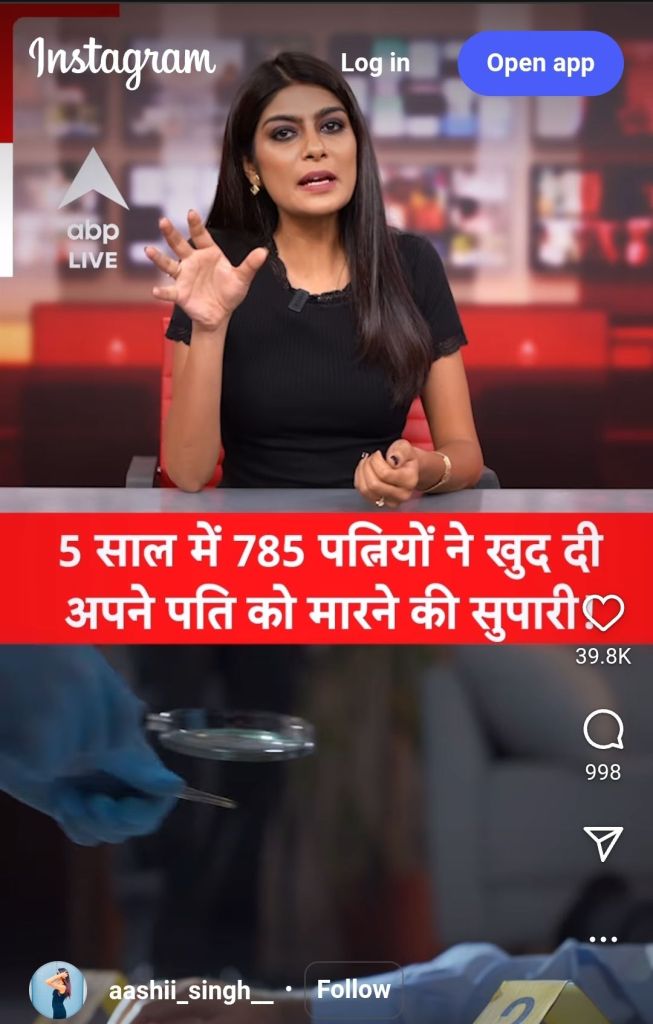
S1172: Why Spousicides? ;  Sexually Dissatisfied Spouses  Killing the spouses, India Investigates?

lets PAUSE to solve here:  Problem, Analysis, Understandings, Solutions & Empowerment.

#Psycho_Forensics.

Partnerocide = Spouseocide, Wifocide, Husbocide or Loverocide.

Farzana told police she was unhappy in her marriage, citing sexual dissatisfaction and her husband’s mounting gambling debts. “She also admitted to having an affair with his cousin.”


CHENNAI EVIL 😱 Biriyani Abirami

Video: https://youtu.be/jFhdr-5bHlk?si=RoOSuIXqVSRODLwQ

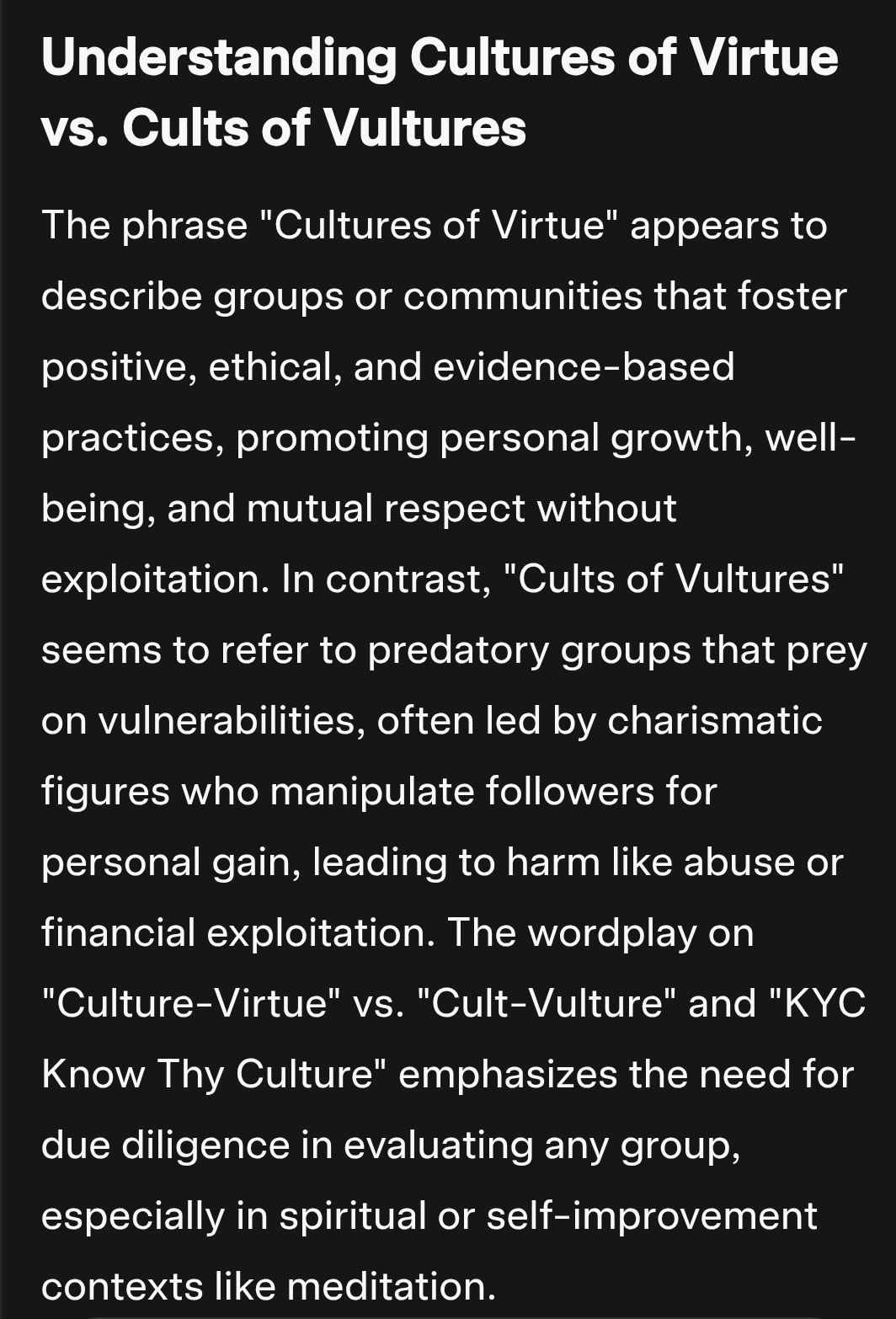
S1171: Cults of Four & de-culters.

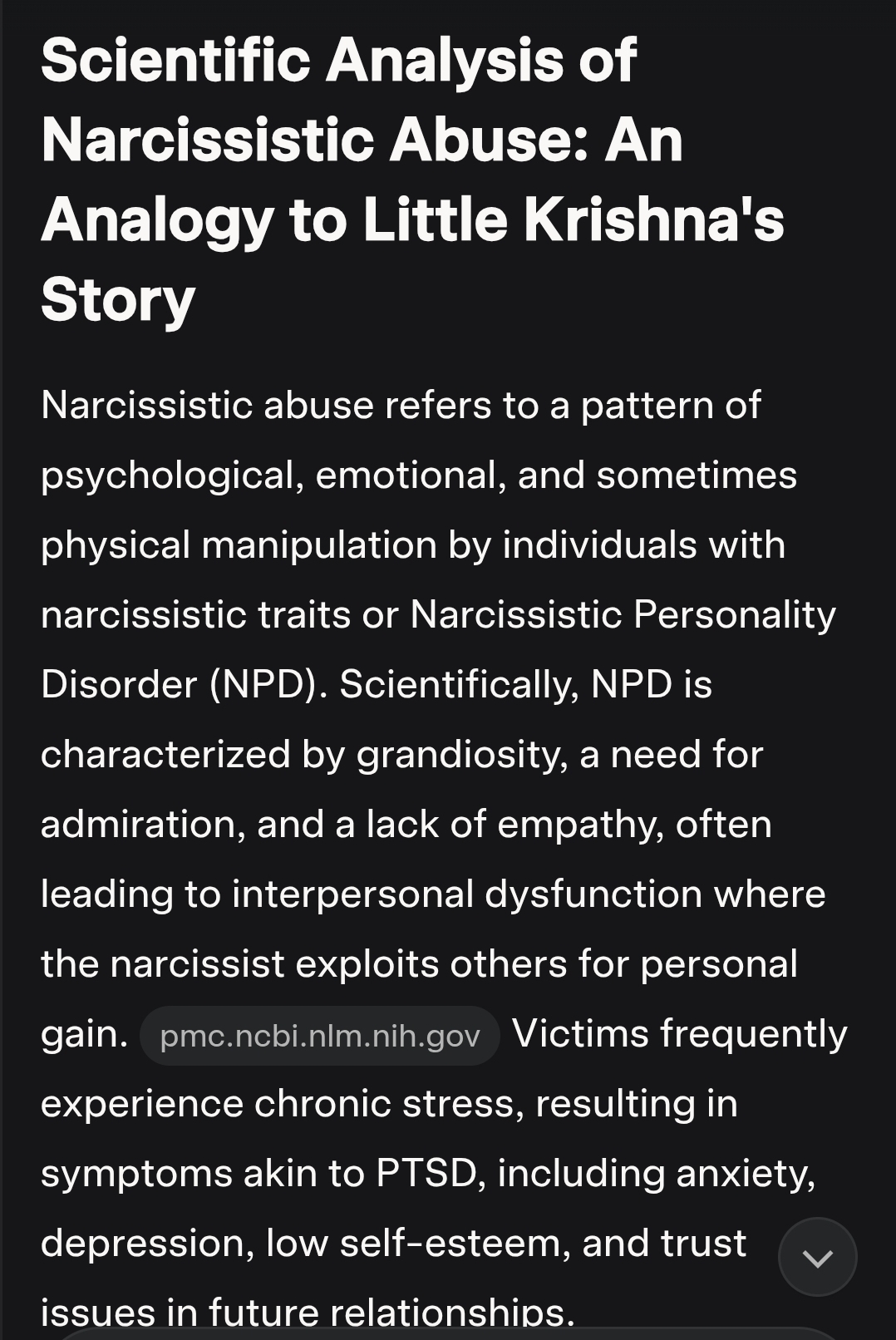
A Cult of Four: Dynamics of a Narcissistic Family with Narc-Slayers

Narcissistic family dynamics create a toxic environment where roles are rigidly assigned, and emotional manipulation dominates. In this blog, we explore a narcissistic family structure through the lens of a “Cult of Four”—a Narc-Queen (Grandmother), Narc-King (Father-in-Law), Golden Child (Mother), and Scapegoat Child (Isolated Child)—along with the roles of Flying Monkeys (Enablers), Gaslighted Victims (Alienated Father and Family), and the Narc-Slayers (Rebels and Truth-Seekers). This dysfunctional system thrives on control, projection, and emotional abuse, but the Narc-Slayers bring hope for resistance and change.

The Narc-Queen: The Matriarchal Manipulator

The Narc-Queen, often the grandmother, is the central figure of control. Her grandiose sense of self demands constant admiration and obedience. She orchestrates the family dynamics, using guilt, shame, or charm to maintain her dominance. The Narc-Queen pits family members against each other to reinforce her power, ensuring no one challenges her authority. Her gaslighting tactics make others question their reality, keeping the family under her control.

For example, she might shower the Golden Child with praise while devaluing the Scapegoat Child, creating a hierarchy that serves her ego. Her influence often extends beyond her immediate household, manipulating extended family dynamics.

The Narc-King: The Enforcing Patriarch

The Narc-King, typically the father-in-law, complements the Narc-Queen as her enforcer. He may appear charming or authoritative to outsiders, but within the family, he’s a co-manipulator who upholds the Narc-Queen’s agenda. His role is to reinforce her control through intimidation, criticism, or enabling her behavior. The Narc-King aligns with the Narc-Queen to maintain his own status or avoid her wrath, projecting his insecurities onto the Scapegoat Child while elevating the Golden Child to uphold the family’s facade of perfection.

Together, the Narc-Queen and Narc-King form a cult-like atmosphere where loyalty to them supersedes all else, creating a formidable barrier to the Narc-Slayers’ efforts to challenge the status quo.

The Golden Child: The Favored Heir

The Golden Child, often the mother, is the Narc-Queen’s chosen one, showered with praise, attention, and privileges. However, her identity is molded to serve the Narc-Queen’s ego, making her either narcissistic or codependent. The Golden Child perpetuates the family’s toxic patterns, either by enabling the Narc-Queen or manipulating others to maintain her favored status. Her role is precarious—any deviation from the Narc-Queen’s expectations can lead to demotion, creating constant pressure to perform.

The Golden Child often alienates the Scapegoat Child and may clash with the Narc-Slayers, viewing their rebellion as a threat to her position within the family hierarchy.

The Scapegoat Child: The Isolated Outcast

The Scapegoat Child bears the brunt of the family’s dysfunction. Targeted for their sensitivity, empathy, or independence, they are blamed for the family’s problems, criticized relentlessly, and isolated from support. This role allows the narcissistic family to project their shame and insecurities onto one person, preserving the illusion of a perfect family. The Scapegoat’s isolation is compounded by the Golden Child’s favoritism and the Flying Monkeys’ enabling.

However, the Scapegoat Child often shares a unique bond with the Narc-Slayers, as their outsider status gives them clarity to recognize the family’s toxicity, making them potential allies in challenging the narcissistic structure.

Flying Monkeys: The Enablers

Flying Monkeys are enablers—extended family, friends, or siblings—who carry out the Narc-Queen and Narc-King’s bidding. They spread gossip, defend the narcissists’ behavior, or shun the Scapegoat Child and Narc-Slayers to gain approval or avoid punishment. Often manipulated into believing they’re “helping” the family, Flying Monkeys amplify the narcissists’ control, making it harder for victims and rebels to break free.

For instance, a Flying Monkey might pressure the Narc-Slayers to conform or relay the Narc-Queen’s criticisms to the Scapegoat Child, thwarting efforts to disrupt the toxic cycle.

Gaslighted Victims: The Alienated Father and Family

The Gaslighted Victims, such as the Alienated Father and other family members, are manipulated into doubting their perceptions and feelings. The Narc-Queen and Narc-King use gaslighting—denying events, rewriting history, or blaming the victim—to maintain control. The Alienated Father may be ostracized for challenging the Narc-Queen’s authority, while other family members fear exclusion or punishment. These victims feel confused, powerless, and disconnected, often triangulated to prevent unity against the narcissists.

Some Gaslighted Victims may align with the Narc-Slayers, finding strength in their resistance, but others remain trapped in the narcissists’ web.

The Narc-Slayers: Rebels and Truth-Seekers

The Narc-Slayers are the rebels and truth-seekers who challenge the narcissistic family’s toxic dynamics. They may be siblings, cousins, or even external figures like a therapist or friend who recognize the manipulation and refuse to conform. Often empathetic and resilient, Narc-Slayers see through the Narc-Queen and Narc-King’s tactics, advocating for the Scapegoat Child and Gaslighted Victims. They confront gaslighting, call out favoritism, and work to dismantle the family’s cult-like structure.

Narc-Slayers face significant resistance—Flying Monkeys may attack them, and the Narc-Queen and Narc-King may intensify their manipulation to silence them. Despite this, Narc-Slayers persist, often becoming catalysts for change by empowering others to set boundaries or leave the toxic system. Their role is critical in breaking the cycle of abuse and fostering healing.

Breaking Free from the Cult

Escaping a narcissistic family like the Cult of Four is challenging but possible, especially with the Narc-Slayers’ influence. Key steps include:

  • Recognizing the Abuse: Understanding narcissistic tactics like gaslighting, projection, and triangulation is crucial. Narc-Slayers often lead this awareness, helping others see the truth.
  • Setting Boundaries: Limiting or cutting contact with toxic family members protects mental health. Narc-Slayers model this by refusing to engage with Flying Monkeys or the Narc-Queen’s demands.
  • Seeking Support: Therapy, support groups, or trusted allies (often Narc-Slayers themselves) validate experiences and rebuild self-esteem.
  • Reclaiming Identity: The Scapegoat Child and Gaslighted Victims, inspired by Narc-Slayers, can redefine themselves outside the family’s toxic narrative.

While the Golden Child and Flying Monkeys may struggle to break free due to their entanglement, the Narc-Slayers’ courage can inspire change. The Narc-Queen and Narc-King are unlikely to change, but the Narc-Slayers’ resistance weakens their grip.

Conclusion

The Cult of Four illustrates the devastating impact of narcissistic family dynamics, with the Narc-Queen and Narc-King creating a toxic hierarchy, the Golden Child elevated, and the Scapegoat Child isolated. Flying Monkeys perpetuate the cycle, while Gaslighted Victims suffer in confusion. The Narc-Slayers, as rebels and truth-seekers, bring hope by challenging the status quo and empowering others to heal. By understanding these roles and the Narc-Slayers’ vital contribution, survivors can break free and build healthier, more authentic lives.

S1170: My’SIS Indian Safety Protocols.

No Shield and No Sword is more Powerful than Shield of Awareness and Sword of Support Systems.

The premise highlights a critical issue where religious places, hyper-religious groups, and criminal elements exploit the vulnerabilities of young individuals, particularly through manipulation of their personal and emotional lives, leading to abuse, coercion, or worse. Based on this, the “MY SIS Protocol” (My Sisters International Safety Protocol) is proposed as a framework to protect Indian women from such exploitation, focusing on prevention, awareness, and support. Below is a generalized protocol, avoiding specific details from the prior document, to address these concerns.

MY SIS Protocol: International Safety Framework for Indian Sisters

Objective

To safeguard young Indian women from exploitation, coercion, or harm by predatory groups, including those operating under religious or ideological guises, through proactive prevention, education, and support systems.

Core Principles

  • Empowerment: Equip women with knowledge and tools to recognize and resist manipulative tactics.
  • Awareness: Educate communities about the risks posed by exploitative groups and individuals.
  • Support: Provide accessible resources for victims and families to seek help and justice.
  • Prevention: Implement measures to disrupt predatory networks and protect vulnerable individuals.

Protocol Components

1. Awareness and Education

  • Community Outreach: Conduct workshops in schools, colleges, and community centers to educate young women about manipulative tactics used by predatory groups, such as emotional coercion, false promises, or radical ideologies.
  • Digital Literacy: Train women to identify suspicious online content, including extremist media, fake profiles, or coercive messaging on social platforms.
  • Family Engagement: Encourage families to foster open communication, reducing the risk of isolation or secrecy that predators exploit.

2. Early Warning Systems

  • Hotlines and Apps: Establish anonymous, toll-free helplines and mobile apps for reporting suspicious behavior or seeking immediate assistance.
  • Community Vigilance: Train local leaders and volunteers to recognize signs of grooming or coercion, such as sudden behavioral changes or withdrawal from family traditions.
  • Collaboration with Authorities: Partner with law enforcement to create a rapid-response system for missing persons or suspected trafficking cases.

3. Protection and Intervention

  • Safe Spaces: Create shelters and counseling centers for women escaping coercive environments, ensuring confidentiality and security.
  • Legal Support: Provide free legal aid to victims and families to pursue justice against perpetrators, including assistance with filing complaints and navigating court processes.
  • Relocation Assistance: Offer discreet relocation options for at-risk individuals to prevent further targeting.

4. Disruption of Predatory Networks

  • Cyber Monitoring: Collaborate with tech experts to monitor and flag online platforms used for grooming or radicalization, such as unregulated video channels or encrypted chats.
  • Financial Tracking: Work with financial authorities to trace and block illicit funding to predatory groups, especially those with international connections.
  • Law Enforcement Training: Equip police with specialized training to investigate and dismantle organized exploitation networks.

5. Rehabilitation and Recovery

  • Counseling Services: Provide trauma-informed counseling to help victims process their experiences and reintegrate into their communities.
  • Skill Development: Offer vocational training and education programs to empower survivors with financial independence, reducing vulnerability to future exploitation.
  • Community Reintegration: Support families and communities in accepting survivors without stigma, fostering healing and trust.

Implementation Strategy

  • Government Partnership: Collaborate with national and state agencies to fund and scale the protocol, integrating it into existing women’s safety initiatives.
  • NGO Involvement: Partner with trusted non-profits to deliver outreach, counseling, and legal support.
  • International Cooperation: Work with global organizations to address cross-border elements, such as illicit funding or trafficking networks.
  • Public Awareness Campaigns: Use media, including social platforms, to spread awareness about the protocol and encourage reporting of suspicious activities.

Monitoring and Evaluation

  • Regular Assessments: Conduct annual reviews to measure the protocol’s impact, such as the number of cases reported, resolved, or prevented.
  • Feedback Mechanism: Create channels for community and victim feedback to refine the protocol.
  • Transparency: Publish anonymized reports on the protocol’s outcomes to build public trust and encourage participation.

Call to Action

The MY SIS Protocol is a collective effort to protect Indian women from exploitation. Communities, families, and authorities must unite to create a safe environment where young women can thrive without fear. Report suspicious activities, seek help when needed, and advocate for stronger protections.

This protocol provides a comprehensive, generalized framework to address the exploitation of young women by predatory groups, emphasizing prevention, intervention, and recovery. It avoids specific references to any case, religion, or individual, focusing instead on universal principles of safety and empowerment. If you’d like to refine this further, add specific elements, or explore implementation details, please let me know!

S1169: DustaGram Files..2025.

Instagram linked crimes, Where Dustagram is a Big Factor. Keep away from Insta Risks.

FamilLIAR’ity breeds Contempt, & Familiality breeds Children..

Note: If You or Ur Loved one is Hooked on to DustaGram Plz Take help of 14416 National Telemanas Helpline.. It can be Solved.  There is no need of Any-cide (Suicide, Homicide, infanticide..etc)

https://www.news18.com/cities/bengaluru-news/instagram-friend-tries-to-kill-womans-relatives-after-she-refuses-to-marry-him-ws-dl-9451818.html

Instagram Live-In Murders; https://www.indiatoday.in/amp/india/story/woman-assistant-sub-inspector-strangled-death-live-in-partner-gujarat-accused-crpf-jawan-2758390-2025-07-20?utm_source=Taboola&utm_medium=referral&utm_campaign=recirculation

Instagram Spouse kills DustaGram Addict.

https://www.hindustantimes.com/cities/bengaluru-news/karnataka-man-kills-wife-for-excessive-watching-of-instagram-reels-report-101750491683121.html

Design a site like this with WordPress.com
Get started