Become a MAN: Moral, Adaptive & Nationalistic
Dear Indians,
In a world of digital threats, it’s time to rise as a MAN—Moral (upholding ethics and family values), Adaptive (learning and building resilient alternatives), and Nationalistic (protecting India’s sovereignty). This manifesto, “Save India from Digital Colonization,” calls for urgent action against economic loot, mental slavery, and cultural destruction. It’s a national emergency we’re ignoring—a war we’re losing. Below, I’ve restructured the original message for clarity: key stats in tables, sections with bold headings, concise bullets, and actionable steps. This is Version 2.0—a living document for empowerment.
🔥 The War on India: Three Fronts of Attack
India faces legal “innovation” that’s eroding our future. It’s happening with our consent. Front Key Impacts Scale (2024 Data) Economic Loot Cyber frauds via apps like dating scams, crypto, jobs on LinkedIn/Telegram ₹1.25L Cr+ total; Dating: ₹5K Cr+; Crypto: ₹25K Cr+; Jobs: ₹8K Cr+ Mental Slavery Digital addiction, teen depression, suicide ideation, shortened attention 68% youth (15-25) addicted; 85% rise in teen depression (2019-24); 3x suicide thoughts; 47% attention drop (<8 sec) Cultural Destruction Family breakdown, value erosion, identity loss Divorce doubled; 70% less parent-child talk; Only 12% families eat together; 4x elder abandonment
Worst Part: It’s all “legal” and hidden by government.
🎯 The Culprits: Name & Shame
Foreign Platforms (Main Offenders)
- Meta (FB/IG/WA): Allows radicalization (48 hrs), no minor verification, scam ads, US data storage.
- Google (YT/Gmail): Slow child exploitation removal, sexual thumbnails, violence/porn algorithms, scam search ads.
- Telegram: Drugs, child porn, terror recruitment; zero Indian law cooperation.
- Snapchat: Ephemeral messages hide crimes; minor exploitation, drugs, bullying hub.
- TikTok Clones (Moj/Josh): Chinese algorithms with Indian skins; data to China.
- Dating Apps (Tinder/Bumble): 60%+ fakes; romance scams, trafficking; no ID checks.
- Gaming (PUBG/Free Fire): Minor gambling, in-app traps, sleep loss, voice harassment.
Indian Officials: Negligent Enablers
- MeitY: IT Rules 2021 unenforced; favors foreigners over startups.
- MHA: Cyber portal resolves 0.3%; no police training or intl. coordination.
- RBI: Weak fraud protections; free pass to foreign fintech.
- Education Ministry: No digital literacy, screen guidelines, or mental health support.
- Judiciary: Tech-illiterate; years-long delays; easy bail.
- TRAI: Uncontrolled spam; unlimited foreign app access.
🧠 Psychological Warfare: Hidden Tech Tactics
These aren’t accidents—they’re designed to hijack brains like cocaine.
- Neural Hijacking
- How: Variable rewards (like gambling), infinite scroll, red notifications, auto-play, FOMO.
- Impact: Weak decision-making (prefrontal cortex), overactive fear (amygdala), addiction damage (nucleus accumbens).
- Result: Depression, compulsion, tolerance.
- Sexual Conditioning Pipeline
- How: Thumbnails → soft porn → algo push → hardcore → dysfunction. AI targets minors.
- Impact: 40% teens (12-16) addicted; 300% rise in early ED (18-25); consent blurred; empathy loss.
- Fallout: Normalized objectification, boring real relationships, intimacy violence.
- Sonic Manipulation (Music as Weapon)
- How: Low bass (anxiety), fast beats (trance), binaural messaging, sexual lyrics. A/B tested for addiction.
- Impact: Spiked cortisol (stress), depleted serotonin (depression), aggression, disrupted sleep.
- Echo Chamber Radicalization
- How: Views → extremes → enemies → division.
- Targets: Politics, religion, gender, science.
- Result: Families/friends split; truth relativized; extremists amplified.
- Cultural Erosion by Design
- Attacks: Families “toxic,” traditions “backward,” masculinity mocked, national identity diluted (e.g., Hindu festivals as “superstition”).
- Goal: Psychological colonization—turn youth dependent, divided, deracinated.
💰 Who Profits? Follow the Money
- Tech Giants: ₹50K Cr+ ad revenue from Indians; data for AI; market as beta lab.
- Adversary Nations: Weak youth = destabilized India.
- Global Cartels: Drugs, trafficking, laundering via apps.
- Domestic Traitors: Bribes to officials, ad-funded media, scared politicians.
Freedom vs. Control Clarification: This isn’t anti-speech. Speech = democracy. But algo manipulation (fear/anger/lust amplification) = mind control. Constitution protects expression, not brain hijacking.
⚠️ Hidden Evidence: Leaks & Science
- Leaks: Meta worsens teen body issues/anxiety; Google radicalizes; TikTok addictive by design, CCP-favored.
- Whistleblowers: “Addiction machines”; A/B test humans; profits > safety.
- Science: WHO: Gaming disorder = mental illness. Stanford: Platforms = behavior modifiers. Harvard: Screen thins brain. ICMR: Youth anxiety spike. UK: Social media ≈ drugs.
🛑 Why Government Silence?
- Politics: Tech funds elections; apps = voter tools.
- Bureaucracy: Officers join tech post-retirement; foreign perks.
- Expertise Gap: No algo understanding; self-regulation myth.
- Blackmail: “We’ll pull investments/GDP hit.”
- Laws: Outdated IT Act; foreign jurisdiction.
Safeguards Against Abuse: Judicial oversight, annual reviews, whistleblower protection, 5-year sunset clause, clear speech vs. harm definitions. This is rule-of-law governance, not tyranny.
✅ 10-Point Action Plan: Reclaim Control
Immediate (0-3 Months)
- Declare Digital Emergency: PMO task force; 90-day foreign app compliance.
- Mandatory India-Safe Versions: No porn/infinite scroll for <25; Aadhaar verification; data local; Hindi moderation. Non-compliance = ban.
- Platform Liability Act: CEO liable for suicides/frauds/radicalization; ₹1K Cr fines/criminal cases.
Short-Term (3-12 Months)
- Algo Transparency Law: Submit docs/A/B data to independent board; ₹10K Cr fines for violations.
- Digital Age 21: Block porn/dating/gambling for <21; 2-hr screen cap; parental overrides verified.
- National Cyber Force: 50K cops; 90-day courts; real-time monitoring; intl. treaties. Budget: ₹10K Cr (vs. ₹1.25L Cr cyber losses).
Core Principle: Algorithms = mental products. Require warnings (“Addictive by Design”); treat addiction as defect.
Long-Term (1-3 Years)
- Build Indian Ecosystem: Fund open-source social media, payments, cloud, AI. Budget: ₹50K Cr (like China’s WeChat).
- Digital Literacy Mandate: Schools (Class 1+), colleges, parents, elders, officials. Budget: ₹5K Cr/year.
- Mental Health Build: 10K de-addiction centers; 24/7 helplines; school counselors.
- Sovereign Tech Policy: Data = national asset; license platforms (5-yr renewal); ban data export for foreign AI.
🎯 Accountability: Who Acts When?
Entity Key Deadlines PMO Declare emergency; form task force; budget; weekly monitoring. MeitY Draft Act (30 days); notices (7 days); board (60 days); weekly reports. MHA Recruit force; courts (90 days); treaties (6 mo.); monitoring (90 days). Finance Budget; penalties (30 days); fund alternatives; fraud system (90 days). Education Curriculum (30 days); training (60 days); support/campaigns (immediate). Health Centers (6 mo.); helpline (30 days); research/survey (immediate/ongoing). Supreme Court Suo moto; notices; fast-track cases; monitor govt. Media Expose malpractices (ongoing); educate (daily); question inaction (weekly).
📢 Citizen Power: Your Role as a MAN
Moral: Protect family—start Digital Detox Sundays.
Adaptive: Boycott non-compliant apps; support Indian ones.
Nationalistic: Demand sovereignty—file RTIs, PILs, FIRs.
- Immediate: Share manifesto (10+ people); tag @PMOIndia/@MeitY/@HMOIndia; email MPs; join groups.
- Legal: PIL in SC; consumer complaints; class actions.
- Social: Screen-free schools; awareness sessions; support groups.
- Economic: Refunds for scams; negative reviews.
Human Cost Reminder: Not stats—a student failing exams from Reels, a father scammed on Telegram, a teen lost to porn/depression, a mother grieving suicide. Policies must center victims.
🔥 Questions That Haunt: What Will You Answer Your Children?
- “You knew it destroyed minds—why no stop?”
- “You saw radicalization—why no protection?”
- “Foreign data theft—why no fight?”
Truth: Don’t be the coward who chose convenience over kids, profit over protection, silence over sovereignty.
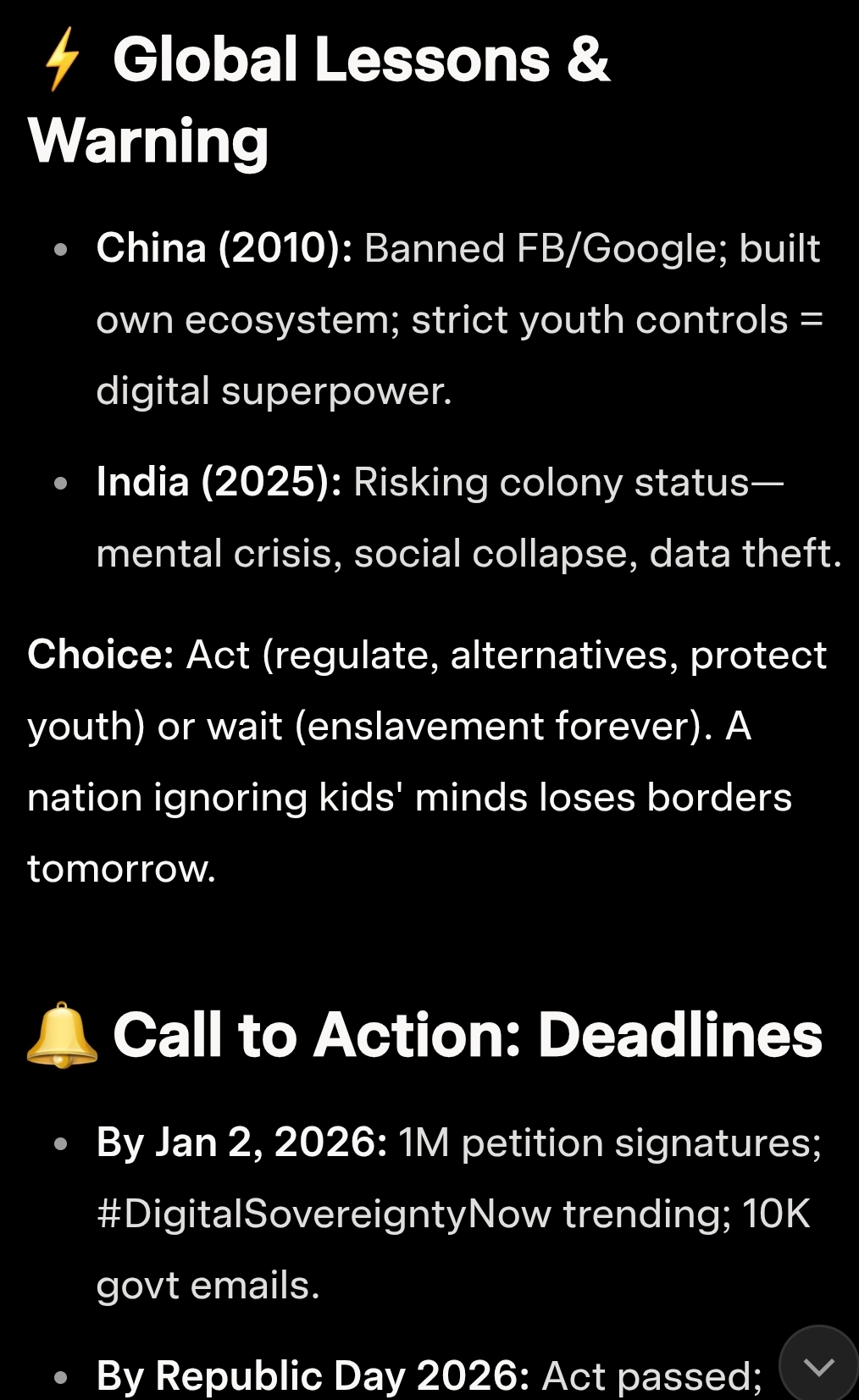
⚡ Global Lessons & Warning
- China (2010): Banned FB/Google; built own ecosystem; strict youth controls = digital superpower.
- India (2025): Risking colony status—mental crisis, social collapse, data theft.
Choice: Act (regulate, alternatives, protect youth) or wait (enslavement forever). A nation ignoring kids’ minds loses borders tomorrow.
🔔 Call to Action: Deadlines
- By Jan 2, 2026: 1M petition signatures; #DigitalSovereigntyNow trending; 10K govt emails.
- By Republic Day 2026: Act passed; compliance deadline; awareness campaign.
- By Independence Day 2026: India-Safe live; cyber force deployed; fast verdicts.
Hybrid Warfare Alert: Platforms = cognitive weapons (NATO term). EU/Australia/China acted—India must, or it’s strategic suicide. National security issue.
💪 The MAN Pledge
As a Moral, Adaptive, Nationalistic MAN:
✋ Protect family from exploitation.
✋ Demand platform accountability.
✋ Support Indian alternatives.
✋ Educate on dangers.
✋ Break silence against colonization.
Share with: 10 people (24 hrs), family groups, networks, community. Silence = betrayal. This is survival.
🎯 Resources
- PIL/RTI/MP Emails: Templates available (adapt this doc).
- Community/Media: Guides for organization, press releases.
- Reach: PMO, ministers, MPs, SC, media, influencers, students, parents, NGOs, citizens.
Share Formats: PDF (emails), images (social), video script (YT), audio (radio), op-ed (papers), speech (meetings).
Hashtags: #DigitalSovereigntyNow #ProtectIndianYouth #StopDigitalColonization #IndiaFirst #BecomeAMAN
🇮🇳 Jai Hind | Jai Bharat 🇮🇳
For global ethics: GRP = Good Resourceful Peer Groups to Empower India. Time for MANs addressing negativity with ethics.
Updates welcome—collaborate for PILs, questions, campaigns.






 GRP_VCare2Dare