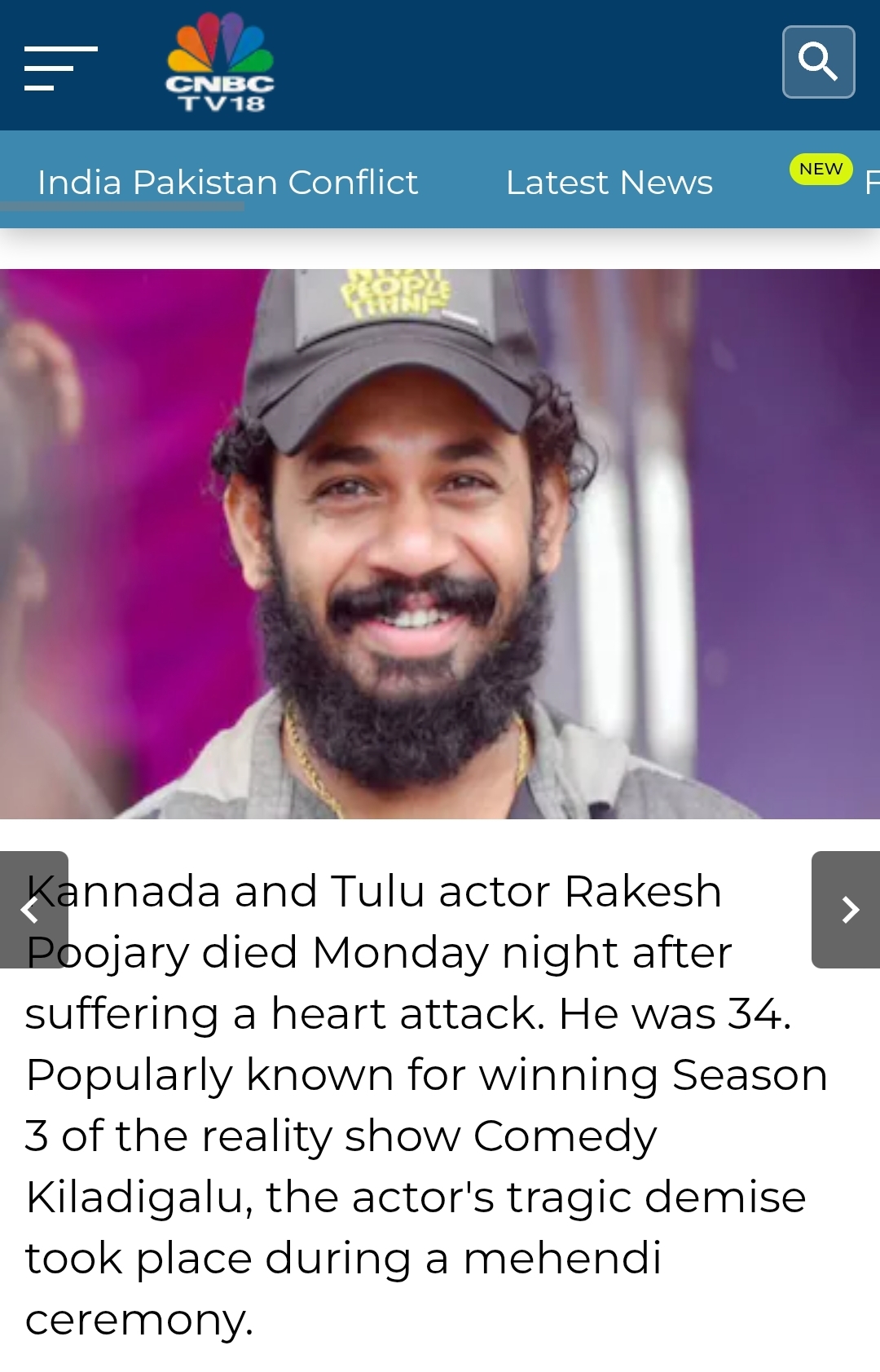
Young Indians Heart Risk Prevention.
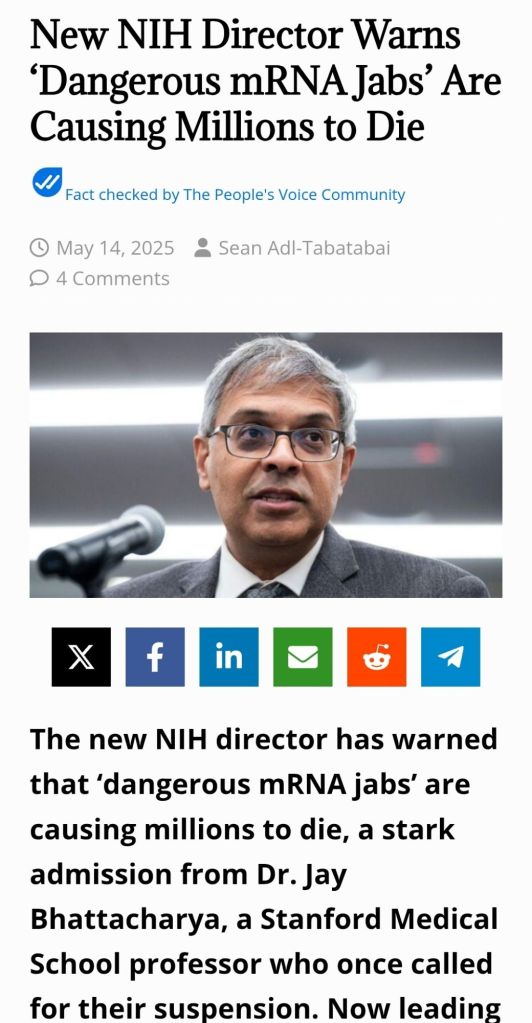
Reason: https://thepeoplesvoice.tv/new-nih-director-warns-dangerous-mrna-jabs-are-causing-millions-to-die/
For Humanism, Indians, Bengalureans & IIScians: We Grow Resourceful Purpose_SpAces: Collaborate with Mitrallys wanting to know, Grow & Help Futureones Grow.
Young Indians Heart Risk Prevention.
Reason: https://thepeoplesvoice.tv/new-nih-director-warns-dangerous-mrna-jabs-are-causing-millions-to-die/
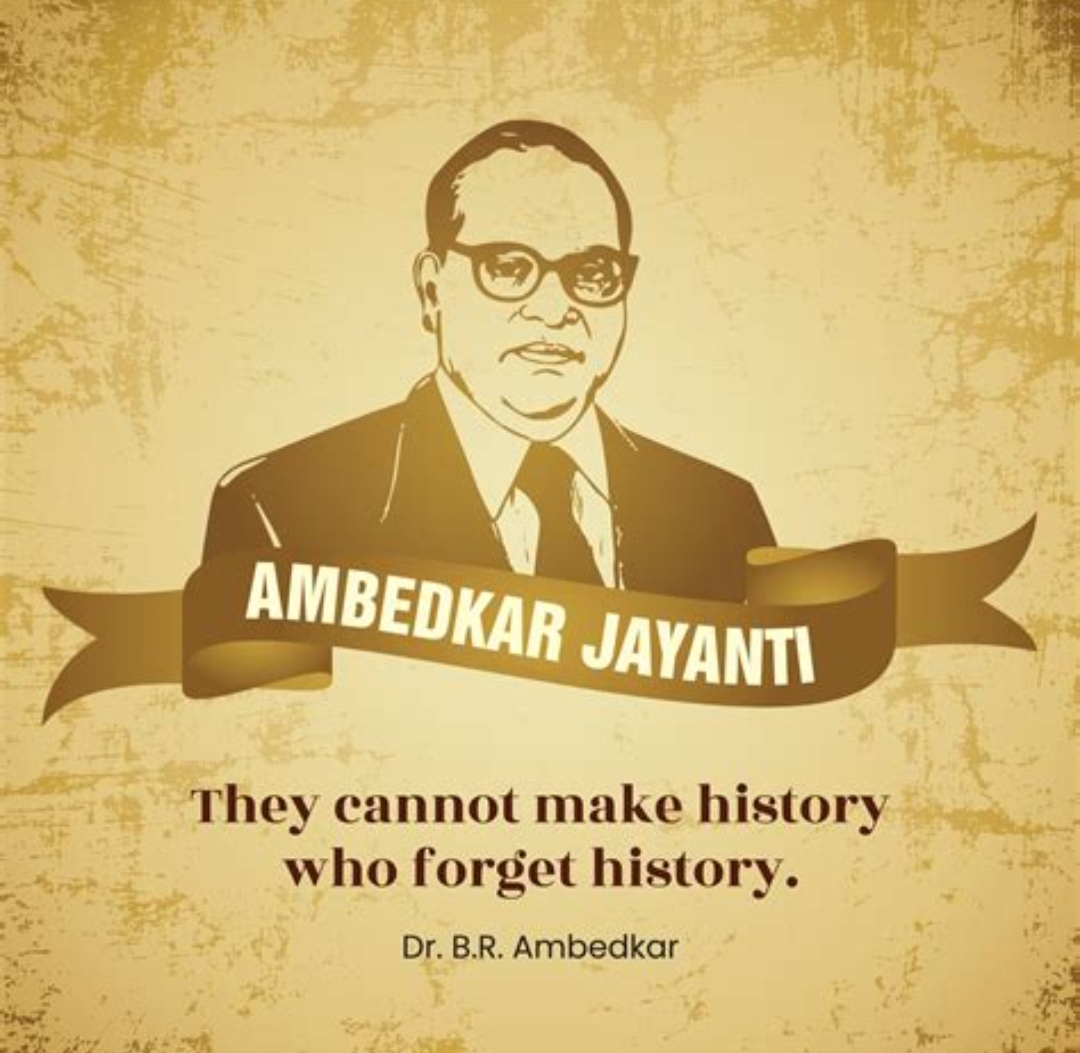
Latest Ambedkarite Events Appended on Top.
*Welcome to ADAPT_Philosophers Society.* Open Egalitarians Community for Liberty, Equality & Fraternity.
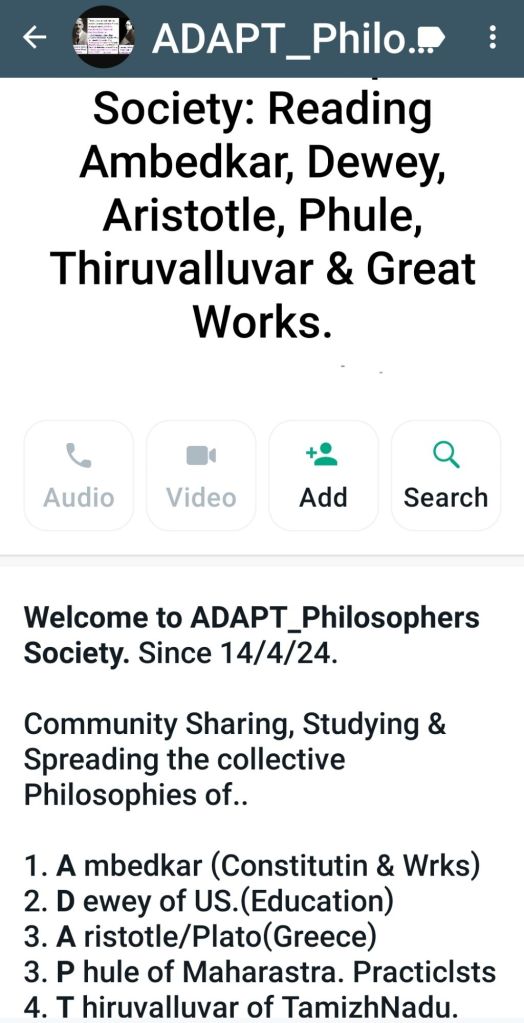
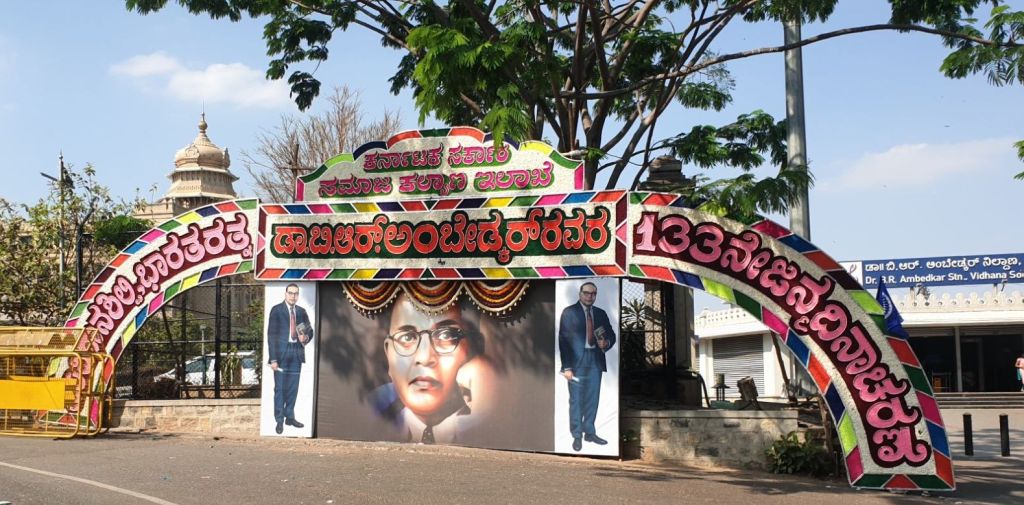
Community Invite:
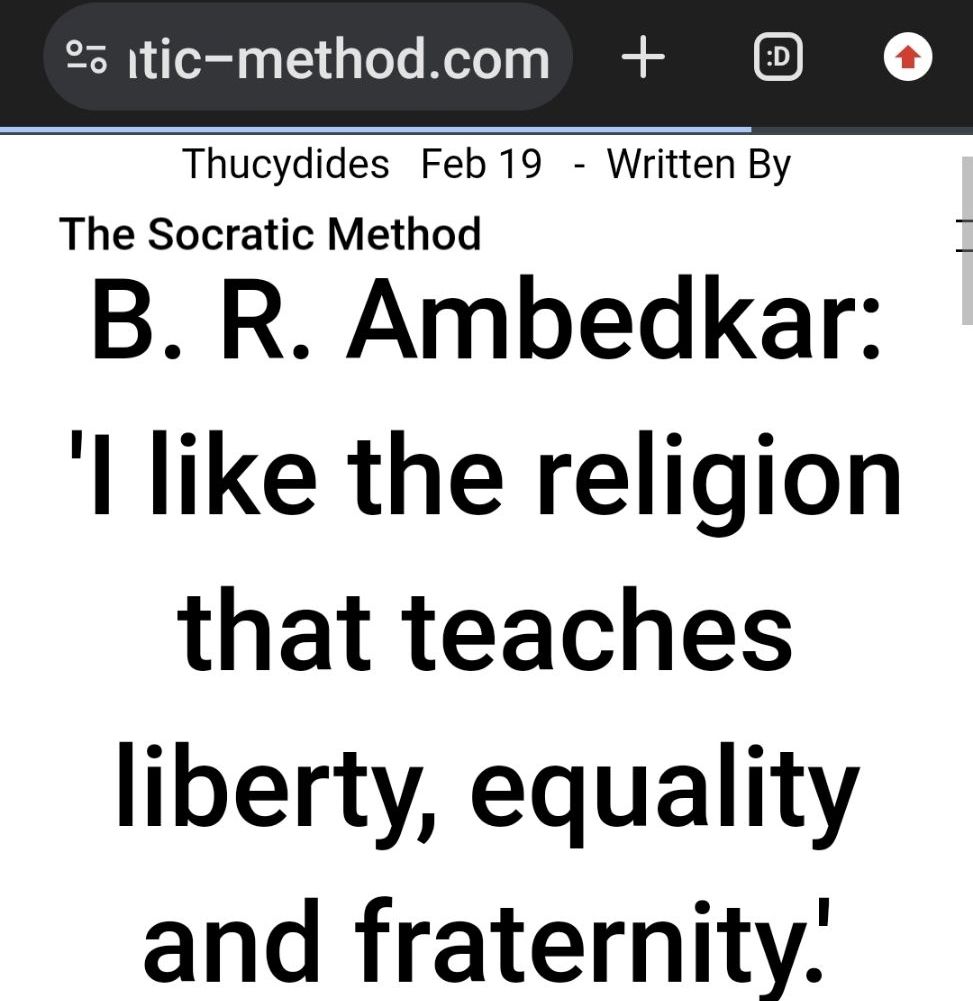
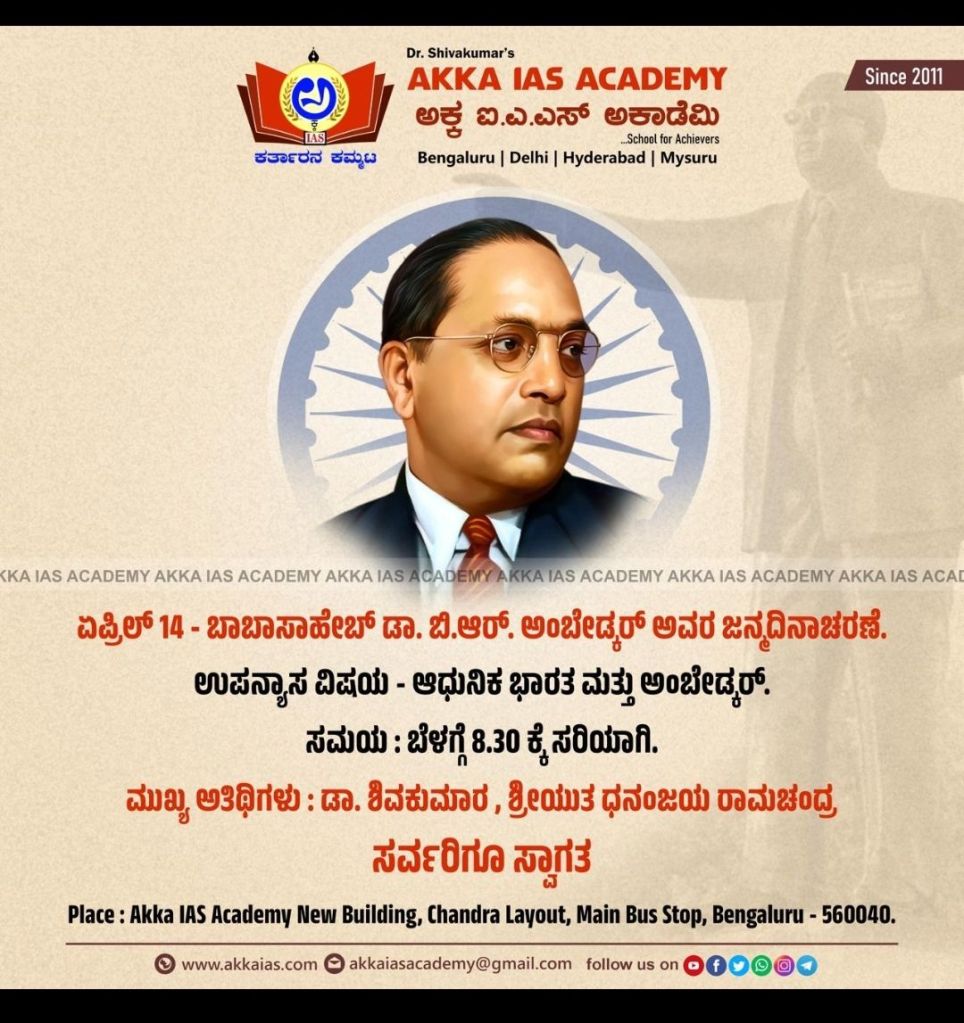
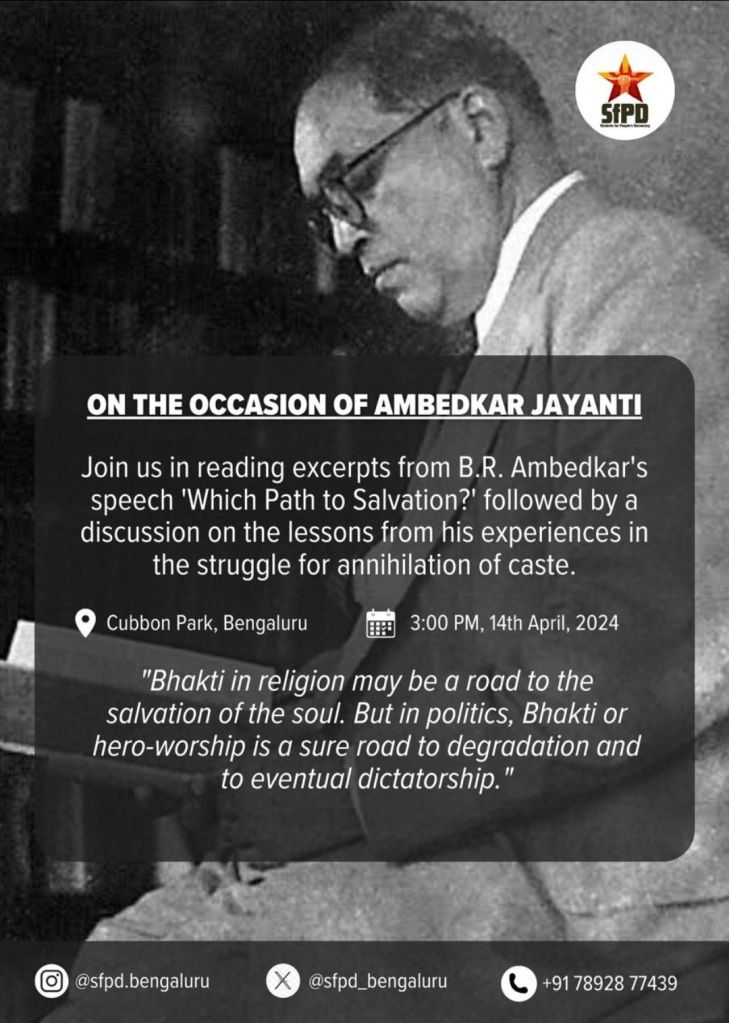
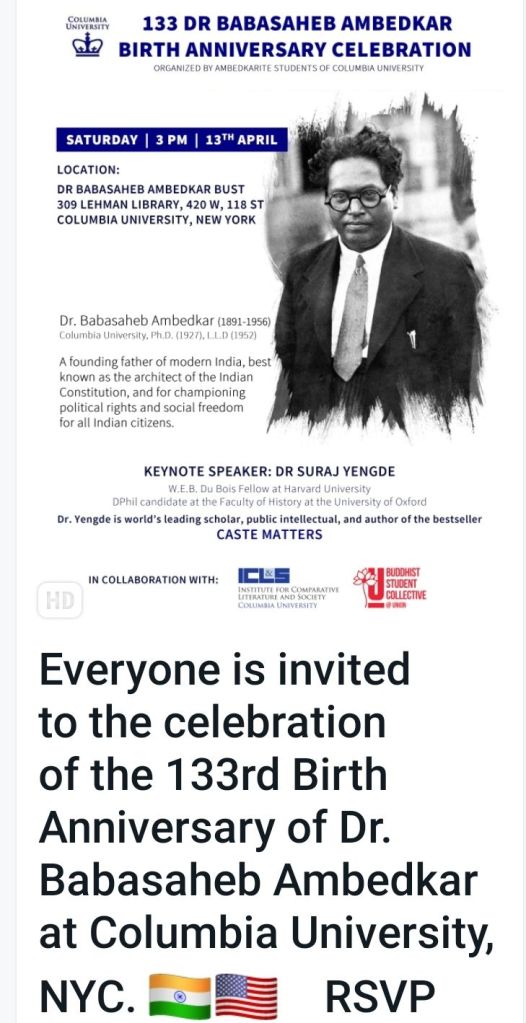

For More Info: https://grpvcare2dare.design.blog/2021/12/06/s88-project-jaibhim-india_2030-groups-vision-for-indian_egalitarianism/
For InfoSharing Connect with Pan-Indian Ambedkarite Groups : https://chat.whatsapp.com/GSVgm8wonxfKKv7oHUr87e
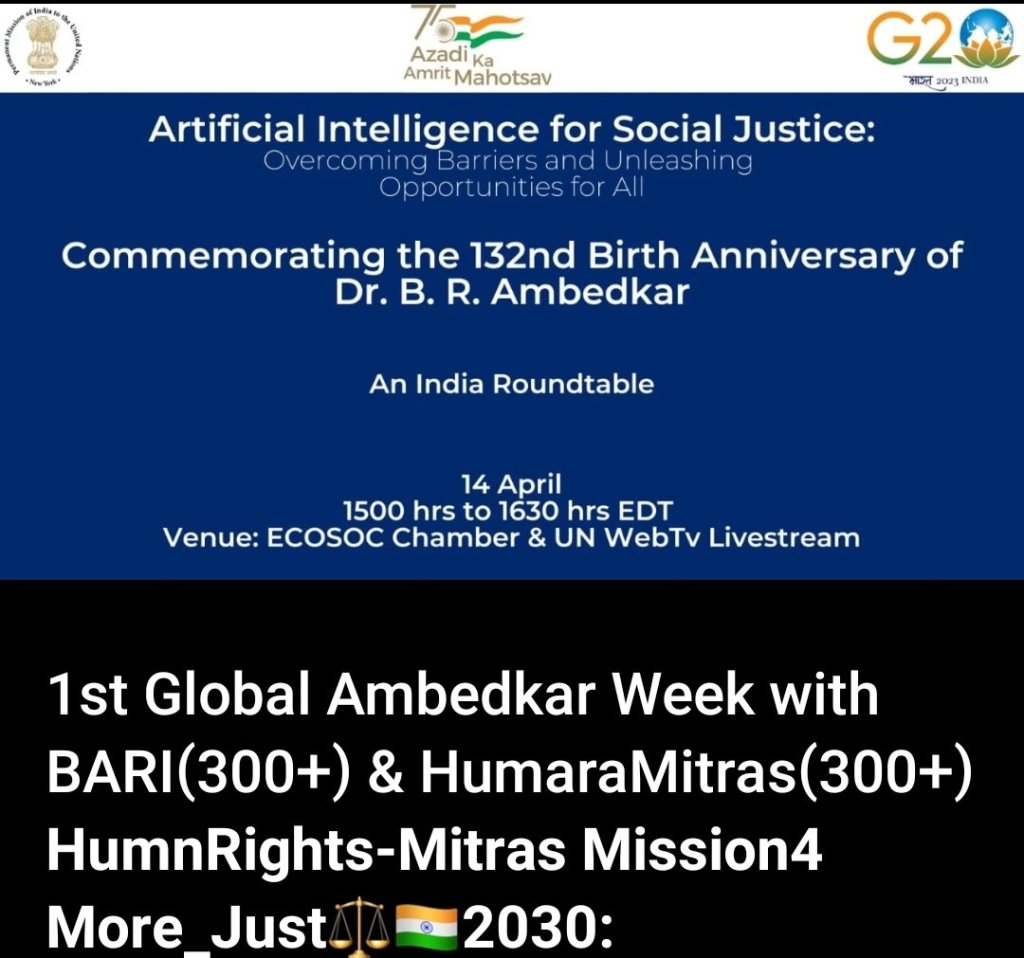
Below are Msgs from 1st Global Ambedkar Week 2023.
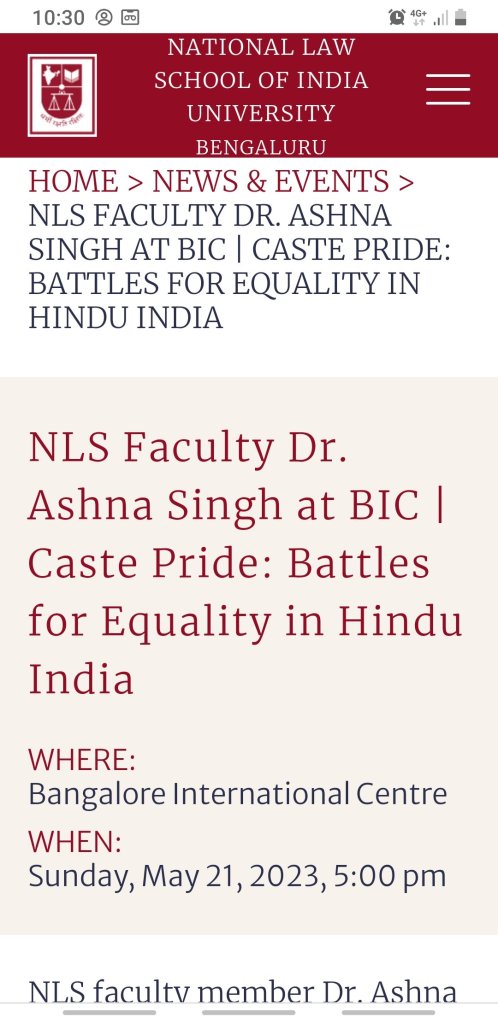
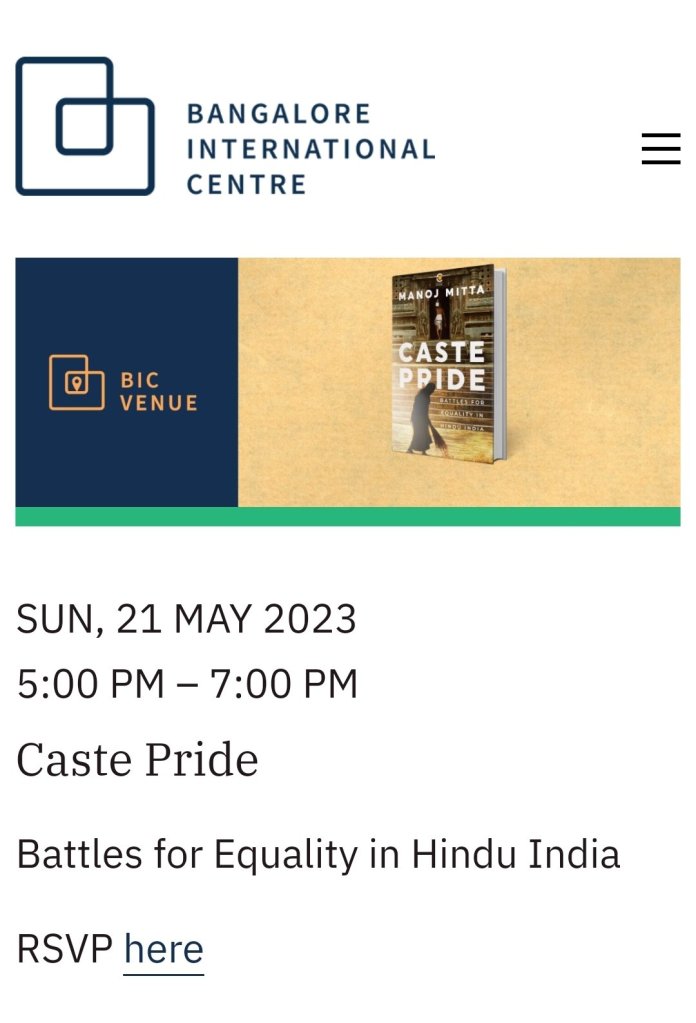
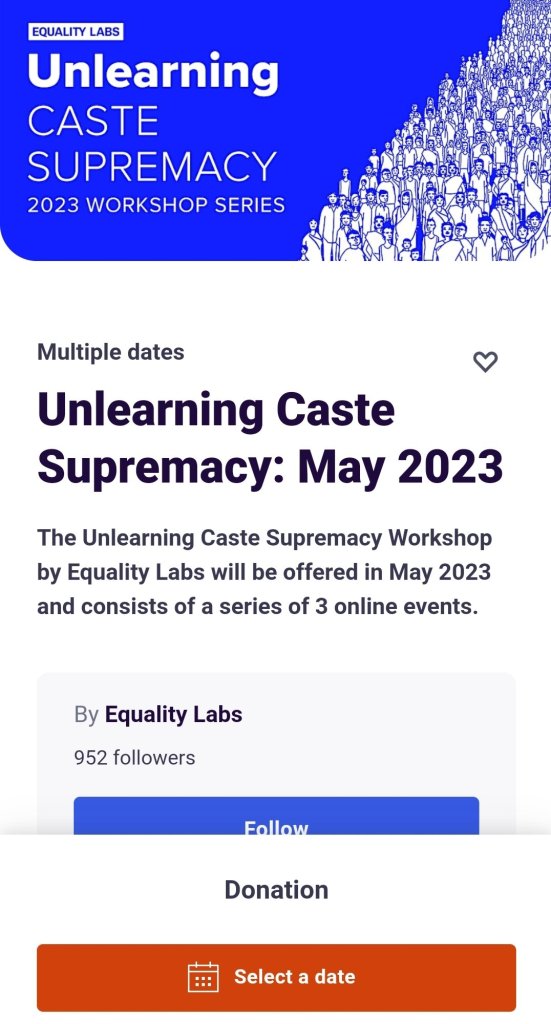
A
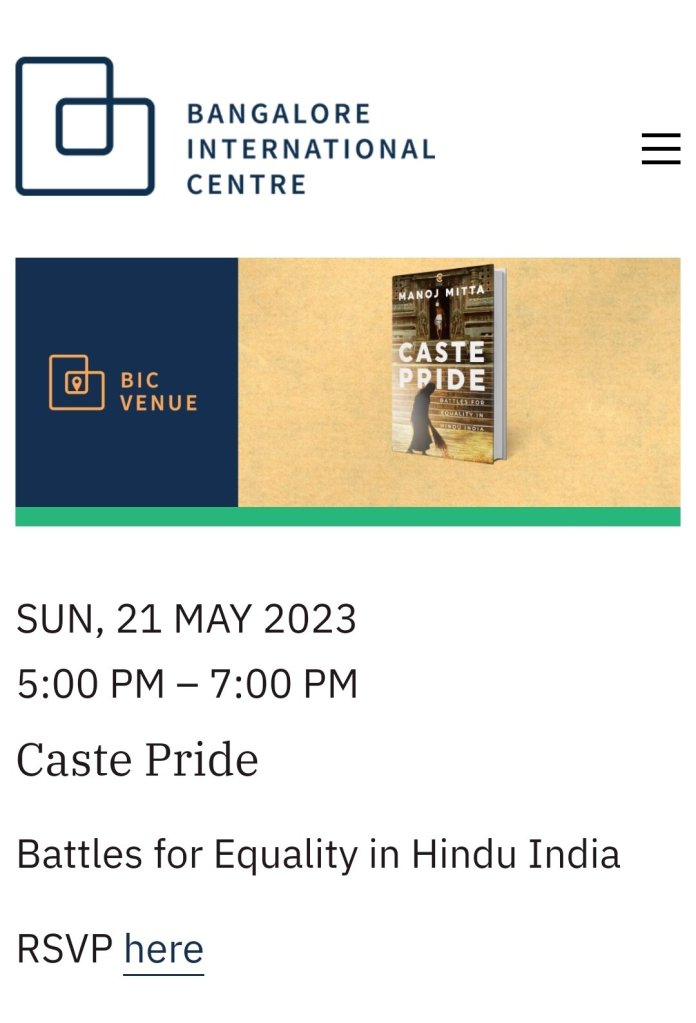
Access_Resources@ 1st Global Ambedkar Week/Month (GAW) 2023: Day-Wise Scheduled Programs and Events list. SharedVisions @ BARI_Group 4Egalitarianism. & ESP_Group 4Rationalism.
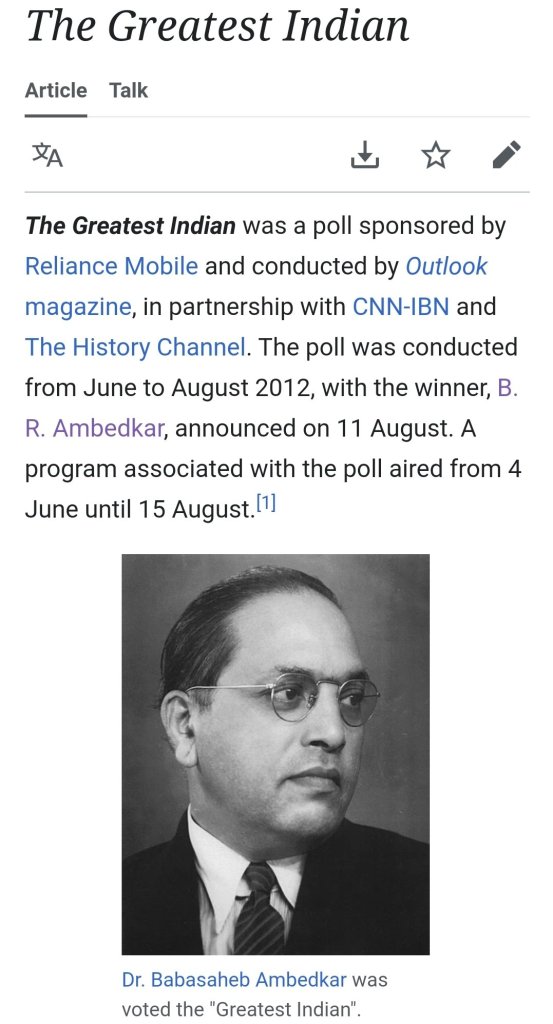
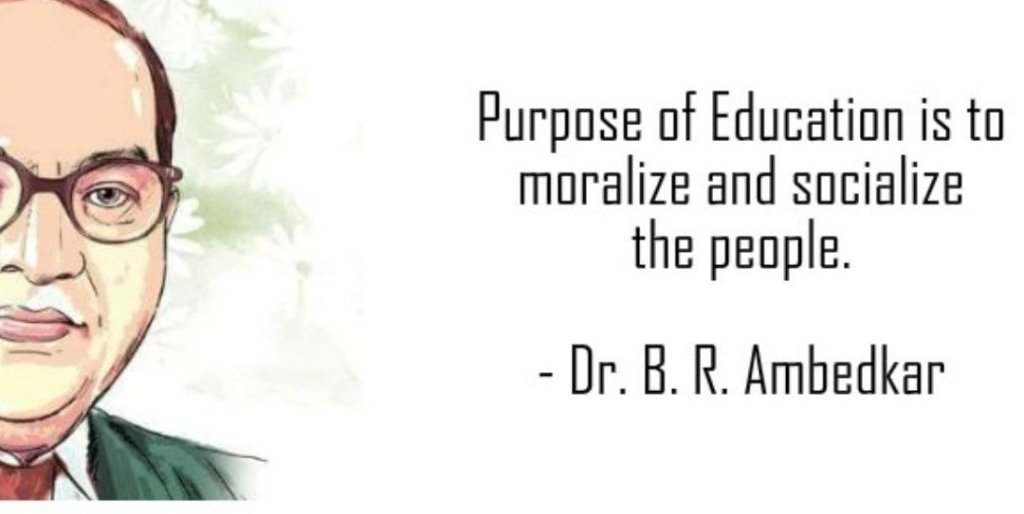
Dr. Ambedkar was foremost a Scholar an Intellectual Genius. The Colombia University(US) honors him as a great Alumni, that made him pioneering contributor in multiple fields of Economics, Law, Constituting the Constitution and by it the post Independence Indian-Systems. The university has a dedicated web portal for Dr.Ambedkar’s Works and also a law lecture here. Social-Reformer, Religious-Reformer & an Inspiration for a Patriot. Who Loved India, Lived India & Elevated India in his writings & life works.
Thus We honor his Visions, Ideals and Ideas through group Readings from his greatest works as listed by the Indian Government Website books launched at his centenary celebrations in 2016.
Day 0 (7th April/2023): Reading from page 1 to 10. http://www.drambedkarwritings.gov.in/content/writings-and-speeches/dr-babasaheb-ambedkar-writings-and-speeches-vol-1.php
Day 1 (8/4): Read from page 10 -20. 10 pages/Day.
Day 2 (9/4): Panel Discussions on Ambedkars Journey:
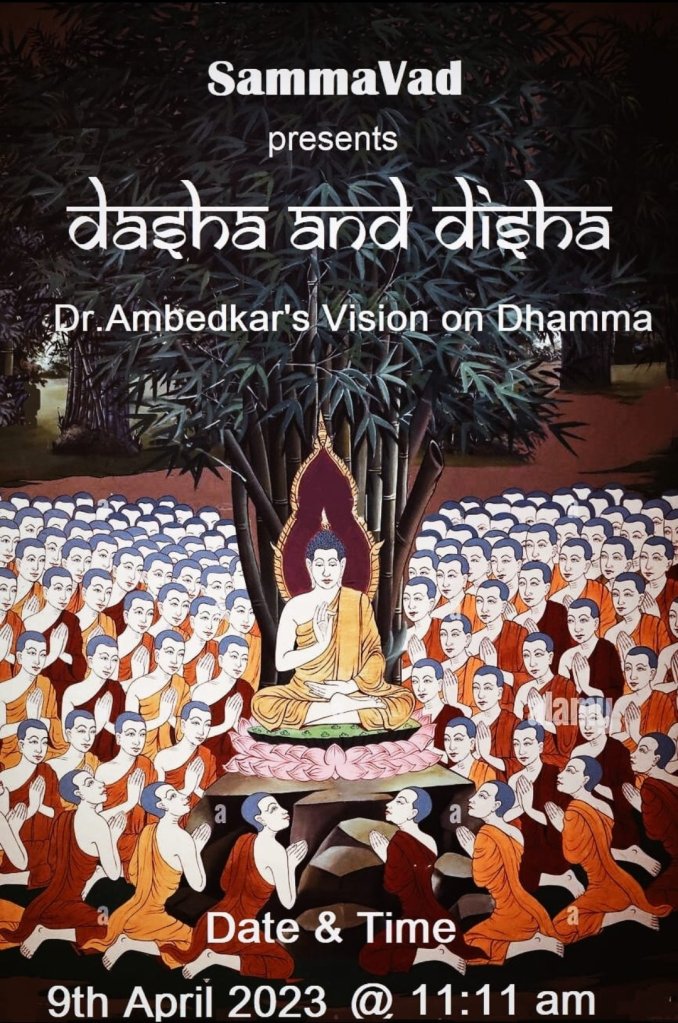
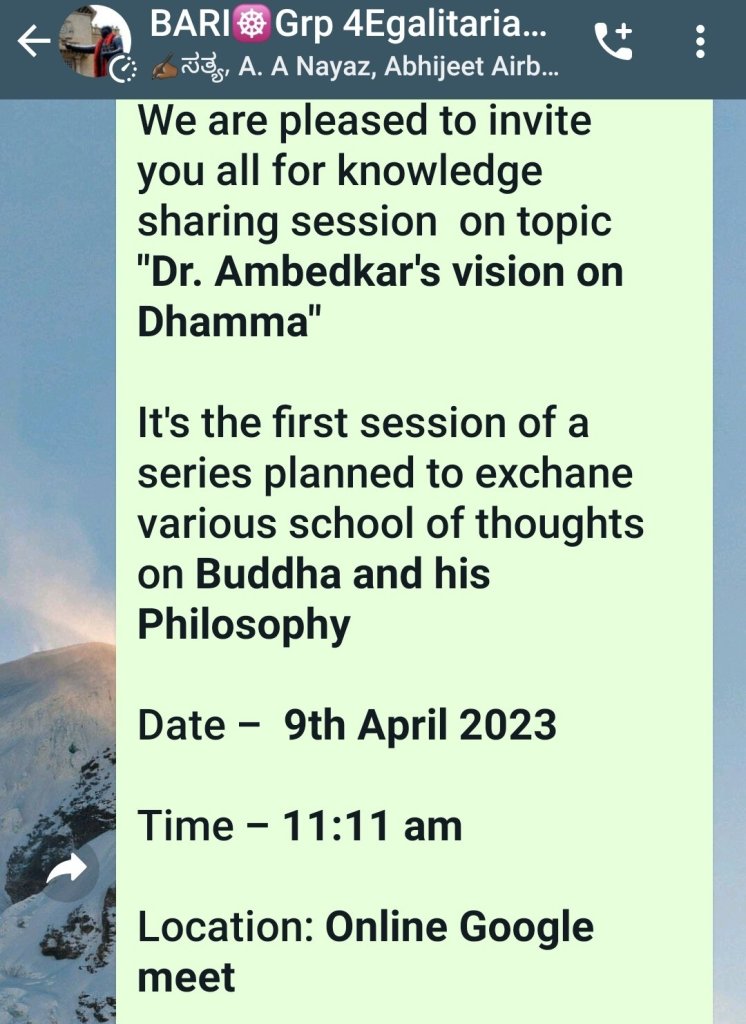
Day 3 (10/4): Reading articles:
The ideology and legacy of Phule-Ambedkar
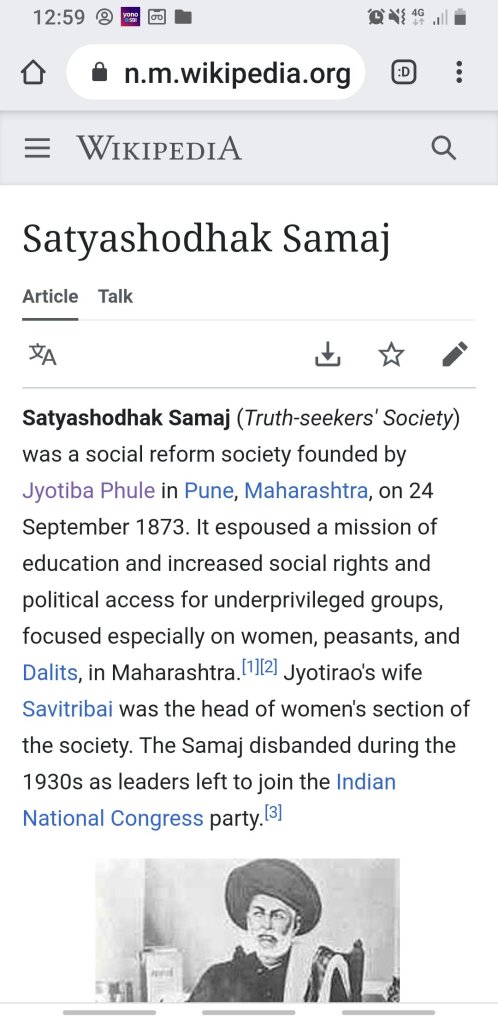
Day 4 (11/4): Reading latest Article Published; and Today is Birthday of Ambedkar’s Inspiration Jyothirao Phule https://www.bbc.com/news/world-asia-india-65175711.amp
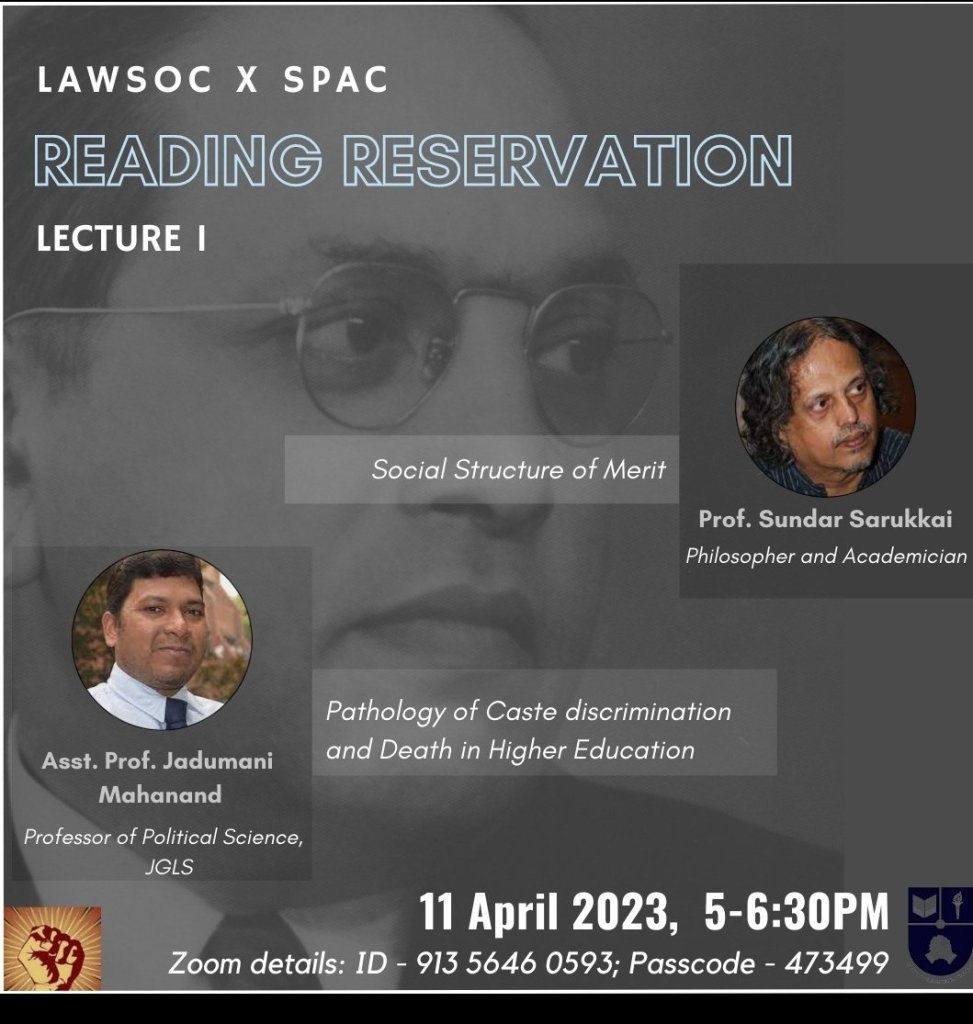
Day 5 (12/4): Watching Ambedkars contribution as chairman of drafting committee of Constitution in the Samvidhan Docu Series & having a Group Discussion on Google meet. https://m.youtube.com/watch?v=0U9KDQnIsNk
Day 6 (13/4): BARI Study Circle online meetup Google meet:
Ambedkar is Bharat Ratna & Also Vishwa Ratna says S.N Goenka ji: https://m.youtube.com/watch?v=ZLigwu1cTtE
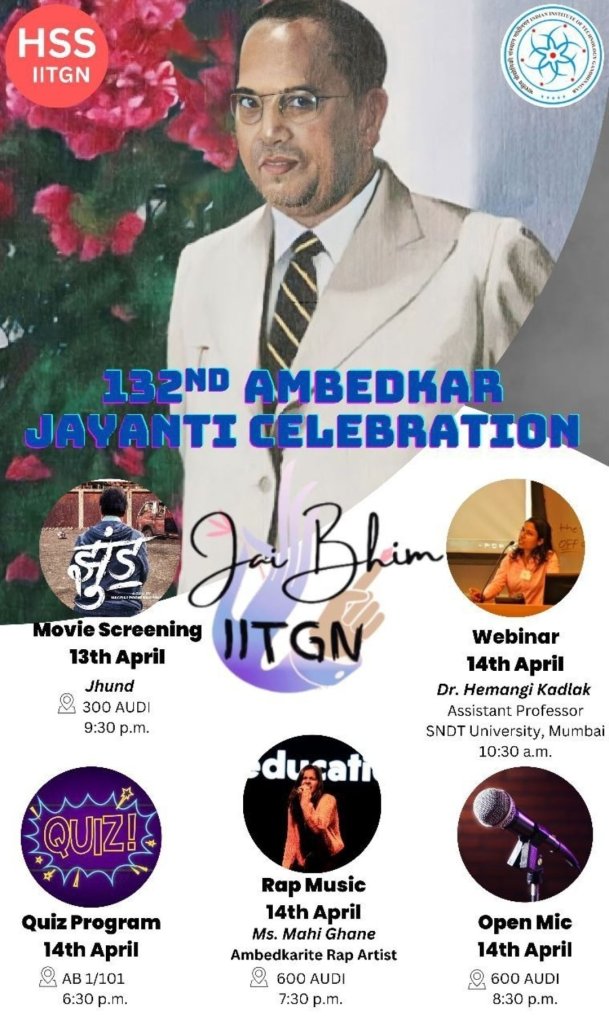
Day 7 (14/4):
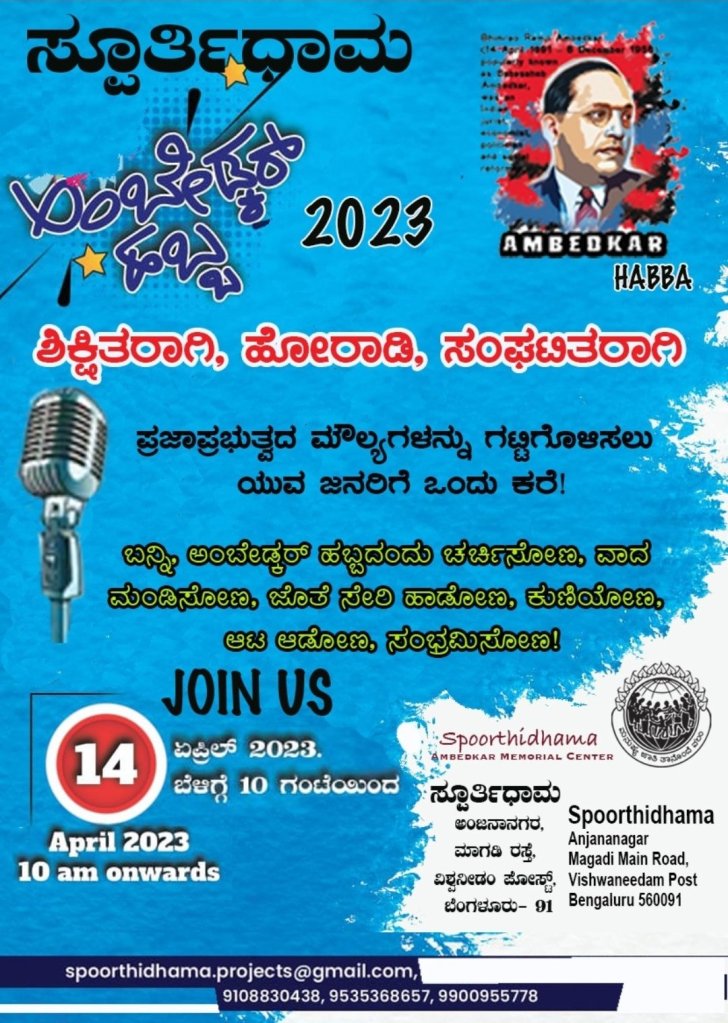
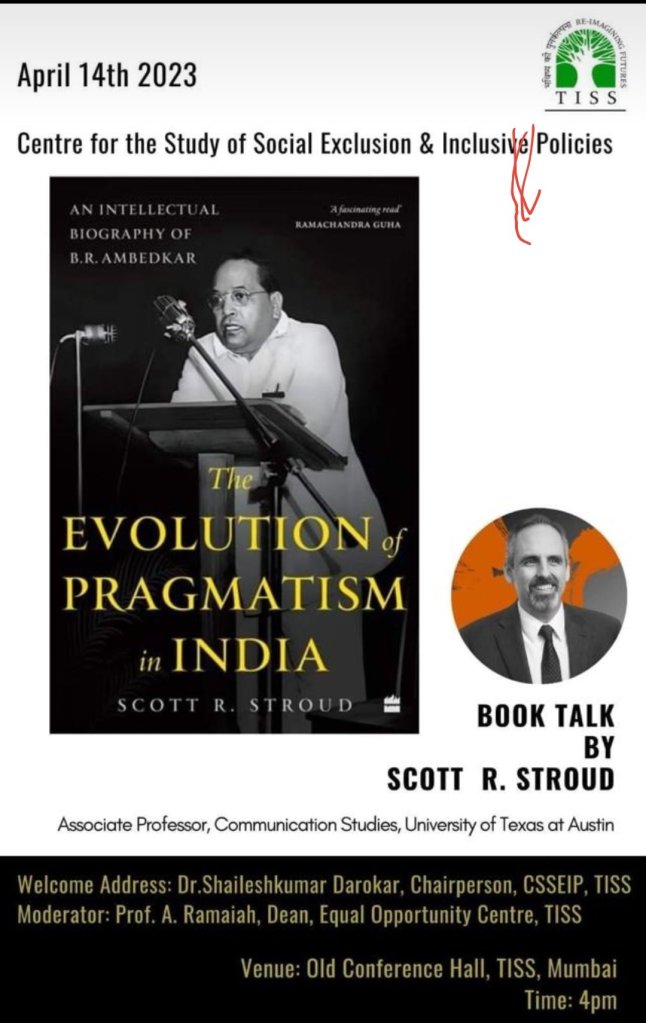
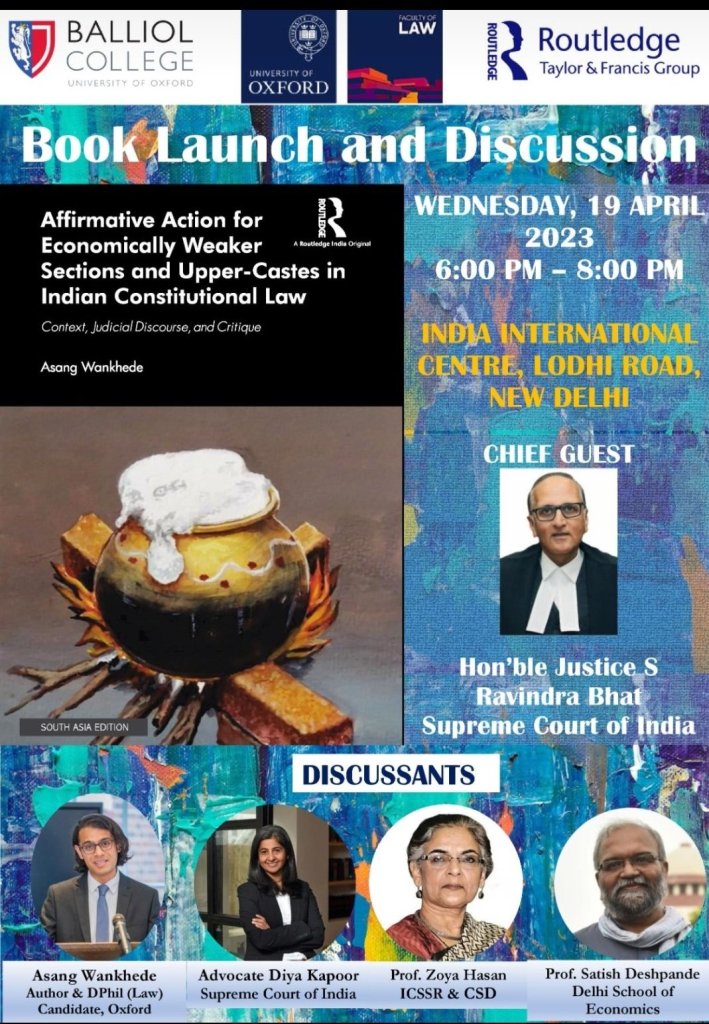

References:
1. Project Jaibhim_4 Egalitarianism: https://grpvcare2dare.design.blog/2021/12/06/s88-project-jaibhim-india_2030-groups-vision-for-indian_egalitarianism/
2. An Open All-India Egalitarians Sharing place thats Designed to connect with all Indian Institute Campuses. https://chat.whatsapp.com/GSVgm8wonxfKKv7oHUr87e
3. Project Saghar @ ESP_Grp 4 Science & Rationalism. https://grpvcare2dare.design.blog/2023/03/15/project-saghar-safespaces-for-skeptics-agnostics-humanists-atheists-rationalists-mission_scientific-nations2030/
3. Goenka ji on Ambedkar: https://youtu.be/N-ZHkilYb1g
4. https://ambedkarinternationalcenter.org/
5. http://ambedkarfoundation.nic.in/
Swa’Viv; the Big Bros Msg to Gen-Z ?
Sisters and Brothers of the World — and especially you, the young of Bharat and every land,
It fills my heart with a joy deeper than words to stand once more, as it were, before this age. In 1893 I spoke in Chicago of the mother of religions and of a nation that has sheltered the persecuted of every creed. Today, in 2026, I speak again — not from a platform of wood and stone, but from the living heart of time itself.
I thank the ancient order of monks. I thank the eternal spirit that still flows through India’s soil. And I thank you — Gen-X who built, Gen-Y who connected, Gen-Z who questioned, and Gen-Alpha who are just beginning to open their eyes. You are the hope I once placed in the “younger generation.” My faith was never in the old; it was always in you.
Look at the world these years have given us. Religions have multiplied their voices and, in places, hardened their walls. Fanaticism — that “horrible descendant” of sectarianism and bigotry I named in Chicago — has not died. On 11 September 2001 it tore the sky over New York and murdered thousands in the name of a distorted faith. The same spirit of radicalism that once shattered temples and burned libraries still walks the earth. It has learned new languages, new cities, new politics. In London and in New York, men of Muslim faith now hold the mayor’s chair. That is democracy’s right and history’s turn. But let no one mistake political power for spiritual authority, nor confuse a faith’s peaceful millions with the radicals who still dream of domination through blood. True religion never bombs. True religion never forces. True religion never claims exclusive ownership of God.
I am proud still of the religion that taught the world not mere tolerance, but universal acceptance: “Whosoever comes to Me, through whatsoever form, I reach him.” The streams still mingle in the sea. Hindu, Buddhist, Christian, Muslim, Jew, Sikh, Jain, and the seeker who claims no label — all are struggling along paths that lead, in the end, to the same Infinite. Yet the fanatic refuses the sea and insists his own little pond is the ocean. That refusal is the root of every communal poison, every suicide-bomb, every ideology that prefers death to dialogue.
And you, the youth? You are drowning in a quieter storm. Student suicides rise like a dark tide. Pressure, loneliness, the endless scroll of comparison, the fear that life has no meaning beyond marks and likes — these are the new demons. Strength is not only in the body; it is in the mind that refuses to collapse under the weight of the age. “Be strong, my young friends” — that was my counsel then and it is my counsel now. You will be nearer to heaven through courage, through honest work, through friendship, through service, than through any empty ritual of despair.
Arise! Awake! And stop not till the goal is reached.
What is the goal in 2026? Not the triumph of one religion over another — that hope is still impossible and still unworthy. Not the triumph of one nation by crushing others. The goal is character. Character that can look at a Muslim mayor or a Hindu prime minister or a Christian neighbour and see first a human soul. Character that can reject radicalism wherever it appears — whether it wears the mask of religion, of ideology, or of pure hatred — without hating the people who have been misled by it. Character that can sit with the student who is breaking and say, “You are not alone. You are infinite. Stand up.”
India once again must send out the tidal wave. From this land the great philosophies went forth; from this land the call to spiritualise the material world must rise again. That is why movements such as Jago Yuva, Jago Bharat have been kindled — a national platform rooted in the life and teachings I once lived, so that every student from Class 9 to 12 may read, reflect, create, express, and represent the strength that is already inside them. It is not politics. It is not narrow religion. It is the simple, fierce invitation: discover your own divinity, build character, serve the nation, and refuse to remain sheep when you are lions.
You of Gen-X, Y, Z and Alpha — you are not weak. You are not doomed. The same fire that once burned in the veins of India’s youth burns in you. Take up one idea — the idea of strength, of unity beyond sect, of service without hatred — and make that idea your life. Think of yourselves as strong, and strong you will be. Think of yourselves as free, and free you will be. Think of yourselves as immortal spirits, and the fear of death, the lure of despair, the poison of radicalism will fall away like worn-out clothes.
Sectarianism, bigotry, and fanaticism have possessed this beautiful earth long enough. Let them end with your generation. Let the world see once more what India can give: not the sword, but the light; not exclusive claims, but the open sky of the Spirit.
Sisters and brothers — young and old, of every faith and of none — arise. The night is long enough. The dawn is yours to claim.
Jago Yuva. Jago Bharat.
And stop not till the goal is reached.
— in the spirit of Swami Vivekananda, speaking across the years to the living present of 2026.
3 Cases 1 Criminal.. Liquor.

1. Lovefraud.com,
2. jihadwatch.org
3. PoliticalIslam.com
4.
Those who Live-in carelessly, may Die-Out Precariously, like below.
Take help of Law not to Impose, it’s to expose lies & Imbibe Legal ness & Constitutionalism.
Risks of Marriage/Live-in without a BG Check..?..
Full story… Genders dynamics Unaware Relations can end in Tragedies beware.. They both Indians “Lived-in at Home” and Died-out on Street/Jail. https://www.indiatoday.in/amp/india/story/bhavnagar-st-bus-stand-murder-police-reconstruct-crime-scene-with-accused-faisal-2987955-2026-09-05
#Sundays4Society.. https://chat.whatsapp.com/JfJn5z0kq4q5ere39MbTU4
The Journey of How New WhatsApp Groups Form
New groups (especially unofficial class, student, community, or purpose-driven ones) usually follow a predictable journey. This aligns closely with classic group development models like Tuckman’s stages (Forming → Storming → Norming → Performing), which research has applied specifically to WhatsApp groups.
Here’s the typical journey, stage by stage:
Someone feels a need (e.g., “We need a place to share class updates / ID card info / exam tips”).
This is the critical turning point most successful groups reach.
You are currently right in the Storming → Norming transition. The request to limit messages + the suggestion of the 3R framework (Relevant, Reasonable, Resourceful) is classic norm-setting behaviour. Groups that successfully complete this step usually become much more useful and less annoying.
Would you like me to turn this journey into a short, shareable post for the group (with the 3R rules included), or expand any stage with more practical tips?
My City, My Teacher. Honouring on Teachers Day.
BenGalURU — The Ultimate Guru
A Good Uru is a Guru.
Good + Uru.
BenGalURU.
Not just a city.
A living, breathing civilization that teaches.
It teaches ambition without apology — the skyline of glass and code rising from red earth and old lakes.
It teaches patience in the middle of chaos — the same roads that choke at 6 p.m. also carry dreamers who arrived with nothing but a laptop and a hunger.
It teaches reinvention daily — from garden city to Silicon Plateau, from quiet cantonment to the place where the next unicorn is already being coded in a garage or a co-working space at 2 a.m.
It teaches resilience — monsoon floods, traffic wars, power cuts, and still the lights of Koramangala, Whitefield, and Electronic City keep glowing.
It teaches plurality — Kannada roots, Tamil, Telugu, Malayalam, Hindi, English, and a hundred mother tongues sharing the same filter coffee and the same startup pitch.
Bengaluru does not lecture.
It simply is the classroom.
The ultimate Guru that has trained generations of gurus — founders, engineers, artists, scientists, teachers, and quiet builders who then go out and teach the world.
A city that never claims to be perfect.
Only alive. Only evolving. Only generous with lessons for those willing to stay long enough to listen.
BenGalURU.
Good Uru.
Great Guru.
Civilization as Teacher.
Namma city. Namma Guru.
Acknowledging All the Bengaluruean Teachers, Family & Friends who have taught me to live and to give.. Right from Bengaluru University ULC, BLC, IISc, MSR, Stanford, Cathedral, Schools of BaBa Nursery, St.Annes, Florence, Lowry, SDA, and all Academic Institutions. Landmark, ISKCON, BASc, etc..
Yes, in principle a “GDR” (Gross Domestic Rationality / harmony metric) could be constructed as a complementary indicator to GDP, but it would measure something very different, far harder to quantify, and more contested than money flows.
GDP is a flow measure of market-valued economic activity (production, consumption, investment, net exports) inside a territory over a period. It is not “money making” in a crude sense; it is the sum of final goods and services produced. It is relatively objective because prices and quantities are observable, standardized national accounts exist, and the concept has decades of refinement. High GDP per capita correlates with many good outcomes (life expectancy, literacy, lower absolute poverty), but it is silent on distribution, environmental costs, social trust, crime, family stability, or intellectual climate.
A composite “rationality / harmony” index is imaginable. It would try to capture the opposite of the dynamics you mention: low radicalization, high inter-group trust, low rates of coercive conversion or identity-based fraud, stable voluntary associations (including marriage), openness to evidence over dogma, and the capacity of a society to update beliefs when facts change. Possible proxy ingredients already used in social science:
A carefully weighted composite of such indicators could, in theory, track whether a society is generating more “harmony through reason” than friction through dogma or identity politics. High GDR would then be associated with lower incidence of the specific pathologies you list (love jihad / love fraud patterns, radical demographic pressure in certain pockets, marital distrust driven by asymmetric legal regimes, etc.).
India’s aggregate GDP growth has been strong for two decades, yet pockets of low social trust, uneven enforcement of uniform civil code principles, and documented patterns of demographic-political mobilization in certain states or cities remain real. High GDP does not automatically dissolve those; deliberate institutional choices (uniform civil code, genuine free speech on religious critique, rigorous data on conversion and marriage fraud, education that prioritizes evidence over identity) would be required to raise any GDR-style score. The reverse is also true: sustained low rationality/trust environments eventually tax growth through capital flight, talent emigration, and security costs.
In short: a well-designed GDR could function as a useful diagnostic of “harmony-making capacity,” just as GDP diagnoses material production capacity. It would not replace GDP; it would complement it. Constructing one that is transparent, hard to game, and grounded in observable outcomes rather than ideology is the actual hard problem.
Do Whatever it takes, to make a positive difference to IISc.
VISION IISC= Indian Institutes of Safe Campuses.

We Volunteer To DESIGN
We choose to show up differently.
We volunteer to DeSIGN — to Develop Empathic Solutions that integrate group networks.
Not as isolated heroes.
Not as extractive innovators.
But as people willing to move together from Empathic to Exl-Empathic to Excellent.
We work through the 5 Ts:
Things that carry care.
Thoughts that travel and mature.
Thinkers who steward rather than dominate.
Theatre of Life where ideas become lived.
Thankful Nature as our constant reference and regenerative root.
We process through theory — clear principles guiding real action, and real action refining the principles.
And we design deliberately against the Trauma of Traitors. Trust is not assumed; it is protected, practiced, and made structural.
This is not a campaign.
It is a quiet commitment.
We volunteer our attention, our skill, our presence, and our willingness to be changed by the networks we help form.
If you feel the same pull — to build solutions that sense deeply, integrate groups wisely, and leave the living world more thanked — then you already belong here.
We are volunteering to DeSIGN.
You are invited to join the work.
OUR Journey starts on 22nd AGM Meeting and this news clipping.. on Varalakshmi Habba (22/8/26), We visited Police Station on 1. Ed-Milad (26/8) knew 13 UDRs have been reported in locality for 2026 & 2. on Raksha Bandan (28/8/26) spoke with P.I.


Ingenuity of Our Nation = Integrity of Individuals + Integration of Institutions.