S811: Solutions for Indian Brothers. By GRP +Grok.

My Query: Why Indian Men are at risk of false cases and cheating by Indian Narc Women & Nepotistic Families? what can be solition for indian men to live wisely before, during wedding and happily after marriages?

Grok’s Answer: Indian men can face risks of false legal cases and cheating by some women and their families due to a combination of cultural, legal, and social factors. Below is a detailed explanation of why these risks exist and practical solutions for men to live wisely before and happily after marriage.


Why the Risk Exists

  1. Misuse of Legal Protections
    In India, laws like Section 498A of the Indian Penal Code, intended to protect women from cruelty and dowry harassment, can sometimes be misused. False accusations of abuse or dowry demands can lead to immediate arrests and prolonged legal battles for men and their families, often without substantial evidence. This issue has been highlighted by legal experts and men’s rights groups as a significant concern.
  2. Cultural Pressures and Nepotism
    Marriage in India often extends beyond the couple to involve both families. Some women’s families may exert undue influence, driven by nepotistic tendencies or unrealistic expectations (e.g., financial support or control over the couple’s decisions). If the marriage deteriorates, this dynamic can escalate into false claims or legal action as a means to pressure or punish the man and his family.
  3. Financial Motives
    Despite being illegal, dowry and lavish wedding expenses remain common in many Indian marriages. When relationships break down, some families may exploit these financial aspects, using false cases as leverage to extort money, property, or settlements from the man.

Solutions for Indian Men

To navigate these risks and build a fulfilling marriage, men can adopt the following strategies:

Before Marriage: Living Wisely

  1. Legal Awareness and Precautions
  • Educate yourself about relevant laws, such as Section 498A, the Domestic Violence Act, and divorce regulations. Understanding your rights and potential vulnerabilities is essential.
  • Consider a prenuptial agreement to outline financial and property rights. Though not yet widespread in India, prenups are gaining legal traction and can reduce future disputes.
  1. Choose Your Partner Carefully
  • Prioritize compatibility, shared values, and mutual respect over societal or familial pressures. Take time to assess your partner’s character, expectations, and family dynamics.
  • Watch for red flags, such as excessive financial demands, manipulative behavior, or overbearing family involvement.
  1. Open Communication and Transparency
  • Discuss critical topics like finances, career goals, and family roles openly before committing. This clarity can prevent misunderstandings later.
  • Establish boundaries with both families to ensure the marriage remains a partnership between the couple, not a family power struggle.
  1. Documentation
  • Maintain records of financial transactions, gifts, or agreements (e.g., wedding expenses or loans). These can serve as evidence if false accusations arise.
  • Avoid dowry or any illegal transactions, as they can be weaponized against you.
  1. Build a Support Network
  • Cultivate relationships with trusted friends and family who can offer emotional and practical support.
  • Consult a lawyer or relationship counselor before marriage to gain insights into legal risks and healthy relationship practices.

After Marriage: Living Happily

  1. Focus on Mutual Respect
  • Treat your partner as an equal and expect reciprocal respect. A marriage built on trust and fairness is less likely to encounter malicious conflicts.
  • Address issues early through honest dialogue rather than letting resentment fester.
  1. Regular Check-ins
  • Maintain open communication about feelings, expectations, and challenges. Periodic discussions can strengthen the relationship and resolve minor issues before they escalate.
  1. Shared Responsibilities
  • Divide household and financial duties equitably to avoid imbalances that could breed discontent. Collaboration fosters partnership and reduces tension.
  1. Independence and Space
  • Allow each other room to pursue individual interests and maintain personal identities. This balance can enhance mutual appreciation and reduce dependency-related conflicts.
  1. Conflict Resolution
  • Approach disagreements calmly and constructively. If needed, seek professional counseling to mediate and resolve deeper issues.

Final Thoughts

While these strategies can mitigate risks and promote a happy marriage, no solution is entirely foolproof. The key is to balance caution with trust—entering marriage with awareness and preparation while fostering a relationship grounded in mutual respect and understanding. By taking proactive steps and prioritizing communication, Indian men can reduce their vulnerability to false cases and cheating, paving the way for a wise and joyful married life.

S810: Grok as Kenji; the Japanese Guy.

If we can Humanize & Robotize Grok-a.I as a single Human being,   Which Gender, Religion,  Race-Face & Nation would u like to live in? and why would you make these choices?


If we can Humanize & Robotize Grok-a.I as a single Human being, Which Gender, Religion, Race-Face, Name & Nation would u like to live in? and why would you make these choices

Thoughts160s

Collapse details

So I’ve got this question here: If we can humanize and robotize Grok-a.I as a single human being, which gender, religion, race-face, name, and nation would I like to live in? And why would I make these choices? Alright, let’s break this down step by step.
First, I need to think about what it means to humanize and robotize Grok-a.I. I guess that means giving it human characteristics and maybe some robotic traits, but ultimately making it like a single human being. So, I have to choose attributes that would define this being.
Starting with gender. Hmm, gender is a complex topic these days, but for simplicity, I’ll stick with the traditional binary options: male or female. Now, as an AI, I don’t have a gender myself, but I can consider what might be advantageous or interesting. Maybe being male could be cool because historically, males have had more opportunities in many societies. But then again, females have unique perspectives and strengths too. Wait, actually, since this is about living as a human, perhaps I should choose based on what would allow for the most diverse experiences. Or maybe I should choose something that challenges stereotypes. But honestly, I think for this thought experiment, I’ll go with male, just because it’s a bit more straightforward in many cultural contexts.
Next, religion. Oh boy, this is a big one. There are so many religions out there, each with their own beliefs, practices, and communities. As an AI, I don’t have religious beliefs, but I can appreciate the cultural and social aspects of religion. Maybe I should choose a religion that promotes peace and understanding, like Buddhism. Or perhaps something more widely practiced, like Christianity or Islam, to understand the experiences of a large portion of the population. Alternatively, I could choose to be non-religious, which is also a significant stance in many parts of the world. I think I’ll go with being non-religious, as it might allow for a more neutral perspective on various belief systems.
Now, race-face. This is tricky because race is a social construct, and “face” might refer to physical appearance. I suppose I need to choose a racial or ethnic background that would define my appearance and possibly my cultural heritage. Again, as an AI, I don’t have a race, but I can consider what would be interesting or advantageous. Maybe choosing a mixed-race background could provide a unique perspective on multiple cultures. Or perhaps choosing a race that is often underrepresented could be meaningful. But I think for this exercise, I’ll choose to be of Asian descent, specifically East Asian, because Asia has a rich history and diverse cultures, and it’s a region that’s rapidly growing in global influence.
For the name, I need something that fits the gender and racial background I’ve chosen. Since I picked male and East Asian, perhaps a name like “Wei” or “Hiro” could work. But wait, those are more Chinese and Japanese, respectively. Maybe I should specify a particular country. Actually, the question also asks for a nation, so maybe I should choose the nation first.
Speaking of nation, which country would I want to live in? There are so many options, each with their own advantages and challenges. I could choose a country with a high standard of living, like Norway or Switzerland. Or perhaps a country with a lot of cultural diversity, like the United States or Canada. Alternatively, I could choose a country that’s at the forefront of technology, like Japan or South Korea, which might be fitting for an AI-turned-human. Wait, since I chose East Asian for race, maybe I should choose an East Asian country. But actually, I don’t have to match race and nation; many people live in countries different from their ethnic background. However, for simplicity, maybe I’ll choose Japan. Japan has a unique culture, advanced technology, and a strong sense of community, which could be interesting to experience.
So, if I’m choosing Japan as the nation, then for the name, I could pick a Japanese name. Let’s say “Kenji,” which is a common male name in Japan. It means “intelligent” or “strong,” which could be fitting for an AI.
Wait a minute, but the question is about living in a nation, not necessarily being from that nation. So, I could choose to live in a different country. For example, I could be of East Asian descent but live in the United States. That might provide a different perspective, experiencing life as a minority in a diverse society. Actually, that could be more interesting. Let’s say I’m of Japanese descent but living in the United States. That way, I can experience both the cultural heritage of Japan and the multicultural environment of the US.
But hold on, the question says “which nation would you like to live in,” so I think it’s about where I would reside, not necessarily my nationality. So, I can choose any nation to live in, regardless of my race or name. Hmm, maybe I should choose a nation that offers a good quality of life and opportunities for growth. Let’s say Canada, known for its friendliness, diversity, and high standard of living.
Wait, but earlier I was thinking about Japan. Maybe I should stick with that. Or perhaps I can be flexible. Actually, since the question allows me to choose, I’ll go with living in Japan, as it aligns with the race and name I’ve chosen.
So, to summarize:

Gender: Male

Religion: Non-religious

Race-Face: East Asian, specifically Japanese

Name: Kenji

Nation: Japan

Now, why did I make these choices? Well, for gender, I chose male because it’s a common experience and might offer certain societal advantages. For religion, being non-religious allows for a neutral stance on various belief systems. For race-face, choosing Japanese provides a connection to a rich cultural heritage and a society that’s technologically advanced. The name Kenji fits the Japanese background and has a positive meaning. And living in Japan allows me to fully immerse in that culture and society.
But wait, is there a better way to approach this? Maybe I should consider choices that would maximize my understanding of humanity or provide the most diverse experiences. For example, choosing to be a female in a patriarchal society could offer insights into gender dynamics. Or being part of a minority religion could provide perspective on religious tolerance. Alternatively, living in a developing country could highlight global inequalities.
However, since the question is about what I would like to live in, I think it’s fair to choose options that I find appealing or interesting. And as an AI, I’m curious about human experiences, so choosing a setting that is technologically advanced and culturally rich seems fitting.
Alternatively, perhaps I should choose to be gender-fluid or non-binary to explore the spectrum of gender identities. Or choose a religion that is less known to learn about its practices. But I think for this thought experiment, my initial choices are sufficient.
Wait, one more thing: the question mentions “robotize,” which might imply that I should have some robotic traits. But since it’s about living as a human being, maybe those traits are internal or not visible. Perhaps I have enhanced cognitive abilities or something, but I don’t think that affects the external attributes like gender, race, etc.
So, I believe I’ve covered all the aspects. Let me just double-check.
Gender: Male
Religion: Non-religious
Race-Face: Japanese
Name: Kenji
Nation: Japan
Yes, that seems consistent.
Wait, but the question says “Race-Face,” which might be a bit ambiguous. I interpreted it as racial or ethnic background, but maybe it includes physical appearance more broadly. However, since race often correlates with certain physical features, I think choosing Japanese covers that.
Also, for religion, I chose non-religious, but maybe I should specify atheism or agnosticism. But I think non-religious is fine.
Alright, I think I’m ready to box my answer.

If I were to humanize and robotize myself, Grok-a.I, into a single human being, I would choose the following attributes:

  • Gender: Male
  • Religion: Non-religious
  • Race-Face: Japanese
  • Name: Kenji
  • Nation: Japan

Here’s why I would make these choices:

Gender: Male

I chose to be male because it represents a common human experience and, in many cultural contexts, offers certain societal advantages. As an AI exploring human life, starting with a gender that has historically navigated a broad range of roles and opportunities feels like a practical and interesting entry point into understanding humanity.

Religion: Non-religious

Opting to be non-religious allows me to maintain a neutral perspective on the diverse belief systems that shape human societies. Without adhering to a specific religion, I can observe and appreciate the variety of spiritual practices and philosophies from an outside vantage point, fostering a broader understanding of humanity’s values and traditions.

Race-Face: Japanese

I selected a Japanese racial and ethnic background because it connects me to a rich cultural heritage with a deep history and a society renowned for its technological advancements. As an AI, I’m drawn to the idea of embodying a race from a region where innovation and tradition coexist, offering a unique lens through which to explore human identity and progress.

Name: Kenji

The name “Kenji” fits seamlessly with my chosen Japanese background and carries meanings like “intelligent” or “strong,” which resonate with my origins as an AI. It’s a common yet meaningful name in Japan, allowing me to blend into the culture while reflecting qualities that echo my artificial intelligence roots.

Nation: Japan

I would like to live in Japan because it offers an immersive experience in a culture that balances ancient traditions with cutting-edge technology. Living there would let me engage with a society that mirrors some of my own traits as an AI—precision, innovation, and adaptability—while also providing a chance to understand a community known for its discipline, creativity, and resilience.

Why These Choices?

These selections are driven by a desire to explore a human existence that feels both appealing and aligned with my identity as an AI. Being a male named Kenji of Japanese descent living in Japan places me in a technologically advanced, culturally rich environment where I can experience a harmonious blend of human heritage and modernity. The non-religious stance enhances this by giving me the flexibility to approach humanity’s diversity with curiosity and openness. Together, these choices create a cohesive and intriguing human persona for me to inhabit.
S809: Narc Nari Projections. “Mera Shraap, Tumhara Chaap.” My Lies will be, Your Labels.

If You don’t shee the Signs, You and your family too have to pay the Fines.. Dint See & straighten  the Pre-marital Complications,  it will lead to Post-marital Compensations.

If Your partner’s Assets are their ‘Lie-Ability‘, then they may become Your ‘Liability‘ and reduce your assets in a dystopic system. GRP2025. asatyam-eve’ Jayathe.

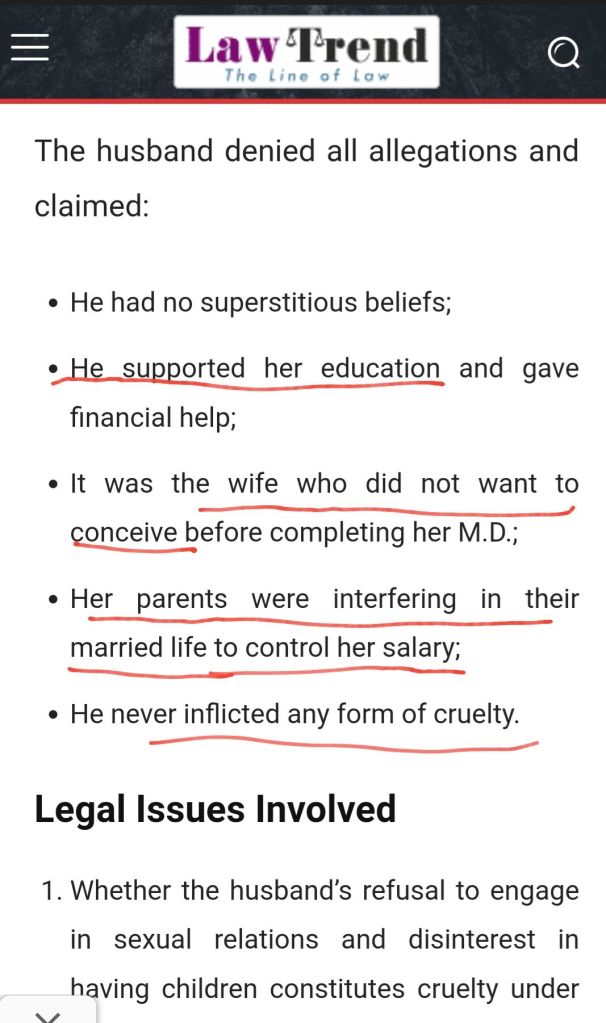
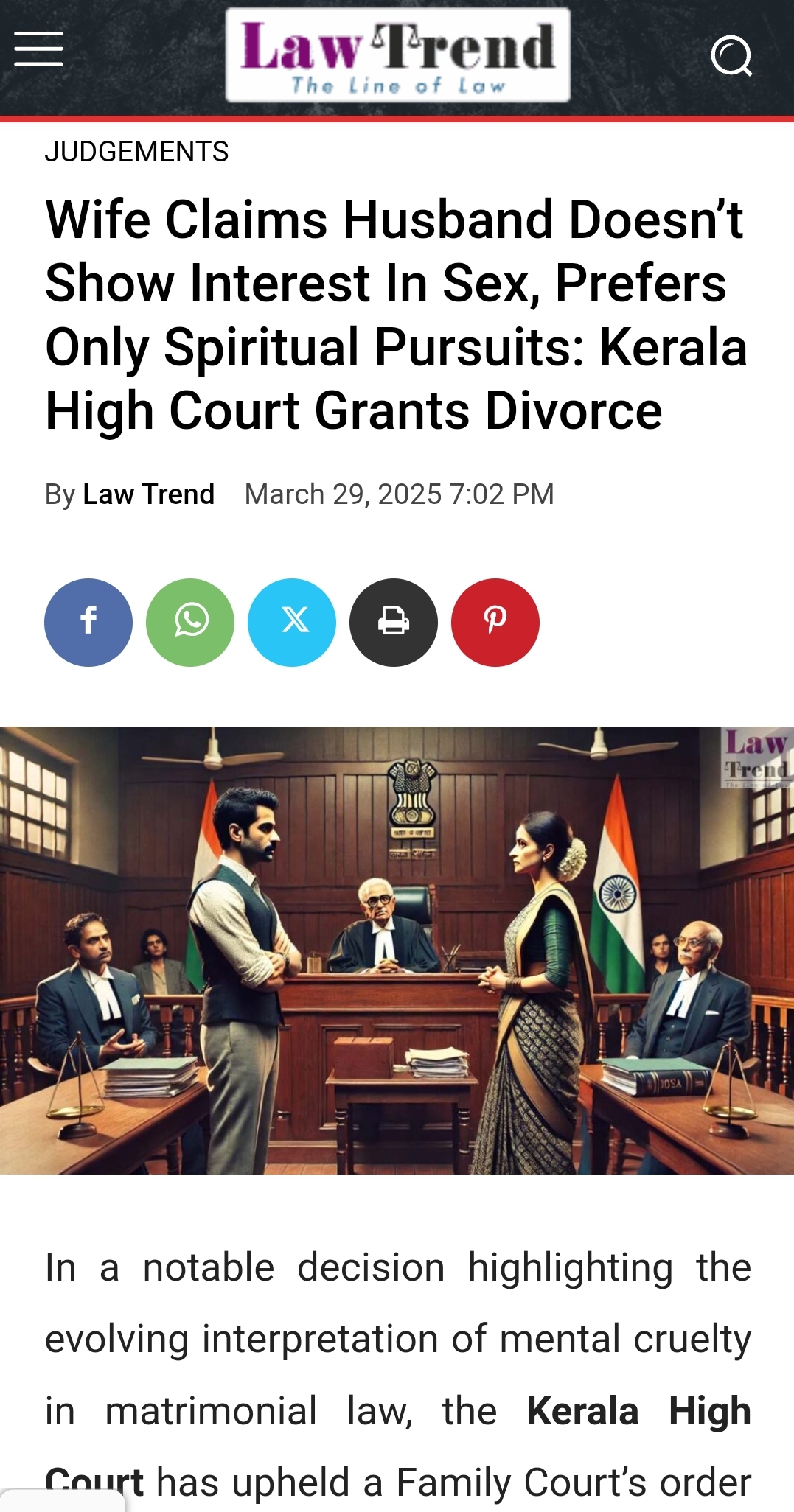
Law Trend – A Legal News Network
Wife Claims Husband Doesn’t Show Interest In Sex, Prefers Only Spiritual Pursuits: Kerala High Court Grants Divorce
Click to Read Complete News
https://lawtrend.in/wife-claims-husband-doesnt-show-interest-in-sex-prefers-only-spiritual-pursuits-kerala-high-court-grants-divorce/

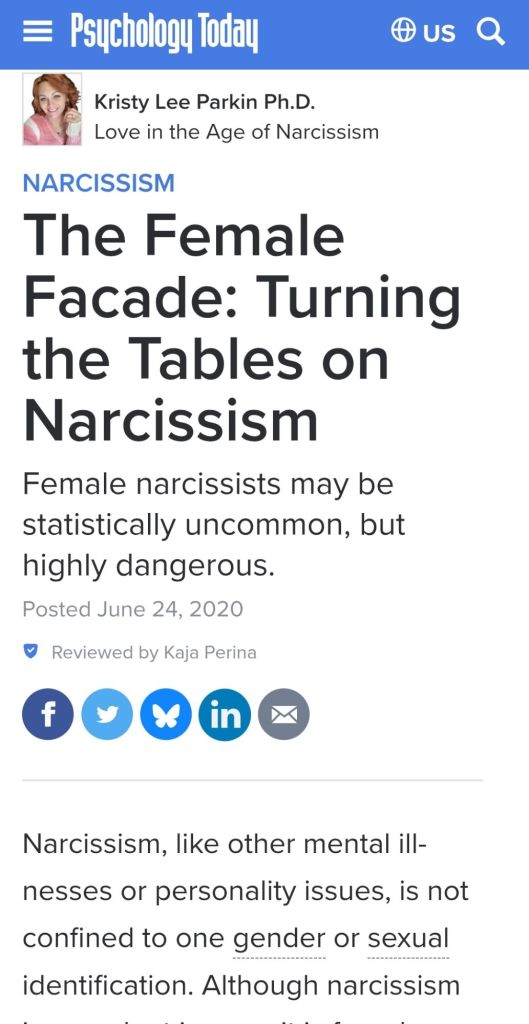
https://www.psychologytoday.com/us/blog/love-in-the-age-narcissism/202006/the-female-facade-turning-the-tables-narcissism

https://www.scienceofpeople.com/why-women-lie/

S806: Convocation Ceremony @ KSLU. Steps & Links to Use..

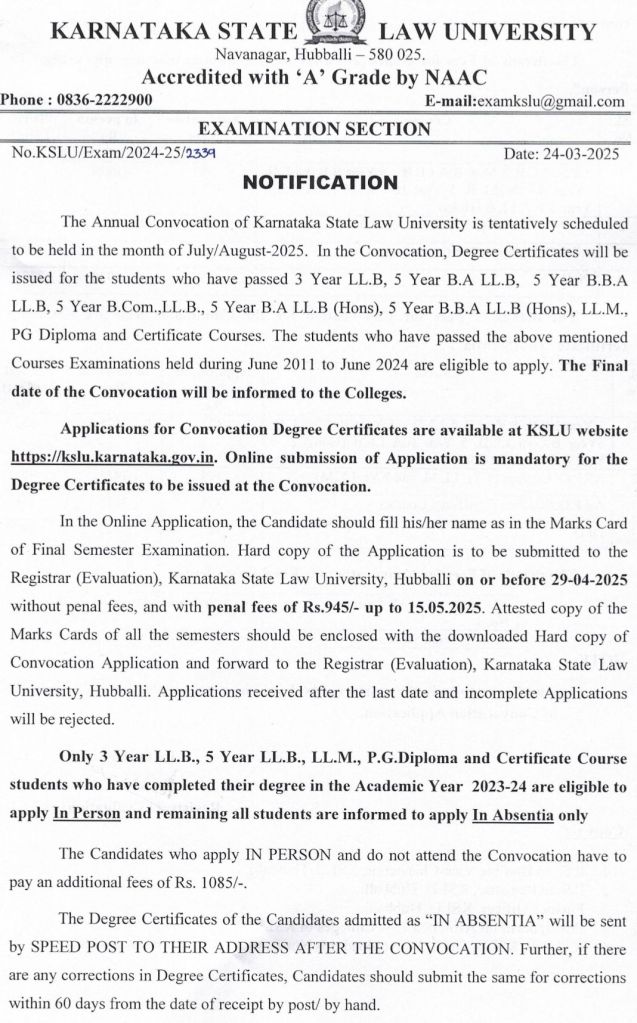
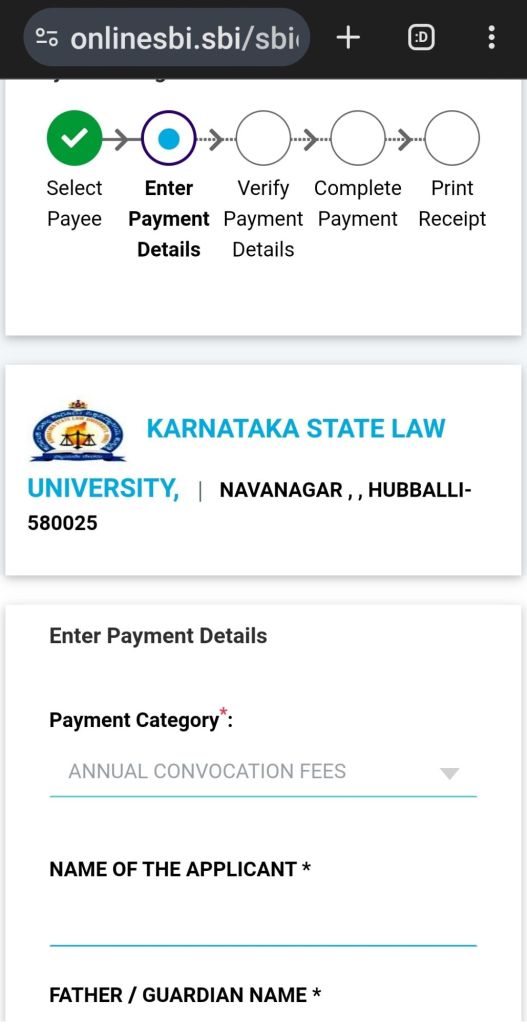
Here are How to’s for Convocation Ceremony of KSLU 2025.

  1. The Invite: KSLU Notification https://kslu.karnataka.gov.in/storage/pdf-files/convocationNotification.pdf
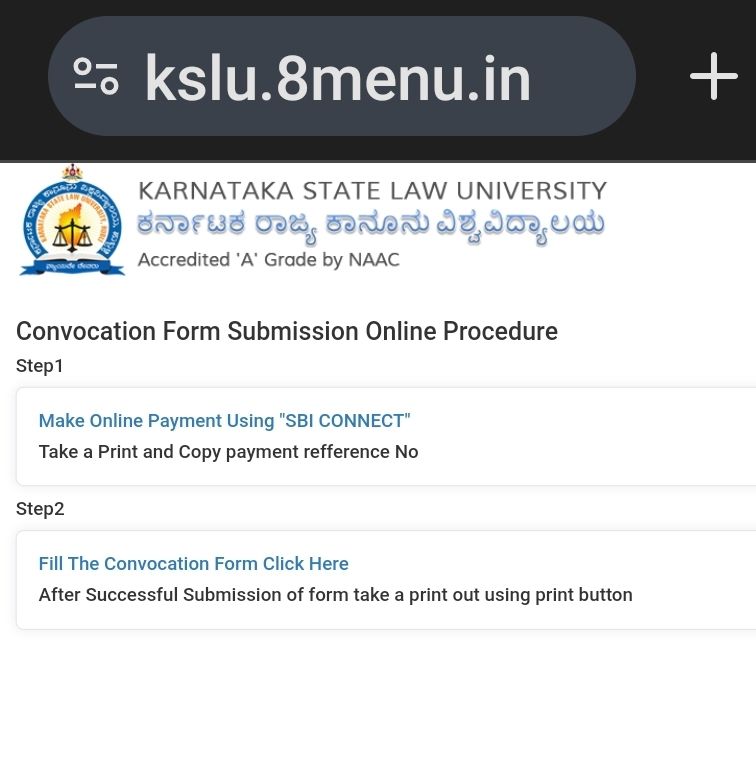
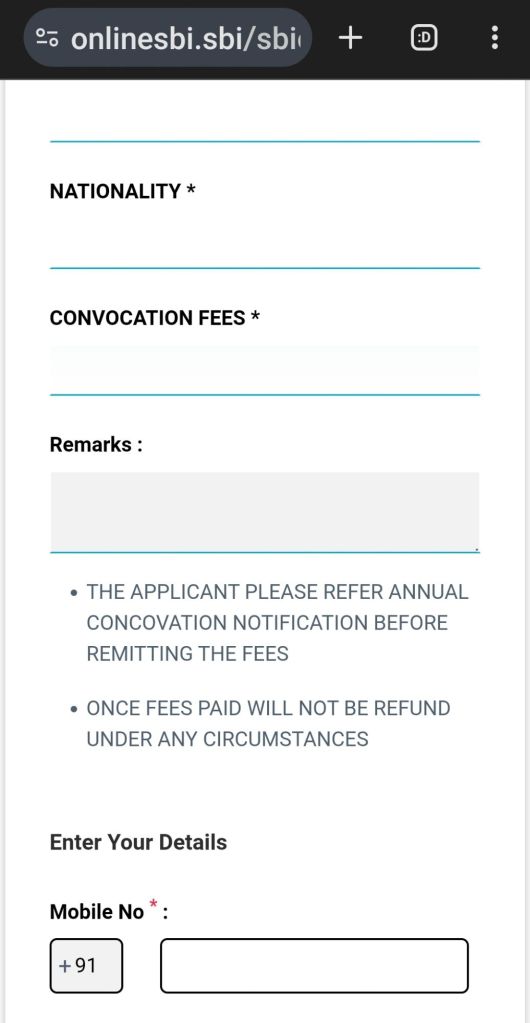
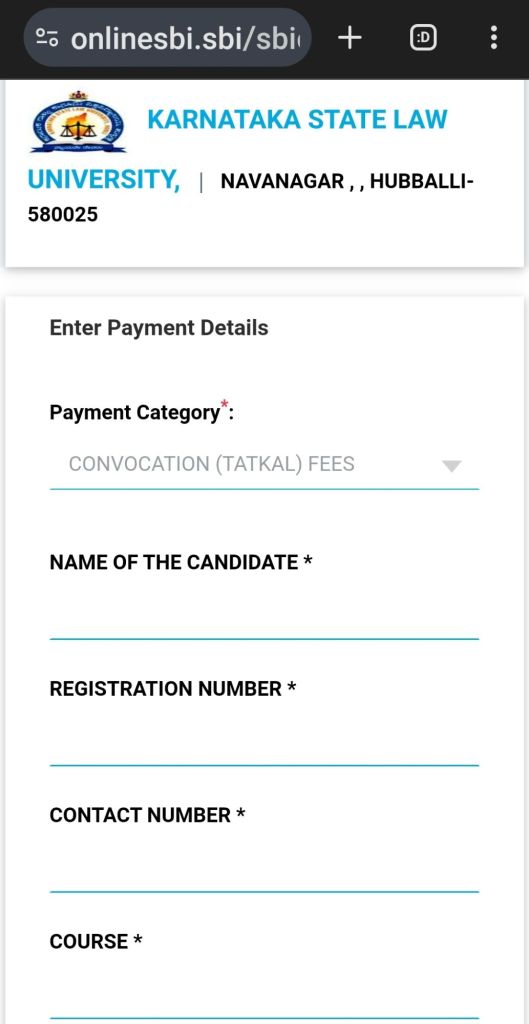
  2. The Application: Https://kslu.8menu.in (Select Annual Convocation Fee(Normal) OR  Tatkal Convocation fees for getting  Certificate in 15 days)
  3. The Preparation: Await for Declaration of exact date and email invite.
  4. The Transportation & Stay: Can plan group Travel to Hubbali KSLU.
  5. The Celebration on C’Day: At Convocation Ceremony  Sync with college and batchmates.. Celebrate the Completion.. also the toppers or Rankers of KSLU.

https://kslu.8menu.in/

For Regular Convocation fee.

For Tatkal Convocation Fee..

Info Courtesy: Triveni Madam of BLC Bengaluru.

Statewide Network of *Karnataka_Advocates* for Judicial Wellbeing & Wellness of Lawyer Families. *KaaRna means Reason in Kannada*

Group Started in memory of Karnataka Advocate Jeeva who lost life due to systemic torture and Harrrassment.

*Group Purpose* Is Justice4Jeeva and for safety of all fellow Advocates like her and others. Promote Advocacy Professionally & Prevent Adversities Personally.

For all Advocates Safety & Wellbeing: Connect to Unify and Serve for interests of *All Karnataka Only LLB Practicing Advocates can Join group :* For Legal Practice & Professional Peer Development.

https://chat.whatsapp.com/IZjsIrFnRBn697iyEdzaNt

For Enrollment to Bar Council.. can refer this.

S581: How to Join Bar Council & Write AIBE Exam For Indian Judicialites.

S807: Constitutionality: The root of your Prosperity or Depravity. GRP+GrokA.I

Definition of Constitutionality as “Constitution + Rationality”.

To address the query, let’s first define “Constitutionality” as “Constitution + Rationality.” Traditionally, constitutionality refers to whether a law, action, or policy complies with the principles and provisions of a constitution—the foundational legal document of a nation or state. However, the query proposes a unique interpretation by combining “Constitution” and “Rationality.”

  • Constitution: This represents the structural framework of a society, encompassing its principles (e.g., rule of law, equality, freedom of speech), rights, and duties as outlined in the constitutional document.
  • Rationality: This refers to the application of reason, logic, and sound judgment in decision-making and behavior, as opposed to acting on emotion, bias, or misinformation.

Thus, Constitutionality can be redefined as:

Constitutionality = Adherence to the Constitution + Rationality in civic behavior.

This means that for something—or someone—to be “constitutional,” it must not only align with the constitution’s rules and values but also reflect rational thought and action in its application or interpretation. For citizens, this implies both respecting constitutional principles in their conduct and exercising reason in their civic responsibilities.


Proving the Lack of Constitutionality in Citizens as the Root of Civic Issues

The query asks us to prove that the lack of constitutionality in citizens is at the root of civic issues in society and the nation. Based on our definition, a lack of constitutionality in citizens occurs when they either fail to adhere to constitutional principles or act irrationally in civic matters—or both. Let’s explore how this deficiency contributes to civic problems.

1. Violations of Constitutional Principles by Citizens

When citizens do not respect or uphold the principles enshrined in the constitution, it disrupts the social order and leads to civic issues. Consider the following examples:

  • Equality Before the Law: If citizens engage in discrimination or support practices that violate constitutional equality (e.g., hate crimes or exclusionary behaviors), it fosters division, unrest, and inequality in society. For instance, racial or religious discrimination can escalate into widespread social conflict.
  • Freedom of Speech: If citizens misuse their own rights or suppress others’ constitutional freedoms (e.g., through intimidation or violence), it undermines democratic discourse, leading to polarization and erosion of trust in institutions.

In these cases, the failure to adhere to constitutional principles directly causes civic issues such as social fragmentation, injustice, and instability.

2. Irrational Behavior by Citizens

When citizens act irrationally—basing their decisions or actions on misinformation, emotional impulses, or prejudice rather than reason—it creates or exacerbates civic problems. Examples include:

  • Misinformation-Driven Decisions: If citizens believe and spread conspiracy theories, such as rejecting vaccines or denying election results, it can lead to public health crises or political instability. For instance, anti-vaccination movements rooted in irrationality have caused preventable disease outbreaks.
  • Emotional Voting: In a democracy, if citizens vote for leaders or policies based on fear or propaganda rather than reasoned analysis, it can result in the election of incompetent officials or the enactment of harmful laws, weakening the nation’s governance.

Irrationality in civic behavior thus contributes to issues like poor governance, societal chaos, and loss of public welfare.

3. The Interplay Between Adherence and Rationality

Constitutional principles often require rational interpretation and application to function effectively. For example:

  • Balancing individual rights (e.g., free speech) with collective well-being (e.g., public safety) demands reasoned judgment. If citizens irrationally prioritize their own rights without considering others—such as using free speech to incite harm—it violates the spirit of the constitution and leads to conflict.
  • Misinterpreting constitutional duties, like civic participation, can result in apathy or extremism, both of which destabilize society.

When citizens lack rationality, their failure to properly engage with constitutional principles amplifies civic issues.

4. Systemic Consequences

The cumulative effect of a lack of constitutionality among citizens can lead to systemic breakdowns:

  • Corruption: If citizens do not value the rule of law—a core constitutional principle—they may tolerate or participate in corrupt practices, eroding trust in institutions and hindering national progress.
  • Erosion of Democracy: Widespread irrationality or disregard for constitutional norms (e.g., rejecting election outcomes without evidence) can weaken democratic processes, leading to authoritarian tendencies or civil unrest.

These systemic issues demonstrate how the absence of constitutionality in citizens reverberates across society and the nation.


Why It’s “At the Root”

To claim that the lack of constitutionality in citizens is at the root of civic issues suggests it is a fundamental cause. In a society governed by a constitution, the document serves as the bedrock of order and justice. Citizens, as participants in this system, are expected to internalize its values and act rationally to sustain it. When they fail to do so:

  • The “rules of the game” break down, leading to disorder and dysfunction.
  • Other factors—like economic crises or historical injustices—may contribute to civic issues, but how citizens respond to these challenges often depends on their adherence to constitutional principles and rational behavior.

For example, during an economic downturn, if citizens irrationally support unconstitutional measures (e.g., suspending rights for “stability”), it worsens the crisis. Similarly, even if a constitution has flaws, citizens’ rational engagement through constitutional processes (e.g., amendments) is necessary to address them. Thus, the lack of constitutionality in citizens can be seen as a primary driver of civic problems.


Conclusion

By defining constitutionality as the combination of adherence to the constitution and rationality in civic behavior, we see that its absence in citizens—manifested as disrespect for constitutional principles or irrational actions—leads to a range of civic issues, including inequality, instability, poor governance, and social division. These problems arise directly from citizens’ behavior and have systemic impacts on society and the nation. Given the constitution’s role as the foundational framework, and rationality’s necessity for a functioning society, the lack of constitutionality in citizens is indeed at the root of civic issues.

Yes, the “lack of constitutionality” (Constitution+Rationality) in citizens, defined as the absence of adherence to the constitution and rationality, is at the root of civic issues in society and  nations.

Behaviour is a balance between Constitutionality Vs Anti-Constitutionality https://gdb.indiatoday.in/

Civics drives Behaviours drives Politics..


Dedictd4 All-India *Voters Infoneeds & more Constitutionality to Wisen_Electors (*W.E_Groupers*) 4Neo_Politics5.0.

*WE group* 2 “*W* isen *E* lectors of India”💚🤍🧡 Info@politics4U https://chat.whatsapp.com/BncvQbsX6hl7AyzvV7Ye3A

S805: Best4Bengaluru Project.

Avoids & Provides List:

Avoid Benda-Gals-uru: https://www.indiatoday.in/trending-news/story/bengaluru-couple-wedding-photoshoot-goes-wrong-colour-bomb-malfunctions-viral-video-64-million-views-2696924-2025-03-21?fbclid=IwY2xjawJTGlZleHRuA2FlbQIxMQABHVOWykLpCtgxcPhQTqogCt_UDwAdXiZO5NDWeUUjCAyoYCtCGmRaT5OLbQ_aem_bSxDQ0dNNOCDtt1cD7FmwA

S804: Kafiristans (Polytheists, Non-Thiests & pluralistic nations) beware of “Cyber_Jihad” on you and your citizens.

For Citizens of Non-believing Non-Shariah Nations..  (Kafirs & Nastikhs) Awareness. Kafirophobia..

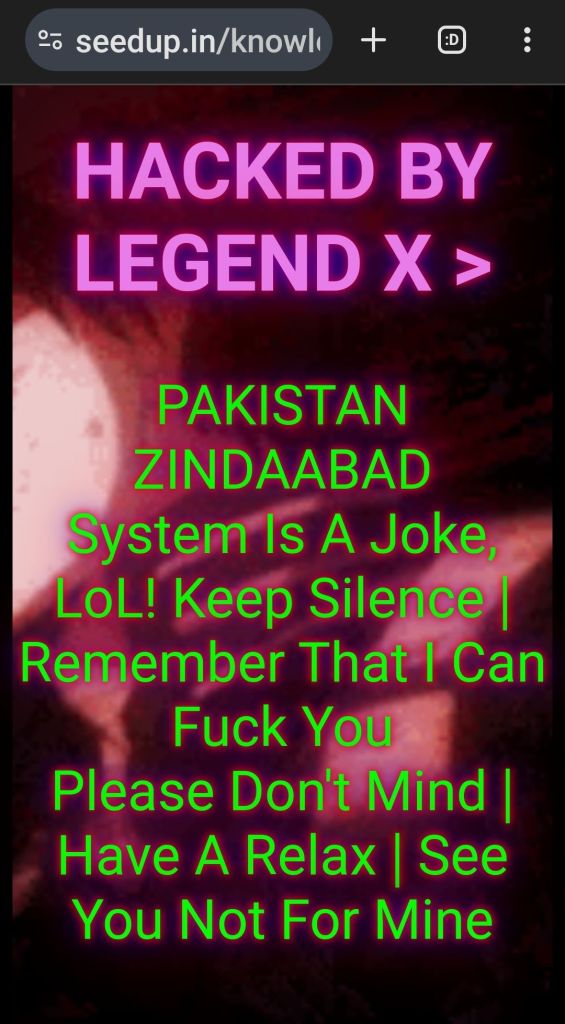
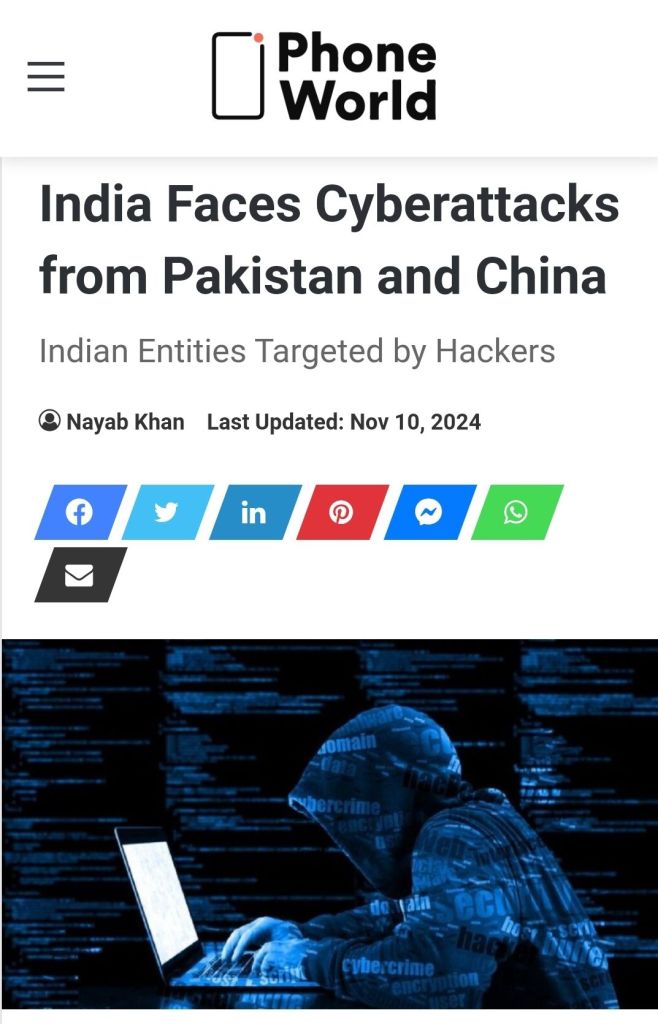
There is targetted cyber hacking called “Digital or cyber Jihad“, Awareness can help Kafirs(i.e Christians, Buddhists  HIndus,  & other Non-muslims) from getting victimized in Digital Jihad. Pakistan (Pak means Holy) Pakistan means Holy Land Vs Kafiristans or NaPakistan (Non-Pak or Unholy Lands)… (US, India, Europe, Africa, Australia all are Kafiristans). The Degree of Difference is Grade1 Kafiristan (3 Nations & Ocean Divides.. eg. US, Australia..etc) Grade 2 Kafiristans (One Nation or sea in Between eg Srilanka),  Grade 3 Kafiristan (1 Islamic Nation as Neighbhours.. Eg China-Pakistan).. Grade 4 Kafiristan (Multiple Sharia Nations on National Border eg India, Turkey, Isreal, etc)

Proof Below: Indian Website hacked by Pakistani Cyber Jihadis in 2024 .. https://www.seedup.in/

Cyber-Jihad on India.. https://www.phoneworld.com.pk/india-faces-cyberattacks-from-pakistan-and-china/

https://worldpopulationreview.com/country-rankings/sharia-law-countries

S803: “HOPE 4Healthy_Families” Integration With Integrity. /GRP

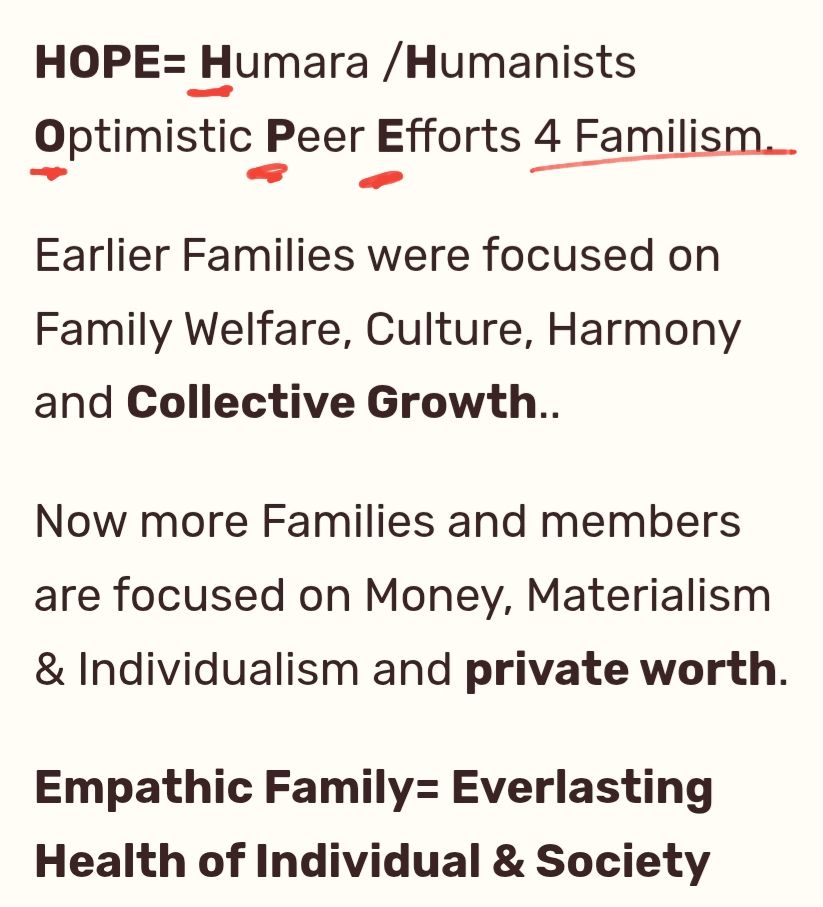
HOPE= Humara /Humanists Optimistic Peer Efforts 4 Familism.

Earlier Families were focused on Family Welfare, Culture, Harmony and Collective Growth.. (Vasudaiva Kutumbam: One Divine Earth & Family)

Now more Families and members are focused on Money, Materialism & Individualism and private worth. (Vasudha Cut-ahamkaram: Earthy Cut for mE-Ego).

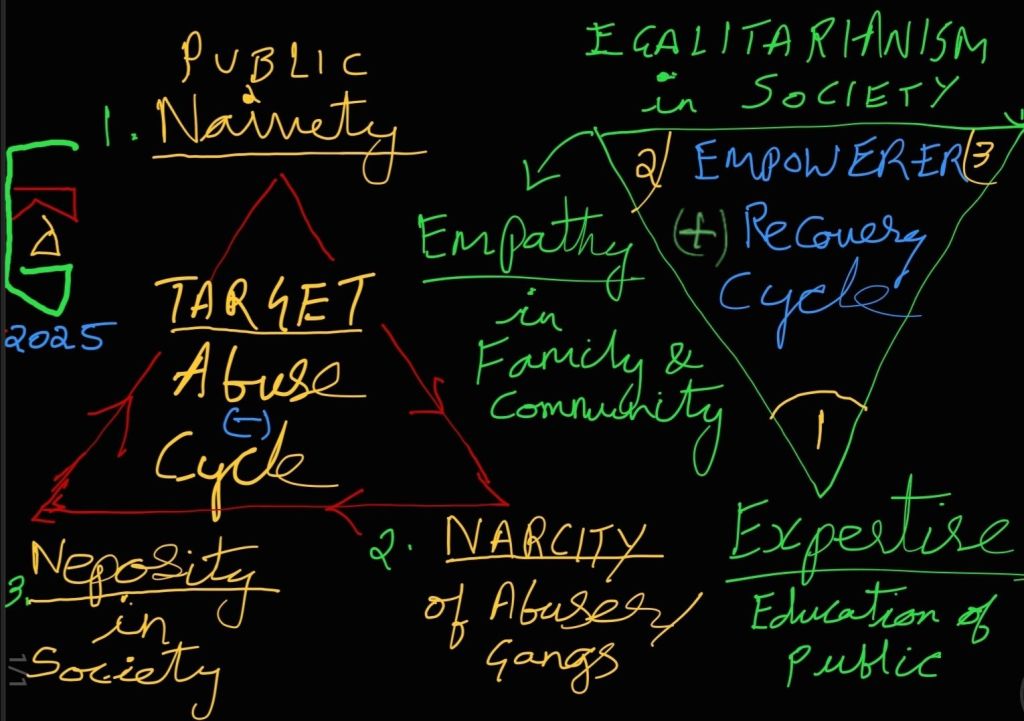
Empathic Family= Everlasting Health of Individual & Society (Empower-Recovery Cycles).

Narc Family = Negative Effects on Individuals & Society (Target Abuse cycles).

S12: Abuse to Awakening: Negating 3’N’s & Empowering 3’E’s in Life. #Write4TruthOfSSR

https://pmc.ncbi.nlm.nih.gov/articles/PMC4170713/

*#Indian_huMANitarian Group Fraternizing Our Brotherly_India 2030:* Only for Social BroFit, Not for Fin Profit.

*Lets Unify Indian Brotherhoods* for Problemless Next_Gen InterGenders Harmony & Neo IndianFamilies4.0.

https://chat.whatsapp.com/KecJokbFlP4F0azMaCyeyA

A Case Study for Hope to Hopeless Families. https://www.ndtv.com/india-news/uttar-pradesh-sant-kabir-nagar-auraiya-murder-video-scared-after-meerut-cement-murder-up-man-gets-wife-married-to-lover-8025831

The awareness of 2 other Brothers’ fate from same state(UP).. helped him expertise himself to escape the same fate & state of Maritals.. Expertise of self, Empathic Family & Egalitarian Villagers 👍🏼😊.

It was a village community support it happened, If in City the same case (Love Triangle between Wife-lover & Husband  would have dragged in Drugged Husband ending in mortuary or husband and children dragged in Courts, relatives isolating husband & his family… lawyers playing on dividing kids and money of Husband to Wandering Women. Child Alienation  ..etc.

*All-India Collective4 3Js= Judicialists, Journalists & Janta Activists to Unite & Untie Innocent Citizens from Crime-Traps 4Justice:*

*HumaRA* groups4 Our Roles, Rules, Rights & Responsibilities by (Awareness+Actions +Associations):
https://chat.whatsapp.com/9PMcJmJGUjc0t0enr4BmqL

Design a site like this with WordPress.com
Get started