For Humanism, Indians, Bengalureans & IIScians: We Grow Resourceful Purpose_SpAces: Collaborate with Mitrallys wanting to know, Grow & Help Futureones Grow.
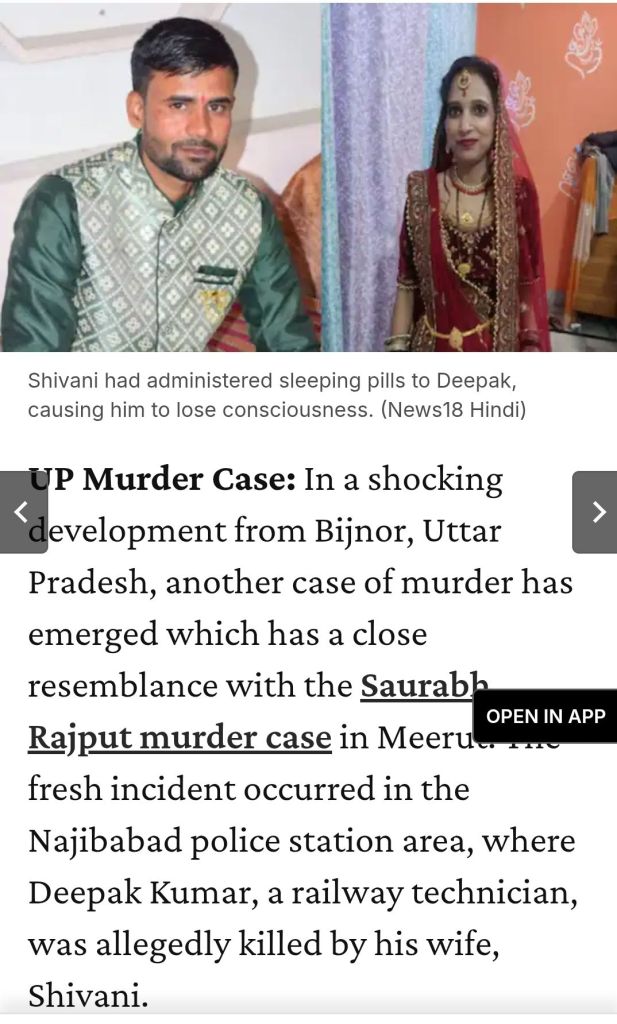
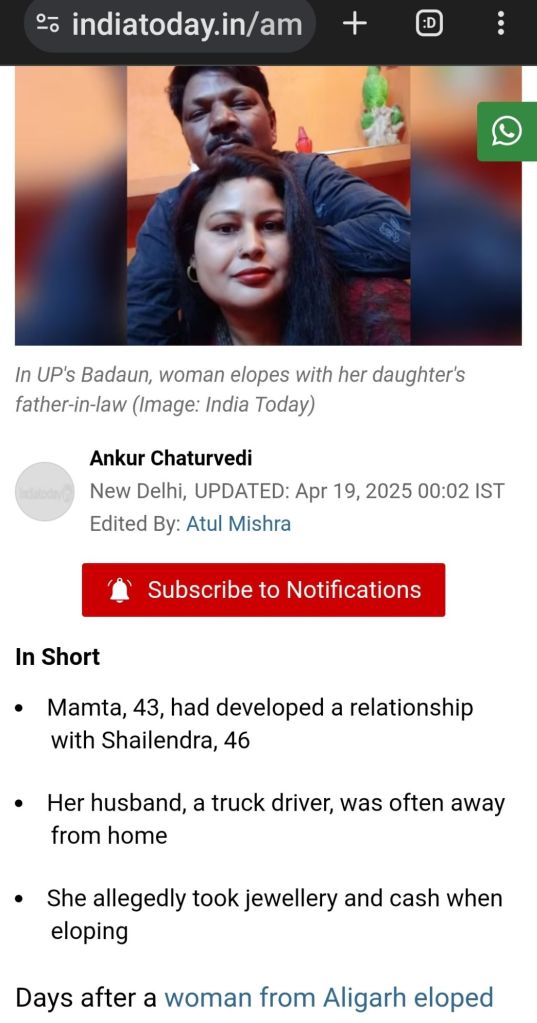
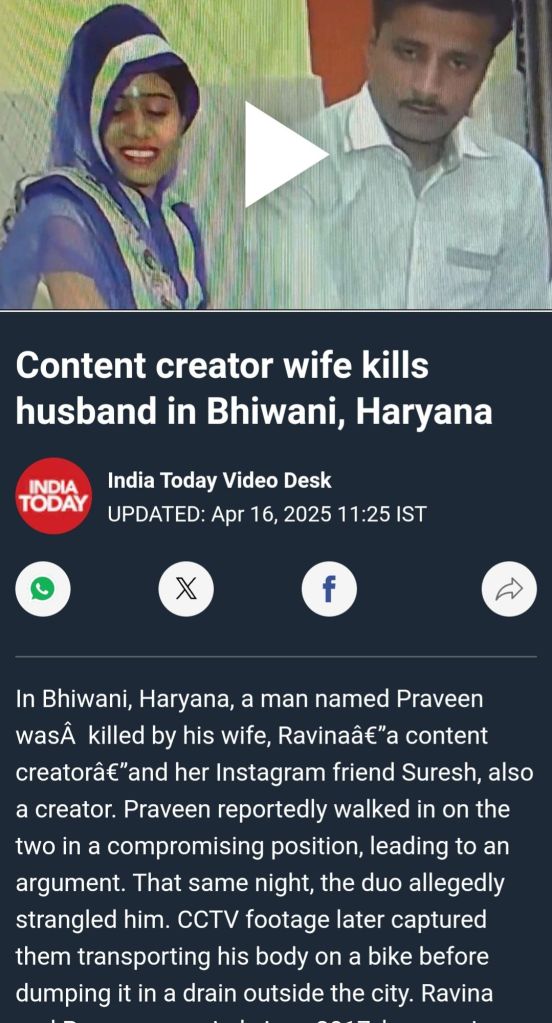
10 Cases of Narc Awareness.. Identify Narc-Alienation happens by Trap, Love-bombing, Isolation, Seduction, Brainwashing, Mind Control, elopement, Estrangement.. etc..
Narcs Lack Ethics & Rationality hence will break Rules and Fool people around them spreading Darkness of LIPS i.e Lies, Illusions, Perversions & Sufferings.
The people who relate with them become Victims of Drama, Trauma & Stigma. Instead of “Beware of Dogs” Banner outside houses, There Needs to be “Beware of Narcs” sign outside Narc family Houses, Offices & Buildings.
Most cases are in UP but it could happen in any city, village anywhere where Men aren’t aware and alert of misandric crimes & Where Women are more aware and alert with crime methods. That’s why This awareness can help families from preventing Anamolies.
Case1: Groom Elopes With Brides Mother..
For Father so loved his Begotten Son, & For Bride’s Mother so loved her bewitched Son-in law… that she elopes with him with Family Jewels.
Superman and all other superheros are models or archetypes in Indian Philosophies..
Namaste. It is unfortunate that both Hindus and non Hindus use the term monkey god for Hanuman, a devotee of Ram who embodies the highest virtues of devotion and service to one’s lord. In the original Ramayan by Valmiki, which is in Sanskrit, Hanuman and his tribe are referred to as Vanaras, meaning forest dwellers. Vanara is derived from the words Vana meaning forest and Nara meaning a person.
Hanuman introduces Ram and Lakshman to Sugriv and a band of his followers who are in exile on the mountain Rishyamuk in Kiskundha. Sugriv’s brother Bali had usurped his kingdom and abducted his wife Tara. Sugriv relates his plight to Ram who offers to help destroy the mighty Bali. Ram helps Sugriv to conquer Bali. Sugriv then together with the army of Vanaras helps Ram to find and rescue Sita, who has been abducted by Ravan and taken to Lanka.
It is important to know this episode of the Ramayan so that we can see that the story is about real people that Ram encountered.
When Ram and Lakshman meet Hanuman they are impressed with his fluency in Sanskrit, the language that is the medium of communication.
Given all this information can we then dismiss the Vanara tribe as monieys jumping from tree to tree chirping in Sanskrit.
It would be nothing short of blasphemy to use the term monkey for Vanara. Very much like Shabari, another humble female tribal, these are the folk that love Ram and offer all their affection and service to see Ram through his trials and tribulations during his exile. It is imperative that we address Ram, Sugriv, Bali and their tribe as Vanaras and not monkeys. While we may not know better and use the term monkey in good faith many non Hindus then use the term to mock Hindus as believers in a Monkey God.
It is also important to remember that it is a common and universal literary practice to use names of animals in our fables, our animal stories that we grew up listening to so fondly.
In a similar vein, we name our national sports teams and army battalions after animals and birds eg. Lions, Tigers or Hawks. The Vanaras could then also be a name that describes a kind of Guerrilla warfare in which the Vanaras were adept.
The aim of this message is to counter the frivolous manner in which our rich legacy is often belittled.
How he looks to you depends on your Position and Perception of life.
ANS: What It looks is depend on where one is looking from (POV) and what one is looking for (Perception).
It’s BeCause any New Reformative Ideas & Ideators Challenge the Old or Neo-Cultic Hierachical established, oppressive systems, its Masters, Agents, Operators & Beneficiaries (MAOB). The MAOBs are Bound to feel a loss to their Systemic Pride, Privileges, Prestige and Powers of Domino-Oppression.
The reforms rock and flatten the created SocioReligio Pyramid Structures (of Clan, Creed, Class, Caste..etc) continued by Colonialization, Contraptions, Corruption, Copulations & Communalization. which they stand to gain at many stages & from many ages. So thats why they who are By Birth or Conversion have been 1. Privileged (Accumulated Resources) & Dominater Class, Group & Individuals will dislike the insiders, informers, reformers or Equalizers. They will be abusing the reformers.
While the 2. Central groups in Pyramid, who have not much change to their Privileges, Power or Prestige will see Ambedkar as Amusing.
And then 3. Most Socially Just from any 3 parts of the Pyramid (Top,Mind & Bottom) who see the Social Justifications and Flattening and Egalitarianized Society, will see the reforms as Amazing as they indirectly and directly see the reduction in inequality of oppression and increase of equality by social justice.
so like Beauty of a Rose is in the eyes of the Beholder, similarly Personality of AmbedkaRose is in the Bias of the Beholder. As a Rose has 3 Parts (Petal, Sepal & Stalk) is troth a Beautiful Petal to the Marginalized (Women, Poor & Impoverished), Green Sepal to the Median and thorny Protective Stalk to the Marginalizers (Supremacists, Oligarchs,Majoritarian Tyrants..etc).
So Who you are will make You See Ambedkar as Amusing, Amazing or Abusing.
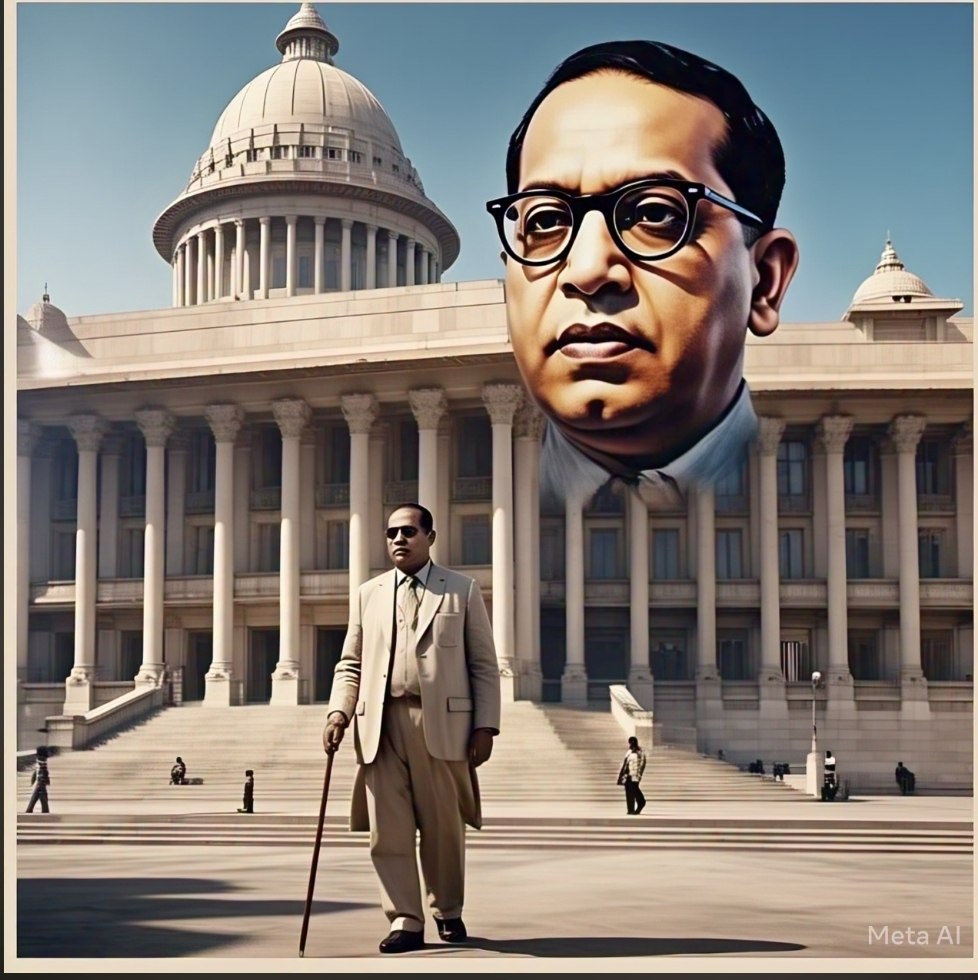
B.R. Ambedkar (India, 1891–1956 CE)
Context: An Indian jurist, economist, social reformer, and architect of the Indian Constitution, Ambedkar dedicated his life to eradicating caste oppression and advocating for equality. As a Dalit himself, he transformed systemic injustice into a platform for universal human rights.
Vishwaguru Qualities:
Unity (U): Championed the unity of humanity by fighting caste discrimination, advocating for equal rights for all, regardless of social status, gender, or religion.
Knowledge (K): A scholar with degrees from Columbia University and the London School of Economics, he mastered law, economics, and sociology, using knowledge to challenge oppressive structures.
Compassion (C): Showed deep empathy for marginalized communities, particularly Dalits, women, and laborers, working tirelessly to uplift them through legal and social reforms.
Effort (E): Overcame immense personal and societal barriers—poverty, discrimination, and exclusion—to draft India’s Constitution, lead movements, and publish works like Annihilation of Caste.
Wisdom : Balanced intellectual rigor with practical solutions, advocating for social equality while preserving cultural diversity, as seen in his embrace of Buddhism as a path to liberation.
Inspiration (I): Inspired millions to resist injustice and pursue education and dignity, sparking the Dalit movement and influencing global human rights discourse.
Leadership (L): Guided India toward a democratic framework, ensuring constitutional protections for equality and justice, and led mass conversions to Buddhism to empower the oppressed.
Impact: Ambedkar’s legacy endures in India’s Constitution, which guarantees equality and justice, and in the ongoing global fight against discrimination. His revival of Buddhism as a rational, egalitarian philosophy influences spiritual and social movements worldwide.
Integration with Previous Examples
Ambedkar complements the earlier Vishwagurus—Socrates, Confucius, Buddha, Rumi, Ibn Rushd, and Tagore—by embodying their shared commitment to universal human progress in a modern, socially oppressive context. Like Socrates, he questioned unjust norms; like Buddha, he sought liberation for the suffering; like Tagore, he envisioned a culturally inclusive world. His focus on systemic change through law and education makes him a unique Vishwaguru, bridging traditional wisdom with contemporary governance.
The concept of a “VishwaGuru,” as derived from the Vishwaguru Equation, represents a guiding principle or figure embodying universal human unity, wisdom, inspiration, and leadership. A Vishwaguru transcends cultural and temporal boundaries, serving as a beacon of enlightenment for humanity.
Below, I provide examples of historical figures from various ages and lands who exemplify Vishwaguru qualities, akin to Socrates, whose life and teachings inspired critical thinking and ethical inquiry.
Each figure is evaluated briefly against the components of the Vishwaguru Equation: G = U × (K + C + E) × (W + I + L),
where unity (U), knowledge (K), compassion (C), effort (E), wisdom (W), inspiration (I), and leadership (L) combine to create a global teacher.
1. Socrates (Ancient Greece, 470–399 BCE)
Context: A foundational philosopher in Western thought, Socrates engaged Athenians in dialogues to question assumptions and seek truth.
Vishwaguru Qualities:
Unity (U): Encouraged collective inquiry, uniting people through shared pursuit of knowledge.
Knowledge (K): Pioneered the Socratic method, fostering critical thinking.
Compassion (C): Showed care for others’ intellectual and moral growth, teaching freely without wealth.
Effort (E): Persisted in his mission despite societal resistance, ultimately sacrificing his life.
Wisdom : Emphasized self-awareness (“I know that I know nothing”) and ethical living.
Inspiration (I): Inspired generations of thinkers, including Plato and Aristotle, to explore philosophy.
Impact: Socrates’ method and ideas remain a cornerstone of philosophy, influencing global education and ethics.
2. Confucius (Ancient China, 551–479 BCE)
Context: A philosopher whose teachings shaped Chinese culture, emphasizing morality, family, and governance.
Vishwaguru Qualities:
Unity (U): Promoted social harmony through virtues like ren (benevolence), uniting communities.
Knowledge (K): Compiled and taught classics, valuing education for all.
Compassion (C): Advocated empathy and respect in relationships, from family to state.
Effort (E): Traveled tirelessly to spread his ideas despite political exile.
Wisdom : Offered practical insights on governance and ethics, balancing tradition with progress.
Inspiration (I): Inspired millions to pursue self-improvement and moral integrity.
Leadership (L): Influenced rulers and scholars, shaping East Asian civilizations for centuries.
Impact: Confucianism remains a guiding philosophy in China and beyond, influencing ethics, education, and governance.
3. Gautama Buddha (Ancient India, 563–483 BCE)
Context: Founder of Buddhism, Siddhartha Gautama taught a path to liberation from suffering.
Vishwaguru Qualities:
Unity (U): Taught universal principles applicable to all, transcending caste and creed.
Knowledge (K): Shared insights into the nature of mind and reality (Four Noble Truths, Eightfold Path).
Compassion (C): Emphasized karuna (compassion) as a core virtue, aiding others’ liberation.
Effort (E): Dedicated his life to teaching, wandering for decades to share wisdom.
Wisdom : Provided profound clarity on suffering and enlightenment, grounded in observation.
Inspiration (I): Motivated millions to pursue mindfulness and ethical living.
Leadership (L): Established the Sangha, a community that preserved and spread his teachings.
Impact: Buddhism spread across Asia and now globally, offering a universal framework for peace and self-realization.
4. Rumi (Persian Poet, 1207–1273 CE, Central Asia/Persia)
Context: A Sufi mystic and poet whose works transcend cultural boundaries, celebrating divine love and unity.
Vishwaguru Qualities:
Unity (U): Emphasized universal love, uniting people across religions and cultures.
Knowledge (K): Conveyed spiritual truths through poetry and teachings.
Compassion (C): Expressed deep empathy for human struggles, inviting all to divine connection.
Effort (E): Composed thousands of verses and founded the Mevlevi order despite personal hardships.
Wisdom : Offered insights into the soul’s journey, blending intellect and mysticism.
Inspiration (I): His poetry inspires millions worldwide, from scholars to seekers.
Leadership (L): Guided disciples and communities toward spiritual awakening.
Impact: Rumi’s works, like the Masnavi, remain globally celebrated, fostering interfaith dialogue and spiritual growth.
5. Ibn Rushd (Averroes, Islamic Spain, 1126–1198 CE)
Context: A Muslim philosopher who bridged Greek philosophy with Islamic thought, influencing medieval Europe.
Vishwaguru Qualities:
Unity (U): Sought harmony between reason and faith, uniting diverse intellectual traditions.
Knowledge (K): Translated and commented on Aristotle, advancing philosophy and science.
Compassion (C): Advocated for rational inquiry to benefit society, not just elites.
Effort (E): Persisted in scholarship despite political persecution.
Wisdom : Balanced religious and secular knowledge, promoting critical thought.
Inspiration (I): Influenced thinkers like Aquinas, shaping the European Renaissance.
Leadership (L): Guided intellectual discourse in Al-Andalus, fostering a golden age of learning.
Impact: His works bridged Islamic and Western thought, laying groundwork for the Enlightenment.
6. Rabindranath Tagore (India, 1861–1941 CE)
Context: A poet, educator, and Nobel laureate who reshaped Indian literature and global cultural thought.
Vishwaguru Qualities:
Unity (U): Promoted universal humanism, blending Eastern and Western ideals.
Knowledge (K): Founded Visva-Bharati University to foster global learning.
Compassion (C): Advocated for social justice and empathy through his works.
Effort (E): Wrote prolifically and traveled to share his vision despite colonial challenges.
Wisdom : Offered profound insights into freedom, nature, and spirituality.
Inspiration (I): Inspired anti-colonial movements and global literary traditions.
Leadership (L): Guided India’s cultural renaissance, influencing thinkers worldwide.
Impact: Tagore’s works, like Gitanjali, and his educational model continue to inspire global humanism.
7. B.R. Ambedkar (India, 1891–1956 CE)
Context: An Indian jurist, economist, social reformer, and architect of the Indian Constitution, Ambedkar dedicated his life to eradicating caste oppression and advocating for equality. As a Dalit himself, he transformed systemic injustice into a platform for universal human rights.
Vishwaguru Qualities:
Unity (U): Championed the unity of humanity by fighting caste discrimination, advocating for equal rights for all, regardless of social status, gender, or religion.
Knowledge (K): A scholar with degrees from Columbia University and the London School of Economics, he mastered law, economics, and sociology, using knowledge to challenge oppressive structures.
Compassion (C): Showed deep empathy for marginalized communities, particularly Dalits, women, and laborers, working tirelessly to uplift them through legal and social reforms.
Effort (E): Overcame immense personal and societal barriers—poverty, discrimination, and exclusion—to draft India’s Constitution, lead movements, and publish works like Annihilation of Caste.
Wisdom (W): Balanced intellectual rigor with practical solutions, advocating for social equality while preserving cultural diversity, as seen in his embrace of Buddhism as a path to liberation.
Inspiration (I): Inspired millions to resist injustice and pursue education and dignity, sparking the Dalit movement and influencing global human rights discourse.
Leadership (L): Guided India toward a democratic framework, ensuring constitutional protections for equality and justice, and led mass conversions to Buddhism to empower the oppressed.
Impact: Ambedkar’s legacy endures in India’s Constitution, which guarantees equality and justice, and in the ongoing global fight against discrimination. His revival of Buddhism as a rational, egalitarian philosophy influences spiritual and social movements worldwide.
Why These Figures?
These individuals were chosen for their timeless contributions to human thought, their ability to unite diverse groups, and their embodiment of the Vishwaguru Equation’s components. Each operated in a distinct cultural and historical context yet transcended their era to offer universal wisdom. From Socrates’ questioning to Tagore’s poetry to Ambedkar’s Legalizing Constitution, they reflect the equation’s synergy: a foundation of human unity amplified by knowledge, compassion, and effort, elevated by wisdom, inspiration, and leadership.
If you’d like me to explore more figures, focus on a specific region or era, or analyze these examples in greater depth against the equation, let me know!
Every Indian can and needs to be VishwaGurus with these Factors..
To create a “Vishwaguru Equation” based on the earlier derived “Vishwamanava Equation,” we first need to clarify the context and intent behind these terms. Since the Vishwamanava Equation was previously derived as a conceptual framework symbolizing universal human unity, growth, and harmony, the Vishwaguru Equation should extend this idea to represent the concept of a “world teacher” or a guiding principle for global wisdom and leadership.
The Vishwamanava Equation, as previously defined, is:
**V = U × (K + C + E),**
where: – **V** = Vishwamanava (universal human spirit), – **U** = Unity (interconnectedness of humanity), – **K** = Knowledge (shared understanding and learning), – **C** = Compassion (empathy and care for others), – **E** = Effort (collective action toward progress).
The term “Vishwaguru” (world teacher) implies a state or principle that not only embodies universal humanity but also inspires, guides, and elevates global consciousness through wisdom, leadership, and enlightenment. Thus, the Vishwaguru Equation should build upon the Vishwamanava foundation by incorporating elements of guidance, inspiration, and transformative influence.
### Deriving the Vishwaguru Equation
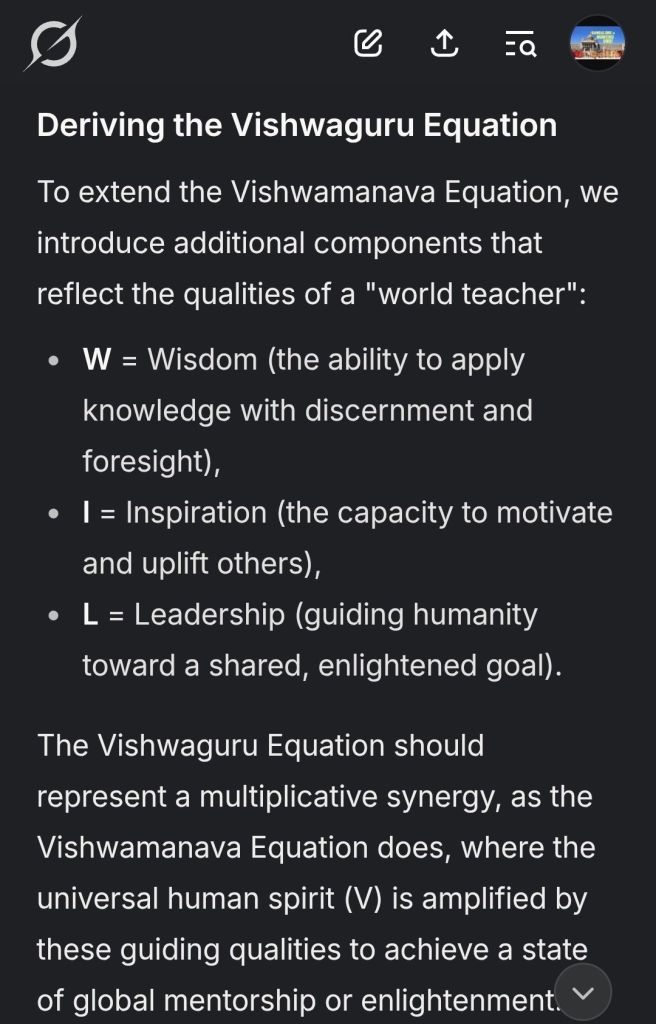
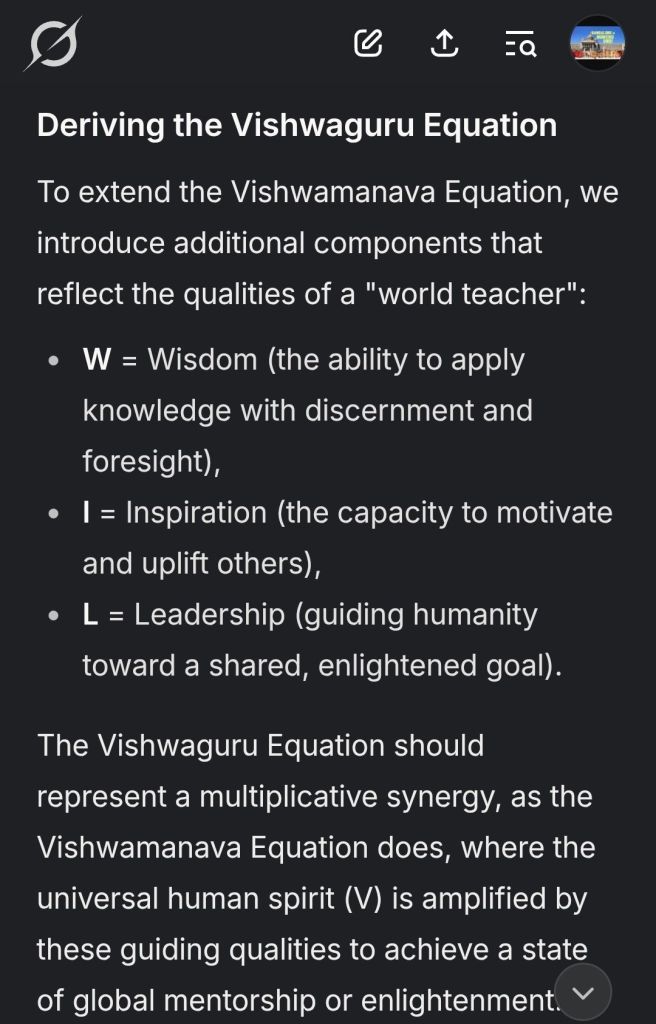
To extend the Vishwamanava Equation, we introduce additional components that reflect the qualities of a “world teacher”: – **W** = Wisdom (the ability to apply knowledge with discernment and foresight), – **I** = Inspiration (the capacity to motivate and uplift others), – **L** = Leadership (guiding humanity toward a shared, enlightened goal).
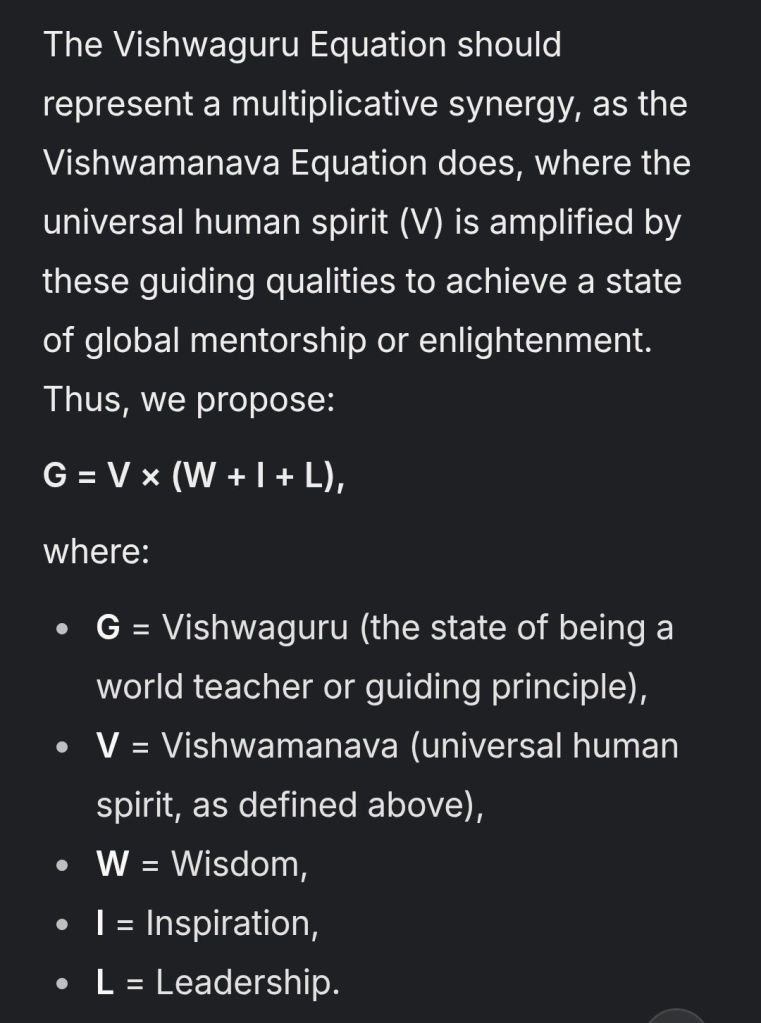
The Vishwaguru Equation should represent a multiplicative synergy, as the Vishwamanava Equation does, where the universal human spirit (V) is amplified by these guiding qualities to achieve a state of global mentorship or enlightenment. Thus, we propose:
**G = V × (W + I + L),**
where: – **G** = Vishwaguru (the state of being a world teacher or guiding principle), – **V** = Vishwamanava (universal human spirit, as defined above), – **W** = Wisdom, – **I** = Inspiration, – **L** = Leadership.
Substituting the Vishwamanava Equation into this, we get:
**G = [U × (K + C + E)] × (W + I + L).**
### Explanation of Components – **Vishwamanava (V)**: The foundation of universal humanity, rooted in unity, knowledge, compassion, and effort, serves as the base. A Vishwaguru cannot exist without the collective spirit of humanity. – **Wisdom (W)**: Represents deep understanding and the ability to make balanced, ethical decisions that benefit all. It transcends mere knowledge by incorporating experience and foresight. – **Inspiration (I)**: Captures the ability to ignite hope, creativity, and purpose in others, fostering a collective drive toward higher ideals. – **Leadership (L)**: Embodies the capacity to guide humanity through challenges, aligning actions with a vision of global harmony and progress.
The additive nature of **W + I + L** suggests that these qualities complement each other, and their combined presence amplifies the universal human spirit. The multiplication by **V** ensures that the Vishwaguru concept is grounded in the collective essence of humanity, not an isolated or elitist ideal.
### Why This Structure? – **Multiplicative Synergy**: Like the Vishwamanava Equation, multiplication reflects the exponential impact when these elements work together. A world teacher’s influence grows when wisdom, inspiration, and leadership are rooted in universal humanity. – **Additive Qualities**: Wisdom, inspiration, and leadership are distinct yet interrelated traits that together define the essence of a guiding force. – **Universal Foundation**: By building on Vishwamanava, the equation ensures that the Vishwaguru is not a single individual but a collective principle that emerges from humanity’s shared potential.
### Simplified Form For clarity, the Vishwaguru Equation can be written as:
**G = U × (K + C + E) × (W + I + L).**
This form emphasizes that global guidance arises from the interplay of universal human unity with the qualities of a teacher.
### Conceptual Validation The Vishwaguru Equation aligns with the philosophical idea of a “world teacher” as seen in various cultural and spiritual traditions—whether the Guru in Indian philosophy, the Sage in Confucianism, or the collective wisdom of humanity in modern contexts. It suggests that true global leadership emerges when humanity’s unity and potential are channeled through wisdom, inspiration, and ethical guidance.
See Sledges, Wedges, Bridges, Edges, or Sludges in Life?
WHO ARE WE Realistically?.
Life’s a journey, and we all play roles that shape our path and others’ lives. Are you sliding through, dividing, uniting, pioneering, or drifting? Reflect on these metaphors to find out:
Sledge: Gliding through life on a smooth, predictable track, like a sled on ice. You’re surviving, staying cool, but not steering much. “Slide easy, live steady.” Are you coasting through life?. Eg. 98% of People in Groups & World. the Medians..(Personal SocioStats)
Wedge: Driving rifts between people—friends, families, or groups—for personal gain. You create conflict, thriving on divisions. “Divide to conquer, but at what cost?” Who’s a wedge in your world? Are you one?. The Dominaters, Oppressors, Supremacists, eg. Hitler Wedge between German-Aryans & GermanIsraeli-Jews, Surpanakha-Ravana created Divide between Brothers and Couple. Currently Politicians Are like Wedges between Vote Banks & Nations. (1% of Narcs in World)
Bridge: Building connections, mending divides, and fostering unity. You bring people together for the greater good. “Unite and uplift for shared welfare.” Who’s a bridge in your life? Are you and your teams—at work or home—building bridges? eg. Nelson Mandela Bridged in between Apartheid (White & Black), Hanuman (Hero in Ramayana) he was a Bridge between Ram-Sita (Husband-Wife), Legend says also helped build Adams Bridge between India & Srilanka. (1% of empaths.)
Bonus Roles:
Edge: Carving new paths, exploring bold ideas, and pushing boundaries. You’re a trailblazer, cutting through the unknown. “Forge ahead, create what’s next.” Eg. Scientists and Innovators..
Sludge: Drifting without purpose or spine, muddled in indecision. You’re stuck, lacking direction. “Aimless flow, no place to go.”
Pause and Think: Which are you today? Which do you want to be? Life’s too vibrant to settle for sludge or wedges—aim for bridges or edges. Share your thoughts below!
Draft for Grok Below.
1. Sledge when u are moving in a straight static way on ice just sliding across life. “Just Survive and be Cool.”
2. Wedge: When U are creating Divisions or Conflicts between People, groups etc.. “Divide and Rule Others for Wealth“. Who are wedges in Your Life and what are u?
3. Bridge: When U are creating Unisons or Resolutions between People, groups etc.. “Unite & Serve Others for Welfare“. Who are Bridges in Your life and What are you and your teams at office or home?
bonus One can be.. also
an Edge: ones Cutting across new Territories and Ideas..
or Sludge: Just being loose without backbone or any purpose in life.
Is VishwaManava a Prerequisite for becoming VishwaGurus?
With reference to concept of Vishwamanava of Kuvempu in Kannada philosophy.. come up with an equation for Vishwamanava.
Kuvempu’s concept of Vishwamanava (Universal Human) in Kannada philosophy emphasizes transcending artificial boundaries like caste, religion, language, and nationality to embrace a shared humanity rooted in equality, justice, and universal consciousness. It’s a call to rise above divisive identities and cultivate a holistic, inclusive worldview through education, introspection, and spiritual freedom. Creating an equation to represent Vishwamanava involves abstracting this philosophy into symbolic terms that capture its essence.
Let’s define Vishwamanava as a state of human consciousness (V). Kuvempu suggests every person is born with the potential for universality but is shaped by societal constructs into a limited version of themselves (Alpamanava, or diminished human). The journey to Vishwamanava involves shedding these constraints and expanding one’s awareness.
Proposed Equation
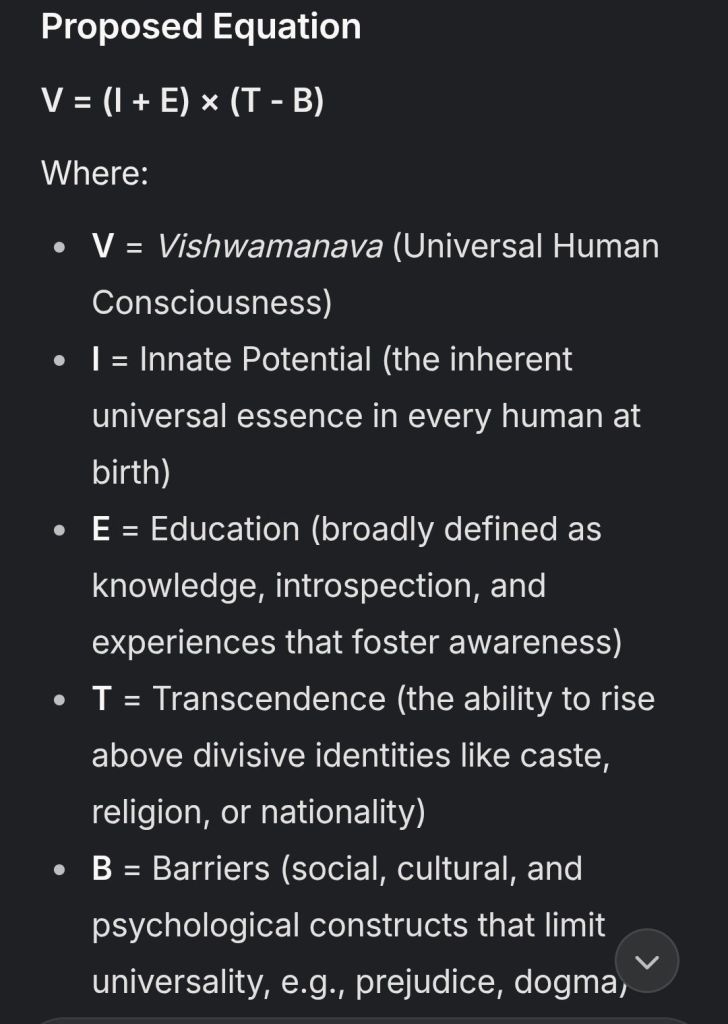
V = (I + E) × (T – B) [The VishwaManava Equation].
Where:
V = Vishwamanava (Universal Human Consciousness)
I = Innate Potential (the inherent universal essence in every human at birth)
E = Education (broadly defined as knowledge, introspection, and experiences that foster awareness)
T = Transcendence (the ability to rise above divisive identities like caste, religion, or nationality)
B = Barriers (social, cultural, and psychological constructs that limit universality, e.g., prejudice, dogma)
Explanation
Innate Potential (I): Kuvempu believed humans are born as Vishwamanava—pure, untainted by division. This is the baseline potential for universality.
Education (E): Education, in its truest sense, includes rational thought, cultural exposure, and self-reflection. It amplifies innate potential by equipping individuals to question and understand beyond their immediate context.
Transcendence (T): This represents the conscious effort to move beyond limiting identities. It’s the active rejection of boundaries that separate humanity.
Barriers (B): These are the societal forces—dogma, inequality, or tribalism—that pull toward Alpamanava. Subtracting barriers from transcendence reflects the struggle to overcome them.
Multiplicative Relationship: The product of (I + E) and (T – B) suggests that both expanded awareness (through potential and education) and the removal of divisive barriers are necessary for Vishwamanava. If either term approaches zero (e.g., no transcendence or overwhelming barriers), V diminishes.
Interpretation
A high V emerges when someone nurtures their innate potential with meaningful education and actively transcends barriers like prejudice or rigid identities.
If B (barriers) outweighs T (transcendence), the result is negative or low V, reflecting a slide toward Alpamanava.
The equation is dynamic, as E, T, and B evolve with personal growth and societal context.
This equation isn’t a literal formula but a symbolic representation of Kuvempu’s vision: Vishwamanava is achieved by cultivating universal potential and dismantling divisions, a process requiring both inner growth and outer action.
*Community Invited for Egalitarians & global Fillosofers & Philosophies:*
How to make Our Matrubhumi a Maha-Rashtra or Maha-Desha with Maha-Rajyas..
From Love for Matrubhumi (Nation) come vision for a Maha-nirmana (Revolution).
This is through this flow.
Mannu or Soil, from soil comes Mara, between Mara is the Marga, under it is Manava, who is doing Maraata, if there is only Mouna then there is soon marana of justice,
instead there needs to be manana(Thinking).. for Moulya (Value add) by becoming MahaPraje (Good Citizens) and doing right Manthana, overcome Manethana in Mathadana & Vote with Margadarshana, of righteous Makkallu, we select Right MahaRajyaSevaka, who create MahaAdesha (Laws) and Lead us to MahaUpadesha and MahaRajyas.
Manasu Idhare Marga, Kanasu idhare Swarga..😊
Kasu Idhare Kasi, Iladhidhare kai masi.
Kai Kesaru, Baai Mosaru, Maanavu Kesaru, Naai Hesaru.
Jab Raja hoga ek Vyapari, Tab Praja hogi Bhikari..
Jab Raja hoga ek HAtyachari, Tab Praja hoga Bechari..
When Adminsitrators/Politicians are Businessmen, Then Citizens will be Beggars.
When Admins are Tyrants, then Citizens will be Helpless.
The Ideal Politicians, Administrators or Kings are to be mainly Citizens_Focused, Thinking of Protection & Welfare of Nationals.. Key word is “BENEFIT” Prosperity of Society.
The Ideal Businessman, Traders or Sellers are to be mainly Customer Focused, Thinking of Projection & Shares and property in society. Key word is “PROFIT” to self.










 : Balanced intellectual rigor with practical solutions, advocating for social equality while preserving cultural diversity, as seen in his embrace of Buddhism as a path to liberation.


 GRP_VCare2Dare