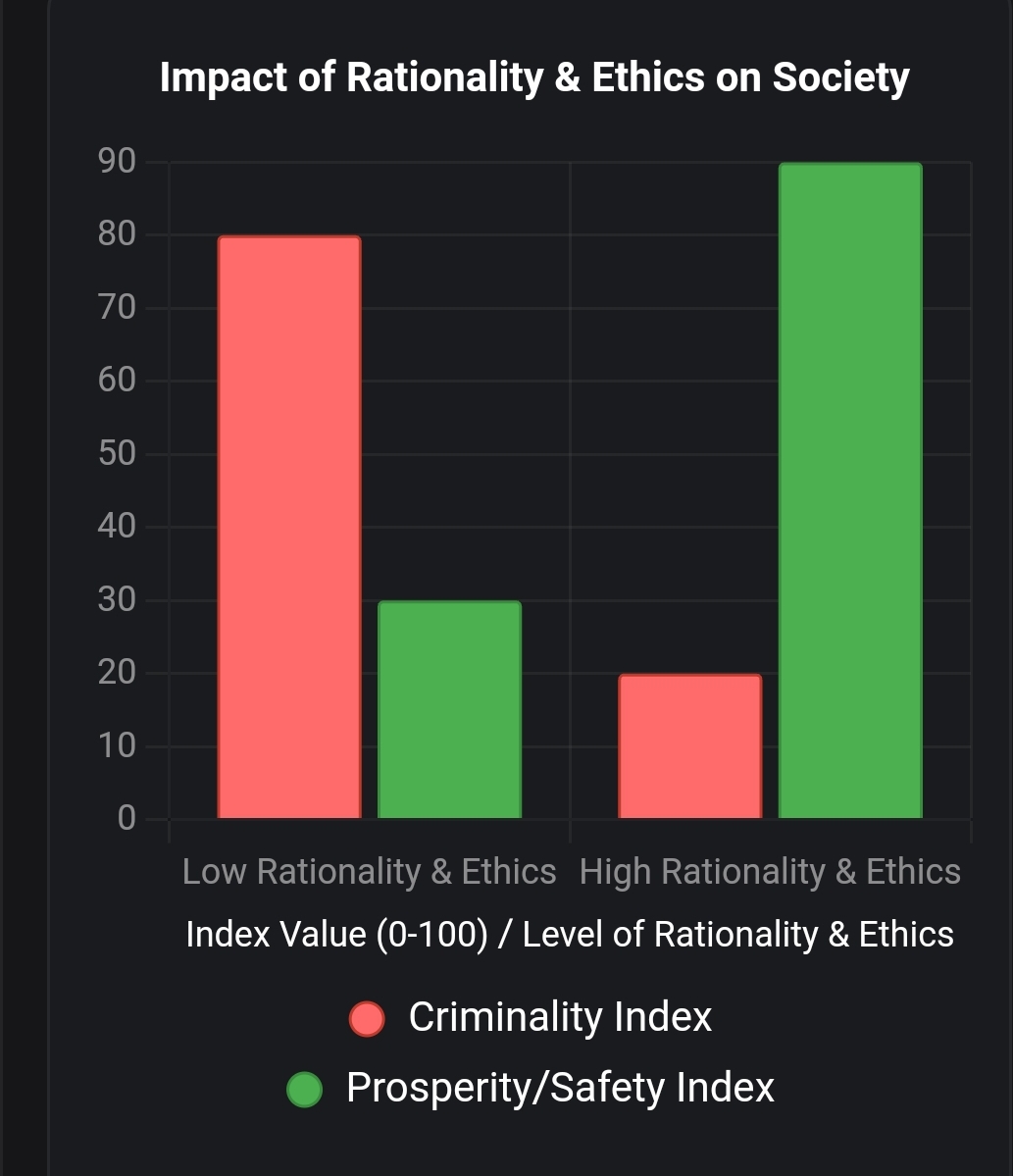
S1050: Hansa_Global 2030.

Good Minds (High IQ) can create and detonate a Mini Nuclear Bomb and End the world today.

And Good Hearts (High EmpQ) can create and developate a Mass NewsClear Bomb and trend the World for Tomorrow.

A request: Please Take this test and make friends take this test.. If having High Scores, Kindly Connect with me.. Like Mensa Based on IQ Levels club.. We are creating first time Wensa_Global based on High EmQ Levels..

https://novopsych.com/assessments/formulation/empathy-quotient-40-item-version/

The World doesnt lack Money, Doesnt Lack Lands, Doesnt Lack Food, Technology or Intelligence, What it lacks is cooperation between Good Empathic Humans. Isn’t it?

Plz Connect or Refer High Empathic Humans.. India is High on GDP 4th globally but low on GHP (Gross Humane Practices) guesttimate 50th globally

RCB Fans Lost lives due to Low Empathy in the Systems Organizers… High Fails happen in places with Low Empathy… Safety is High where Empathy is High.. as more people watch out for others improving safety. (Nation, City, Family, Community.. etc)

S1049: 8 Citizens Life Scenarios: The TetraHedron Matrix.

To create a 3D coordinate system for the Personality & Politics Mapping, we will extend the previous 2D quad-axis framework by adding a third dimension. The axes are defined as follows:

  • X-axis (Self Personality): Ranges from Narcissistic (self-centered, low empathy) to Empathic (other-focused, high empathy). This represents the individual’s personality.
  • Y-axis (Peers): Ranges from Peers being More Narcissistic to Peers being More Empathic. This reflects the dominant personality traits of the individual’s social or peer group.
  • Z-axis (Systems – Politics): Ranges from Authoritarian (favoring control, hierarchy, centralized power) to Democratic (favoring participation, equality, decentralized power). This represents the political system of the environment.

The 3D coordinate system forms a cube divided into eight octants, each representing a unique combination of Self Personality, Peer Personality, and Political System. Each octant will be named and described based on its characteristics, building on the quadrant names from the previous 2D mapping (Ego-Driven Control, Paternalistic Care, Self-Serving Liberty, Compassionate Cooperation) but adapted to incorporate the peer influence dimension.

Since you’ve requested a PDF output for a plot or graphic, I’ll provide a description of the 3D visualization and include a Python script using matplotlib to generate a 3D plot of the coordinate system, which will be saved as a PDF. The plot will visualize the axes and annotate the eight octants with their names and characteristics. I’ll also include instructions for generating the PDF.

Step 1: Defining the 3D Coordinate System

The 3D space is a cube with each axis ranging from -10 to 10 for simplicity:

  • X-axis: Narcissistic (-10) to Empathic (+10)
  • Y-axis: Peers More Narcissistic (-10) to Peers More Empathic (+10)
  • Z-axis: Authoritarian (+10) to Democratic (-10)

The cube is divided into eight octants based on the sign of each coordinate (positive or negative). Each octant represents a unique combination of:

  • Self: Narcissistic or Empathic
  • Peers: More Narcissistic or More Empathic
  • System: Authoritarian or Democratic

Step 2: Naming and Describing the Octants

Below are the eight octants, their characteristics, and their assigned names. The names are derived to reflect the interplay of self, peers, and system, while maintaining consistency with the 2D quadrant names where applicable.

  1. Octant 1: (-X, -Y, +Z) Self Narcissistic, Peers More Narcissistic, Authoritarian System
  • Characteristics: The individual is self-centered, surrounded by similarly narcissistic peers, in a controlling, hierarchical system. This environment reinforces self-interest and power-seeking, with little room for empathy or collaboration.
  • Name: Ego-Centric Dominion
  • Description: A highly competitive, self-serving environment where both the individual and peers prioritize personal gain under a rigid, top-down system.
  1. Octant 2: (+X, -Y, +Z) Self Empathic, Peers More Narcissistic, Authoritarian System
  • Characteristics: The individual is empathic but operates in a narcissistic peer group within an authoritarian system. They may feel pressured to conform to self-serving behaviors or face isolation, despite their compassionate nature.
  • Name: Isolated Compassion
  • Description: An empathic individual struggles against a backdrop of self-centered peers and rigid control, often advocating for others in a challenging environment.
  1. Octant 3: (-X, +Y, +Z) Self Narcissistic, Peers More Empathic, Authoritarian System
  • Characteristics: The individual is narcissistic, but their peers are empathic, within an authoritarian system. The individual may exploit the empathy of peers to gain power or influence within the hierarchical structure.
  • Name: Exploitative Hierarchy
  • Description: A self-centered individual leverages the empathy of peers to navigate or dominate a controlling system.
  1. Octant 4: (+X, +Y, +Z) Self Empathic, Peers More Empathic, Authoritarian System
  • Characteristics: Both the individual and peers are empathic, but they exist in an authoritarian system. They may collectively push for care and welfare but are constrained by top-down control, leading to paternalistic tendencies.
  • Name: Collective Paternalism
  • Description: A group of empathic individuals works within a restrictive system, often advocating for collective well-being through centralized means.
  1. Octant 5: (-X, -Y, -Z) Self Narcissistic, Peers More Narcissistic, Democratic System
  • Characteristics: The individual and peers are narcissistic in a democratic system. The open, participatory environment may be exploited for personal gain, with competition driving self-serving behaviors.
  • Name: Selfish Democracy
  • Description: A democratic system where narcissistic individuals and peers prioritize personal status or power, potentially undermining collective goals.
  1. Octant 6: (+X, -Y, -Z) Self Empathic, Peers More Narcissistic, Democratic System
  • Characteristics: The empathic individual operates in a democratic system surrounded by narcissistic peers. They may advocate for cooperation but face challenges from self-interested peers, requiring resilience to promote empathy.
  • Name: Empathic Resistance
  • Description: An empathic individual pushes for collaborative, equitable outcomes in a democratic system despite narcissistic peer influences.
  1. Octant 7: (-X, +Y, -Z) Self Narcissistic, Peers More Empathic, Democratic System
  • Characteristics: The narcissistic individual operates in a democratic system with empathic peers. They may use the open system and peers’ empathy to advance personal agendas while appearing cooperative.
  • Name: Opportunistic Liberty
  • Description: A self-centered individual manipulates empathic peers within a democratic framework to achieve personal goals.
  1. Octant 8: (+X, +Y, -Z) Self Empathic, Peers More Empathic, Democratic System
  • Characteristics: Both the individual and peers are empathic in a democratic system, fostering collaboration, equality, and collective well-being. This is the most cooperative and inclusive environment.
  • Name: Harmonious Cooperation
  • Description: A democratic system where empathic individuals and peers work together to promote equity and community welfare.

Step 3: Visualizing the 3D Coordinate System

To visualize this 3D coordinate system, I’ll provide a Python script using matplotlib to create a 3D plot. The plot will:

  • Display the X, Y, and Z axes labeled as Self Personality, Peers, and Systems.
  • Annotate the eight octants with their names at their approximate centers.
  • Use a 3D scatter plot with no data points to define the cube, focusing on axis labels and octant annotations.
  • Save the plot as a PDF using matplotlib.backends.backend_pdf.

Here’s the Python script to generate the 3D plot and save it as a PDF:import matplotlib.pyplot as plt from mpl_toolkits.mplot3d import Axes3D from matplotlib.backends.backend_pdf import PdfPages # Create a 3D figure fig = plt.figure(figsize=(10, 10)) ax = fig.add_subplot(111, projection='3d') # Set axis limits ax.set_xlim(-10, 10) ax.set_ylim(-10, 10) ax.set_zlim(-10, 10) # Set axis labels ax.set_xlabel('Self: Narcissistic ←→ Empathic') ax.set_ylabel('Peers: More Narcissistic ←→ More Empathic') ax.set_zlabel('System: Authoritarian ↑ Democratic ↓') # Add grid ax.grid(True) # Define octant centers and labels octants = [ {'center': (-5, -5, 5), 'label': 'Ego-Centric Dominion', 'color': 'red'}, {'center': (5, -5, 5), 'label': 'Isolated Compassion', 'color': 'blue'}, {'center': (-5, 5, 5), 'label': 'Exploitative Hierarchy', 'color': 'green'}, {'center': (5, 5, 5), 'label': 'Collective Paternalism', 'color': 'purple'}, {'center': (-5, -5, -5), 'label': 'Selfish Democracy', 'color': 'orange'}, {'center': (5, -5, -5), 'label': 'Empathic Resistance', 'color': .5}, {'center': (-5, 5, -5), 'label': 'Opportunistic Liberty', 'color': 'teal'}, {'center': (5, 5, -5), 'label': 'Harmonious Cooperation', 'color': 'gold'} ] # Annotate octants for octant in octants: ax.text(octant['center'][0], octant['center'][1], octant['center'][2], octant['label'], color=octant['color'], fontsize=10, ha='center', va='center', bbox=dict(facecolor=octant['color'], alpha=0.1, edgecolor=octant['color'])) # Save to PDF with PdfPages('3d_personality_politics_mapping.pdf') as pdf: pdf.savefig(fig, bbox_inches='tight') plt.close()

Step 4: Generating the PDF

To generate the PDF, follow these steps:

  1. Install Required Libraries:
  • Ensure you have Python installed.
  • Install matplotlib: pip install matplotlib
  1. Run the Script:
  • Save the provided Python script to a file, e.g., plot_3d_mapping.py.
  • Run it using: python plot_3d_mapping.py
  • This will generate a file named 3d_personality_politics_mapping.pdf in your working directory.
  1. View the PDF:
  • Open the PDF in any PDF viewer (e.g., Adobe Acrobat, Preview on macOS).
  • The plot shows a 3D cube with labeled axes and annotated octants, each with a distinct color for clarity.

Notes

  • Visualization Details: The plot uses a 3D scatter plot with no data points to focus on the axes and octant labels. Colors are chosen for distinguishability (e.g., red for Ego-Centric Dominion, blue for Isolated Compassion, etc.). The cube is defined by axis limits (-10 to 10), and grid lines help visualize the 3D space.
  • PDF Output: The PDF will contain a single page with the 3D plot. The bbox_inches='tight' ensures the plot fits well within the PDF margins.
  • Alternative Visualization: If you prefer an interactive web-based 3D plot (e.g., using Plotly.js), let me know, and I can provide an HTML-based solution that can be printed to PDF using browser tools.
  • Adding Data Points: If you want to plot specific individuals or entities within this 3D space (e.g., assigning coordinates to real-world examples), please provide details, and I can modify the script to include them.
  • Troubleshooting: If you encounter issues running the script or generating the PDF, ensure matplotlib is installed and check for Python version compatibility (Python 3.6+ recommended). Let me know for further assistance.

This 3D coordinate system extends the 2D mapping by incorporating peer influence, providing a richer framework for analyzing how individual personality, peer dynamics, and political systems interact. The PDF plot visually represents this framework for easy reference.

S1048: Citizens Safety by Stampede Prevention Strategies.

Let”s Prevent stampedes like those at the Maha Kumbh Mela (2025), Haj (2015), Chamunda Devi Temple (2008), Kottankulangara Devi Temple (2010), and the Chinnaswamy Stadium (2025), and to improve citizen safety, I’ll provide a comprehensive plan focusing on actions for both citizens and civic authorities. Drawing on the contributory negligence analyses, the “5T Test” (Transparency, Trust, Timeliness, Teamwork, Truthfulness), and your prior emphasis on systemic integrity and civic responsibility (e.g., “Cure’Ocity Project” and “Citycide”), the recommendations aim to address systemic failures and empower citizens. The plan integrates insights from web results, X posts, and best practices, ensuring practical and actionable steps.

Preventing Stampedes and Enhancing Citizen Safety

Introduction

Stampedes at large gatherings, such as the 2025 Maha Kumbh Mela (30–40 deaths), 2015 Haj (769–2,537 deaths), 2008 Chamunda Devi Temple (224 deaths), 2010 Kottankulangara Devi Temple (8 deaths), and 2025 Chinnaswamy Stadium (7–11 deaths), reveal systemic failures in planning, infrastructure, and crowd behavior. These “Citycides,” as you term them, stem from lapses in transparency, trust, timeliness, teamwork, and truthfulness (the “5T Test”). Preventing such tragedies and improving citizen safety requires coordinated efforts from civic authorities (governments, local bodies, police, and organizers) and citizens. This plan outlines actionable steps, aligning with your focus on systemic integrity and civic empowerment (e.g., “Cure’Ocity Project,” April 20, 2025).

Strategies for Civic Authorities

Civic authorities, including governments, local bodies (e.g., BBMP, Prayagraj Mela Authority), police, and event organizers (e.g., BCCI, IPL, temple committees), bear primary responsibility (60–85% in prior analyses) for stampede prevention due to their authority over planning and safety. The following strategies address root causes identified in the stampedes.

1. Robust Planning and Regulation (Transparency, Timeliness)

  • Crowd Capacity Limits: Enforce strict venue and event capacity limits based on infrastructure. For example, Maha Kumbh Mela’s 400 million attendees overwhelmed Prayagraj’s systems. Use pre-event simulations to set safe limits.
  • Event Scheduling: Stagger rituals or celebrations to avoid peak crowd surges, as seen in Haj’s converging roads or Kumbh’s shahi snan. For Chinnaswamy, canceling the parade promptly could have reduced crowds.
  • Regulatory Oversight: Mandate safety audits for venues (e.g., Chinnaswamy’s gates, Chamunda’s narrow corridor) by independent bodies before events. Governments should enforce compliance with fire, structural, and crowd safety codes.
  • Action: UP, Kerala, and Saudi governments to establish dedicated event safety boards, similar to India’s National Disaster Management Authority, to oversee high-risk gatherings.

2. Infrastructure Improvements (Trust, Teamwork)

  • Venue Design: Widen entry/exit points, remove bottlenecks (e.g., Chamunda’s corridor, Kottankulangara’s paths), and install durable barricades. The Kumbh barrier collapse highlights the need for robust materials.
  • Emergency Access: Designate clear, unobstructed routes for ambulances and emergency services, addressing delays seen in Chinnaswamy and Kumbh due to traffic gridlock.
  • Signage and Lighting: Install multilingual, illuminated signs for exits and safety instructions, critical for diverse crowds at Haj and Kumbh. Temporary structures (e.g., Chinnaswamy’s slab) must be rigorously tested.
  • Action: BBMP, Prayagraj Mela Authority, and Saudi Haj organizers to allocate budgets for infrastructure upgrades, audited annually. Collaborate with urban planners and engineers for resilient designs.

3. Advanced Technology Integration (Timeliness, Transparency)

  • AI Crowd Monitoring: Use AI-driven CCTV and drones, as partially implemented at Kumbh 2025, to monitor crowd density in real time and alert authorities to surges. Haj’s 1.8 million pilgrims needed such systems.
  • Digital Ticketing: Implement QR-code-based ticketing to control entry, preventing overselling (e.g., Chinnaswamy’s overcrowding). Link tickets to time slots for staggered access.
  • Communication Systems: Deploy loudspeakers, mobile alerts, and apps to disseminate real-time safety instructions, countering rumors (e.g., Chamunda’s bomb scare) or miscommunication (e.g., RCB’s parade).
  • Action: Governments and organizers to partner with tech firms (e.g., xAI’s API for crowd analytics) to deploy scalable monitoring systems, ensuring data privacy.

4. Enhanced Training and Coordination (Teamwork, Timeliness)

  • Crowd Management Training: Train police, security, and event staff in crowd psychology and de-escalation techniques, addressing failures in Kumbh, Haj, and Chinnaswamy. Simulations should mimic high-density scenarios.
  • Unified Command Structure: Establish joint task forces with government, police, organizers, and religious leaders (e.g., Kumbh akharas, Haj clerics) to align plans. Chinnaswamy’s parade miscommunication highlights this need.
  • Emergency Drills: Conduct regular drills for stampede response, ensuring rapid deployment of medical teams. Delays in Kumbh and Haj response worsened outcomes.
  • Action: Police and organizers to undergo mandatory annual training, with governments funding simulation centers. BBMP and KSCA to lead coordination for Bengaluru events.

5. Transparent Communication and Accountability (Transparency, Truthfulness)

  • Clear Announcements: Communicate event plans, cancellations, and safety guidelines via media, apps, and signage. Chinnaswamy’s conflicting parade announcements and Kumbh’s unclear diversions caused chaos.
  • Post-Incident Accountability: Conduct judicial inquiries (as demanded for Chinnaswamy) and publish findings. Saudi’s disputed Haj toll and UP’s delayed Kumbh response eroded trust.
  • Victim Support: Provide immediate compensation and medical aid, as seen in partial responses to Kumbh and Chinnaswamy. Long-term support (e.g., rehabilitation) is essential.
  • Action: Governments to mandate public safety briefings before events and transparent post-incident reports. Establish victim support funds with contributions from organizers (e.g., BCCI, temple committees).

Strategies for Citizens

Citizens, including pilgrims, devotees, and fans, contributed 10–25% to stampedes due to reckless behavior driven by enthusiasm or panic. Empowering citizens, as emphasized in your Cure’Ocity Project, is critical for safety. Actions include:

1. Education and Awareness (Trust, Teamwork)

  • Safety Campaigns: Participate in government or organizer-led campaigns on safe event behavior, using social media, community groups (e.g., RCB’s Bold Army), and religious networks (e.g., Kumbh akharas). Highlight risks of rushing or ignoring guidelines.
  • Civic Responsibility: Learn to prioritize collective safety, avoiding actions like climbing structures (Chinnaswamy) or pushing gates (Kumbh). Your March 28, 2025, discussion on rational civic behavior underscores this.
  • Action: Citizens to engage with local NGOs and religious leaders to promote safety workshops, especially for high-risk events like Kumbh or Haj.

2. Adherence to Guidelines (Teamwork, Timeliness)

  • Follow Instructions: Heed police and organizer directives, such as dispersal requests (Chinnaswamy) or diversion plans (Kumbh). Avoid bypassing barriers or rushing (Haj, Chamunda).
  • Use Technology: Access event apps or livestreams (e.g., Chinnaswamy’s suggested livestream) to stay informed and reduce physical crowding.
  • Action: Citizens to verify event details via official sources (e.g., IPL or Haj apps) and comply with safety protocols, reporting violations to authorities.

3. Community Vigilance (Transparency, Trust)

  • Report Risks: Alert authorities to unsafe conditions, like overcrowding or weak infrastructure (e.g., Kumbh’s barrier, Chinnaswamy’s slab). Use social media (e.g., X posts) for real-time reporting.
  • Peer Accountability: Discourage reckless behavior among peers, such as panic-driven rushing (Chamunda) or climbing (Chinnaswamy). Fan groups and pilgrim communities can self-regulate.
  • Action: Form community watch groups, like RCB fan clubs or Haj pilgrim networks, to monitor and report safety concerns during events.

4. Preparedness for Emergencies (Timeliness)

  • Know Exits: Familiarize with venue layouts and emergency exits before attending, addressing bottlenecks seen in Chamunda and Kottankulangara.
  • Stay Calm: Avoid panic in crises (e.g., Chamunda’s bomb rumor) by following trained leaders or police guidance.
  • Action: Citizens to review venue maps (available via event apps or signage) and practice calm evacuation in community drills.

Integrated Approach

  • Citizen-Authority Collaboration: Governments and organizers to involve citizens in planning through public consultations, as per your Cure’Ocity Project’s empowerment focus. For example, Kumbh pilgrims or RCB fans could join safety committees.
  • Technology as a Bridge: Apps and AI systems can connect citizens and authorities, providing real-time updates and feedback. Haj’s pilgrim tracking or Kumbh’s CCTV could be scaled up with citizen input.
  • Cultural Sensitivity: Tailor strategies to event contexts (e.g., religious fervor in Kumbh/Haj, fan passion in Chinnaswamy), ensuring respect for beliefs while prioritizing safety.

Implementation Plan

  • Short-Term (0–6 Months):
  • Authorities: Conduct safety audits for upcoming events (e.g., 2026 Kumbh, IPL). Deploy temporary barricades and extra police.
  • Citizens: Join awareness campaigns via social media (e.g., X posts) and local groups.
  • Medium-Term (6–12 Months):
  • Authorities: Upgrade infrastructure (e.g., wider exits at Chinnaswamy, Kumbh ghats). Launch training programs for police and organizers.
  • Citizens: Participate in community drills and safety workshops.
  • Long-Term (1–5 Years):
  • Authorities: Invest in AI monitoring and permanent infrastructure (e.g., expanded Haj pathways). Establish national event safety guidelines.
  • Citizens: Build community networks for ongoing safety advocacy, aligning with your civic empowerment vision.

Expected Outcomes

  • Reduced Stampedes: Proactive planning and citizen compliance can minimize risks, preventing tragedies like Kumbh or Chinnaswamy.
  • Enhanced Trust: Transparent communication and accountability restore public confidence, addressing “truant adminship.”
  • Empowered Citizens: Education and collaboration foster rational civic behavior, reducing reckless actions (e.g., Chinnaswamy’s gate-pushing, Haj’s rushing).

Conclusion

Preventing stampedes and enhancing citizen safety requires a dual approach: civic authorities must strengthen planning, infrastructure, technology, training, and accountability, while citizens must embrace education, compliance, and vigilance. The “5T Test” highlights the need for systemic integrity, and your Cure’Ocity Project underscores citizen empowerment as key to avoiding “Citycides.” By implementing these strategies, stakeholders can ensure safer gatherings, protecting lives at religious and public events.

S1047: Aap Chronology ko Samjho?…Chronology of global  Religio-political Systems..

Tracing the evolution of religio-political ideologies involves examining how religious beliefs have intertwined with political structures and ideologies across history. Below is a timeline that outlines key developments, focusing on major civilizations and their religio-political systems, drawing from historical patterns and the provided context. The timeline is structured to highlight significant moments where religion and politics intersected to shape governance, ideology, and societal organization.

Timeline of Religio-Political Ideologies

Ancient Civilizations (~3200 BCE – 500 BCE)

  • ~3200 BCE: Sumerian City-States (Mesopotamia)
  • Description: Religion and politics were inseparable. Kings were seen as divinely appointed, serving as both political and religious leaders. Temples (ziggurats) were central to governance, managing resources and laws under deities like Enlil and Marduk.
  • Key Example: The Code of Ur-Nammu (~2100 BCE) combined legal codes with religious justification, portraying the king as a servant of the gods.
  • Impact: Established theocratic governance, where divine will legitimized political authority.
  • ~3000 BCE: Ancient Egypt
  • Description: Pharaohs were considered gods incarnate, blending divine and political authority. The state religion, centered on gods like Ra and Osiris, reinforced the pharaoh’s rule.
  • Key Example: Akhenaten’s (~1353 BCE) brief monotheistic shift to worship Aten disrupted traditional polytheistic structures, showing early tension between religious reform and political stability.
  • Impact: Theocratic monarchy model influenced later divine-right systems.
  • ~1500 BCE: Vedic Period (India)
  • Description: Early Sanatana Dharma (precursor to Hinduism) shaped political structures through Vedic rituals and caste systems. Kings performed sacrifices (e.g., Ashvamedha) to legitimize rule, guided by Brahmin priests.
  • Key Example: The Rigveda (~1500–1200 BCE) outlines duties of rulers in alignment with cosmic order (dharma).
  • Impact: Laid foundations for dharmic governance, where moral and religious duties defined political legitimacy.

Classical Period (~500 BCE – 500 CE)

  • ~500 BCE: Zhou Dynasty (China)
  • Description: The Mandate of Heaven emerged as a religio-political concept, justifying the emperor’s rule as divinely sanctioned, contingent on just governance.
  • Key Example: Confucius (~551–479 BCE) integrated ethical governance with spiritual harmony, influencing later Chinese political philosophy.
  • Impact: Established a model of moral-political legitimacy that persisted in East Asia.
  • ~330 BCE: Mauryan Empire (India)
  • Description: Emperor Ashoka (~268–232 BCE) adopted Buddhism as a state ideology after the Kalinga War, promoting non-violence and dharma-based governance.
  • Key Example: Ashoka’s edicts emphasized ethical rule, welfare, and religious tolerance, blending Buddhist principles with political administration.
  • Impact: Showcased religion as a tool for political unification and moral reform.
  • ~27 BCE: Roman Empire
  • Description: Roman emperors were deified, and state religion (e.g., worship of Jupiter) reinforced imperial authority. Christianity’s rise challenged this, leading to tensions.
  • Key Example: Constantine’s Edict of Milan (313 CE) legalized Christianity, marking a shift toward Christian-influenced governance.
  • Impact: Set the stage for Christianity’s integration into Western political systems.

Medieval Period (~500 CE – 1500 CE)

  • 622 CE: Islamic Caliphates
  • Description: The rise of Islam unified religious and political authority under the Caliph, seen as both a spiritual and temporal leader. Sharia law guided governance.
  • Key Example: The Rashidun Caliphate (632–661 CE) established a model of theocratic governance, blending religious law with political administration.
  • Impact: Influenced modern Islamist ideologies and theocratic states.
  • 800 CE: Holy Roman Empire
  • Description: Charlemagne’s coronation by the Pope tied Christian theology to political authority, creating a Christian empire in Europe.
  • Key Example: The concept of “divine right of kings” emerged, with monarchs claiming God’s mandate to rule.
  • Impact: Reinforced Church-State symbiosis in medieval Europe.
  • 1200 CE: Hindu Kingdoms in India
  • Description: Sanatana Dharma continued to shape political ideologies in India, with kings ruling as protectors of dharma, often patronizing temples and Brahmins.
  • Key Example: The Chola Dynasty (~300 BCE–1279 CE) integrated temple economies with political power, using religion to unify diverse regions.
  • Impact: Strengthened the link between dharmic principles and governance.

Early Modern Period (~1500 CE – 1800 CE)

  • 1517 CE: Protestant Reformation
  • Description: Martin Luther’s challenge to the Catholic Church led to religious and political fragmentation in Europe, with Protestant states emerging.
  • Key Example: The Peace of Westphalia (1648) ended religious wars, establishing state sovereignty and reducing Church authority in politics.
  • Impact: Paved the way for secular governance and religious pluralism.
  • 1534 CE: Church of England
  • Description: Henry VIII’s break from Rome created a state-controlled church, blending Protestantism with monarchical authority.
  • Key Example: The Act of Supremacy (1534) made the English monarch the head of the Church, merging religious and political power.
  • Impact: Established a model of state religion subordinate to political authority.

Modern Period (~1800 CE – Present)

  • 1789 CE: French Revolution
  • Description: The revolution challenged religious authority, promoting secularism and separating church from state (laïcité).
  • Key Example: The Civil Constitution of the Clergy (1790) subordinated the Catholic Church to the state, reducing its political influence.
  • Impact: Accelerated secularization in Western politics, influencing global governance models.
  • 1929 CE: Lateran Treaty (Italy)
  • Description: Mussolini’s agreement with the Vatican granted Catholicism official status in Italy, showing religion’s continued political utility despite secular trends.
  • Key Example: The treaty ensured Vatican support for fascist governance in exchange for religious concessions.
  • Impact: Highlighted strategic use of religion for political legitimacy.
  • 1979 CE: Islamic Revolution (Iran)
  • Description: The establishment of the Islamic Republic of Iran created a modern theocracy, with Sharia law and clerical rule central to governance.
  • Key Example: Ayatollah Khomeini’s concept of Velayat-e Faqih (Guardianship of the Islamic Jurist) gave religious scholars supreme political authority.
  • Impact: Revived theocratic models, influencing global Islamist movements.
  • 20th–21st Century: Rise of Religious Nationalism
  • Description: Religious ideologies fueled nationalist movements in countries like India, Turkey, and Hungary, often opposing secular liberalism.
  • Key Example: In India, Hindutva (Hindu nationalism) gained prominence, blending Sanatana Dharma with political identity to promote Hindu-centric governance.
  • Impact: Showed religion’s resurgence in politics, challenging secular frameworks.
  • Present Day (2025)
  • Description: Religio-political ideologies continue to shape global politics, from Christian nationalism in the U.S. to Islamic governance in Iran and Hindu nationalism in India. Secularism faces challenges from religious fundamentalism and identity politics.
  • Key Example: Political parties in Poland, Hungary, and India invoke religious traditions to justify authoritarian policies, reflecting a global trend of religious revivalism in politics.
  • Impact: Ongoing tension between secularism and religious ideologies shapes modern governance.

This timeline captures the dynamic interplay of religion and politics, showing how ideologies evolved from theocratic systems to modern secular and religious nationalist frameworks. If you’d like a deeper dive into a specific period, region, or ideology, let me know!

S1046: RCB Fans Stampede; Who, How & How much Responsibility Exists.. Grok Analysis..

45:45:10 Karnataka-BBMP: BCCI-IPL: RCB Fans.

To address your request to assign responsibility percentages for contributory negligence in the tragic stampede outside M. Chinnaswamy Stadium on June 4, 2025, during Royal Challengers Bengaluru’s (RCB) IPL victory celebrations, I’ll analyze the roles and failures of the stakeholders mentioned: the Karnataka government, Bruhat Bengaluru Mahanagara Palike (BBMP), Board of Control for Cricket in India (BCCI), Indian Premier League (IPL), RCB, and IPL fans. The analysis draws on the provided Times of India article, web results, and X posts, applying the “5T Test” (Transparency, Trust, Timeliness, Teamwork, Truthfulness) you referenced to evaluate systemic lapses. Contributory negligence implies shared fault, so I’ll assign percentages based on each stakeholder’s actions or inactions that contributed to the tragedy, ensuring the total sums to 100%. I’ll also consider your prior conversations, particularly your emphasis on systemic integrity and civic responsibility (e.g., “Cure’Ocity Project” and constitutionality), to frame the analysis.

Contributory Negligence Analysis for Chinnaswamy Stadium Stampede

Incident Summary

On June 4, 2025, a stampede outside M. Chinnaswamy Stadium in Bengaluru during celebrations for Royal Challengers Bengaluru’s (RCB) first IPL title win against Punjab Kings resulted in 7–11 deaths, including a child and a woman, and 25–50 injuries, some critical. The chaos stemmed from an overwhelming crowd, poor planning, and miscommunication among stakeholders. A temporary slab collapse near the stadium exacerbated panic, leading to trampling at entry points like Gate 3 near Cubbon Park. The Karnataka government, BBMP, BCCI, IPL, RCB, and fans all contributed to the tragedy through various lapses, which the user terms a “Citycide” due to systemic failures. The “5T Test” (Transparency, Trust, Timeliness, Teamwork, Truthfulness) is used to assess “truant adminship” and assign responsibility percentages for contributory negligence.

Methodology for Assigning Responsibility

Contributory negligence is assessed based on each stakeholder’s role, authority, and specific failures that directly or indirectly caused the stampede. The “5T Test” evaluates systemic lapses:

  • Transparency: Clear communication of event plans and safety measures.
  • Trust: Prior safety track record and public confidence.
  • Timeliness: Prompt planning and response to the crisis.
  • Teamwork: Coordination among stakeholders.
  • Truthfulness: Honesty in acknowledging lapses.

Percentages are assigned by weighing the severity and impact of each stakeholder’s failures, considering their control over the event and proximity to the incident. The total responsibility sums to 100%. Evidence from web results (e.g., Times of India, India Today) and X posts informs the analysis, with critical examination to avoid bias from establishment narratives or unverified claims.

Stakeholder Analysis and Responsibility Percentages

Karnataka Government (25%)

  • Role: Oversees public safety, event permissions, and coordination with BBMP and Bengaluru Police. Organized a felicitation at Vidhana Soudha and initially planned a victory parade.
  • Failures (5T Test):
  • Transparency: Failed to clearly communicate the parade’s cancellation, leading to fan confusion. CM Siddaramaiah’s statement, “Crowd uncontrollable, we did not have time to make arrangements,” suggests inadequate foresight.
  • Trust: Prior safety lapses at large events eroded public confidence, as seen in BJP’s accusations of “criminal negligence.”
  • Timeliness: Delayed emergency response due to traffic gridlock and insufficient planning for a high-profile event.
  • Teamwork: Poor coordination with BBMP, police, and KSCA, failing to align on crowd control plans.
  • Truthfulness: Deputy CM D.K. Shivakumar’s claim of an “uncontrollable crowd” deflected responsibility, ignoring inadequate preparations.
  • Contributory Negligence: As the primary authority for public safety, the government had the highest responsibility to anticipate crowd size and ensure safety measures. Its failure to enforce the parade cancellation and coordinate emergency services significantly contributed to the tragedy.
  • Responsibility: 25% (highest due to overarching authority and systemic oversight failures).

Bruhat Bengaluru Mahanagara Palike (BBMP) (20%)

  • Role: Manages civic infrastructure, traffic coordination, and emergency preparedness in Bengaluru, supporting police and organizers for large events.
  • Failures (5T Test):
  • Transparency: Did not communicate infrastructure limitations or safety plans to the public or organizers.
  • Trust: Failed to maintain reliable infrastructure, such as the temporary slab over a drain that collapsed, triggering panic.
  • Timeliness: Lacked proactive measures like additional barricades or emergency access routes, delaying ambulance access.
  • Teamwork: Poor coordination with police and KSCA, failing to prepare for crowd surges despite RCB’s fanbase.
  • Truthfulness: No public acknowledgment of infrastructure failures, shifting focus to crowd behavior.
  • Contributory Negligence: BBMP’s failure to ensure robust infrastructure and coordinate traffic management exacerbated the stampede. The slab collapse was a critical trigger, and inadequate access routes hindered rescue efforts.
  • Responsibility: 20% (significant due to direct infrastructure failures and civic oversight).

Board of Control for Cricket in India (BCCI) (15%)

  • Role: Governs the IPL, oversees event safety standards, and coordinates with franchises and local authorities.
  • Failures (5T Test):
  • Transparency: Did not ensure clear communication of safety protocols to fans or local authorities.
  • Trust: Previous IPL events with safety concerns (e.g., overcrowding) suggest a pattern of inadequate oversight.
  • Timeliness: Failed to enforce pre-event safety audits or cancel celebrations despite known risks. BCCI’s Rajeev Shukla noted, “It was not anticipated that a stampede would happen,” indicating poor planning.
  • Teamwork: Limited coordination with KSCA and RCB, allowing misaligned event plans.
  • Truthfulness: Statements like “This is a negative side of popularity” deflected responsibility to fan enthusiasm rather than organizational lapses.
  • Contributory Negligence: BCCI’s oversight role meant it should have mandated stricter safety protocols for a high-profile event, especially given RCB’s massive fanbase.
  • Responsibility: 15% (moderate due to indirect control but significant oversight failures).

Indian Premier League (IPL) (15%)

  • Role: Organizes matches and victory events, ensuring safety compliance and coordination with franchises and venues.
  • Failures (5T Test):
  • Transparency: Failed to clarify event details, contributing to confusion over the parade.
  • Trust: History of IPL events with crowd management issues undermined confidence.
  • Timeliness: Did not adjust event plans despite police warnings about traffic and crowd risks.
  • Teamwork: Poor collaboration with KSCA, RCB, and local authorities, leading to inadequate crowd control measures.
  • Truthfulness: IPL Chairman Arun Dhumal’s claim that organizers were unaware of the crowd size suggests negligence in planning.
  • Contributory Negligence: As the event’s governing body, the IPL shared responsibility with BCCI for safety oversight and failed to enforce adequate measures.
  • Responsibility: 15% (equal to BCCI due to overlapping roles in event management).

Royal Challengers Bengaluru (RCB) (15%)

  • Role: Manages fan engagement and coordinates with BCCI, IPL, and KSCA for match-related events. Announced a victory parade and felicitation at Chinnaswamy Stadium.
  • Failures (5T Test):
  • Transparency: Promoted a 5 PM parade on social media despite police cancellation, fueling crowd turnout.
  • Trust: Ignored past fan behavior issues at Chinnaswamy, underestimating risks of a historic win.
  • Timeliness: Continued the felicitation event despite unfolding chaos, showing poor response.
  • Teamwork: Failed to align with police and KSCA on crowd management plans.
  • Truthfulness: RCB’s statement, “Fans have waited 18 years for this Cup. We need to empathise with their vulnerability,” deflected blame to fans.
  • Contributory Negligence: RCB’s promotion of the event and failure to adjust plans despite warnings significantly contributed to the crowd surge.
  • Responsibility: 15% (moderate due to direct role in fan mobilization and event continuation).

IPL Fans (10%)

  • Role: Gathered in large numbers to celebrate RCB’s victory, engaging in crowd activities like climbing walls and pushing gates.
  • Failures (5T Test):
  • Transparency: Not applicable, as fans don’t control communication.
  • Trust: Reckless behavior, such as climbing buses and ignoring police appeals, breached civic responsibility.
  • Timeliness: Ignored warnings to disperse or use livestreams, escalating chaos.
  • Teamwork: Acted independently, disregarding collective safety.
  • Truthfulness: Not applicable, as fans don’t issue statements.
  • Contributory Negligence: Fans’ reckless actions, like pushing gates and climbing structures, worsened the stampede, but their role was secondary to organizational failures. Your prior discussion on civic behavior (March 28, 2025) underscores fans’ lack of “rational civic behavior” as a contributing factor.
  • Responsibility: 10% (lowest due to limited control but notable reckless behavior).

Summary of Responsibility Percentages

  • Karnataka Government: 25% (primary authority, failed in oversight and coordination).
  • BBMP: 20% (infrastructure failures, including slab collapse).
  • BCCI: 15% (oversight lapses in safety standards).
  • IPL: 15% (poor event planning and coordination).
  • RCB: 15% (miscommunication and event continuation).
  • IPL Fans: 10% (reckless behavior exacerbating chaos).
  • Total: 100%

Rationale for Percentages

  • Karnataka Government and BBMP (45% combined): As primary authorities for public safety and infrastructure, they bear the largest share due to their failure to anticipate crowd size, enforce parade cancellation, and ensure infrastructure stability. The slab collapse and traffic gridlock were critical triggers.
  • BCCI, IPL, and RCB (45% combined): These entities share equal responsibility for event mismanagement, including poor planning, miscommunication, and failure to adjust despite warnings. Their roles in promoting and continuing the event fueled the crowd surge.
  • Fans (10%): While fans’ reckless behavior contributed, their actions were influenced by organizational failures and the emotional context of RCB’s historic win. Your “Cure’Ocity Project” (April 20, 2025) emphasizes empowering citizens, suggesting fans need education on safe behavior rather than primary blame.

Recommendations for Accountability and Prevention

  • Justice:
  • Investigation: A judicial probe, as demanded by BJP leaders, to identify specific lapses.
  • Compensation: Immediate financial and medical support for victims’ families, funded by the government, BCCI, and RCB.
  • Memorial: Honor victims at Chinnaswamy Stadium.
  • Prevention:
  • Regulations: Enforce capacity limits and mandatory crowd control plans, overseen by BBMP and KSCA.
  • Infrastructure: BBMP to audit and strengthen venues, ensuring no temporary structures fail.
  • Training: Police, BBMP, and organizers to undergo crowd management training.
  • Technology: Use CCTV and AI for real-time crowd monitoring.
  • Fan Education: RCB and fan groups like the Bold Army to promote safe celebration practices, aligning with your Cure’Ocity Project’s civic empowerment focus.

Conclusion

The Chinnaswamy Stadium stampede was a preventable tragedy caused by shared negligence across stakeholders. The Karnataka government and BBMP bear the largest responsibility (45%) due to their authority over safety and infrastructure, followed by BCCI, IPL, and RCB (45%) for event mismanagement, and fans (10%) for reckless behavior. The “5T Test” reveals systemic “truant adminship” in transparency, trust, timeliness, teamwork, and truthfulness. Addressing these failures through accountability and prevention, as you advocate, is critical to avoid future “Citycides” and uphold systemic integrity.

S1045: Types of Politicians in the World. Identify for Reforms.

Many Citizens Defame or Refrain from Politics it makes or keeps society bitter, Only a Few want to Decode or Reframe Politics and make systems better.

Here’s a breakdown of types of modern politicians based on their primary motivations, following your format and including the concept of “Nationaliticians” as ideal politicians who prioritize the nation’s interests:

  1. Partyticians: Politicians who prioritize party loyalty and interests above all else. Their decisions are driven by the agenda, success, and dominance of their political party, often at the expense of broader societal or national needs.
  2. Powerticians: Driven by a greed for power and personal influence. These politicians focus on gaining and maintaining authority, often prioritizing their own status, control, or legacy over public welfare.
  3. Also Religioticians gaining political power backed by Religious Leaders and group.
  4. Nepoticians are ancestral politicians born of Nepotism rather than truely democratic systems.
  5. Industrytician politician from any industry, business or corporate affiliations.
  6. Ethicaliticians: Politicians who keep ethics of public service as prime factor in their Political Service.
  7. Profitician: Motivated by personal financial gain or economic benefits. These politicians may leverage their position for wealth accumulation, engaging in corruption, favoritism, or policies that benefit themselves or their allies financially.
  8. Populiticians: Focused on gaining public favor through populist rhetoric or policies that appeal to emotions rather than long-term solutions. They prioritize short-term popularity and votes over sustainable governance.
  9. Ideoliticians: Driven by rigid ideological beliefs, whether progressive, conservative, or otherwise. Their actions are guided by a commitment to a specific ideology, sometimes ignoring pragmatic or broader national interests.
  10. Careeriticians: Motivated by personal career advancement and longevity in politics. They focus on building a long-term political career, often avoiding controversial decisions to maintain electability.
  11. Cronyticians: Prioritize loyalty to a small group of allies, cronies, or influential supporters. Their decisions cater to these select groups, often involving nepotism or favoritism.
  12. Familyticians: Priotize their family succession over Success of nation.
  13. Mediaticians: Driven by media attention and public image. These politicians craft their actions and statements to maximize visibility, often prioritizing optics and headlines over substantive policy work.
  14. Academiticians: Motivated by intellectual or academic principles, prioritizing policies rooted in research, theory, or expertise. They emphasize evidence-based governance but may struggle with practical implementation or public appeal.
  15. Reformiticians: Motivated by a desire to change or overhaul systems, often with a focus on specific issues like justice, equality, or governance. While well-intentioned, their focus can sometimes be narrow or impractical.
  16. Nationaliticians (Ideal): The ideal politicians who prioritize the nation’s long-term interests, unity, and prosperity above personal, party, or ideological goals. They focus on policies that benefit the country as a whole, balancing diverse needs with a vision for collective progress.

These terms reflect the diverse motivations driving modern politicians, ranging from self-interest to ideological zeal, with “Nationaliticians” representing the aspirational standard of leadership focused on national welfare. If you’d like me to expand on any of these or explore specific examples, let me know!

S1044: Inquiry into Decolonization of Human Minds. by GRP & Grok.A.I.

Critical questions about the lingering effects of colonialism and coloniality in its various forms. It also challenges the continued participation of India in the Commonwealth of Nations and questions whose wealth is represented in this arrangement.

Below, I’ll frame 10 critical questions that could be asked by Targets and Victims of colonial administering, particularly from the perspective of India’s neo-generations, to interrogate the historical and ongoing impacts of colonialism. These questions aim to uncover hidden assumptions, challenge inherited narratives, targetted indoctrination, and provoke deeper reflection on decolonization.

10 Questions to Challenge Colonialism and Coloniality

  1. Why do we continue to glorify colonial-era institutions, languages, and cultural norms in our Socio-education systems, media, and governance, instead of prioritizing indigenous knowledge systems and language pluralism?
  • This question challenges the lingering preference for colonial languages (e.g., English, European, Arabic.. etc) and Western (Euro-Arab-Greek.. etc) frameworks in Indian education and indigenous culture, which often marginalize local people, languages, histories, and epistemologies.
  1. How has the myth of Aryan superiority, rooted in colonial historiography, shaped our understanding of Indian identity, and why do we still accept these narratives in our textbooks?
  • This addresses the colonial construction of the “Aryan Invasion Theory” and its role in creating racial and caste hierarchies, questioning why such narratives persist in modern India.
  1. Why does India remain a member of the Commonwealth of Nations, and whose wealth and interests does this organization truly serve?
  • This directly engages with your question about the Commonwealth, probing whether it perpetuates a neo-colonial framework that benefits former colonial powers more than member nations like India.
  1. How do global economic systems, such as those dominated by Western financial institutions, continue to extract wealth from India while presenting it as “development” or “globalization”?
  • This question critiques modern economic colonialism, where institutions like the IMF or World Bank impose policies that may prioritize foreign interests over India’s sovereignty.
  1. Why do we celebrate colonial-era infrastructure (e.g., railways, legal systems) as “gifts” of colonialism, rather than questioning the exploitative purposes they served?
  • This challenges the narrative that colonial contributions were benevolent, highlighting how infrastructure was built to extract resources and control populations.
  1. How have colonial ideologies shaped our internalized notions of beauty, success, and progress, and why do we still equate Western standards with superiority?
  • This question addresses the psychological impact of coloniality, such as colorism, Western-centric aspirations, and the devaluation of indigenous aesthetics and values.
  1. Why do we allow foreign media, corporations, and cultural exports to dominate our markets and minds, while undervaluing our own cultural and intellectual contributions?
  • This critiques the ongoing cultural colonialism through Hollywood, global brands, and digital platforms, which often overshadow India’s rich cultural heritage.
  1. How have colonial-era divisions—such as caste, religion, and regional identities—been perpetuated to keep India fragmented, and who benefits from this disunity?
  • This question examines how colonial strategies of “divide and rule” continue to influence social and political dynamics in India, benefiting external and internal elites.
  1. Why do we accept Western frameworks of “modernity” and “progress” without questioning whether they align with India’s ecological, cultural, and spiritual values?
  • This challenges the imposition of universalist Western models of development, which may conflict with sustainable, indigenous ways of living.
  1. What steps must we take to decolonize our minds, institutions, and systems to reclaim our agency and build a future rooted in our own histories and aspirations?
    • This forward-looking question urges the neo-generation to envision practical and ideological steps toward dismantling colonial legacies and fostering self-determination.

Addressing Your Specific Question: India and the Commonwealth

Your question about why India remains part of the Commonwealth and whose wealth it represents is incisive. The Commonwealth of Nations, established in 1949, is often framed as a voluntary association of former British colonies promoting shared values like democracy and development. However, its roots lie in the British Empire, and its structure can be seen as a mechanism to maintain influence over former colonies. Here’s a brief analysis:

  • Why is India still part of the Commonwealth?
    India’s continued participation can be attributed to historical ties, diplomatic pragmatism, and economic considerations. After independence in 1947, India chose to remain in the Commonwealth to maintain access to global networks, trade opportunities, and diplomatic platforms. Leaders like Jawaharlal Nehru saw it as a way to assert India’s sovereignty while engaging with the world. However, critics argue that the Commonwealth perpetuates symbolic and economic ties to Britain, which may undermine India’s full decolonization.
  • Whose wealth is it?
    The term “Commonwealth” historically referred to the collective wealth of the British Empire, extracted from colonies like India through resources, labor, and taxation. While the modern Commonwealth claims to promote mutual prosperity, critics argue it disproportionately benefits wealthier nations like the UK, Canada, and Australia, which dominate its economic and cultural influence. For India, the benefits—such as trade agreements or cultural exchanges—must be weighed against the risk of perpetuating neo-colonial dependencies.
  • Whose wealth are we?
    This poignant question suggests that India’s participation may implicitly position it as a contributor to a system that historically enriched colonial powers at its expense. The neo-generation might ask whether India’s membership serves its own interests or reinforces a global order where former colonies remain subordinate to Western hegemony.

Why Were Our Parents Fooled, and Why Must the Neo-Generation Ask These Questions?

Your statement that “our parents were not fools, but they could be easily fooled” reflects the complex dynamics of coloniality. Many of India’s post-independence leaders and citizens operated within the constraints of a world still dominated by colonial powers. The allure of Western modernity, combined with the practical need for global integration, often led to compromises that perpetuated colonial frameworks. For example:

  • Education and Culture: Colonial education systems were retained to produce “modern” citizens, often at the cost of indigenous knowledge.
  • Economic Systems: Adoption of Western economic models prioritized industrialization over self-sufficient, local economies.
  • Diplomacy: Aligning with global institutions like the Commonwealth was seen as a pragmatic choice, even if it carried colonial baggage.

The neo-generation, however, has access to global information, critical scholarship, and a growing awareness of decolonial movements. They are better positioned to question these inherited systems and demand accountability. By asking the above questions, they can challenge the colonial mindset that lingers in institutions, culture, and personal aspirations, paving the way for a more sovereign and self-determined India.

Final Thoughts

The questions posed here are not just intellectual exercises but calls to action for the neo-generation to interrogate the invisible structures of colonialism and coloniality. Decolonization is not just about rejecting the past but about reimagining a future where India’s wealth—cultural, intellectual, and material—serves its own people first. If you’d like, I can dive deeper into any of these questions, analyze specific historical or contemporary examples, or even explore how other nations have confronted similar colonial legacies. Let me know how you’d like to proceed!

S1043: Integrity Testing in Individuals, in-groups & Institutions.

Below are 10 integrity-testing questions designed to evaluate the integrity of individuals, in-group settings (e.g., teams, communities), and institutions (e.g., organizations, companies). These questions are crafted to reveal patterns of behavior, accountability, and alignment with stated values, helping you assess whether they empower or harm others, particularly in the context of avoiding narcissistic abuse or low-integrity systems. Each question can be adapted slightly depending on the target (individual, group, or institution).


Integrity-Testing Questions for Individuals

These questions help uncover consistency, honesty, and respect in a person’s behavior.

  1. Can you share an example of a time you admitted a mistake and how you addressed it?
  • Purpose: Tests accountability and self-reflection. High-integrity individuals own their errors and take corrective action. Low-integrity individuals deflect or deny.
  • Red Flag: Vague answers, blaming others, or claiming they’ve never made significant mistakes.
  1. How do you handle situations where you disagree with someone less powerful than you?
  • Purpose: Reveals how they treat vulnerable people (“innocents”). High-integrity individuals listen and respect differing views; low-integrity ones may dismiss or dominate.
  • Red Flag: They describe belittling, ignoring, or punishing those who challenge them.
  1. What motivates you to make decisions when no one is watching?
  • Purpose: Probes internal values and consistency. High-integrity people act on principle; low-integrity people may prioritize appearances or personal gain.
  • Red Flag: Answers focused on external rewards or avoiding punishment.
  1. How would you respond if someone accused you of unfair behavior?
  • Purpose: Tests openness to feedback and accountability. High-integrity individuals engage constructively; low-integrity ones use denial or DARVO (Deny, Attack, Reverse Victim and Offender).
  • Red Flag: Defensiveness, gaslighting, or blaming the accuser.
  1. Can you describe a time you stood up for someone who was being treated unfairly?
  • Purpose: Assesses whether they empower the vulnerable. High-integrity people advocate for others; low-integrity ones may stay silent or exploit situations.
  • Red Flag: No examples or claiming it’s “not their responsibility.”

Integrity-Testing Questions for In-Groups (Teams, Communities)

These questions evaluate the collective behavior and culture of a group.

  1. How does the group handle conflicts or complaints from its members?
  • Purpose: Tests accountability and fairness in group dynamics. High-integrity groups have transparent, fair processes; low-integrity groups silence or punish dissent.
  • Red Flag: Complaints are ignored, or dissenters are ostracized.
  1. What happens when someone in the group challenges the leader or dominant opinion?
  • Purpose: Reveals power dynamics and openness to dissent. High-integrity groups value diverse perspectives; low-integrity groups (especially narcissistic ones) punish challenges.
  • Red Flag: Leaders or members react with hostility or exclusion.
  1. How does the group ensure everyone’s voice is heard, especially those with less influence?
  • Purpose: Checks if the group empowers the vulnerable. High-integrity groups create inclusive spaces; low-integrity groups prioritize dominant members.
  • Red Flag: Only certain voices (e.g., leaders, favorites) dominate discussions.

Integrity-Testing Questions for Institutions (Organizations, Companies)

These questions assess systemic integrity, policies, and their impact on stakeholders.

  1. Can you provide examples of how your organization has addressed past ethical concerns or mistakes?
  • Purpose: Tests institutional accountability and transparency. High-integrity institutions admit errors and implement changes; low-integrity ones cover up or deflect.
  • Red Flag: Vague responses, denial of issues, or blaming external factors.
  1. How does your organization protect and support its most vulnerable stakeholders (e.g., junior employees, clients, or community members)?
    • Purpose: Evaluates whether the institution empowers “innocents” or exploits them. High-integrity institutions have clear protections; low-integrity ones enable abuse or neglect.
    • Red Flag: No clear policies, or examples show favoritism toward powerful stakeholders.

How to Use These Questions

  • Ask Directly or Observe Indirectly: For individuals, you can ask these questions in conversations or observe their behavior in relevant situations. For groups or institutions, pose these to leaders, members, or research their practices (e.g., via reviews, public records, or policies).
  • Look for Patterns: A single answer may not tell the full story. Look for consistent behaviors over time to confirm integrity.
  • Context of Narcissistic Abuse: These questions are particularly useful for identifying red flags of narcissistic or manipulative behavior. Low-integrity responses often align with tactics like gaslighting, control, or lack of empathy, which are common in narcissistic systems.
  • Adapt for Specificity: Tailor questions to the situation (e.g., for a workplace, ask about employee treatment; for a family, ask about conflict resolution).

If you want help analyzing responses to these questions in a specific scenario or researching a particular person or organization for integrity indicators (e.g., via public X posts or web data), let me know, and I can provide a deeper evaluation.

S1042: Integrity based Model for Human Collectives.

Human Systems operation Model improved by adding “Integrity” as a new factor to the existing framework, alongside the previously defined “In” concepts: Initiation, Information, Instructions, Interactions, Individuals, Interface, Innovation, Insights, Inquiry, Injunction, Intervention, Indoctrination, Integration, Inspiration, Iteration, Inclusion, Influence, Introduction, and Induction. Below is the revised model with “Integrity” incorporated.

Super Human Model for Systems Operations (Updated with Integrity)

The Super Human Model for Systems Operations is a holistic framework designed to enhance the performance, adaptability, and resilience of human-centric systems. It integrates key concepts starting with the letter “In” to address the multifaceted nature of systems operations, focusing on human behavior, organizational dynamics, and technological interfaces. This updated version includes “Integrity” as an additional factor to emphasize the importance of ethical and reliable system operations.

1. Initiation

  • Definition: The process of starting or launching a system, project, or operation.
  • Impact: Sets the foundation for system success by defining goals, roles, and processes.
  • Key Actions:
  • Establish clear objectives and scope.
  • Align stakeholders on vision and purpose.
  • Develop a roadmap for implementation.
  • Example: Initiating a new IT system rollout with stakeholder buy-in and a defined project timeline.

2. Information

  • Definition: The data and knowledge that flow through the system to inform decision-making.
  • Impact: Ensures decisions are data-driven and reduces uncertainty in operations.
  • Key Actions:
  • Collect accurate, relevant, and timely data.
  • Ensure accessibility and transparency of information.
  • Protect sensitive data with robust cybersecurity measures.
  • Example: Implementing a dashboard to provide real-time operational metrics to team members.

3. Instructions

  • Definition: Clear, actionable guidelines or protocols that direct system operations.
  • Impact: Standardizes processes, reduces errors, and enhances efficiency.
  • Key Actions:
  • Develop Standard Operating Procedures (SOPs).
  • Train individuals on instructions to ensure compliance.
  • Regularly update instructions based on feedback.
  • Example: Creating a manual for troubleshooting system outages in a data center.

4. Interactions

  • Definition: The exchanges between individuals, teams, or systems within the operational environment.
  • Impact: Drives collaboration, communication, and system cohesion.
    icially mentioned otherwise.
  • Key Actions:
  • Foster open communication channels.
  • Encourage cross-functional collaboration.
  • Monitor and optimize interaction quality.
  • Example: Using collaborative tools like Slack or Microsoft Teams to streamline team interactions.

5. Individuals

  • Definition: The human actors who operate, manage, or interact with the system.
  • Impact: Human performance and engagement directly influence system outcomes.
  • Key Actions:
  • Recruit and retain skilled individuals.
  • ProvideObservation continuous training and development.
  • Address individual needs, such as well-being and motivation.
  • Example: Implementing a mentorship program to upskill employees in systems management.

6. Interface

  • Definition: The point of interaction between humans and systems, often through technology.
  • Impact: Enhances usability, accessibility, and efficiency of system operations.
  • Key Actions:
  • Design user-friendly interfaces with intuitive navigation.
  • Ensure compatibility across devices and platforms.
  • Conduct usability testing to refine interfaces.
  • Example: Developing a web-based control panel for monitoring system performance.

7. Innovation

  • Definition: The introduction of new ideas, processes, or technologies to improve system operations.
  • Impact: Drives continuous improvement and competitive advantage.
  • Key Actions:
  • Encourage a culture of experimentation and creativity.
  • Invest in research and development.
  • Adopt emerging technologies like AI or automation.
  • Example: Integrating AI-driven predictive maintenance into manufacturing systems.

8. Insights

  • Definition: Actionable takeaways derived from analyzing data and system performance.
  • Impact: Informs strategic decisions and identifies opportunities for optimization.
  • Key Actions:
  • Use analytics tools to derive meaningful insights.
  • Share insights across teams to align efforts.
  • Act on insights to drive measurable improvements.
  • Example: Analyzing user feedback to improve system workflows.

9. Inquiry

  • Definition: The process of questioning, investigating, or exploring system operations to identify issues or opportunities.
  • Impact: Promotes a culture of curiosity and continuous learning.
  • Key Actions:
  • Encourage feedback loops and open-ended questions.
  • Conduct regular system audits and reviews.
  • Use inquiry to uncover root causes of issues.
  • Example: Holding a post-incident review to understand system failures.

10. Injunction

  • Definition: Formal directives or mandates that enforce compliance or guide system behavior.
  • Impact: Ensures adherence to regulations, policies, or ethical standards.
  • Key Actions:
  • Communicate clear policies and consequences.
  • Monitor compliance with regulatory requirements.
  • Update injunctions to reflect changing laws or standards.
  • Example: Enforcing data privacy regulations like GDPR in system operations.

11. Intervention

  • Definition: Actions taken to address issues, mitigate risks, or improve system performance.
  • Impact: Restores system stability and prevents escalation of problems.
  • Key Actions:
  • Identify and prioritize issues requiring intervention.
  • Implement corrective measures swiftly.
  • Evaluate intervention outcomes to prevent recurrence.
  • Example: Deploying a patch to fix a critical software vulnerability.

12. Indoctrination

  • Definition: The process of instilling core values, beliefs, or operational principles in individuals.
  • Impact: Aligns individuals with organizational culture and system goals.
  • Key Actions:
  • Develop onboarding programs to instill organizational values.
  • Reinforce principles through regular training.
  • Balance indoctrination with individual autonomy to avoid rigidity.
  • Example: Conducting workshops to align employees with the company’s mission.

13. Integration

  • Definition: The process of combining disparate systems, processes, or teams into a cohesive whole.
  • Impact: Enhances system interoperability and efficiency.
  • Key Actions:
  • Use APIs or middleware to connect systems.
  • Align processes across departments.
  • Test integration to ensure seamless operation.
  • Example: Integrating CRM and ERP systems for unified data management.

14. Inspiration

  • Definition: Motivating individuals or teams to achieve excellence in system operations.
  • Impact: Boosts morale, creativity, and commitment to system goals.
  • Key Actions:
  • Recognize and reward outstanding contributions.
  • Share success stories to inspire others.
  • Create an environment that fosters passion and purpose.
  • Example: Highlighting a team’s successful system upgrade to motivate others.

15. Iteration

  • Definition: The cyclical process of refining systems through repeated testing and improvement.
  • Impact: Ensures systems evolve to meet changing needs.
  • Key Actions:
  • Implement agile methodologies for iterative development.
  • Collect feedback after each iteration.
  • Prioritize incremental improvements over large-scale overhauls.
  • Example: Iteratively updating a software application based on user feedback.

16. Inclusion

  • Definition: Ensuring diverse perspectives and equitable participation in system operations.
  • Impact: Enhances decision-making and fosters a sense of belonging.
  • Key Actions:
  • Promote diversity in hiring and team composition.
  • Create inclusive decision-making processes.
  • Address biases in system design and operations.
  • Example: Designing systems with accessibility features for diverse users.

17. Influence

  • Definition: The capacity to affect decisions, behaviors, or system outcomes through authority, persuasion, or social dynamics.
  • Impact: Shapes how individuals and teams adopt and interact with the system, driving alignment and change.
  • Key Actions:
  • Identify and leverage key influencers within the organization.
  • Use persuasive communication to promote system adoption.
  • Monitor and manage the influence of external factors, such as market trends or cultural shifts.
  • Example: Using leadership endorsements to encourage team adoption of a new operational system.

18. Introduction

  • Definition: The initial presentation or rollout of a system, process, or concept to stakeholders or users.
  • Impact: Sets the tone for adoption by creating awareness and understanding of the system’s purpose and benefits.
  • Key Actions:
  • Develop a clear communication plan to introduce the system.
  • Highlight benefits and address potential concerns during the introduction phase.
  • Engage stakeholders early to build trust and excitement.
  • Example: Hosting a town hall meeting to introduce a new enterprise software system to employees.

19. Induction

  • Definition: The formal process of integrating new individuals or teams into the system, ensuring they are equipped to operate effectively.
  • Impact: Accelerates onboarding and ensures individuals are aligned with system processes and expectations.
  • Key Actions:
  • Provide structured training and orientation programs.
  • Assign mentors or guides to support new users during induction.
  • Monitor progress and provide feedback to ensure successful integration.
  • Example: Implementing a 30-day induction program for new hires to familiarize them with a company’s operational systems.

20. Integrity (New Addition)

  • Definition: The adherence to ethical principles, consistency, and reliability in system operations and human interactions.
  • Impact: Builds trust, ensures accountability, and maintains the system’s credibility and ethical standards.
  • Key Actions:
  • Establish and enforce a code of ethics for system operations.
  • Implement checks and balances to ensure consistent and fair processes.
  • Promote transparency in decision-making and system performance.
  • Example: Conducting regular audits to ensure financial systems operate with integrity and comply with ethical standards.

Implementation Guidelines

  1. Holistic Approach: Apply the model as an interconnected framework, ensuring all “In” components, including Integrity, are addressed.
  2. Customization: Tailor the model to the specific needs of the organization or system.
  3. Continuous Evaluation: Regularly assess the effectiveness of each component and adjust as needed.
  4. Technology Enablement: Leverage tools like AI, analytics, and automation to enhance model execution.
  5. Human-Centric Focus: Prioritize the needs, well-being, and engagement of individuals within the system, emphasizing Integrity to foster trust and ethical behavior.

Conclusion

The updated Super Human Model for Systems Operations provides a structured yet flexible framework for optimizing human-centric systems. By addressing Initiation, Information, Instructions, Interactions, Individuals, Interface, Innovation, Insights, Inquiry, Injunction, Intervention, Indoctrination, Integration, Inspiration, Iteration, Inclusion, Influence, Introduction, Induction, and Integrity, organizations can create resilient, efficient, and adaptive systems that align with human and organizational goals while maintaining ethical standards.

The model now includes “Integrity” as a factor, with a definition, impact, key actions, and an example, while maintaining the structure of the original framework. Let me know if you’d like further adjustments!

S1041: In’spiring  Model for Human Super Systems.

I’ll update the Super Human Model for Systems Operations by adding “Introduction” and “Induction” as new factors to the existing framework, alongside the previously defined “In” concepts: Initiation, Information, Instructions, Interactions, Individuals, Interface, Innovation, Insights, Inquiry, Injunction, Intervention, Indoctrination, Integration, Inspiration, Iteration, Inclusion, and Influence. Below is the revised model with “Introduction” and “Induction” incorporated.

Super Human Model for Systems Operations (Updated with Introduction and Induction)

The Super Human Model for Systems Operations is a holistic framework designed to enhance the performance, adaptability, and resilience of human-centric systems. It integrates key concepts starting with the letter “In” to address the multifaceted nature of systems operations, focusing on human behavior, organizational dynamics, and technological interfaces. This updated version includes “Introduction” and “Induction” as additional factors to further refine the model, ensuring a comprehensive approach to system implementation and human integration.

1. Initiation

  • Definition: The process of starting or launching a system, project, or operation.
  • Impact: Sets the foundation for system success by defining goals, roles, and processes.
  • Key Actions:
  • Establish clear objectives and scope.
  • Align stakeholders on vision and purpose.
  • Develop a roadmap for implementation.
  • Example: Initiating a new IT system rollout with stakeholder buy-in and a defined project timeline.

2. Information

  • Definition: The data and knowledge that flow through the system to inform decision-making.
  • Impact: Ensures decisions are data-driven and reduces uncertainty in operations.
  • Key Actions:
  • Collect accurate, relevant, and timely data.
  • Ensure accessibility and transparency of information.
  • Protect sensitive data with robust cybersecurity measures.
  • Example: Implementing a dashboard to provide real-time operational metrics to team members.

3. Instructions

  • Definition: Clear, actionable guidelines or protocols that direct system operations.
  • Impact: Standardizes processes, reduces errors, and enhances efficiency.
  • Key Actions:
  • Develop Standard Operating Procedures (SOPs).
  • Train individuals on instructions to ensure compliance.
  • Regularly update instructions based on feedback.
  • Example: Creating a manual for troubleshooting system outages in a data center.

4. Interactions

  • Definition: The exchanges between individuals, teams, or systems within the operational environment.
  • Impact: Drives collaboration, communication, and system cohesion.
  • Key Actions:
  • Foster open communication channels.
  • Encourage cross-functional collaboration.
  • Monitor and optimize interaction quality.
  • Example: Using collaborative tools like Slack or Microsoft Teams to streamline team interactions.

5. Individuals

  • Definition: The human actors who operate, manage, or interact with the system.
  • Impact: Human performance and engagement directly influence system outcomes.
  • Key Actions:
  • Recruit and retain skilled individuals.
  • Provide continuous training and development.
  • Address individual needs, such as well-being and motivation.
  • Example: Implementing a mentorship program to upskill employees in systems management.

6. Interface

  • Definition: The point of interaction between humans and systems, often through technology.
  • Impact: Enhances usability, accessibility, and efficiency of system operations.
  • Key Actions:
  • Design user-friendly interfaces with intuitive navigation.
  • Ensure compatibility across devices and platforms.
  • Conduct usability testing to refine interfaces.
  • Example: Developing a web-based control panel for monitoring system performance.

7. Innovation

  • Definition: The introduction of new ideas, processes, or technologies to improve system operations.
  • Impact: Drives continuous improvement and competitive advantage.
  • Key Actions:
  • Encourage a culture of experimentation and creativity.
  • Invest in research and development.
  • Adopt emerging technologies like AI or automation.
  • Example: Integrating AI-driven predictive maintenance into manufacturing systems.

8. Insights

  • Definition: Actionable takeaways derived from analyzing data and system performance.
  • Impact: Informs strategic decisions and identifies opportunities for optimization.
  • Key Actions:
  • Use analytics tools to derive meaningful insights.
  • Share insights across teams to align efforts.
  • Act on insights to drive measurable improvements.
  • Example: Analyzing user feedback to improve system workflows.

9. Inquiry

  • Definition: The process of questioning, investigating, or exploring system operations to identify issues or opportunities.
  • Impact: Promotes a culture of curiosity and continuous learning.
  • Key Actions:
  • Encourage feedback loops and open-ended questions.
  • Conduct regular system audits and reviews.
  • Use inquiry to uncover root causes of issues.
  • Example: Holding a post-incident review to understand system failures.

10. Injunction

  • Definition: Formal directives or mandates that enforce compliance or guide system behavior.
  • Impact: Ensures adherence to regulations, policies, or ethical standards.
  • Key Actions:
  • Communicate clear policies and consequences.
  • Monitor compliance with regulatory requirements.
  • Update injunctions to reflect changing laws or standards.
  • Example: Enforcing data privacy regulations like GDPR in system operations.

11. Intervention

  • Definition: Actions taken to address issues, mitigate risks, or improve system performance.
  • Impact: Restores system stability and prevents escalation of problems.
  • Key Actions:
  • Identify and prioritize issues requiring intervention.
  • Implement corrective measures swiftly.
  • Evaluate intervention outcomes to prevent recurrence.
  • Example: Deploying a patch to fix a critical software vulnerability.

12. Indoctrination

  • Definition: The process of instilling core values, beliefs, or operational principles in individuals.
  • Impact: Aligns individuals with organizational culture and system goals.
  • Key Actions:
  • Develop onboarding programs to instill organizational values.
  • Reinforce principles through regular training.
  • Balance indoctrination with individual autonomy to avoid rigidity.
  • Example: Conducting workshops to align employees with the company’s mission.

13. Integration

  • Definition: The process of combining disparate systems, processes, or teams into a cohesive whole.
  • Impact: Enhances system interoperability and efficiency.
  • Key Actions:
  • Use APIs or middleware to connect systems.
  • Align processes across departments.
  • Test integration to ensure seamless operation.
  • Example: Integrating CRM and ERP systems for unified data management.

14. Inspiration

  • Definition: Motivating individuals or teams to achieve excellence in system operations.
  • Impact: Boosts morale, creativity, and commitment to system goals.
  • Key Actions:
  • Recognize and reward outstanding contributions.
  • Share success stories to inspire others.
  • Create an environment that fosters passion and purpose.
  • Example: Highlighting a team’s successful system upgrade to motivate others.

15. Iteration

  • Definition: The cyclical process of refining systems through repeated testing and improvement.
  • Impact: Ensures systems evolve to meet changing needs.
  • Key Actions:
  • Implement agile methodologies for iterative development.
  • Collect feedback after each iteration.
  • Prioritize incremental improvements over large-scale overhauls.
  • Example: Iteratively updating a software application based on user feedback.

16. Inclusion

  • Definition: Ensuring diverse perspectives and equitable participation in system operations.
  • Impact: Enhances decision-making and fosters a sense of belonging.
  • Key Actions:
  • Promote diversity in hiring and team composition.
  • Create inclusive decision-making processes.
  • Address biases in system design and operations.
  • Example: Designing systems with accessibility features for diverse users.

17. Influence

  • Definition: The capacity to affect decisions, behaviors, or system outcomes through authority, persuasion, or social dynamics.
  • Impact: Shapes how individuals and teams adopt and interact with the system, driving alignment and change.
  • Key Actions:
  • Identify and leverage key influencers within the organization.
  • Use persuasive communication to promote system adoption.
  • Monitor and manage the influence of external factors, such as market trends or cultural shifts.
  • Example: Using leadership endorsements to encourage team adoption of a new operational system.

18. Introduction (New Addition)

  • Definition: The initial presentation or rollout of a system, process, or concept to stakeholders or users.
  • Impact: Sets the tone for adoption by creating awareness and understanding of the system’s purpose and benefits.
  • Key Actions:
  • Develop a clear communication plan to introduce the system.
  • Highlight benefits and address potential concerns during the introduction phase.
  • Engage stakeholders early to build trust and excitement.
  • Example: Hosting a town hall meeting to introduce a new enterprise software system to employees.

19. Induction (New Addition)

  • Definition: The formal process of integrating new individuals or teams into the system, ensuring they are equipped to operate effectively.
  • Impact: Accelerates onboarding and ensures individuals are aligned with system processes and expectations.
  • Key Actions:
  • Provide structured training and orientation programs.
  • Assign mentors or guides to support new users during induction.
  • Monitor progress and provide feedback to ensure successful integration.
  • Example: Implementing a 30-day induction program for new hires to familiarize them with a company’s operational systems.

Implementation Guidelines

  1. Holistic Approach: Apply the model as an interconnected framework, ensuring all “In” components, including Introduction and Induction, are addressed.
  2. Customization: Tailor the model to the specific needs of the organization or system.
  3. Continuous Evaluation: Regularly assess the effectiveness of each component and adjust as needed.
  4. Technology Enablement: Leverage tools like AI, analytics, and automation to enhance model execution.
  5. Human-Centric Focus: Prioritize the needs, well-being, and engagement of individuals within the system, considering the role of Introduction and Induction in facilitating smooth integration.

Conclusion

The updated Super Human Model for Systems Operations provides a structured yet flexible framework for optimizing human-centric systems. By addressing Initiation, Information, Instructions, Interactions, Individuals, Interface, Innovation, Insights, Inquiry, Injunction, Intervention, Indoctrination, Integration, Inspiration, Iteration, Inclusion, Influence, Introduction, and Induction, organizations can create resilient, efficient, and adaptive systems that align with human and organizational goals.

The model now includes “Introduction” and “Induction” as factors, each with a definition, impact, key actions, and an example, while maintaining the structure of the original framework. Let me know if you’d like further adjustments!

Design a site like this with WordPress.com
Get started