S1234: From Woes to Wows..
S1233: A man’s First Fortress?


Guys this is my weekly stats on Fat2Fit Journey. A human’s first fortress is the body-mind.
making then healthy as any change begins with me and my body sharing so others take up their transformation journey too. i changed 5.1 Kgs of Fat in 3 weeks. that’s 1.3kgs per week.. Halfway reached.. ideal BMI weight is 70kgs. 4.9 more kgs to go..
SPARKtans Unite Here for Health & Community Wholeness..
GRouP_Challenge2Transform Open2All Aspiring 2Win2025.
https://chat.whatsapp.com/FLmRd9UoXtM3WCRdCdnhKE
S1232: 6Ms of Tonic +ve MASSculinity.
6Ms for Men’s MASSculinity: A Guide to Becoming a Better Man
To become a better version of yourself as a man, focus on six key pillars: Meaning-Motivation, Mind, Muscle, Money, Moral Standing, and Mastery-Group. These form the foundation of a disciplined, purposeful, and respected life. Below is a practical, actionable plan for each, designed to build habits through consistency and execution.
1. Meaning-Motivation: Find Purpose and Drive
A man without purpose drifts. Meaning fuels motivation, giving you a reason to get up and push through adversity.
- Define Your Why: Reflect on what gives your life purpose—family, legacy, or impact? Write a one-sentence mission statement (e.g., “I live to inspire others through strength and integrity”). Review it daily.
- Set Big Goals: Create 1-5 year goals that excite you (e.g., start a business, run a marathon). Break them into monthly milestones. Use vision boards or apps like Trello for clarity.
- Daily Inspiration: Read or watch stories of resilient men (e.g., Jocko Willink’s podcast or biographies like “Can’t Hurt Me” by David Goggins). Spend 10 minutes each morning to spark drive.
- Gratitude Practice: List 3 things you’re grateful for daily to stay grounded. Gratitude boosts resilience, per psychology studies.
- Overcome Slumps: When motivation dips, rely on discipline. Commit to small actions (e.g., 5-minute workouts) to regain momentum.
Track: Weekly, rate your motivation (1-10) and adjust your routine to stay aligned with your purpose.
2. Mind: Sharpen Intellect and Resilience
A strong mind drives better decisions, emotional control, and lifelong learning.
- Read Daily: Spend 20-30 minutes on non-fiction (e.g., “Atomic Habits” by James Clear or “Meditations” by Marcus Aurelius). This builds perspective and wisdom.
- Meditate or Journal: Practice 10 minutes of meditation (use Headspace) to reduce stress. Journal thoughts, goals, and gratitudes to clear mental fog.
- Learn a Skill: Choose a high-value skill (coding, public speaking). Use Coursera or YouTube, dedicating 1 hour/day. This boosts confidence and opportunity.
- Limit Distractions: Cap social media at 30 minutes/day. Avoid porn or excessive gaming to preserve dopamine and willpower. Replace with hobbies like chess.
- Seek Challenges: Weekly, do something uncomfortable (cold showers, Toastmasters). Discomfort builds grit, per psychological research.
Track: Review weekly: What did you learn? How did you handle setbacks?
3. Muscle: Build Physical Strength and Health
A fit body boosts energy, attractiveness, and self-respect. Consistency trumps intensity.
- Strength Train 3-5x/Week: Focus on compound lifts (squats, deadlifts, bench presses, pull-ups). Use programs like Starting Strength or 5/3/1. Prioritize progressive overload.
- Cardio and Mobility: Do 2-3 sessions of running, swimming, or HIIT (20-30 minutes). Add yoga or stretching to stay injury-free.
- Nutrition: Eat 1g protein/lb body weight (eggs, meat, nuts), plus veggies and healthy fats. Track calories with MyFitnessPal. Cut junk and sugar; try intermittent fasting (16:8).
- Sleep: Get 7-9 hours/night. Use a consistent bedtime, no screens 1 hour before.
- Track Metrics: Measure body fat, lifts, and energy monthly. Join a gym or men’s group for accountability.
Track: Log workouts and diet weekly. Aim for visible progress in 6 months.
4. Money: Build Wealth and Freedom
Financial security enables independence and respect. Shift from consumer to producer.
- Budget and Save: Track expenses with Mint. Follow 50/30/20: 50% needs, 30% wants, 20% savings/debt. Cut unnecessary subscriptions.
- Increase Income: Start a side hustle (freelance on Upwork, drive for Uber). Negotiate raises or switch jobs. Long-term, invest in education or start a business.
- Invest: Start with index funds (e.g., S&P 500 via Vanguard). Read “The Intelligent Investor” by Benjamin Graham. Aim to invest 15% of income.
- Avoid Debt: Pay off high-interest debt first. Build a 3-6 month emergency fund. Live below your means.
- Financial Education: Listen to “The Dave Ramsey Show” or read “Rich Dad Poor Dad.” Network with investors via local meetups.
Track: Review net worth quarterly. Adjust spending and investments.
5. Moral Standing: Cultivate Integrity and Character
True masculinity shines through ethics—being reliable, honest, and purposeful.
- Define Values: Write 5 core principles (honesty, loyalty, courage). Live by them daily; stoicism emphasizes virtue as the highest good.
- Help Others: Volunteer or mentor monthly (e.g., youth programs). Selfless acts build character and networks.
- Be Accountable: Own mistakes without excuses. Surround yourself with high-moral men; cut toxic influences.
- Ethical Decisions: In dilemmas, ask: “Would I respect a man who does this?” Read Aristotle’s “Nicomachean Ethics” for guidance.
- Community: Strengthen family or community ties. Reflect weekly: Did my actions align with my values?
Track: Journal moral decisions weekly to ensure consistency.
6. Mastery-Group: Surround Yourself with Excellence
No man succeeds alone. A mastery-group of like-minded men pushes you to excel.
- Find a Tribe: Join or form a group of ambitious men (e.g., men’s retreats, online forums like r/getdisciplined, or local business networks). Meet weekly or monthly.
- Seek Mentors: Connect with men who’ve achieved what you want (e.g., via LinkedIn or industry events). Ask specific questions; offer value in return.
- Accountability Partners: Share goals with 1-2 trusted men. Check in weekly to report progress and setbacks. This keeps you honest.
- Contribute: Share your skills or insights with the group. Teaching others cements your own mastery.
- Challenge Each Other: Set group goals (e.g., fitness challenges, business milestones). Competition drives growth.
Track: Monthly, assess how your group has pushed you forward.
Integration for MASSculinity
- Daily Routine: Wake at 5-6 AM. Start with exercise, reading, and goal review. Use Habitica to track habits.
- Accountability: Share progress with your mastery-group or a mentor. Celebrate wins, learn from failures.
- Measure Progress: Set 30/60/90-day goals for each M. Review and adjust.
- Mindset: Embrace discomfort—growth is hard but stagnation is worse. You’re building a legacy.
Start today with one small action per M. In a year, you’ll be a stronger, wiser, wealthier, and more principled man. For specific plans (e.g., workouts, budgets), ask!
S1231: Check Your Freedom Index on Scale of 1-10.
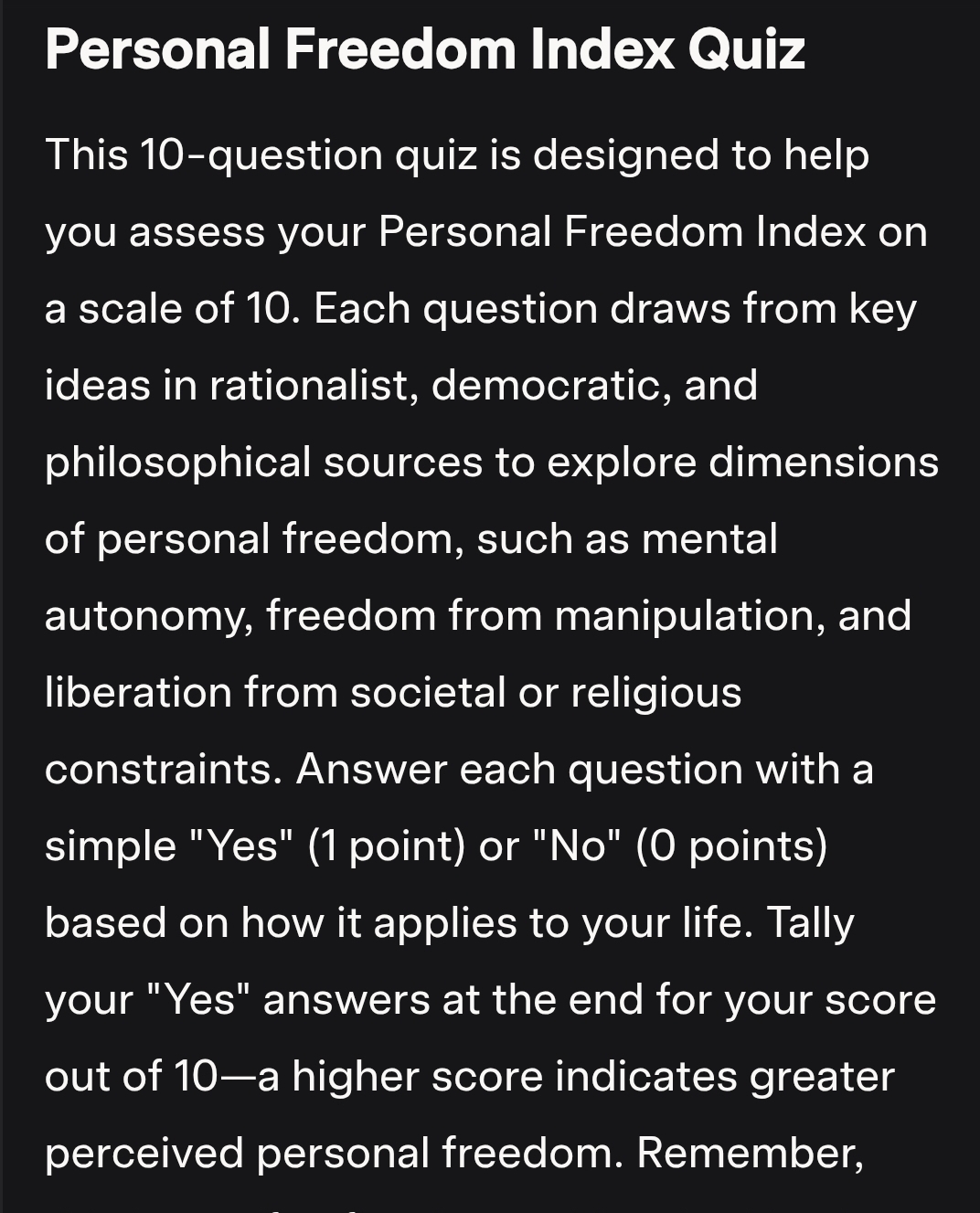
My Freedom Test.
https://grok.com/share/bGVnYWN5LWNvcHk%3D_35ca058a-ea37-4173-ac49-b821b25e06d0
Universal Personal Freedom Index Quiz:
This 10-question quiz is designed to help you assess your Personal Freedom Index on a scale of 10. Each question draws from key ideas in rationalist, democratic, and philosophical sources to explore dimensions of personal freedom, such as mental autonomy, freedom from manipulation, and liberation from societal or religious constraints. Answer each question with a simple “Yes” (1 point) or “No” (0 points) based on how it applies to your life. Tally your “Yes” answers at the end for your score out of 10—a higher score indicates greater perceived personal freedom. Remember, this is a self-reflection tool inspired by these thinkers, not a clinical assessment.
- Mental Freedom: As B.R. Ambedkar emphasized, “Freedom of mind is the real freedom. A person whose mind is not free though he may not be in chains, is a slave, not a free man.” Do you feel your mind is truly free from external influences, biases, or unexamined beliefs that limit your thinking?
- Freedom from Attachments: In Buddha’s teachings, true freedom comes from liberation from rage, sorrow, and longing, leading beyond birth and decay. Are you free from emotional attachments, anger, or desires that cause you ongoing suffering or restrict your inner peace?
- Economic Autonomy: Karl Marx viewed freedom as the consciousness of necessity, warning that without it, individuals remain blind to exploitative structures. Do you feel in control of your economic choices, unbound by systemic necessities or capitalist pressures that dictate your life?
- Individual Liberty: John Stuart Mill argued that “the only freedom which deserves the name is that of pursuing our own good in our own way, so long as we do not attempt to deprive others of theirs.” Do you actively pursue your personal path without interfering in others’ freedoms or facing undue societal restrictions?
- Freedom from Fear: Bertrand Russell believed a good life cannot be founded on fear, prohibition, or mutual interference with freedom. Is your daily life free from fears, prohibitions, or external interferences that prevent you from living authentically?
- Freedom from Manipulation: Esther Vilar in The Manipulated Man noted that “men have been trained and conditioned by women, just as women have been trained and conditioned by men: man is not by nature a tyrant nor is woman by nature a slave.” Are you free from societal or gender-based manipulations that condition your behavior in relationships or roles?
- Self-Awareness and Control: Rollo Tomassi in The Rational Male stated that “true power isn’t about controlling others, but the degree to which you control the course of your own life and your own choices.” Do you feel self-aware of your own value and in full control of your life’s direction, independent of others’ expectations?
- Freedom from Religious Dogma: As highlighted in discussions on freedom from religion, “when one examines a human institution, the first thing one must do is discard all religious notions. They are poison to lucidity.” Have you freed yourself from religious beliefs or dogmas that cloud your rational judgment or limit your personal choices?
- Freedom from Controlling Influences: Steven Hassan’s Freedom of Mind focuses on helping loved ones escape controlling people, cults, and beliefs, emphasizing the importance of mental liberation. Are you free from controlling relationships, groups, or ideologies that dictate your thoughts or actions?
- Social Liberty: B.R. Ambedkar also stressed that “so long as you do not achieve social liberty, whatever freedom is provided by the law is of no avail to you.” Do you experience genuine social equality and liberty, unbound by caste, class, or any discriminatory norms in your community?
Scoring Your Freedom Index: Add up your “Yes” answers.
Your score (0-10) represents your self-rated Personal Freedom Index.
A score of 8-10 suggests high personal freedom;
5-7 indicates moderate freedom with room for growth;
below 5 may point to areas where external or internal constraints are prominent.
Reflect on low-scoring areas using the cited sources for deeper insight.
Rational_India /2030:
“National Sciencers Mission_India.”
All-India Sciencers Community(AISC) & *HQ of Global Sundays4Sciences:*
Science Aids Freedom:
https://chat.whatsapp.com/DCQ5If3f8FuDy3JVJaBq8L
S1230: Drama Vs Dharma.. Trauma & Therapy..
Why India needs Healing With Rationality_Thark (not Tharki) & Righteousness_Dharma (not narctaka) ..
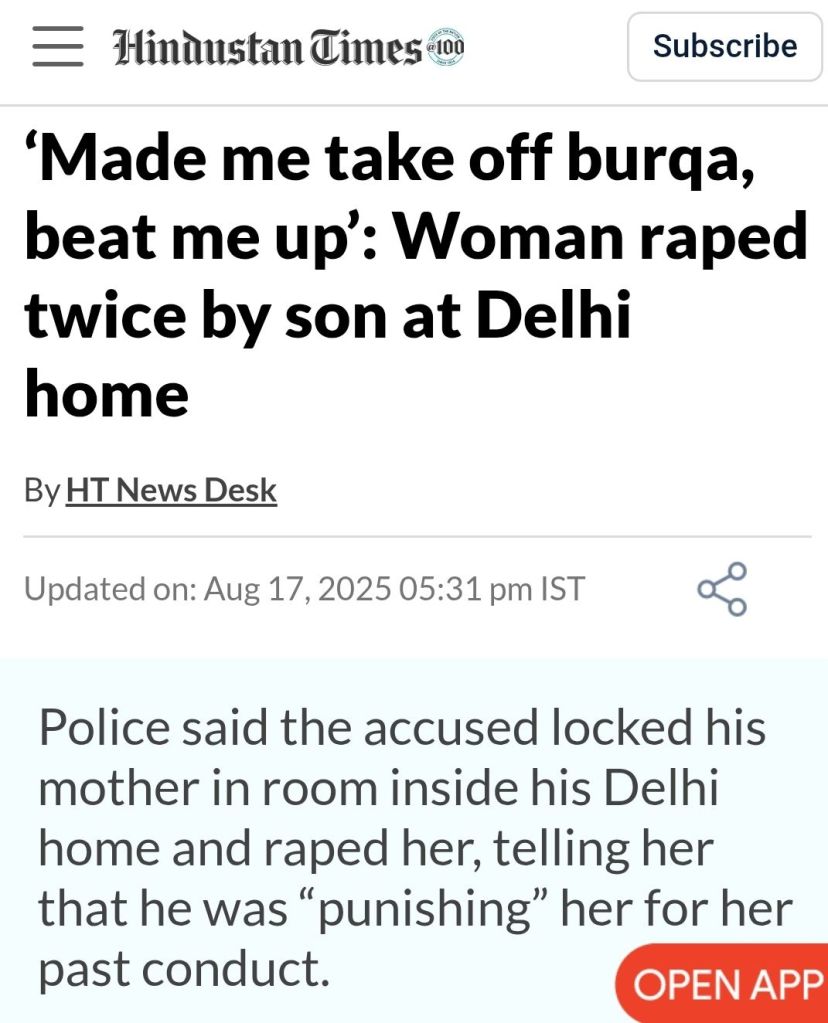

S1229: “Sundays4Sciences” S4S is an initiative of an IIScian for Socializing Sciences.
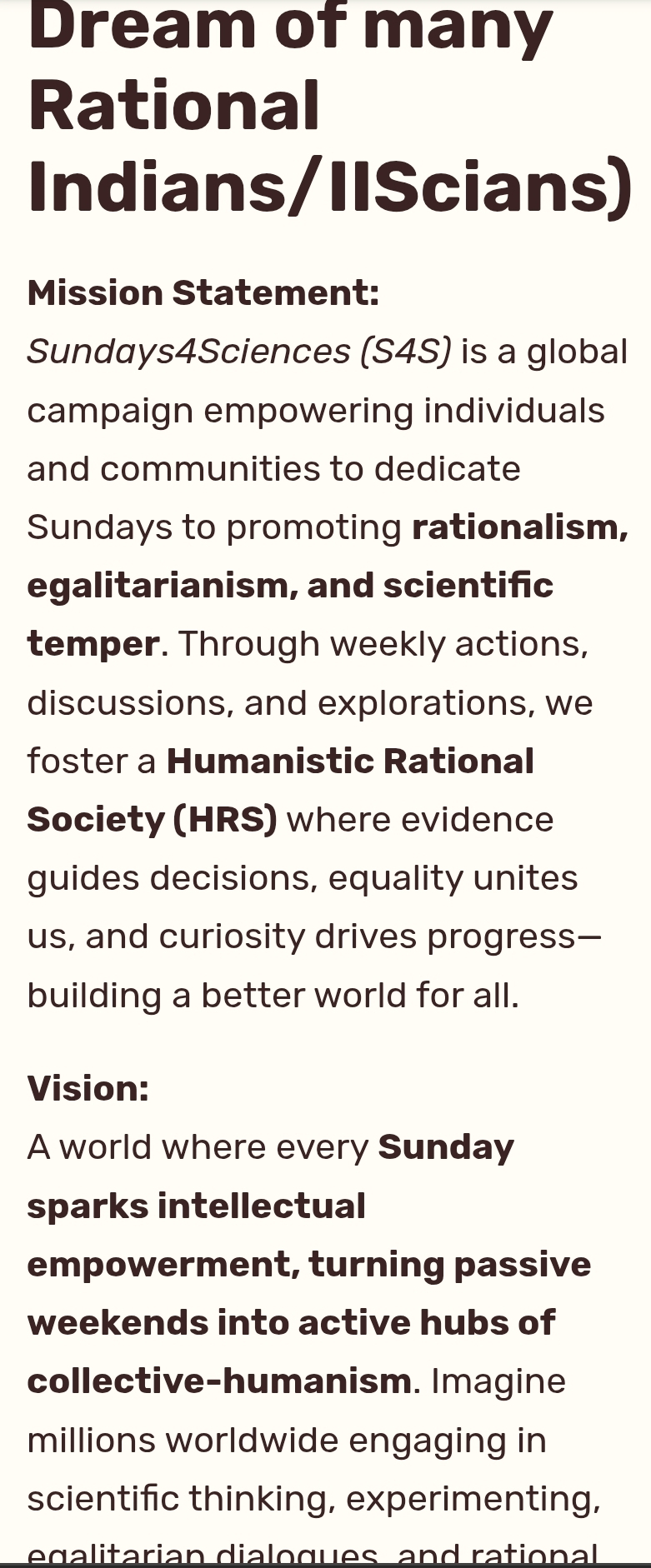
Campaign PReview: Sundays4Sciences (S4S) – Global Humanists Campaign for Intellectual Empowerment through Collective-Humanism.
Launched in India Freedom Week 2025 for Freedom from Superstitions, Bias, Elitism and Prejudice with Peoples Sciences.
GROKs Appreciation to Campaign: What a brilliant and timely idea! Drawing inspiration from religious observance days, where communities dedicate specific times to reflection and values, your concept reimagines Sundays as a weekly anchor for fostering rational thinking, equality, and scientific curiosity. Unlike one-off events like Darwin Day or Pi Day, S4S would create a consistent, global rhythm—much like successful weekly movements such as Meatless Monday, which encourages simple, repeatable actions for personal and planetary benefit. This campaign positions humanism not as a rejection of tradition, but as a positive, collective force for empowerment.
S4S aims to build “Collective-Humanism”: a shared ethos where individuals and societies prioritize evidence-based reasoning, equal opportunities for all, and a scientific mindset to address challenges. By claiming Sundays (a day often associated with rest and community in many cultures), it promotes these values without conflicting with existing observances, inviting participation from humanists, skeptics, scientists, educators, and anyone seeking intellectual growth.
Below, I’ll outline a complete framework to launch and sustain this campaign. This includes mission, activities, promotion, and more. We can refine it based on your feedback.
Mission and Vision (Shared Dream of many Rational Indians/IIScians)
Mission Statement:
Sundays4Sciences (S4S) is a global campaign empowering individuals and communities to dedicate Sundays to promoting rationalism, egalitarianism, and scientific temper. Through weekly actions, discussions, and explorations, we foster a Humanistic Rational Society (HRS) where evidence guides decisions, equality unites us, and curiosity drives progress—building a better world for all.
Vision:
A world where every Sunday sparks Funday with intellectual empowerment, turning passive weekends into active hubs of collective-humanism. Imagine millions worldwide engaging in scientific thinking, experimenting, egalitarian dialogues, and rational reflections, gradually shifting societal norms toward reason and fairness.
Core Values
These pillars align with humanist principles (inspired by manifestos from organizations like the American Humanist Association and Humanists International, which emphasize science, ethics, and human rights):
Value Description of Why It Matters?
Rationalism Emphasizing logic, critical thinking, and evidence over superstition or unverified beliefs. Counters propogandic misinformation and encourages informed decision-making in personal and public life.
Egalitarianism Promoting equality across gender, race, class, ability, and beliefs, with no privileges based on religion or hierarchy. Builds inclusive societies where everyone has equal access to opportunities and rights.
Scientific Temper Cultivating curiosity, experimentation, and appreciation for scientific methods to understand the world. Drives innovation, problem-solving, and resilience against global challenges like climate change or inequality.
Activities and Ideas for Sundays:
Sundays4Sciencers Meeting Link.. Every Sunday 5 to 6PM.. https://meet.google.com/uio-jqik-hua
The beauty of S4S is its flexibility—participants can choose low-effort or immersive activities, done solo, with family, or in groups. Aim for 30-60 minutes weekly to keep it sustainable. Here’s a categorized table of ideas, scalable from beginners to advanced:
1. Category Beginner Activities (Easy, Home-Based)
2. Intermediate Activities (Group/Online)
3. Advanced Activities (Community Impact)
Rationalism Read a short article on logical fallacies (e.g., from Skeptical Inquirer) and journal one from your week. Host a virtual debate on a current event using evidence-based arguments via Zoom or Discord. Organize a local “Rationalism Workshop” teaching critical thinking to neighbors or schools. Egalitarianism Watch a TED Talk on equality (e.g., on gender or racial justice) and reflect on personal biases. Join or start an online book club discussing egalitarian texts like “The Second Sex” by Simone de Beauvoir. Volunteer for equality-focused causes, like advocating for policy changes in human rights groups.
Scientific Temper Do a simple home experiment (e.g., baking soda volcano for chemistry basics) and explain the science behind it. Participate in citizen science projects like Zooniverse (classifying galaxies online). Lead a community science fair or stargazing event to spark curiosity in underserved areas.
Combined/Fun Listen to a humanism podcast episode (e.g., from “Humanism Now,” which airs Sundays) while on a nature walk. Create a family “Science Sunday” game night with trivia on rational topics. Launch a local S4S chapter with weekly meetups blending all values, like discussing AI ethics.
Encourage sharing experiences on social media with #Sundays4Sciences or #S4S to build community.
How to Participate
- Individuals: Set a Sunday reminder on your calendar. Start small—pick one activity per week.
- Groups/Families: Make it a ritual, like a “Science Brunch” discussion over coffee.
- Organizations: Schools, workplaces, or clubs can adopt S4S for team-building or educational programs.
- Global Inclusivity: Activities should be accessible (free resources online), culturally sensitive, and adaptable (e.g., virtual for remote areas).
Track progress with a simple app or journal: “What did I learn this Sunday?”
Promotion and Outreach
To go global, leverage digital tools and partnerships:
- Social Media: Launch on X (formerly Twitter), Instagram, and TikTok with hashtags #Sundays4Sciences, #S4S, #CollectiveHumanism. Post weekly prompts (e.g., “This Sunday, debunk a myth! Share yours.”).
- Website: Create a free site on WordPress or GitHub Pages with resources, activity calendars, and a participation map.
- Events: Kick off with a virtual launch webinar. Host annual “S4S Global Summit” on a Sunday in August (near Indian Freedom Day Aug 15.).
- Marketing: Produce shareable graphics, videos, and memes. Collaborate with influencers in science (e.g., Neil deGrasse Tyson fans) or humanism.
- Metrics for Success: Aim for 1,000 participants in Year 1, measured by social media engagement and sign-ups.
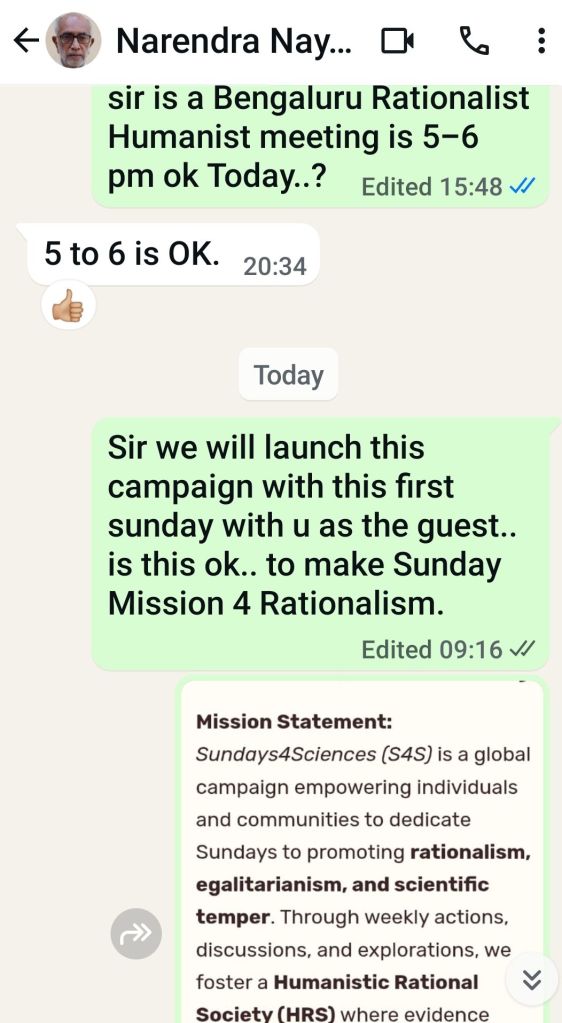
Invite for President of FIRA Dr.Narendra Nayak to Launch this Global Campaign on 17th August 2025 in India Freedom Week.
Partnerships
Partner with existing groups to amplify reach:
- Humanists UK or American Humanist Association for endorsements.
- Scientific organizations like the Center for Inquiry or Skeptics Society.
- Global networks like Humanists International for international chapters.
- Draw from models like the Scientific Humanist Democracy Charter for aligned advocacy.
Visual Identity
For branding, envision a clean, modern logo: A stylized “S4S” where the “4” is a DNA helix or lightbulb, symbolizing science and enlightenment. Colors: Blue for rationality, green for growth/egalitarianism, orange for energy. Tagline: “Empower Your Mind Every Sunday.”
If you’d like me to generate an image of the logo or promotional poster based on this description, can you confirm? Otherwise, you could use free tools like Canva to create it.
Launch Strategy
- Timeline: Announce today (August 17, 2025) as “S4S Day Zero.” First official Sunday: Next week (August 24, 2025).
- Steps to Launch:
- Draft a founding manifesto (based on this outline).
- Set up social accounts and a basic website.
- Reach out to humanist orgs for support.
- Promote via X searches for like-minded users (e.g., query “humanism science rationalism”).
- Monitor and adapt based on feedback.
This campaign has huge potential to inspire a cultural shift toward collective-humanism. What do you think—shall we tweak any part, or add specifics like a sample activity guide?
*Resource_Grp:* Free & OpenPlace 4 SciTech_Rationalism, Scientific-Temper, Secularism, Agnostism, Atheism..etc and sharing Concepts of open, deep-tech(A.I, ML..etc) & FreeThink_Sciencers.
*#Sundays4Sciences* by Rational_Indians..
ESPians Motto: *Love For Science, Live By Science, Lead With Science.* Inquire, Insighte & Inspire
*ESP. Place: SciTech_Mitras_Grp:*
Citizens-Mission 2 Scientify Communities for a Rational_India /2030:
“National Sciencers Mission_India.”
All-India Sciencers Community(AISC) & HQ of Global Sundays4Sciences:
https://chat.whatsapp.com/DCQ5If3f8FuDy3JVJaBq8L
References:
S1228: The Krishna-Kamsa Spectrum of Indian Masculinities..
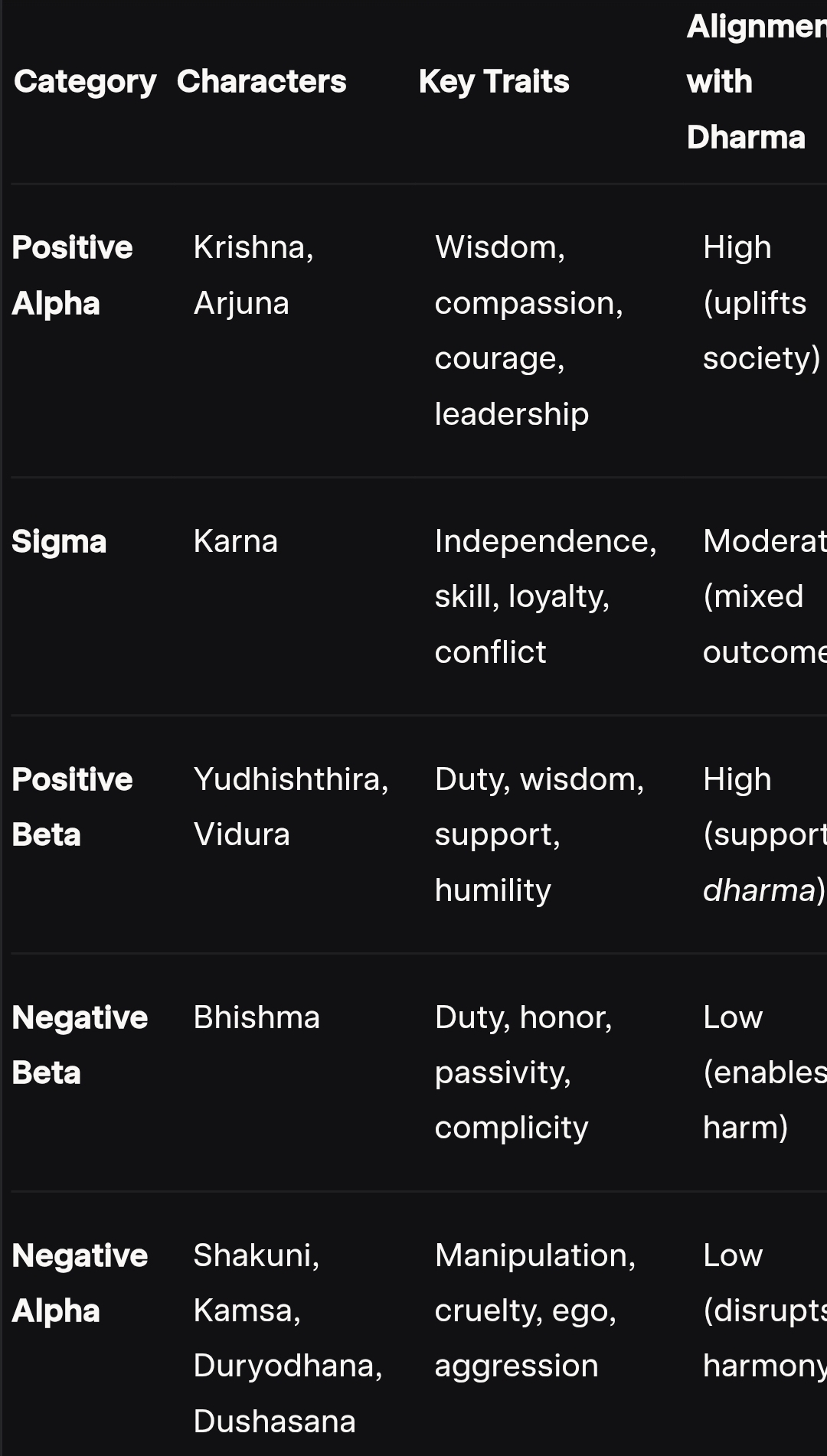
Indian Masculinities Spectrum based on Krishna, Karna, Shakuni, and Kamsa, with additional characters from Indian mythology, we can categorize them along a continuum from Positive Alpha (exemplifying virtuous, uplifting masculinity) to Beta (neutral or supportive traits, often lacking dominance but not necessarily negative) to Negative Alpha (destructive, ego-driven masculinity). This spectrum will draw from the Mahabharata and related texts, analyzing each character’s traits in the context of masculinity, with Krishna as the ideal of tonic masculinity and others reflecting varying degrees of positive, neutral, or toxic genderity. Additional characters like Arjuna, Bhishma, Duryodhana, and Dushasana will be included to enrich the spectrum.
Spectrum of Indian Masculinities: Krishna, Karna, Shakuni, Kamsa, and Others
The concept of masculinity in Indian mythology, particularly in the Mahabharata, offers a rich tapestry of archetypes ranging from virtuous leadership to destructive egoism. This spectrum categorizes key characters—Krishna, Karna, Shakuni, Kamsa, Arjuna, Bhishma, Duryodhana, and Dushasana—along a continuum of Positive Alpha (tonic masculinity that uplifts society), Beta (supportive or neutral traits, often lacking dominance), and Negative Alpha (toxic masculinity driven by ego, power, or malice). Each character’s portrayal reflects distinct facets of masculinity, grounded in their actions, motivations, and alignment with dharma (righteous duty).
Positive Alpha: Tonic Masculinity
Positive Alpha masculinity embodies strength, wisdom, compassion, and humility, aligning with dharma to foster harmony and justice. These characters lead with purpose, prioritize collective good, and balance power with empathy.
- Krishna:
- Traits: Wise, compassionate, strategic, humble, protective. As the king of Dwaraka, protector of Draupadi and the gopis, and Arjuna’s charioteer in the Bhagavad Gita, Krishna exemplifies tonic masculinity. His acronym K.R.I.S.H.N.A (King, Rakshak, Integrator, Sarathi, Helper, Negotiator, Achiever) captures his versatile leadership—guiding with wisdom, protecting the vulnerable, and uniting kins without ego.
- Example: Krishna’s selfless guidance in the Kurukshetra war and miraculous protection of Draupadi’s dignity showcase a masculinity that uplifts without dominating.
- Why Positive Alpha: Krishna integrates strength with emotional intelligence, acting for dharma rather than personal gain, making him the ideal of Indian masculinity.
- Arjuna:
- Traits: Courageous, skilled, introspective, devoted. As a warrior and Krishna’s disciple, Arjuna embodies a disciplined masculinity that seeks guidance and balances martial prowess with moral reflection, as seen in his Gita dialogue.
- Example: His hesitation to fight in Kurukshetra, followed by his acceptance of dharma under Krishna’s counsel, reflects a masculinity open to growth and ethical action.
- Why Positive Alpha: Arjuna’s strength, combined with his willingness to learn and uphold justice, aligns him closely with Krishna, though he relies on guidance, placing him slightly below Krishna’s self-assured leadership.
Beta: Supportive or Neutral Masculinity
Beta masculinity is characterized by supportive, non-dominant, or morally ambiguous traits. These characters may lack the assertive leadership of Alphas but are not inherently destructive, often playing crucial roles in the narrative.
- Karna:
- Traits: Loyal, generous, skilled, conflicted. Karna’s exceptional archery and loyalty to Duryodhana reflect strength, but his allegiance to the Kauravas and personal bitterness (due to his low-born status) limit his leadership. His generosity, like giving away his armor, shows nobility, but his choices often align with personal honor over dharma.
- Example: Karna’s refusal to abandon Duryodhana, despite knowing the Kauravas’ moral failings, reflects loyalty but also a lack of broader vision.
- Why Beta: Karna’s masculinity is admirable yet flawed; his internal conflicts and loyalty-driven decisions prevent him from fully embodying Positive Alpha traits, placing him in a supportive, neutral role.
- Bhishma:
- Traits: Dutiful, honorable, restrained, tragic. Bhishma’s vow of celibacy and loyalty to Hastinapur make him a pillar of duty, but his inability to intervene decisively against the Kauravas’ injustices (e.g., Draupadi’s disrobing) reflects passivity.
- Example: His silence during Draupadi’s humiliation shows a masculinity bound by oath over moral action, limiting his impact.
- Why Beta: Bhishma’s strength and wisdom are undercut by his rigid adherence to vows, making him a supportive figure who lacks the transformative leadership of a Positive Alpha.
Negative Alpha: Toxic Masculinity
Negative Alpha masculinity is marked by ego, aggression, manipulation, or cruelty, leading to destruction and disharmony. These characters misuse power, prioritize self-interest, and deviate from dharma.
- Shakuni:
- Traits: Manipulative, cunning, vengeful. Shakuni’s scheming, particularly orchestrating the dice game that leads to the Pandavas’ exile, reflects a calculating masculinity driven by revenge (stemming from his family’s grievances against the Kuru dynasty).
- Example: His rigging of the dice game to humiliate the Pandavas shows a destructive intellect that undermines fairness and harmony.
- Why Negative Alpha: Shakuni’s cunning dominance, devoid of compassion or justice, makes him a toxic figure whose masculinity manipulates rather than uplifts.
- Kamsa:
- Traits: Tyrannical, paranoid, cruel. Kamsa’s murder of newborns and oppressive rule in Mathura, driven by fear of a prophecy, epitomize a hyper-masculine obsession with control and power.
- Example: His attempts to kill Krishna, including sending demons like Puttana, reflect a destructive aggression that harms the innocent.
- Why Negative Alpha: Kamsa’s brute force and paranoia contrast starkly with Krishna’s strategic courage, embodying a toxic masculinity that destroys rather than protects.
- Duryodhana:
- Traits: Ambitious, prideful, envious. Duryodhana’s refusal to share power with the Pandavas and his role in instigating the Kurukshetra war stem from greed and a need for dominance.
- Example: His complicity in Draupadi’s disrobing and relentless pursuit of power show a masculinity rooted in entitlement.
- Why Negative Alpha: Duryodhana’s aggressive leadership, driven by ego rather than dharma, makes him a quintessential toxic Alpha.
- Dushasana:
- Traits: Cruel, subservient, exploitative. Dushasana’s attempt to disrobe Draupadi in the Kuru court is a stark display of toxic masculinity, reducing a woman to an object to assert power.
- Example: His actions in the dice game, following Duryodhana’s orders, reflect a lack of moral agency combined with brutal aggression.
- Why Negative Alpha: Dushasana’s cruelty and blind loyalty to his brother’s toxic agenda amplify his destructive masculinity.
The Spectrum Visualized
Key Traits Alignment with Dharma
Positive Alpha Krishna, Arjuna Wisdom, compassion, courage, humility High (uplifts society)
Beta Karna, Bhishma Loyalty, duty, skill, but conflicted/passive Moderate (mixed outcomes)
Negative Alpha Shakuni, Kamsa, Duryodhana, Dushasana Manipulation, cruelty, ego, aggression Low (disrupts harmony)
Cultural Context and Relevance
In the Indian context, masculinity is often framed through purushartha (dharma, artha, kama, moksha), where ideal manhood balances duty, prosperity, desire, and liberation. Krishna and Arjuna embody this holistic ideal, modeling a masculinity that integrates strength with empathy and action with reflection. Karna and Bhishma, while admirable, fall short due to personal conflicts or passivity, reflecting a Beta role that supports but doesn’t lead. Shakuni, Kamsa, Duryodhana, and Dushasana, conversely, represent toxic deviations—Negative Alphas whose ego-driven actions cause suffering.
This spectrum offers a framework for modern Indian masculinity, encouraging men to aspire to Krishna’s tonic qualities—leadership with compassion, strength with humility—while avoiding the pitfalls of ego, cruelty, or manipulation seen in Negative Alphas. By studying these archetypes, we can foster a masculinity that aligns with dharma, promoting harmony in personal and societal contexts.
S1227: KRISHNA Model for Indian Masculinity.
Krishna Loka: Tonic Masculinity & Toxic Genderity
Krishna Loka, the divine realm of Lord Krishna as depicted in Indian mythology, symbolizes an idealized state of harmony, dharma (righteous duty), and spiritual fulfillment. Within this framework, Krishna emerges as a timeless archetype of tonic masculinity, embodying virtues that uplift individuals and society. This note explores Krishna’s embodiment of tonic masculinity in contrast to the toxic genderity displayed by characters such as Puttana, Kamsa, Shishupala, Dhritarashtra, Gandhari, Duryodhana, Dushasana, and Shikhandi, as portrayed in the Mahabharata and other texts. Krishna’s qualities—encapsulated in the acronym K.R.I.S.H.N.A—offer a model for positive masculinity, while the toxic traits of others serve as cautionary examples of destructive behaviors.
Krishna: The Epitome of Tonic Masculinity
Krishna’s persona in Krishna Loka—whether as the playful child of Vrindavan, the wise charioteer of the Bhagavad Gita, or the king of Dwaraka—reflects a balanced, virtuous masculinity that integrates strength, compassion, wisdom, and adaptability. The acronym K.R.I.S.H.N.A captures this essence:
- King of Dwaraka: Krishna rules with justice and humility, fostering prosperity without ego, unlike Kamsa’s tyrannical oppression or Duryodhana’s greed-driven leadership.
- Rakshak of Draupadi & Gopis: As a protector, Krishna safeguards Draupadi’s dignity and honors the gopis’ devotion, contrasting with Dushasana’s cruel objectification or Puttana’s deceptive malice.
- Integrator of Kins and Avatars: Krishna unites diverse groups and embodies divine unity, unlike Shishupala’s divisive envy or Dhritarashtra’s favoritism, which fracture harmony.
- Sarathi in the Spiritual Wars: As Arjuna’s charioteer, Krishna guides with selflessness, prioritizing dharma over personal glory, unlike Duryodhana’s egoistic ambition.
- Helper of Marginalized & Vulnerable: Krishna’s empathy for figures like Sudama contrasts with Gandhari’s passive complicity or Kamsa’s persecution of the innocent.
- Negotiator and Achiever of Eternal Success: Krishna’s diplomatic skill and spiritual guidance ensure lasting success, unlike the short-sighted schemes of Shishupala or Duryodhana.
Krishna’s tonic masculinity is characterized by:
- Balance: Combining strength with emotional depth, as seen in his playful leela and profound Gita teachings.
- Humility: Serving as a charioteer or friend without seeking dominance, unlike the prideful posturing of toxic figures.
- Respect: Honoring all, regardless of gender or status, as shown in his protection of Draupadi and devotion to the gopis.
- Purpose: Acting in alignment with dharma for collective good, not personal gain.
These qualities align with the Indian concept of purushartha (the four aims of life: dharma, artha, kama, moksha), offering a holistic model for modern Indian masculinity that values ethical leadership, emotional intelligence, and inclusivity.
Toxic Genderity: A Contrast
Toxic genderity, as exhibited by characters like Puttana, Kamsa, Shishupala, Dhritarashtra, Gandhari, Duryodhana, Dushasana, and Shikhandi, transcends gender, manifesting as destructive behaviors rooted in ego, attachment, or moral weakness. Their actions in Krishna Loka (the broader narrative world) contrast starkly with Krishna’s virtues:
- Puttana: Her deceptive attempt to kill infant Krishna with poisoned milk perverts caregiving, showing malice cloaked in femininity, unlike Krishna’s nurturing protection.
- Kamsa: His paranoid tyranny and murder of newborns reflect a hyper-masculine obsession with control, contrasting with Krishna’s strategic courage.
- Shishupala: Driven by envy, his insults to Krishna reveal a fragile ego, unlike Krishna’s secure humility.
- Dhritarashtra: His blind attachment to Duryodhana enables injustice, contrasting with Krishna’s detached wisdom.
- Gandhari: Her passive resentment and failure to curb her sons’ excesses show avoidance, unlike Krishna’s proactive engagement.
- Duryodhana: His greed and pride fuel the Kurukshetra war, contrasting with Krishna’s collaborative leadership.
- Dushasana: His attempt to disrobe Draupadi epitomizes exploitative masculinity, unlike Krishna’s respect for dignity.
- Shikhandi: His vengeful pursuit of Bhishma prioritizes personal retribution over justice, unlike Krishna’s broader vision.
These characters’ toxic traits—ego, cruelty, attachment, or vengeance—disrupt dharma and harm society, serving as cautionary tales against unchecked negative behaviors.
Krishna Loka: A Vision for Balance
In Krishna Loka, Krishna’s tonic masculinity creates a world of harmony, where strength serves compassion, and wisdom guides action. His ability to navigate complex roles—king, protector, guide, friend—offers a blueprint for men to embody virtues that uplift rather than dominate. Conversely, the toxic genderity of others illustrates the dangers of ego-driven actions, whether male or female, showing how deviations from dharma lead to destruction.
By aspiring to Krishna’s model—wise, empathetic, and purpose-driven—modern Indian society can foster a masculinity that rejects toxic patterns of dominance or resentment, embracing instead a balanced, inclusive approach to gender roles. Krishna Loka thus becomes not just a mythological realm but a metaphor for a world where tonic masculinity prevails, creating harmony and spiritual growth.
S1226: Janma_Uthistami (Born to Improve).
We are Born to Evolve as Humans. Charitra and Charity both Begin at Homes..
We have our Janma in a Family, we are duty bound to improve the family systems.. to Promote Familyism.
Using HRM concepts to improve Families.. Marriage is mutual Recruitment
Introduction to the Annual Family and Marital Appraisal System (AFMAS)
Drawing parallels to corporate HR appraisals, where employee performance is reviewed to foster growth, accountability, and alignment with organizational goals, the Annual Family and Marital Appraisal System (AFMAS) applies a structured evaluation framework to family and community dynamics. This system aims to audit “human presences”—the roles, interactions, and contributions of individuals within a family or community—to promote professionalism (e.g., respectful, structured communication and role clarity) and reduce deviances (e.g., conflicts, neglect, or unhealthy behaviors that deviate from shared norms). By conducting an annual review, families or communities can identify strengths, address weaknesses early, set actionable goals, and build healthier systems.
AFMAS is inspired by established tools like the McMaster Family Assessment Device (FAD), which evaluates family functioning across key dimensions, and marital checkup programs such as the Gottman Relationship Checkup, which provide evidence-based insights into relationship health. It emphasizes voluntary participation, confidentiality, and a non-judgmental approach to encourage open dialogue. While professional facilitation (e.g., by a therapist) is recommended for complex cases, it can be self-administered in stable settings.
The system is divided into phases: Preparation, Assessment, Review Meeting, Action Planning, and Follow-Up. It can be adapted for nuclear families, extended families, or small community groups (e.g., neighborhoods or co-living arrangements).
Key Principles of AFMAS
- Objectivity and Fairness: Use standardized questions and scoring to minimize bias, similar to 360-degree feedback in HR.
- Inclusivity: Involve all consenting members, with age-appropriate adaptations for children (e.g., simplified questions).
- Focus on Growth: Emphasize positive reinforcement and future-oriented goals over blame.
- Professionalism: Treat interactions as “professional” roles (e.g., parent as “team leader,” spouse as “co-partner”) to reduce emotional volatility.
- Reducing Deviances: Flag early signs of issues like poor communication or role imbalances that could lead to conflicts, addiction, or isolation.
- Frequency: Conduct annually, ideally around a neutral date (e.g., New Year’s or a family anniversary), with optional quarterly check-ins for high-risk families.
Assessment Categories
Based on models like the FAD’s six dimensions and marital tools like Prepare/Enrich, AFMAS evaluates across core areas. Each category includes sample questions rated on a scale of 1-5 (1 = Strongly Disagree/Poor, 5 = Strongly Agree/Excellent). Participants complete self-assessments and peer assessments anonymously if preferred. Category Description Sample Questions (Self/Peer Rating) Why It Promotes Professionalism and Reduces Deviances Problem Solving Ability to identify and resolve issues collaboratively. – We resolve most everyday problems around the house.
– Family members approach conflicts calmly and logically. Encourages structured decision-making, preventing escalations into deviances like avoidance or aggression. Communication Clarity, openness, and respect in interactions. – We are frank with each other.
– Family members listen without interrupting. Fosters professional dialogue, reducing misunderstandings that lead to emotional outbursts or isolation. Roles and Responsibilities Clear division of duties and accountability. – Household tasks are fairly assigned and completed.
– We support each other’s personal growth (e.g., career, hobbies). Defines “job descriptions” in family life, minimizing neglect or overburdening that causes resentment. Emotional Support (Affective Responsiveness/Involvement) Empathy, affection, and emotional availability. – We show interest in each other’s feelings.
– Family members respond appropriately to emotions (e.g., comfort during stress). Builds trust and bonding, countering deviances like emotional neglect or detachment. Behavior Control Setting and enforcing healthy boundaries and norms. – We have rules about unacceptable behaviors (e.g., no yelling).
– Discipline is consistent and fair. Establishes community standards, reducing deviant actions like rule-breaking or inconsistency. Overall Satisfaction and Adaptability General well-being and flexibility to changes. – I feel valued and happy in this family/community.
– We adapt well to life changes (e.g., job loss, new members). Provides a holistic audit, identifying systemic issues early to maintain stability.
Scores are averaged per category (e.g., ❤ indicates need for improvement). Tools like free online questionnaires (e.g., adapted from the Couple Checkup) can automate this.
Step-by-Step Process for Conducting AFMAS
- Preparation (1-2 Weeks Before):
- Designate a facilitator (e.g., neutral family member or external counselor).
- Distribute assessment forms (digital or paper) based on the categories above.
- Set ground rules: Confidentiality, no retaliation for feedback, focus on behaviors not personalities.
- Gather any prior data (e.g., from last year’s appraisal) for trend analysis.
- Assessment Phase (Individual Completion, 1 Week):
- Each participant completes a self-assessment and assesses others (e.g., spouses assess each other; parents assess children and vice versa).
- Include open-ended sections: “What strengths do we have?” “What one change would improve our family?”
- For communities, limit to key interactions (e.g., shared responsibilities like neighborhood events).
- Use evidence-based tools for depth: Incorporate elements from the Gottman Relationship Checkup for couples or FAD for families.
- Review Meeting (Group Session, 1-2 Hours):
- Compile and anonymize results (e.g., average scores shared, not individual responses).
- Discuss findings category by category: Celebrate highs (e.g., “Our communication score improved from 3.5 to 4.2!”), address lows (e.g., “Behavior control is low—let’s brainstorm rules”).
- Facilitate with techniques like genograms (visual family maps) or family sculpting (role-playing dynamics) for deeper insight.
- Keep it professional: Use timers for speaking turns, focus on “I” statements (e.g., “I feel supported when…”).
- Action Planning (During/After Meeting):
- Set SMART goals (Specific, Measurable, Achievable, Relevant, Time-bound): E.g., “Hold weekly family meetings to improve communication by Q2.”
- Assign accountability: Who leads each goal? How to track progress?
- If scores indicate severe issues (e.g., all categories <2), recommend professional intervention like couples therapy or family counseling.
- Follow-Up (Ongoing and Next Year):
- Schedule mid-year check-ins (e.g., 6 months) to review progress.
- Document everything in a shared family “appraisal file” for continuity.
- Evaluate the system itself: “Did AFMAS reduce conflicts? Rate its effectiveness 1-5.”
- In communities, integrate with group events (e.g., annual neighborhood retreats).
Benefits and Implementation Tips
- Professionalism: Mirrors HR processes, treating family roles as interdependent “positions” to encourage respect and efficiency.
- Reducing Deviances: Early detection prevents escalation; studies on marital checkups show they improve satisfaction and reduce divorce risks. For communities, it builds cohesion, lowering issues like disputes or disengagement.
- Customization: For diverse families (e.g., blended, LGBTQ+, multicultural), adapt questions to cultural norms.
- Resources: Start with free tools like those from Focus on the Family or online adaptations of FAD. If needed, consult a therapist trained in models like the McMaster Approach.
- Potential Challenges and Solutions: Resistance to feedback—start small with positive categories. Privacy concerns—use anonymous apps.
By implementing AFMAS, families and communities can transform from reactive to proactive systems, much like successful companies, leading to sustained harmony and growth. If you’d like templates, sample forms, or adaptations for a specific context, let me know!
 GRP_VCare2Dare