For Humanism, Indians, Bengalureans & IIScians: We Grow Resourceful Purpose_SpAces: Collaborate with Mitrallys wanting to know, Grow & Help Futureones Grow.
Several nations have historically or currently implemented laws or constitutional provisions that promote state atheism, restrict religious practices, or enforce strict secularism, often to suppress religion or limit its influence in public life. Below is a list of nations with notable atheistic or anti-religious laws and constitutions, based on historical and contemporary contexts. Note that the enforcement and interpretation of these laws vary, and some nations have evolved over time to allow more religious freedom.
Nations with Atheistic or Anti-Religious Laws/Constitutions
People’s Republic of China
Status: Officially an atheist state.
Details: The Chinese Communist Party (CCP), which has governed since 1949, promotes atheism and views religion as a potential threat to state control. The Constitution of the People’s Republic of China (Article 36) guarantees freedom of religious belief but restricts religious activities that “disrupt public order” or are deemed contrary to state interests. The CCP requires its members to be atheists, and religious activities are heavily regulated, with bans on unsanctioned religious groups (e.g., Falun Gong). Religious education for minors is restricted, and public religious expression is often curtailed.
Context: Despite constitutional protections, the state suppresses religious movements that challenge its authority, though non-theistic traditions like Confucianism and Taoism are tolerated to varying degrees.
North Korea
Status: De facto atheist state with severe restrictions on religion.
Details: The Democratic People’s Republic of Korea (DPRK) does not explicitly declare atheism in its constitution, but the regime enforces strict control over all aspects of life, including religion, which is seen as a threat to state ideology (Juche). Religious believers face imprisonment, torture, or execution. The constitution (Article 68) nominally grants freedom of religion but is not enforced in practice. Religious activities are banned, and the state promotes a cult of personality around its leaders, effectively replacing religion.
Context: North Korea’s policies make it one of the most repressive environments for religious expression, with atheism imposed through state control.
Cuba
Status: Historically atheist, with evolving policies.
Details: From the 1959 Cuban Revolution until 1992, Cuba was officially an atheist state under its communist government, restricting religious activities and banning religious believers from Communist Party membership. The 1992 constitutional amendment removed explicit references to atheism, and the current constitution (2019) recognizes freedom of religion (Article 15). However, restrictions remain, particularly on church construction, and the government monitors religious groups to ensure compliance with state policies.
Context: While Cuba has softened its anti-religious stance, the legacy of state atheism influences its legal framework, with ongoing limitations on religious infrastructure.
Vietnam
Status: Officially an atheist state with constitutional protections for religion.
Details: The Socialist Republic of Vietnam’s constitution (Article 24) recognizes freedom of religion or belief but declares the state atheist, reflecting its communist ideology. Religious activities are regulated, and groups must be approved by the government. Unregistered religious organizations face harassment, and religious leaders are sometimes imprisoned for activities deemed anti-government.
Context: Vietnam’s policies balance nominal religious freedom with state control, maintaining an atheistic framework in governance.
Albania (Historical)
Status: Formerly the world’s first officially atheist state (1967–1991).
Details: In 1967, under Enver Hoxha’s Marxist-Leninist regime, Albania declared itself the “first atheist state of the world,” banning all religious practices and institutions. The 1976 Constitution (Article 37) explicitly prohibited religious organizations, and possessing religious texts or participating in religious ceremonies was punishable. After 1991, Albania reversed these policies, and the current constitution guarantees religious freedom.
Context: Albania’s anti-religious laws were unique in their explicit constitutional ban on religion, but these are no longer in effect.
Mexico (Historical)
Status: Historically enforced anti-clerical laws.
Details: The Mexican Constitution of 1917 included strong anti-clerical provisions under Articles 3, 5, 24, 27, and 130, aimed at reducing the Catholic Church’s influence. These included bans on religious education in public schools, restrictions on clergy participating in politics, prohibition of monastic orders, and nationalization of church property. The Calles Law (1926) intensified these restrictions, leading to the Cristero War. While many of these provisions have been relaxed, some restrictions, like bans on religious political parties, remain.
Context: Mexico’s anti-clerical laws were rooted in a desire to separate church and state, but enforcement has softened over time.
France (Historical and Current Secularism)
Status: Strict secularism (laïcité) with historical anti-religious measures.
Details: During the French Revolution (1789–1799), the state suppressed the Catholic Church, nationalized its properties, and promoted atheistic ideologies like the Cult of Reason. The 1905 Law on the Separation of Church and State formalized laïcité, prohibiting state funding of religion and banning religious symbols in public institutions. While not explicitly atheist, France’s constitution (Article 1) emphasizes secularism, and laws like the 2004 ban on religious symbols in schools reflect this stance.
Context: France’s secular laws are not anti-religious per se but prioritize state neutrality, occasionally limiting religious expression in public spaces.
Soviet Union (Historical)
Status: De facto atheist state (1917–1991).
Details: The Soviet Union, under Marxist-Leninist ideology, promoted state atheism, closing churches, persecuting clergy, and banning religious education. The 1936 Constitution (Article 135) nominally protected against religious discrimination, but in practice, religion was suppressed, with exceptions like allowing Sharia in some Islamic regions. After its dissolution in 1991, successor states adopted varying religious policies.
Context: The Soviet Union’s policies were a hallmark of state atheism, influencing other communist states, but are no longer applicable.
Mongolia (Historical)
Status: Anti-religious policies during communist era (1924–1990).
Details: Under Soviet influence, the Mongolian People’s Republic launched purges against Buddhism in the 1930s, demolishing over 700 monasteries and killing thousands of monks. The state promoted atheism, mirroring Soviet policies. The 1992 Constitution introduced religious freedom, and these anti-religious laws are no longer in effect.
Context: Mongolia’s anti-religious policies were tied to its communist period and are historical.
German Democratic Republic (East Germany, Historical)
Status: Promoted atheism during communist era (1949–1990).
Details: The GDR’s constitution (Article 39, 1968) guaranteed religious freedom but in practice promoted atheism through secular education and policies discouraging religious affiliation. By 1986, 60% of the population identified as non-religious due to state-driven secularization. After reunification, Germany’s constitution became fully secular.
Context: East Germany’s atheistic policies were part of its communist framework, now historical.
Notes
Historical vs. Current: Some nations (e.g., Albania, Mexico, Soviet Union, Mongolia, East Germany) had explicitly anti-religious or atheistic policies in the past but have since adopted more neutral or freedom-oriented constitutions. Others, like China, North Korea, and Vietnam, maintain atheistic state ideologies with varying degrees of restriction.
Secularism vs. Atheism: Countries like France enforce strict secularism (laïcité), which is not equivalent to state atheism but can limit religious expression in public spaces, creating a de facto anti-religious environment in certain contexts.
Persecution of Atheists: Conversely, some countries criminalize atheism (e.g., Saudi Arabia, where a royal decree brands atheists as terrorists). This list focuses on nations with atheistic or anti-religious laws, not those persecuting atheists.
Data Limitations: Surveys on atheism (e.g., WIN/Gallup, Pew Research) often conflate “non-religious” with “atheist,” and cultural factors (e.g., non-theistic religions in China) complicate classifications.
Sources
-: State atheism and historical anti-religious policies in Albania, Soviet Union, Mexico, Cuba, Vietnam, Mongolia, and East Germany. -: China and North Korea’s restrictions on religious freedom. -: France’s historical and current secular policies. -: Albania’s historical atheist state declaration. -: Data on irreligion and atheism prevalence.
If you need more details on specific countries or their legal frameworks, let me know!
…and these many religions are Abrahamic religions.. Theological common roots of multiple Religions.. even Bhai Bahai..
Was Louis Massignon Wrong on Abrahamic Religions?
Louis Massignon, a French Catholic scholar of Islam (1883–1962), is known for his work on Islamic mysticism and interreligious dialogue. He emphasized the shared spiritual heritage of Judaism, Christianity, and Islam, often framing them as “Abrahamic religions” due to their common reverence for Abraham as a foundational figure. Massignon’s views aligned with the concept that these three faiths share a monotheistic tradition rooted in Abraham’s covenant with God. However, his interpretations were not without criticism.
Was He Wrong? Massignon was not fundamentally wrong in identifying Judaism, Christianity, and Islam as Abrahamic religions, as this categorization is widely accepted in religious studies. His emphasis on Abraham as a unifying figure was groundbreaking for fostering interfaith dialogue, especially between Christians and Muslims. However, critics argue:
Oversimplification: Massignon’s focus on Abrahamic unity sometimes glossed over significant theological and historical differences between the faiths, such as differing views on prophecy, scripture, and salvation.
Mystical Bias: His interest in Sufism led him to prioritize mystical and spiritual commonalities, potentially underplaying doctrinal divides or sociopolitical tensions (e.g., between Jews and Muslims in the Middle East).
Limited Scope: Massignon’s framework did not extensively address smaller Abrahamic faiths (e.g., Druze, Baha’i), focusing primarily on the three major traditions.
In summary, Massignon was not wrong to classify these religions as Abrahamic, but his approach could be seen as selective or overly idealistic by those who prioritize theological distinctions or historical conflicts.
Is Christianity an Abrahamic Religion?
Yes, Christianity is unequivocally an Abrahamic religion. The term “Abrahamic” refers to religions that trace their spiritual lineage to Abraham, a patriarch revered in Judaism, Christianity, and Islam for his faith and covenant with God. In Christianity:
Abraham is seen as the “father of faith” (Romans 4:16 in the New Testament), whose trust in God prefigures Christian belief.
The Gospel narratives and Pauline epistles emphasize that Christians inherit the promises made to Abraham through faith in Jesus Christ, considered the fulfillment of God’s covenant.
The Old Testament, shared with Judaism, includes Abraham’s story (Genesis 12–25), central to Christian theology.
Any claim that Christianity is not Abrahamic would be incorrect, as its scriptures, traditions, and theology explicitly connect to Abraham’s legacy.
List of Abrahamic Religions
The Abrahamic religions are monotheistic faiths that venerate Abraham as a key figure in their sacred narratives. The widely recognized Abrahamic religions, in approximate order of historical emergence, are:
Judaism: Originating over 3,000 years ago, Judaism reveres Abraham as the first patriarch who made a covenant with God, promising land and descendants (Genesis 12:1–3). The Torah (e.g., Genesis) is the primary source.
Christianity: Emerging in the 1st century CE from Judaism, Christianity views Abraham as a model of faith and ancestor of Jesus, the Messiah. It includes Judaism’s scriptures (Old Testament) and the New Testament.
Islam: Founded in the 7th century CE by Prophet Muhammad, Islam honors Abraham (Ibrahim) as a prophet and builder of the Kaaba in Mecca. The Quran and Hadith detail his role.
Druze: A syncretic faith emerging in the 11th century CE from Ismaili Shi’a Islam, the Druze consider Abraham a key figure in their monotheistic tradition, alongside other prophets.
Baha’i Faith: Founded in the 19th century CE by Baha’u’llah, the Baha’i Faith recognizes Abraham as one of many prophets in a progressive revelation, uniting previous Abrahamic traditions.
Samaritanism: A small, ancient offshoot of Judaism, Samaritans revere Abraham as a patriarch and follow a version of the Torah, with distinct practices centered on Mount Gerizim.
Rastafari: A 20th-century movement originating in Jamaica, Rastafari incorporates Abrahamic elements, viewing Abraham as part of the biblical narrative tied to Ethiopian Orthodoxy and Judaism.
Yazidism: Though debated, some scholars include Yazidism (a Kurdish monotheistic faith) as Abrahamic due to its incorporation of figures like Abraham, though it blends pre-Islamic and Islamic influences.
Note: Some groups, like Mandaeism, are occasionally linked to Abrahamic traditions due to shared figures (e.g., John the Baptist), but their distinct cosmologies often exclude them from this category. The core Abrahamic religions are Judaism, Christianity, and Islam, with others being smaller or syncretic offshoots.
Why Islam Venerates Abraham
Islam venerates Abraham (Ibrahim in Arabic) as a central figure for several theological and historical reasons:
Prophet and Monotheist (Hanif): The Quran describes Abraham as a hanif—a pure monotheist who submitted to God (Allah) before the establishment of Judaism or Christianity (Quran 3:67). He is seen as a model of unwavering faith, rejecting idolatry and obeying God’s commands.
Covenant and Legacy: Abraham’s covenant with God, including the promise of descendants (Quran 2:124–129), is foundational. Muslims believe Ishmael (Isma’il), Abraham’s son, is an ancestor of Arabs and Prophet Muhammad, linking Islam to Abraham’s lineage.
Builder of the Kaaba: The Quran (2:125–127) and Hadith narrate that Abraham and Ishmael built the Kaaba in Mecca, Islam’s holiest site. The Hajj pilgrimage, one of Islam’s Five Pillars, includes rituals (e.g., circumambulating the Kaaba, running between Safa and Marwa) commemorating Abraham’s and Hagar’s faith.
Sacrifice Story: The Quran (37:99–113) recounts Abraham’s willingness to sacrifice his son (unnamed but traditionally Ishmael in Islamic exegesis) as a test of obedience. This is commemorated annually during Eid al-Adha, where Muslims sacrifice animals in remembrance.
Model of Submission: Abraham’s complete submission (islam in Arabic) to God exemplifies the ideal Muslim. His trials, including leaving Hagar and Ishmael in the desert, demonstrate trust in divine providence.
Unifying Figure: Islam positions Abraham as a universal prophet, not exclusive to Jews or Christians, reinforcing its claim as the culmination of Abrahamic monotheism (Quran 3:65–68).
In Islamic traditions, Abraham’s role bridges theology and practice, making him a symbol of faith, sacrifice, and the universal worship of one God.
Conclusion
Louis Massignon was not wrong to include Christianity among Abrahamic religions, though his idealistic focus on unity had limitations. Christianity, alongside Judaism, Islam, and smaller faiths like the Druze and Baha’i, is Abrahamic due to its reverence for Abraham. Islam venerates Abraham as a prophet, Kaaba builder, and exemplar of monotheistic submission, tying him to its core beliefs and rituals. If you’d like further details on any specific aspect (e.g., Massignon’s scholarship, a particular faith), let me know!
Below is a test designed to help citizens self-assess the gap between themselves and their government, focusing on aspects like trust, participation, accountability, and responsiveness. The test consists of 10 questions, each scored from 1 to 10, where 1 indicates a significant gap (poor alignment) and 10 indicates minimal gap (strong alignment). The total score provides a scale to gauge the citizen-government gap.
Citizen-Government Gap Test
This test helps citizens evaluate the gap between themselves and their government based on trust, participation, accountability, and responsiveness. Answer each question honestly, assigning a score from 1 (strongly disagree, indicating a large gap) to 10 (strongly agree, indicating a small gap). Sum your scores to assess the overall gap on a scale of 10 to 100.
Instructions
For each question, rate your agreement on a scale of 1 to 10.
We are fans of Progress may not be of Congress, We are fans of GDP maynot be of BJP, We are fans of Akal may not be Akali Dal, We are fans of Aaj not AAP, We are fans of A.I. in politics not AIMIM, We are fans of JP yes not JDS, We are fans of Gyan-hi not any Gandhi or Modi, We are fans of Public eye not CPI, We are fans of MSP not BSP, We are fans of DeMoKrats not DMK, We are fans of Unity not SP, We are fans of Truth not TMC, We are fans of Justice not JD(U), We are fans of Equality not NCP, We are fans of Freedom not Shiv Sena, We are fans of Wisdom not RJD, We are fans of Harmony not BJD, We are fans of Clarity not CPM,
We are fans of Republic not RPI, We are fans of Citizens Empowerment not Elites Entitlement, We are fans of Constitution not any institution,
We are fans of Satyameva Jayathe not mera party hi satyahai,
We are fans of Citizens_Participation not Parties_Domination,
We are fans of Democracy not Partycracy,
We are here for W.E (WiseNlight Electors) not to Gaslight Citizens.
“Arrogance” Blinds both eyes of Intelligence(IQ) & Tolerance(EQ) & leads to Ignorance. more “Citizens’ Awaraness-Arrogance” in Nation.
While Rational Acceptance increases Tolerance+Intelligence leading to Benevolence. Constitutional Awareness-Activism in Nation.
Social Solutions to bring more Equity & Tolerance (Reduce Inequality & Intolerance) is Equal Equitable Education & Healthcare for all Citizens.
Tolerance
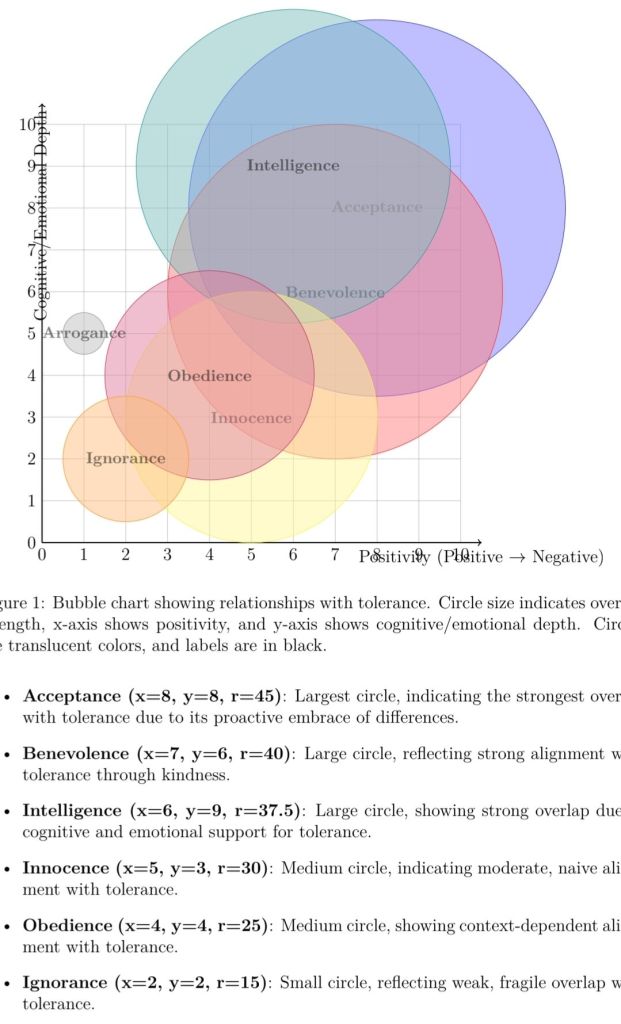
To extend the analysis of tolerance by including acceptance and intelligence as additional factors, I’ll incorporate these into the radar chart visualization, updating the set theory framework to account for their relationships with tolerance and the previously discussed concepts (innocence, ignorance, arrogance, benevolence, obedience). The goal is to visualize the strength of overlap between tolerance and all these factors, maintaining the same methodology as before.
Step 1: Defining the New Factors as Sets
Acceptance (C): The set of attitudes and behaviors involving embracing or approving of differences in beliefs, identities, or behaviors without judgment. Acceptance is closely related to tolerance but often implies a deeper, more positive endorsement rather than mere endurance.
Intelligence (N): The set of cognitive abilities involving reasoning, problem-solving, and understanding complex ideas. In this context, intelligence includes emotional and social intelligence, which influence how one processes and responds to differences.
These are added to the existing sets: Tolerance (T), Innocence (I), Ignorance (G), Arrogance (A), Benevolence (B), and Obedience (O), within the universal set U (all possible human attitudes, behaviors, or states of mind).
Step 2: Set Theory Analysis for New Factors
1. Tolerance and Acceptance (T ∩ C):
Intersection: Acceptance and tolerance have a significant overlap, as both involve positive engagement with differences. Acceptance is often seen as a stronger form of tolerance, implying not just enduring but embracing diversity. For example, accepting someone’s cultural practices goes beyond tolerating them.
Difference: Tolerance without acceptance (T − C) includes grudging or pragmatic tolerance (e.g., enduring differences due to social pressure). Acceptance without tolerance (C − T) is rare but might occur in performative acceptance without genuine endurance of discomfort.
Complement: The complement of acceptance (C’, rejection or indifference) is largely incompatible with tolerance, as rejection often fuels intolerance.
2. Tolerance and Intelligence (T ∩ N):
Intersection: Intelligence supports tolerance by enabling understanding of diverse perspectives and critical reflection on biases. Emotional intelligence, in particular, fosters empathy, which aligns with tolerance. For example, an intelligent person might tolerate differing opinions by reasoning through their validity.
Difference: Tolerance without intelligence (T − N) can occur in simplistic or instinctive forms (e.g., tolerance due to social norms rather than understanding). Intelligence without tolerance (N − T) might manifest as intellectual arrogance, where knowledge leads to dismissal of others’ views.
Complement: The complement of intelligence (N’, lack of reasoning or understanding) overlaps with ignorance but can still coexist with tolerance if driven by other factors like benevolence or innocence.
3. Interactions with Other Concepts:
Acceptance and Benevolence (C ∩ B): Strong overlap, as both involve positive, goodwill-driven engagement with others.
Intelligence and Ignorance (N ∩ G): Mutually exclusive, as intelligence implies knowledge, while ignorance is its absence. However, intelligence can coexist with arrogance if knowledge fosters superiority (N ∩ A).
Acceptance and Innocence (C ∩ I): Similar to tolerance, acceptance can stem from innocent, non-judgmental attitudes but may lack depth without experience.
Intelligence and Obedience (N ∩ O): Intelligence can inform obedience (e.g., following rules after reasoning) but may also lead to questioning authority, reducing blind obedience.
Step 3: Updated Radar Chart
The radar chart now includes acceptance and intelligence alongside the original factors. The values (0–100) represent the estimated strength of overlap with tolerance, based on the set theory analysis:
Acceptance (C): Very high overlap (90), as acceptance is a deeper form of tolerance.
Intelligence (N): High overlap (75), as cognitive and emotional intelligence support tolerance through understanding and empathy.
Benevolence (B): High overlap (80), as before, due to shared kindness.
Acceptance has the strongest overlap with tolerance, reflecting its role as a proactive, positive form of tolerance.
Intelligence and benevolence are close seconds, highlighting their roles in fostering informed and kind tolerance.
Innocence and obedience remain moderately aligned, context-dependent as before.
Ignorance and arrogance show minimal overlap, as they often undermine true tolerance.
The chart visually emphasizes that tolerance is most strongly supported by acceptance, intelligence, and benevolence, while ignorance and arrogance are least aligned.
If you’d like to:
Explore specific intersections (e.g., T ∩ C ∩ N)?
Add more factors to the analysis?
Use a different visualization (e.g., bar chart)?
Incorporate real-world examples via external data? Please let me know your preference!
Being Blindly Tolerant or Tyrant to citizens both are Issues..
As a nation we need to find the Balance to be Tolerant to Citizens & Indian Constitutionalists and Tyrants to the *Anti-Constitutionalists.* eg.. Taslima Nasreen and Sheikh Haseena is a Tolerant Bangladeshi, who India has provided shelter.. Even Dalai Lama and Tibetan are Tolerant Refugees.. there needs to be system of testing Constituonism.
Indian Constitution as a Religious_Philosophy for Better life of Citizens. (Constitutionism).
Opposite of SwarthVidanis or Method of Selfs_ish (NOT Nation-ish)
Becoming a Samvidhani (Constitutionalist), a practitioner of Samvidana Dharma (I.e Constitutionalism) , involves embracing a syncretic spiritual and philosophical path that integrates India’s diverse historical, cultural, and religious evolution into a modern constitutional framework. Samvidana Dharma, as described, is a culmination of India’s multifaceted heritage—from prehistoric times through various religious and cultural periods to the present constitutional era. Below is a guide on how to become a Samvidhani, outlining the principles, practices, and mindset required to embody this unique path.
How to Become a Samvidhani
“Samvidana Dharma” represents the synthesis of India’s rich historical and spiritual evolution, encompassing prehistoric traditions, the Indus Valley Civilization (IVC), Vedic Sanatana Dharma, Buddhist influences under Ashoka, Greek interactions, Mughal Islamic culture, British Christian influences, communistic ideologies, and the modern constitutional framework. Becoming a Samvidhani involves embracing this pluralistic heritage while aligning with the values of India’s Constitution. Below is a step-by-step guide to embody this path.
1. Understand the Historical and Philosophical Foundations
Study India’s Diverse Heritage: Familiarize yourself with the key periods of India’s evolution:
Prehistoric AdiDharma and Adivasi Traditions: Learn about the spiritual practices of India’s indigenous communities and their connection to nature and animism.
Keezhadi and IVC Dharma: Explore the urban sophistication and egalitarian principles of the Indus Valley Civilization and Keezhadi excavations.
Sanatana Vedic Period: Understand the philosophical depth of the Vedas, Upanishads, and concepts like Dharma, Karma, and Moksha.
Ashokan Buddhist Period: Study the principles of non-violence (Ahimsa), compassion, and social equity promoted by Emperor Ashoka.
Greek, Mughal, and British Influences: Recognize the cultural exchanges, including Greek philosophy, Islamic Sufism, and Christian ethics, that shaped India’s pluralistic identity.
Communistic Ideals: Reflect on the emphasis on equality and collective welfare from India’s brief communistic influences.
Modern Constitutional Period: Embrace the values of justice, liberty, equality, and fraternity enshrined in the Indian Constitution.
Action: Read texts like the Rigveda, Buddhist Suttas, Sufi poetry, and the Indian Constitution. Visit museums or archaeological sites like Keezhadi or Dholavira to connect with this heritage.
2. Embrace Syncretism and Pluralism
Integrate Diverse Beliefs: Samvidana Dharma is inherently inclusive. Practice openness to ideas from all traditions, recognizing their contributions to India’s spiritual and cultural mosaic.
Reject Exclusivism: Move beyond rigid religious or ideological boundaries. A Samvidhani sees truth as multifaceted, drawing wisdom from all periods of India’s history.
Action: Participate in interfaith dialogues, attend cultural festivals (e.g., Diwali, Eid, Christmas), and reflect on shared values like compassion and justice.
3. Align with Constitutional Values
Core Principles: The Indian Constitution is the cornerstone of Samvidana Dharma’s modern phase. Internalize its values:
Justice: Advocate for social, economic, and political fairness.
Liberty: Uphold freedom of thought, expression, and belief.
Equality: Promote equal opportunities regardless of caste, creed, or gender.
Fraternity: Foster unity and brotherhood among diverse communities.
Action: Study the Preamble and key articles of the Indian Constitution. Engage in civic activities like voting, community service, or promoting social justice.
4. Practice Mindfulness and Ethical Living
Incorporate Meditation and Reflection: Draw from Vedic, Buddhist, and Sufi practices to cultivate mindfulness. Meditate daily to connect with your inner self and the universal principles of Dharma.
Ethical Conduct: Live by Ahimsa (non-violence), Satya (truth), and Karuna (compassion). These principles bridge India’s ancient traditions with modern constitutional ethics.
Action: Practice daily meditation or yoga. Volunteer for causes that align with equality and non-violence, such as environmental conservation or social welfare.
5. Contribute to Society
Community Engagement: A Samvidhani is an active participant in society. Work towards uplifting marginalized communities, inspired by Ashoka’s welfare policies and the Constitution’s emphasis on justice.
Cultural Preservation: Celebrate and preserve India’s diverse heritage through art, literature, or storytelling, reflecting the syncretic spirit of Samvidana Dharma.
Action: Join or start initiatives that promote education, environmental sustainability, or cultural heritage. Share stories of India’s pluralistic past through blogs or community events.
6. Develop a Personal Practice
Create a Daily Ritual: Blend practices from various traditions, such as chanting Vedic mantras, practicing Buddhist mindfulness, or reflecting on constitutional values.
Journaling: Maintain a journal to reflect on how you integrate Samvidana Dharma’s principles into your life.
Action: Design a morning routine that includes meditation, reading a constitutional article, and setting an intention for ethical action.
7. Educate and Inspire Others
Share Knowledge: Spread awareness about Samvidana Dharma’s inclusive philosophy. Educate others about India’s syncretic heritage and constitutional values.
Lead by Example: Demonstrate tolerance, compassion, and civic responsibility in your actions to inspire others to follow this path.
Action: Organize workshops or discussions on India’s cultural evolution or write articles to promote the ideals of “Samvidana Dharma 1950-2025+..”
Conclusion
Becoming a Samvidhani or Constitutionalist is a journey of embracing India’s diverse spiritual and cultural heritage while living by the principles of the Indian Constitution. It requires continuous learning, ethical living, and active contribution to society. By integrating the wisdom of India’s past with the values of its present, a Samvidhani becomes a beacon of unity, rights, justice, and compassion in a diverse and dynamic world.
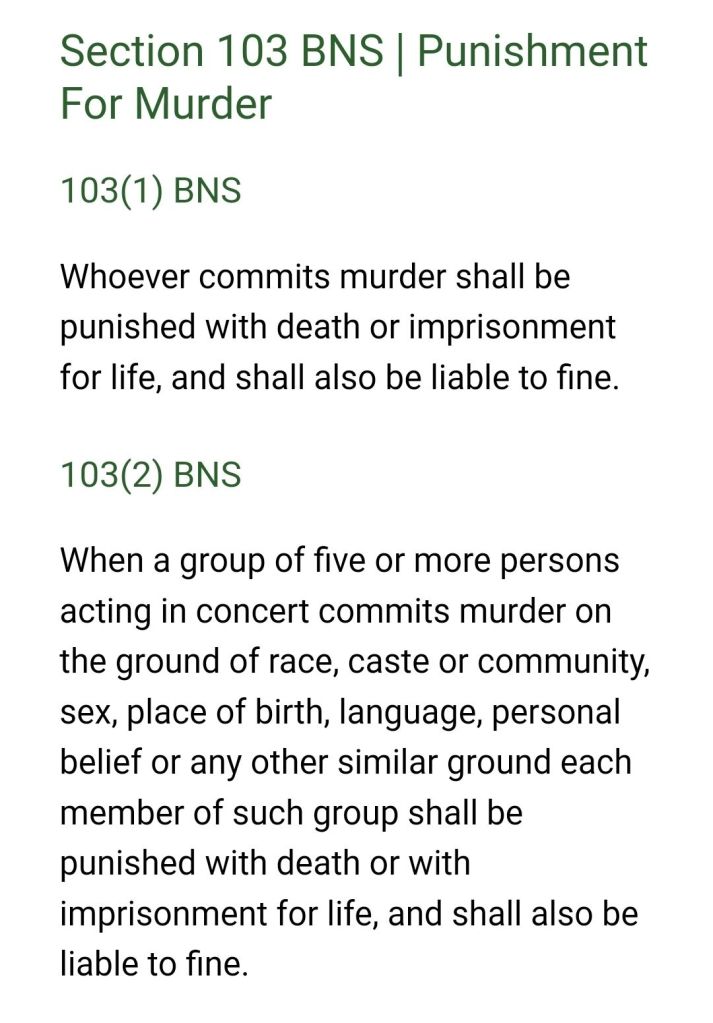
BNS.103 will just maximum give Death or life imprisonment or 14+years of Imprisonment with fine and after it, the system may release the murderers depending on Court proceedings (bail..eg Kannada Actor Darshan Murder case)..
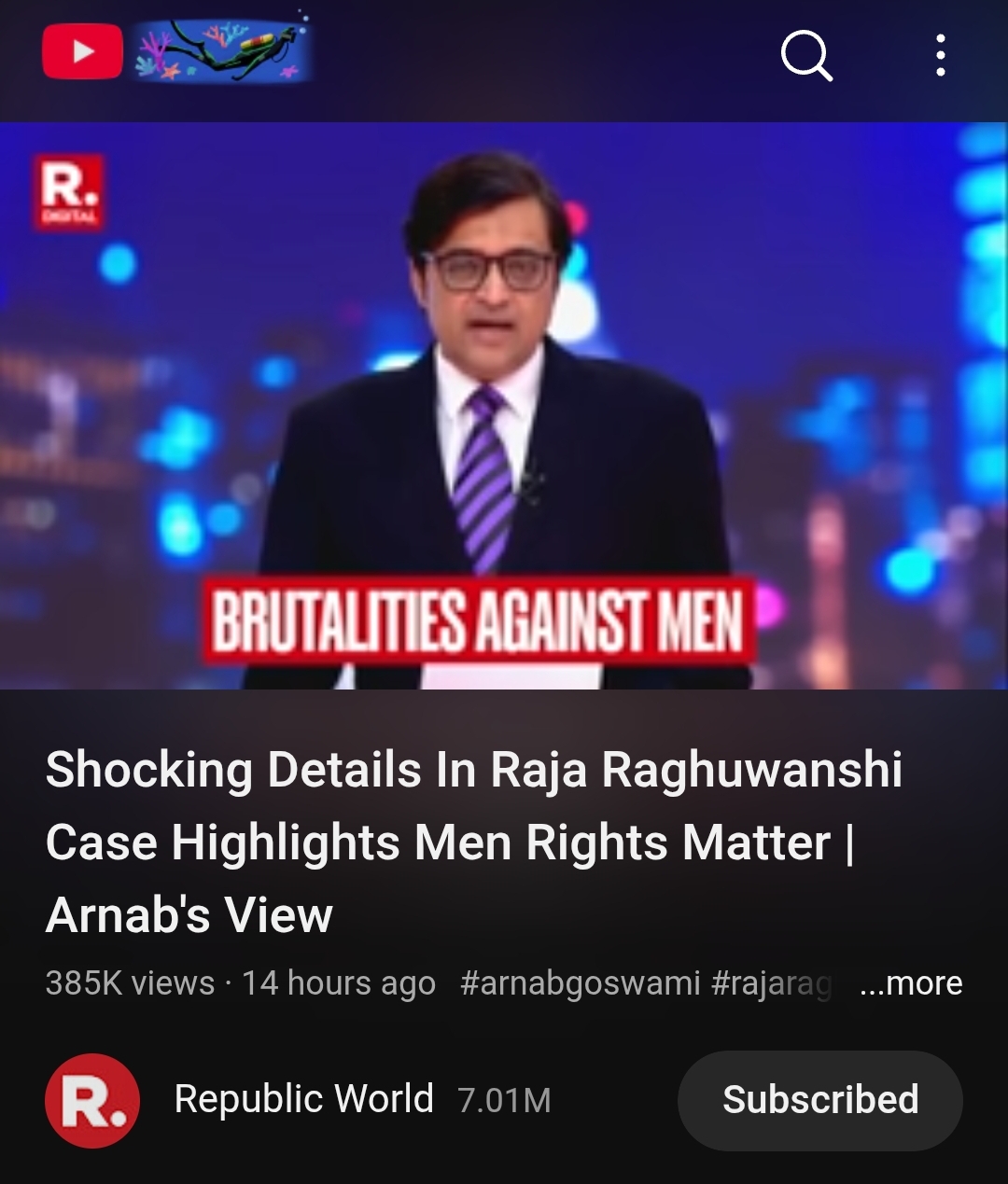
The murderers will be dead, In prison or out and the cycle (of Cheat, Marry & Kill, Jail or Bail) in society continues?… Most suffering like in this case is by the Men & their families..
How can complete justice be done so the Husband’s family is compensated from the murderer Wife’s Assets of her ancestral wealth (fined fully). also the muderers need mental correction for Narc-Criminality & Victim+Society needs family counselling for grief & Narc Abuse/CPTSD Social Support which is lacking in Indian Society.
Below is an updated and comprehensive analysis that incorporates familicide (the death & killing of family members, often including a spouse, children, or other relatives) alongside mariticide (killing of a husband by a wife) and spousicide (killing of a spouse, encompassing both Suicide, mariticide and uxoricide). The analysis builds on the Raja Raghuvanshi case and extends to broader strategies for preventing deaths, abuse, and crimes within families in India, focusing on psychological, social, cultural, and systemic interventions.
Given the cultural and socioeconomic context of India in 2025, the recommendations are tailored to address unique challenges such as Love or arranged Fraud_marriages, patri-Matriarchal norms, and resource constraints.
Preventing Familicide, Mariticide, Spousicide, and Family Abuse in India: Strategies for 2025
Introduction
Familicide, mariticide, suicide, spousicide, elopicide and family Narc abuse represent severe forms of intra-family violence, with devastating consequences for individuals and communities. Familicide involves the killing of multiple family members, often a spouse, children, or extended relatives, typically by a family member driven by motives such as control, despair, or revenge. Mariticide (killing of a husband by a wife) and spousicide (killing of a spouse, including mariticide and uxoricide, the killing of a wife by a husband) are subsets of family violence, often linked to infidelity, financial disputes, or domestic abuse. In India, these crimes are shaped by cultural factors like fraud arranged marriages, misandry, Matri-patriarchal norms, and social stigma, as exemplified by the Raja Raghuvanshi murder case (2025), where Sonam Raghuvanshi allegedly orchestrated her husband’s killing during their honeymoon.
This analysis outlines comprehensive strategies to prevent deaths, abuse, and crimes within Indian Innocent or fraud families, addressing root causes and leveraging systemic reforms.
The Raja Raghuvanshi Case: A Contextual Anchor
Case Summary
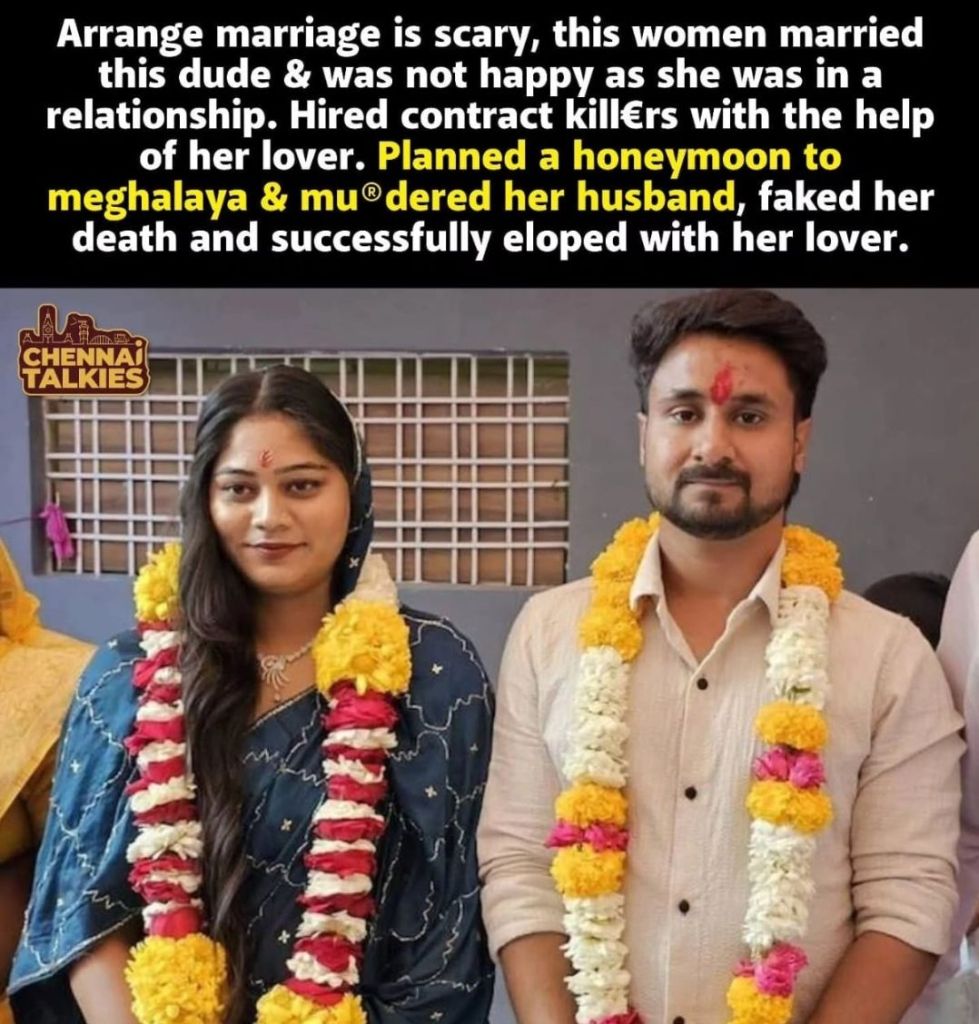
Raja Raghuvanshi, a 29-year-old businessman from Indore, was murdered around May 23, 2025, in Meghalaya during his honeymoon. His wife, Sonam Rags_Kia_Vanshki (24), allegedly (Police & People Evidences) conspired with her lover, Raj Kushwaha(21), and three hired accomplices (Akash Rajput, Vishal Singh Chauhan, and Anand Kurmi/Patel) to kill him. Raja’s body was found on June 2 in a gorge near Weisawdong Falls, with a bloodstained machete as a key clue. Sonam surrendered on June 9 in Ghazipur, Uttar Pradesh, and the accomplices were arrested in Madhya Pradesh and Uttar Pradesh. The case highlights motives of infidelity (Sonam’s affair with Kushwaha) and financial gain (control over family wealth), rooted in the pressures of an arranged marriage.
Relevance to Familicide
While the Raghuvanshi case is a mariticide, it reflects dynamics that could escalate to familicide, such as betrayal, sexual, financial motives, and disregard for family life, honor or bonds. Had the conspiracy extended to other family members (e.g., Raja’s relatives over inheritance disputes), it could have qualified as familocide. The case underscores the need for early intervention by MedicoLegal Maritologists to prevent inter & intra-family violences from escalating.
Understanding Familicide, Mariticide, Spousicide, and Family Abuse
Definitions and Patterns
Familicide: The killing of multiple family members, often by a male head of household, driven by motives like financial ruin, perceived betrayal, or mental health crises. Examples include cases where a parent kills their spouse and children before committing suicide, often due to shame or control (e.g., John List, 1971, USA, who killed his wife, mother, and three children).
Mariticide: The killing of a husband by a wife, as in the Raghuvanshi case, often linked to infidelity, financial gain, or escaping an unwanted marriage. Motives may overlap with familicide when extended to other relatives.
Spousicide: Encompasses mariticide and uxoricide, with uxoricide being more common in India due to dowry disputes and patriarchal violence. The National Crime Records Bureau (NCRB) reported in 2019 that love affairs and extramarital relationships were significant murder motives in India.
Family Abuse: Includes physical, emotional, financial, or sexual abuse within families, often a precursor to homicide. In India, domestic violence is prevalent, with 32% of women reporting abuse in the 2019–21 National Family Health Survey (NFHS-5).
Common Risk Factors in India
Cultural Pressures: Arranged marriages, as in the Raghuvanshi case, can lead to emotional disconnect or resentment, especially when personal desires (e.g., Sonam’s affair) conflict with familial expectations.
Patriarchal Norms: Rigid gender roles often empower men to exert control through abuse or uxoricide, while women may resort to mariticide to escape oppressive marriages.
Economic Stress: Financial disputes, as seen with the alleged Rs 9 lakh transfer in the Raghuvanshi case, can escalate tensions, particularly in affluent families or those facing economic distress.
Mental Health Issues: Untreated conditions like depression, personality disorders, or substance abuse increase the risk of violence. Sonam’s calculated behavior suggests possible antisocial traits.
Social Stigma: Divorce and separation are stigmatized, pushing individuals toward extreme measures like murder to resolve marital conflicts.
Strategies to Prevent Familicide, Mariticide, Spousicide, and Family Abuse in India
1. Strengthening Family Relationships
Pre-Marital and Family Counseling
Objective: Identify and resolve conflicts before marriage and within families to prevent escalation to violence.
Actions:
Mandatory Counseling for Arranged Marriages: Require pre-marital counseling to assess compatibility, discuss prior relationships, and set expectations. In the Raghuvanshi case, counseling could have revealed Sonam’s disinterest or affair, potentially halting the marriage.
Family Mediation: Offer counseling for extended families to address tensions, such as inheritance disputes or in-law conflicts, which can lead to familicide.
Parenting Support: Provide programs to teach non-violent discipline and stress management, reducing risks of abuse or familicide involving children.
Implementation: Partner with NGOs, religious institutions, and community health workers to deliver counseling in urban and rural areas. Leverage India’s ASHA workers to reach remote communities.
Education on Healthy Family Dynamics
Objective: Promote mutual respect, communication, and non-violence within families.
Actions:
School Curricula: Integrate modules on healthy relationships, conflict resolution, and gender equality in schools to shape attitudes early.
Community Workshops: Conduct sessions on family communication, focusing on managing financial stress and emotional conflicts, which are common precursors to violence.
Media Campaigns: Use platforms like X, television, and radio to share stories of healthy families and destigmatize seeking help for marital or family issues.
Implementation: Collaborate with the Ministry of Education and media outlets. Engage influencers to amplify messages on social media.
2. Addressing Cultural and Social Barriers
Normalizing Divorce and Family Dispute Resolution
Objective: Provide socially acceptable alternatives to violence for resolving family conflicts.
Actions:
Legal Reforms: Simplify divorce and separation processes, reducing legal barriers. Fast-track divorce for irreconcilable differences could have given Sonam an alternative to murder.
Destigmatization Campaigns: Promote acceptance of divorce and single-parent households through media and community leaders, reducing pressure to stay in toxic relationships.
Mediation Centers: Establish family dispute resolution centers to handle conflicts over inheritance, dowry, or custody non-violently.
Implementation: Expand initiatives like the Ministry of Women and Child Development’s One Stop Centres and collaborate with legal aid organizations to support families.
Challenging Patriarchal Norms
Objective: Dismantle gender roles that perpetuate control, abuse, and violence.
Actions:
Gender Equality Education: Promote equal partnership in families, challenging male dominance and female subservience that fuel uxoricide and abuse.
Women’s Empowerment: Enhance access to education, employment, and financial independence for women, reducing dependency on abusive or unwanted marriages.
Engaging Men: Educate men on healthy masculinity, discouraging controlling behaviors that may provoke retaliation or escalate to familicide.
Implementation: Leverage programs like Beti Bachao Beti Padhao and engage men’s groups to foster gender equity.
3. Enhancing Mental Health Support
Accessible Mental Health Services
Objective: Address psychological issues that contribute to family violence and homicide.
Actions:
Expand Infrastructure: Increase funding for mental health services under the National Mental Health Programme, focusing on rural access. Train community health workers to identify risks like depression or personality disorders.
Screening Programs: Integrate mental health screenings into pre-marital counseling, family planning clinics, and routine health check-ups to detect issues early, as Sonam’s manipulative behavior might have been flagged.
Crisis Hotlines: Establish 24/7 helplines for family members experiencing distress, offering immediate counseling to de-escalate conflicts.
Implementation: Partner with NGOs and private healthcare providers to scale services. Use telehealth platforms to reach remote areas.
Support for Abuse Victims
Objective: Protect victims and prevent abuse from escalating to homicide.
Actions:
Safe Shelters: Expand shelters for victims of domestic violence, ensuring safety for women, children, and extended family members at risk of familicide.
Legal Protections: Strengthen enforcement of the Protection of Women from Domestic Violence Act, 2005, with swift restraining orders and penalties for abusers.
Awareness Campaigns: Educate families about recognizing and reporting abuse, using platforms like X to share resources like India’s 181 Women Helpline.
Implementation: Collaborate with police, NGOs, and community leaders to create a robust support network.
4. Strengthening Law Enforcement and Community Vigilance
Proactive Policing
Objective: Enhance prevention and detection of family-related crimes.
Actions:
Specialized Training: Train police to recognize warning signs of familicide, mariticide, and spousicide, such as sudden financial transactions or reports of infidelity, as in the Raghuvanshi case.
Digital Forensics: Prioritize real-time analysis of call records, financial transactions, and social media for early intervention. Sonam’s communication with Kushwaha was a key clue.
Community Policing: Deploy officers to engage with communities, particularly in high-risk areas, to monitor family disputes and prevent escalation.
Implementation: Strengthen State Crime Records Bureaus and cybercrime units. Allocate budgets for advanced forensic tools.
Community Engagement
Objective: Leverage community networks to prevent and report family violence.
Actions:
Vigilance Networks: Encourage neighbors, relatives, and community leaders to report signs of abuse or distress, as the guide Albert Pde did in the Raghuvanshi case.
Family Mediation Boards: Establish local boards to resolve disputes over marriage, inheritance, or dowry, preventing escalation to violence.
Tourist Safety Protocols: In tourist areas like Meghalaya, train guides and locals to monitor for suspicious behavior, such as strangers accompanying families.
Implementation: Partner with Gram Panchayats and tourism boards to foster vigilance. Train community leaders as first responders.
5. Financial and Digital Oversight
Monitoring Financial Transactions
Objective: Detect financial motives behind family crimes.
Actions:
Bank Alerts: Implement systems to flag large or unusual transactions, like the alleged Rs 9 lakh transfer in the Raghuvanshi case, especially in new marriages or family disputes.
Family Oversight: Encourage families to monitor financial dealings, particularly in arranged marriages with significant wealth.
Forensic Accounting: Train investigators to trace money trails in homicide or abuse cases, identifying payments to accomplices.
Implementation: Collaborate with the Reserve Bank of India and financial institutions to establish monitoring protocols.
Digital Surveillance
Objective: Identify planning or coordination of family crimes.
Actions:
Communication Tracking: Enhance police access to call and message records in suspected cases, respecting privacy laws. Sonam’s call logs were critical in her arrest.
Social Media Monitoring: Analyze public X posts or other platforms for signs of distress or threats, ensuring legal compliance.
Cyber Education: Educate families on securing devices to prevent manipulation or tracking by abusive relatives.
Implementation: Work with telecom providers and the CyberCrime Portal to streamline investigations.
6. Legal and Policy Reforms
Stricter Penalties for Family Crimes
Objective: Deter familicide, spousicide, and abuse through robust legal consequences.
Actions:
Legislative Changes: Increase penalties for conspiracy, contract killings, and family violence, emphasizing premeditation as in the Raghuvanshi case.
Fast-Track Courts: Establish specialized courts for family-related crimes to ensure swift justice, deterring potential offenders.
Witness Protection: Protect informants, such as family members or accomplices, to encourage cooperation in dismantling criminal networks.
Implementation: Advocate for amendments to the Indian Penal Code and expand fast-track courts.
Transparency in Family Arrangements
Objective: Reduce fraud or hidden motives in marriages and family dynamics.
Actions:
Mandatory Disclosures: Require disclosure of prior relationships, financial debts, or mental health issues during matchmaking to prevent conflicts, as in Sonam’s undisclosed affair.
Prenuptial Agreements: Encourage agreements to clarify asset distribution, reducing financial motives for familicide or spousicide.
Community Oversight: Involve elders or mediators in verifying marriage and family arrangements to ensure transparency.
Implementation: Integrate disclosures into community matchmaking traditions and legal frameworks.
7. Research and Data Collection
Understanding Family Violence Trends
Objective: Build evidence to inform prevention strategies.
Actions:
National Registry: Enhance the NCRB to track familicide, spousicide, and abuse cases with detailed motives, demographics, and outcomes for 2025.
Criminological Studies: Fund research on risk factors like arranged marriages, dowry disputes, or mental health issues, using cases like Raghuvanshi’s as reference.
Global Collaboration: Share data with international bodies like the UN to adopt best practices for family violence prevention.
Implementation: Partner with the National Institute of Criminology and Forensic Science and academic institutions for robust data collection.
India-Specific Considerations
Cultural Context: India’s diverse traditions, particularly arranged marriages and joint family systems, require culturally sensitive interventions. Engaging community leaders ensures acceptance of reforms like counseling or divorce normalization.
Resource Constraints: Limited mental health and policing resources necessitate cost-effective solutions, such as training ASHA workers or leveraging community networks.
Urban-Rural Divide: Urban areas may adopt modern interventions like telehealth, while rural areas need grassroots programs through Panchayats and NGOs.
Gender Dynamics: While uxoricide is more prevalent due to patriarchy, mariticide and familicide cases like Raghuvanshi’s highlight the need for gender-neutral approaches to address all perpetrators and victims.
Critical Reflections from the Raghuvanshi Case
Missed Opportunities: Sonam’s family knew of her affair but dismissed it, and Raja’s mother noted her disinterest. Pre-marital counseling and family mediation could have prevented the marriage or addressed conflicts.
Cultural Pressures: The stigma of divorce and arranged marriage pressures likely pushed Sonam toward murder. Normalizing separation could have offered an alternative.
Community Role: The guide’s testimony was pivotal, underscoring the importance of community vigilance in preventingソーシャルメディア detecting suspicious behavior in remote areas.
Economic Factors: The financial motive (Rs 9 lakh) highlights the need for oversight in high-stake family arrangements to prevent exploitation.
Conclusion
Preventing familicide, mariticide, spousicide, and family abuse in India requires a holistic approach that addresses psychological, cultural, and systemic factors. By strengthening family relationships through counseling and education, normalizing divorce, enhancing mental health and legal support, improving policing and community vigilance, and promoting transparency, India can reduce intra-family violence. The Raghuvanshi case illustrates the tragic consequences of unaddressed conflicts in arranged marriages, emphasizing the urgency of these reforms. With coordinated efforts from government, communities, and individuals, India can foster safer families, preventing the escalation of disputes into deadly outcomes in 2025 and beyond.
Marry Safer or Later Suffer? Emotional Choice Vs Rational Choice.
Below is a detailed psycho-forensic dissection of the Raja Raghuvanshi murder case, focusing on the psychological and criminological aspects of the crime, the perpetrators, and potential factors that could have prevented the tragedy. The analysis is based on the provided source and additional web results, critically examining the case to understand the motivations, behaviors, and circumstances surrounding the crime.
Psycho-Forensic Dissection of the Raja Raghuvanshi Murder Case
Case Overview
The Raja Raghuvanshi murder case is a chilling example of a premeditated spousal murder that unfolded during a honeymoon trip in Meghalaya, India. Raja Raghuvanshi, a 29-year-old businessman from Indore, was found dead on June 2, 2025, in a gorge near Weisawdong Falls in Sohra, with a bloodstained machete nearby serving as a critical clue. His wife, Sonam Raghuvanshi, aged 24, was arrested on June 9, 2025, in Ghazipur, Uttar Pradesh, accused of orchestrating the murder with her alleged lover, Raj Kushwaha, and three hired accomplices: Akash Rajput, Vishal Singh Chauhan, and Anand Kurmi (or Patel, as referred to in some sources). The case, dubbed “Operation Honeymoon” by the Meghalaya Police, revealed a complex conspiracy rooted in infidelity, greed, and meticulous planning.
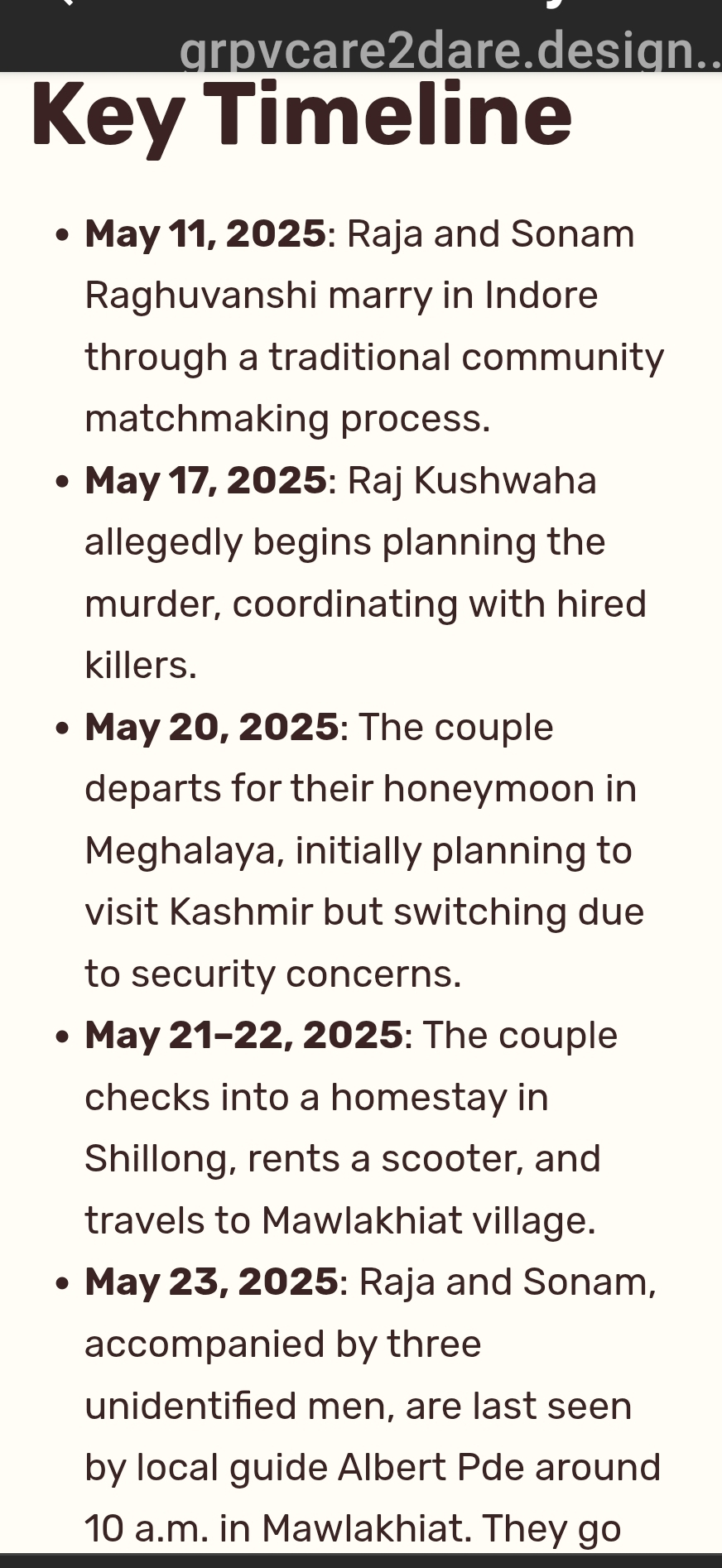
Key Timeline
May 11, 2025: Raja and Sonam Raghuvanshi marry in Indore through a traditional community matchmaking process.
May 17, 2025: Raj Kushwaha allegedly begins planning the murder, coordinating with hired killers.
May 20, 2025: The couple departs for their honeymoon in Meghalaya, initially planning to visit Kashmir but switching due to security concerns.
May 21–22, 2025: The couple checks into a homestay in Shillong, rents a scooter, and travels to Mawlakhiat village.
May 23, 2025: Raja and Sonam, accompanied by three unidentified men, are last seen by local guide Albert Pde around 10 a.m. in Mawlakhiat. They go missing later that day.
May 24, 2025: Their rented scooter is found abandoned near a cafe on the Shillong-Sohra road.
June 2, 2025: Raja’s body is discovered in a gorge, identified by a tattoo. A bloodstained machete is found nearby.
June 3, 2025: Police suspect Sonam’s involvement based on early evidence.
June 4, 2025: A bloodstained raincoat, possibly linked to the couple, is found in Mawkma village.
June 7, 2025: Albert Pde’s testimony about seeing the couple with three men shifts the investigation toward a conspiracy.
June 9, 2025: Sonam surrenders in Ghazipur, Uttar Pradesh. Three accomplices (Akash Rajput, Vishal Singh Chauhan, and Raj Kushwaha) are arrested in Madhya Pradesh, with Anand Patel detained later.
Psycho-Forensic Analysis of the Perpetrators
Sonam Raghuvanshi (Primary Accused)
Psychological Profile:
Motivation: Sonam’s alleged motive appears to be a combination of romantic entanglement and financial gain. Her two-year relationship with Raj Kushwaha, an employee in her family’s plywood business, suggests emotional attachment and possible dissatisfaction with her arranged marriage to Raja. Reports indicate she planned to live as a widow temporarily before marrying Kushwaha, pointing to a long-term strategy to maintain social and familial acceptance while pursuing her relationship.
Personality Traits: Sonam’s actions suggest manipulative and calculating tendencies, characteristic of individuals with high levels of Machiavellianism, a trait associated with deceit and strategic planning for personal gain. Her ability to orchestrate a murder within days of her wedding, while maintaining the facade of a honeymoon, indicates a lack of empathy and possible narcissistic traits, prioritizing her desires over Raja’s life. Her claim of being abducted and abandoned in Ghazipur could reflect a defensive strategy to deflect guilt, a common tactic among offenders with antisocial tendencies.
Behavioral Indicators: Sonam’s choice of a remote trail (Mawlingkhiyiat) over a popular tourist route suggests premeditation and knowledge of the terrain’s isolation, facilitating the crime. Her call records showing contact with Kushwaha and sharing her location further indicate active coordination. Her surrender in Ghazipur, after allegedly fleeing to Indore and then Uttar Pradesh, may suggest a mix of guilt, fear of capture, or an attempt to control the narrative.
Criminological Context:
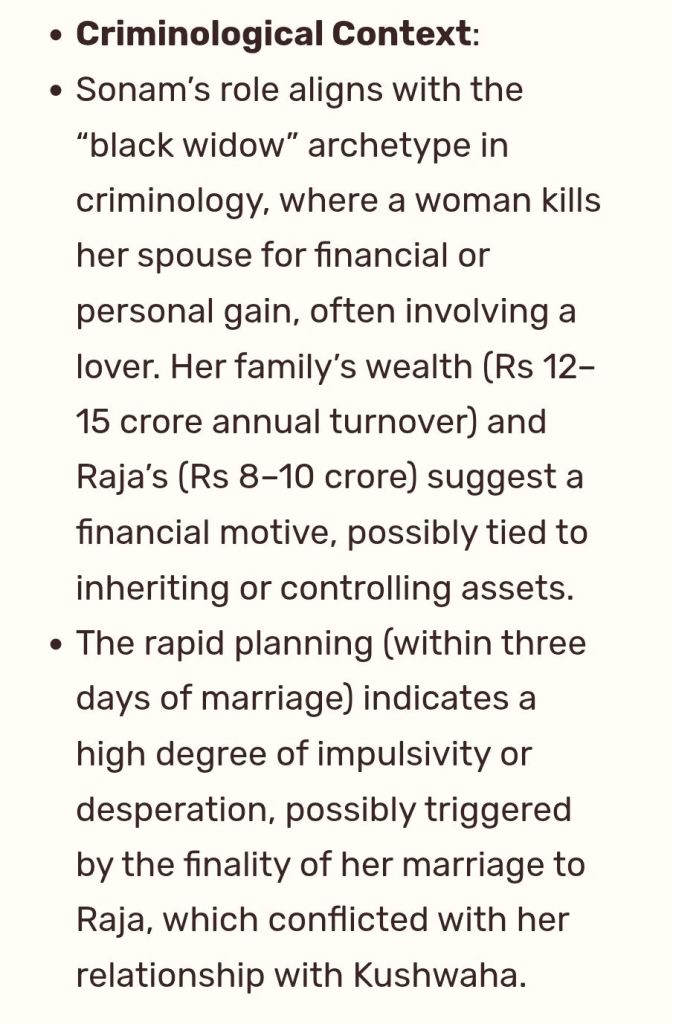
Sonam’s role aligns with the “black widow” archetype in criminology, where a woman kills her spouse for financial or personal gain, often involving a lover. Her family’s wealth (Rs 12–15 crore annual turnover) and Raja’s (Rs 8–10 crore) suggest a financial motive, possibly tied to inheriting or controlling assets.
The rapid planning (within three days of marriage) indicates a high degree of impulsivity or desperation, possibly triggered by the finality of her marriage to Raja, which conflicted with her relationship with Kushwaha.
Raj Kushwaha (Alleged Co-Conspirator)
Psychological Profile:
Motivation: As Sonam’s alleged lover, Kushwaha’s motive appears rooted in jealousy, possessiveness, and a desire to eliminate Raja as a rival. His role as the planner, staying in Indore to maintain an alibi, suggests strategic thinking and a willingness to manipulate others (the hired killers) to achieve his goals.
Personality Traits: Kushwaha’s behavior indicates traits of antisocial personality disorder, including disregard for societal norms and willingness to engage in violent crime. His presence at Raja’s funeral, as reported by an eyewitness, suggests a lack of remorse and a bold attempt to maintain appearances, possibly to monitor the investigation or feign innocence.
Behavioral Indicators: Kushwaha’s coordination with the hired killers, providing them with a phone and planning the murder from May 17, shows organizational skills and premeditation. His employment in Sonam’s family business and proximity to her suggests a power dynamic where he may have felt entitled to her, fueling his willingness to orchestrate the crime.
Criminological Context:
Kushwaha fits the profile of a conspiratorial accomplice in spousal murder cases, often driven by romantic obsession or financial incentives. His decision to remain in Indore while others executed the murder aligns with a “mastermind” role, minimizing his direct exposure to risk.
His prior relationship with Sonam, known to her family but rejected, suggests a motive rooted in resentment toward the arranged marriage system, which may have exacerbated his willingness to resort to extreme measures.
Motivation: The three accomplices, aged 19–22, were likely motivated by financial gain or loyalty to Kushwaha. Their willingness to travel from Madhya Pradesh to Meghalaya and execute a violent murder suggests a lack of moral inhibition, possibly influenced by socioeconomic factors or group dynamics.
Personality Traits: Young, impressionable individuals involved in contract killings often exhibit low empathy, thrill-seeking behavior, or susceptibility to manipulation by a dominant figure (in this case, Kushwaha). Their confession that Sonam instructed them to kill Raja in her presence indicates a hierarchical dynamic where they followed orders, possibly under coercion or promise of reward.
Behavioral Indicators: The use of a non-local machete, purchased in Guwahati, and the brutal nature of the attack (two head injuries) suggest a lack of sophistication in execution but a high level of violence. Leaving evidence like a bloodstained shirt and machete indicates inexperience or carelessness, common among young offenders.
Criminological Context:
The accomplices fit the profile of hired killers in organized crime, often young men from lower socioeconomic backgrounds who are easily recruited for violent tasks. Their arrests in Madhya Pradesh and Uttar Pradesh suggest a network of connections, possibly through Kushwaha’s influence in Indore.
The group’s decision to follow the couple from Guwahati to Shillong and execute the murder in a remote location indicates planning but poor operational security, as evidenced by the trail of physical evidence.
Forensic Evidence and Investigation
Physical Evidence:
Machete: The bloodstained machete, identified as non-local and brand new, was pivotal in shifting suspicion toward external perpetrators. Its purchase in Guwahati by the accomplices suggests premeditation and logistical planning.
Autopsy Findings: Raja sustained two head injuries, one to the front and one to the back, indicating a brutal, targeted attack. The absence of his gold ring and chain suggests a possible attempt to stage the murder as a robbery.
Additional Items: A bloodstained raincoat, a woman’s white shirt, a strip of tablets, a smartwatch, and part of a phone screen were recovered, linking the crime scene to the couple and accomplices. The raincoat’s location in Mawkma village, halfway between the gorge and Sohrarim, suggests an attempt to dispose of evidence.
Scooter: The abandoned rented scooter on May 24 provided an early clue, prompting a search and rescue operation.
Witness Testimony:
Albert Pde’s observation of Raja and Sonam with three Hindi-speaking men on May 23 was critical, expanding the investigation to include accomplices. His lack of interaction with the group due to language barriers highlights the perpetrators’ attempt to blend in as tourists.
Digital Evidence:
Sonam’s call records revealed communication with Kushwaha and one of the hired killers, with her sharing her last location before the murder. This digital trail was instrumental in linking her to the conspiracy.
Psychological and Social Factors Contributing to the Crime
Arranged Marriage Dynamics:
The marriage between Raja and Sonam, arranged through a community matchmaking tradition, appears to have been a source of tension. Raja’s mother reported that Sonam showed little interest in him post-marriage, suggesting emotional detachment or resentment. Sonam’s prior relationship with Kushwaha, known to her family but rejected, likely created a conflict between personal desires and societal expectations.
Arranged marriages can lead to psychological strain when one partner feels coerced or unfulfilled, potentially fostering resentment or desperation, as seen in Sonam’s actions.
Infidelity and Emotional Betrayal:
Sonam’s two-year affair with Kushwaha, an employee in her family’s business, indicates a deep emotional bond that conflicted with her marriage. This relationship likely fueled her willingness to eliminate Raja to pursue her preferred partner.
Kushwaha’s role as a subordinate in Sonam’s family business may have intensified his desire to “prove” himself or secure her, leading to extreme measures.
Financial Motives:
Both families were affluent, with Raja’s transport business and Sonam’s family’s plywood business generating significant revenue. Allegations that Sonam took Rs 9 lakh from Raja for honeymoon expenses and possibly paid the killers suggest a financial incentive, possibly to control assets or fund her future with Kushwaha.
The missing jewelry (gold ring and chain) supports the theory of a staged robbery, potentially to obscure the true motive.
Cultural and Social Pressures:
The Raghuvanshi community’s matchmaking tradition and the pressure to conform to familial expectations may have trapped Sonam in a marriage she did not want, pushing her toward drastic action.
The stigma of divorce in Indian society may have made murder seem a more viable option to Sonam than ending the marriage legally, especially given her family’s rejection of her relationship with Kushwaha.
Factors That Could Have Saved Raja Raghuvanshi
Open Communication and Family Intervention:
Pre-Marital Counseling: Had Raja and Sonam undergone pre-marital counseling, underlying issues like Sonam’s lack of interest or her relationship with Kushwaha might have surfaced, potentially leading to the marriage being reconsidered. Open discussions about compatibility could have prevented the union.
Family Awareness: Sonam’s family was aware of her relationship with Kushwaha but dismissed it. Proactive intervention, such as addressing her emotional needs or mediating with Raja’s family, could have resolved the conflict before marriage.
Raja’s Awareness: Raja’s mother noted his concerns about Sonam’s disinterest. Encouraging Raja to confront these issues directly or seek mediation might have led to a separation rather than a honeymoon trip.
Social Acceptance of Divorce:
Greater societal acceptance of divorce or relationship dissolution could have allowed Sonam to end the marriage without resorting to violence. Cultural stigma often pressures individuals to remain in unhappy marriages, leading to extreme outcomes. Providing Sonam with a socially acceptable exit strategy might have prevented the crime.
Psychological Support:
Mental Health Resources: Sonam’s manipulative and calculating behavior suggests underlying psychological issues, possibly exacerbated by the pressure of an unwanted marriage. Access to therapy or counseling could have helped her process her emotions and make healthier choices.
Conflict Resolution: Psychological support for both Sonam and Kushwaha could have addressed their resentment and obsession, potentially deterring the murder plot.
Vigilance During the Honeymoon:
Travel Safety Measures: Raja’s decision to travel to a remote area with strangers (the three men) was a critical vulnerability. Greater awareness of personal safety, such as avoiding isolated locations or verifying companions, could have reduced the opportunity for the crime.
Local Authorities: Enhanced monitoring by local police or tourist guides in high-risk areas like Sohra could have deterred the perpetrators or led to earlier intervention. Albert Pde’s testimony was crucial, but proactive engagement with tourists might have raised red flags sooner.
Digital and Financial Oversight:
Call Record Monitoring: Earlier access to Sonam’s call records could have alerted authorities to her communication with Kushwaha and the killers, potentially preventing the murder.
Financial Transparency: Raja’s family alleged Sonam took Rs 9 lakh for honeymoon expenses. Closer scrutiny of large financial transactions within the family could have raised suspicions about her intentions.
Community and Legal Support:
Community Mediation: The Raghuvanshi community’s matchmaking tradition could incorporate follow-up mechanisms to check on newlyweds’ well-being, identifying issues like Sonam’s disinterest early on.
Legal Protections: Stronger legal mechanisms to protect individuals in arranged marriages, such as mandatory disclosures of prior relationships or financial agreements, could have flagged Sonam’s intentions.
Critical Reflections
Police Efficiency: The Meghalaya Police’s swift response, forming an SIT and arresting suspects within seven days, highlights effective investigative work. However, the initial search-and-rescue operation was hampered by heavy rain, suggesting a need for better resources in remote areas.
Sonam’s Defense: Sonam’s claim of abduction and abandonment lacks corroboration and contradicts the evidence of her coordination with the killers. This defense may reflect a calculated attempt to evade responsibility, a common tactic in spousal murder cases.
Societal Implications: The case underscores the dangers of unresolved emotional conflicts in arranged marriages and the need for cultural shifts toward open communication and mental health support. It also highlights the risks of hiring contract killers, a growing trend in spousal crimes in India.
Conclusion
The Raja Raghuvanshi murder case reveals a tragic interplay of infidelity, societal pressures, and premeditated violence. Sonam Raghuvanshi’s alleged orchestration, driven by her affair with Raj Kushwaha and possible financial motives, reflects deep psychological and social dysfunction. The hired accomplices’ actions underscore the accessibility of contract killers in certain networks. Preventive measures, including open communication, psychological support, and enhanced safety protocols, could have saved Raja’s life. The case serves as a stark reminder of the need for societal reform to address the root causes of such crimes, particularly in the context of arranged marriages and cultural expectations.
 GRP_VCare2Dare