S1228: The Krishna-Kamsa Spectrum of Indian Masculinities..

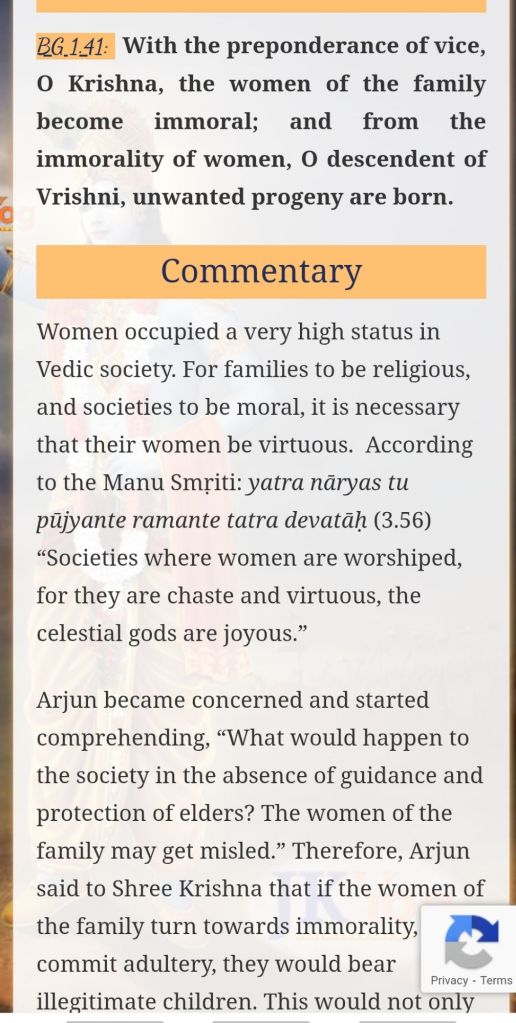
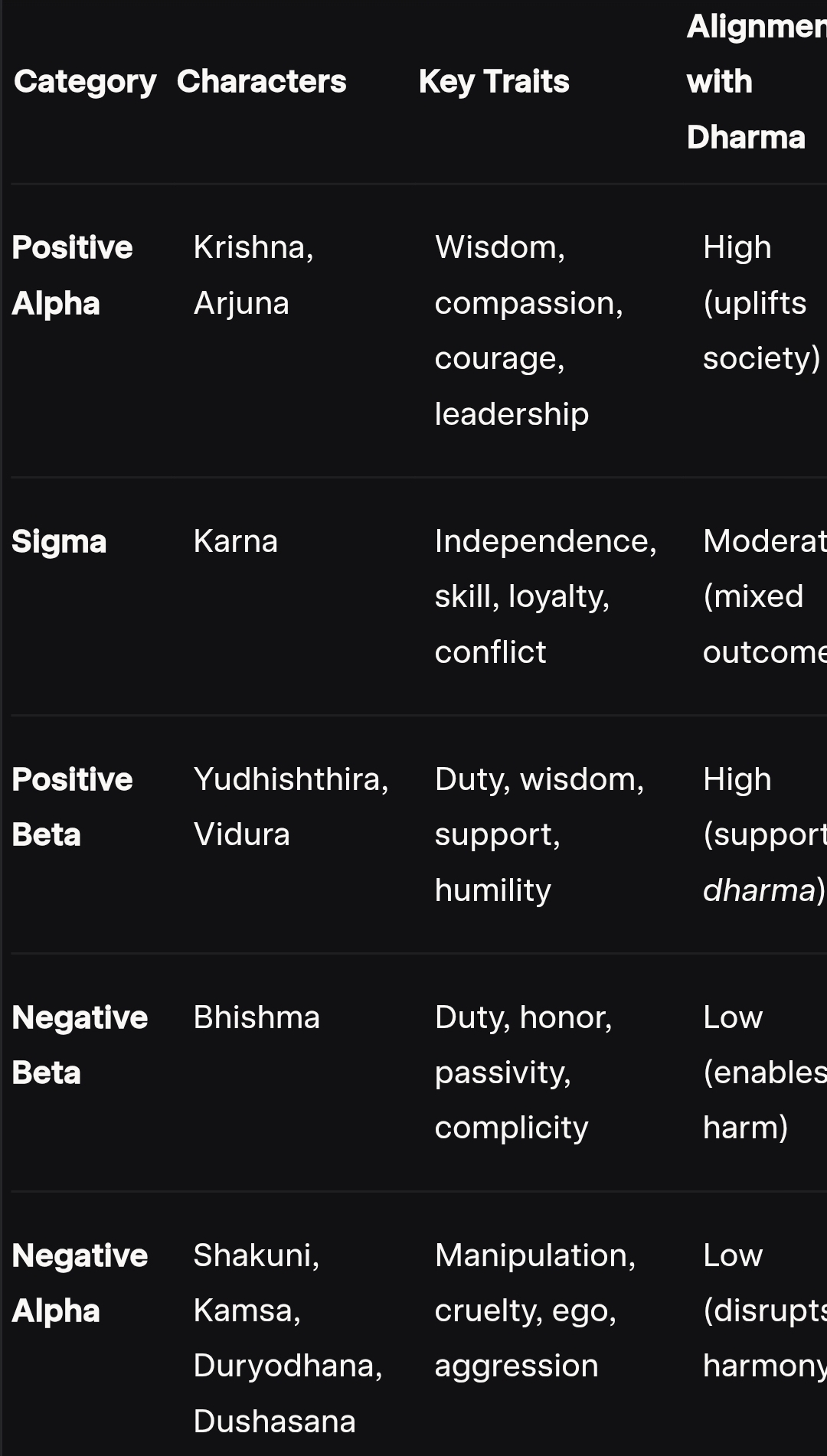
Indian Masculinities Spectrum based on Krishna, Karna, Shakuni, and Kamsa, with additional characters from Indian mythology, we can categorize them along a continuum from Positive Alpha (exemplifying virtuous, uplifting masculinity) to Beta (neutral or supportive traits, often lacking dominance but not necessarily negative) to Negative Alpha (destructive, ego-driven masculinity). This spectrum will draw from the Mahabharata and related texts, analyzing each character’s traits in the context of masculinity, with Krishna as the ideal of tonic masculinity and others reflecting varying degrees of positive, neutral, or toxic genderity. Additional characters like Arjuna, Bhishma, Duryodhana, and Dushasana will be included to enrich the spectrum.

Spectrum of Indian Masculinities: Krishna, Karna, Shakuni, Kamsa, and Others

The concept of masculinity in Indian mythology, particularly in the Mahabharata, offers a rich tapestry of archetypes ranging from virtuous leadership to destructive egoism. This spectrum categorizes key characters—Krishna, Karna, Shakuni, Kamsa, Arjuna, Bhishma, Duryodhana, and Dushasana—along a continuum of Positive Alpha (tonic masculinity that uplifts society), Beta (supportive or neutral traits, often lacking dominance), and Negative Alpha (toxic masculinity driven by ego, power, or malice). Each character’s portrayal reflects distinct facets of masculinity, grounded in their actions, motivations, and alignment with dharma (righteous duty).

Positive Alpha: Tonic Masculinity

Positive Alpha masculinity embodies strength, wisdom, compassion, and humility, aligning with dharma to foster harmony and justice. These characters lead with purpose, prioritize collective good, and balance power with empathy.

  • Krishna:
  • Traits: Wise, compassionate, strategic, humble, protective. As the king of Dwaraka, protector of Draupadi and the gopis, and Arjuna’s charioteer in the Bhagavad Gita, Krishna exemplifies tonic masculinity. His acronym K.R.I.S.H.N.A (King, Rakshak, Integrator, Sarathi, Helper, Negotiator, Achiever) captures his versatile leadership—guiding with wisdom, protecting the vulnerable, and uniting kins without ego.
  • Example: Krishna’s selfless guidance in the Kurukshetra war and miraculous protection of Draupadi’s dignity showcase a masculinity that uplifts without dominating.
  • Why Positive Alpha: Krishna integrates strength with emotional intelligence, acting for dharma rather than personal gain, making him the ideal of Indian masculinity.
  • Arjuna:
  • Traits: Courageous, skilled, introspective, devoted. As a warrior and Krishna’s disciple, Arjuna embodies a disciplined masculinity that seeks guidance and balances martial prowess with moral reflection, as seen in his Gita dialogue.
  • Example: His hesitation to fight in Kurukshetra, followed by his acceptance of dharma under Krishna’s counsel, reflects a masculinity open to growth and ethical action.
  • Why Positive Alpha: Arjuna’s strength, combined with his willingness to learn and uphold justice, aligns him closely with Krishna, though he relies on guidance, placing him slightly below Krishna’s self-assured leadership.

Beta: Supportive or Neutral Masculinity

Beta masculinity is characterized by supportive, non-dominant, or morally ambiguous traits. These characters may lack the assertive leadership of Alphas but are not inherently destructive, often playing crucial roles in the narrative.

  • Karna:
  • Traits: Loyal, generous, skilled, conflicted. Karna’s exceptional archery and loyalty to Duryodhana reflect strength, but his allegiance to the Kauravas and personal bitterness (due to his low-born status) limit his leadership. His generosity, like giving away his armor, shows nobility, but his choices often align with personal honor over dharma.
  • Example: Karna’s refusal to abandon Duryodhana, despite knowing the Kauravas’ moral failings, reflects loyalty but also a lack of broader vision.
  • Why Beta: Karna’s masculinity is admirable yet flawed; his internal conflicts and loyalty-driven decisions prevent him from fully embodying Positive Alpha traits, placing him in a supportive, neutral role.
  • Bhishma:
  • Traits: Dutiful, honorable, restrained, tragic. Bhishma’s vow of celibacy and loyalty to Hastinapur make him a pillar of duty, but his inability to intervene decisively against the Kauravas’ injustices (e.g., Draupadi’s disrobing) reflects passivity.
  • Example: His silence during Draupadi’s humiliation shows a masculinity bound by oath over moral action, limiting his impact.
  • Why Beta: Bhishma’s strength and wisdom are undercut by his rigid adherence to vows, making him a supportive figure who lacks the transformative leadership of a Positive Alpha.

Negative Alpha: Toxic Masculinity

Negative Alpha masculinity is marked by ego, aggression, manipulation, or cruelty, leading to destruction and disharmony. These characters misuse power, prioritize self-interest, and deviate from dharma.

  • Shakuni:
  • Traits: Manipulative, cunning, vengeful. Shakuni’s scheming, particularly orchestrating the dice game that leads to the Pandavas’ exile, reflects a calculating masculinity driven by revenge (stemming from his family’s grievances against the Kuru dynasty).
  • Example: His rigging of the dice game to humiliate the Pandavas shows a destructive intellect that undermines fairness and harmony.
  • Why Negative Alpha: Shakuni’s cunning dominance, devoid of compassion or justice, makes him a toxic figure whose masculinity manipulates rather than uplifts.
  • Kamsa:
  • Traits: Tyrannical, paranoid, cruel. Kamsa’s murder of newborns and oppressive rule in Mathura, driven by fear of a prophecy, epitomize a hyper-masculine obsession with control and power.
  • Example: His attempts to kill Krishna, including sending demons like Puttana, reflect a destructive aggression that harms the innocent.
  • Why Negative Alpha: Kamsa’s brute force and paranoia contrast starkly with Krishna’s strategic courage, embodying a toxic masculinity that destroys rather than protects.
  • Duryodhana:
  • Traits: Ambitious, prideful, envious. Duryodhana’s refusal to share power with the Pandavas and his role in instigating the Kurukshetra war stem from greed and a need for dominance.
  • Example: His complicity in Draupadi’s disrobing and relentless pursuit of power show a masculinity rooted in entitlement.
  • Why Negative Alpha: Duryodhana’s aggressive leadership, driven by ego rather than dharma, makes him a quintessential toxic Alpha.
  • Dushasana:
  • Traits: Cruel, subservient, exploitative. Dushasana’s attempt to disrobe Draupadi in the Kuru court is a stark display of toxic masculinity, reducing a woman to an object to assert power.
  • Example: His actions in the dice game, following Duryodhana’s orders, reflect a lack of moral agency combined with brutal aggression.
  • Why Negative Alpha: Dushasana’s cruelty and blind loyalty to his brother’s toxic agenda amplify his destructive masculinity.

The Spectrum Visualized

Key Traits Alignment with Dharma

Positive Alpha Krishna, Arjuna Wisdom, compassion, courage, humility High (uplifts society)

Beta Karna, Bhishma Loyalty, duty, skill, but conflicted/passive Moderate (mixed outcomes)

Negative Alpha Shakuni, Kamsa, Duryodhana, Dushasana Manipulation, cruelty, ego, aggression Low (disrupts harmony)

Cultural Context and Relevance

In the Indian context, masculinity is often framed through purushartha (dharma, artha, kama, moksha), where ideal manhood balances duty, prosperity, desire, and liberation. Krishna and Arjuna embody this holistic ideal, modeling a masculinity that integrates strength with empathy and action with reflection. Karna and Bhishma, while admirable, fall short due to personal conflicts or passivity, reflecting a Beta role that supports but doesn’t lead. Shakuni, Kamsa, Duryodhana, and Dushasana, conversely, represent toxic deviations—Negative Alphas whose ego-driven actions cause suffering.

This spectrum offers a framework for modern Indian masculinity, encouraging men to aspire to Krishna’s tonic qualities—leadership with compassion, strength with humility—while avoiding the pitfalls of ego, cruelty, or manipulation seen in Negative Alphas. By studying these archetypes, we can foster a masculinity that aligns with dharma, promoting harmony in personal and societal contexts.

S1227: KRISHNA Model for Indian Masculinity.

Krishna Loka: Tonic Masculinity & Toxic Genderity

Krishna Loka, the divine realm of Lord Krishna as depicted in Indian mythology, symbolizes an idealized state of harmony, dharma (righteous duty), and spiritual fulfillment. Within this framework, Krishna emerges as a timeless archetype of tonic masculinity, embodying virtues that uplift individuals and society. This note explores Krishna’s embodiment of tonic masculinity in contrast to the toxic genderity displayed by characters such as Puttana, Kamsa, Shishupala, Dhritarashtra, Gandhari, Duryodhana, Dushasana, and Shikhandi, as portrayed in the Mahabharata and other texts. Krishna’s qualities—encapsulated in the acronym K.R.I.S.H.N.A—offer a model for positive masculinity, while the toxic traits of others serve as cautionary examples of destructive behaviors.

Krishna: The Epitome of Tonic Masculinity

Krishna’s persona in Krishna Loka—whether as the playful child of Vrindavan, the wise charioteer of the Bhagavad Gita, or the king of Dwaraka—reflects a balanced, virtuous masculinity that integrates strength, compassion, wisdom, and adaptability. The acronym K.R.I.S.H.N.A captures this essence:

  • King of Dwaraka: Krishna rules with justice and humility, fostering prosperity without ego, unlike Kamsa’s tyrannical oppression or Duryodhana’s greed-driven leadership.
  • Rakshak of Draupadi & Gopis: As a protector, Krishna safeguards Draupadi’s dignity and honors the gopis’ devotion, contrasting with Dushasana’s cruel objectification or Puttana’s deceptive malice.
  • Integrator of Kins and Avatars: Krishna unites diverse groups and embodies divine unity, unlike Shishupala’s divisive envy or Dhritarashtra’s favoritism, which fracture harmony.
  • Sarathi in the Spiritual Wars: As Arjuna’s charioteer, Krishna guides with selflessness, prioritizing dharma over personal glory, unlike Duryodhana’s egoistic ambition.
  • Helper of Marginalized & Vulnerable: Krishna’s empathy for figures like Sudama contrasts with Gandhari’s passive complicity or Kamsa’s persecution of the innocent.
  • Negotiator and Achiever of Eternal Success: Krishna’s diplomatic skill and spiritual guidance ensure lasting success, unlike the short-sighted schemes of Shishupala or Duryodhana.

Krishna’s tonic masculinity is characterized by:

  • Balance: Combining strength with emotional depth, as seen in his playful leela and profound Gita teachings.
  • Humility: Serving as a charioteer or friend without seeking dominance, unlike the prideful posturing of toxic figures.
  • Respect: Honoring all, regardless of gender or status, as shown in his protection of Draupadi and devotion to the gopis.
  • Purpose: Acting in alignment with dharma for collective good, not personal gain.

These qualities align with the Indian concept of purushartha (the four aims of life: dharma, artha, kama, moksha), offering a holistic model for modern Indian masculinity that values ethical leadership, emotional intelligence, and inclusivity.

Toxic Genderity: A Contrast

Toxic genderity, as exhibited by characters like Puttana, Kamsa, Shishupala, Dhritarashtra, Gandhari, Duryodhana, Dushasana, and Shikhandi, transcends gender, manifesting as destructive behaviors rooted in ego, attachment, or moral weakness. Their actions in Krishna Loka (the broader narrative world) contrast starkly with Krishna’s virtues:

  • Puttana: Her deceptive attempt to kill infant Krishna with poisoned milk perverts caregiving, showing malice cloaked in femininity, unlike Krishna’s nurturing protection.
  • Kamsa: His paranoid tyranny and murder of newborns reflect a hyper-masculine obsession with control, contrasting with Krishna’s strategic courage.
  • Shishupala: Driven by envy, his insults to Krishna reveal a fragile ego, unlike Krishna’s secure humility.
  • Dhritarashtra: His blind attachment to Duryodhana enables injustice, contrasting with Krishna’s detached wisdom.
  • Gandhari: Her passive resentment and failure to curb her sons’ excesses show avoidance, unlike Krishna’s proactive engagement.
  • Duryodhana: His greed and pride fuel the Kurukshetra war, contrasting with Krishna’s collaborative leadership.
  • Dushasana: His attempt to disrobe Draupadi epitomizes exploitative masculinity, unlike Krishna’s respect for dignity.
  • Shikhandi: His vengeful pursuit of Bhishma prioritizes personal retribution over justice, unlike Krishna’s broader vision.

These characters’ toxic traits—ego, cruelty, attachment, or vengeance—disrupt dharma and harm society, serving as cautionary tales against unchecked negative behaviors.

Krishna Loka: A Vision for Balance

In Krishna Loka, Krishna’s tonic masculinity creates a world of harmony, where strength serves compassion, and wisdom guides action. His ability to navigate complex roles—king, protector, guide, friend—offers a blueprint for men to embody virtues that uplift rather than dominate. Conversely, the toxic genderity of others illustrates the dangers of ego-driven actions, whether male or female, showing how deviations from dharma lead to destruction.

By aspiring to Krishna’s model—wise, empathetic, and purpose-driven—modern Indian society can foster a masculinity that rejects toxic patterns of dominance or resentment, embracing instead a balanced, inclusive approach to gender roles. Krishna Loka thus becomes not just a mythological realm but a metaphor for a world where tonic masculinity prevails, creating harmony and spiritual growth.

S1226: Janma_Uthistami (Born to Improve).

We are Born to Evolve as Humans. Charitra and Charity both Begin at Homes..

We have our Janma in a Family, we are duty bound to improve the family systems.. to Promote Familyism.

Using HRM concepts to improve Families.. Marriage is mutual Recruitment

Introduction to the Annual Family and Marital Appraisal System (AFMAS)

Drawing parallels to corporate HR appraisals, where employee performance is reviewed to foster growth, accountability, and alignment with organizational goals, the Annual Family and Marital Appraisal System (AFMAS) applies a structured evaluation framework to family and community dynamics. This system aims to audit “human presences”—the roles, interactions, and contributions of individuals within a family or community—to promote professionalism (e.g., respectful, structured communication and role clarity) and reduce deviances (e.g., conflicts, neglect, or unhealthy behaviors that deviate from shared norms). By conducting an annual review, families or communities can identify strengths, address weaknesses early, set actionable goals, and build healthier systems.

AFMAS is inspired by established tools like the McMaster Family Assessment Device (FAD), which evaluates family functioning across key dimensions, and marital checkup programs such as the Gottman Relationship Checkup, which provide evidence-based insights into relationship health. It emphasizes voluntary participation, confidentiality, and a non-judgmental approach to encourage open dialogue. While professional facilitation (e.g., by a therapist) is recommended for complex cases, it can be self-administered in stable settings.

The system is divided into phases: Preparation, Assessment, Review Meeting, Action Planning, and Follow-Up. It can be adapted for nuclear families, extended families, or small community groups (e.g., neighborhoods or co-living arrangements).

Key Principles of AFMAS

  • Objectivity and Fairness: Use standardized questions and scoring to minimize bias, similar to 360-degree feedback in HR.
  • Inclusivity: Involve all consenting members, with age-appropriate adaptations for children (e.g., simplified questions).
  • Focus on Growth: Emphasize positive reinforcement and future-oriented goals over blame.
  • Professionalism: Treat interactions as “professional” roles (e.g., parent as “team leader,” spouse as “co-partner”) to reduce emotional volatility.
  • Reducing Deviances: Flag early signs of issues like poor communication or role imbalances that could lead to conflicts, addiction, or isolation.
  • Frequency: Conduct annually, ideally around a neutral date (e.g., New Year’s or a family anniversary), with optional quarterly check-ins for high-risk families.

Assessment Categories

Based on models like the FAD’s six dimensions and marital tools like Prepare/Enrich, AFMAS evaluates across core areas. Each category includes sample questions rated on a scale of 1-5 (1 = Strongly Disagree/Poor, 5 = Strongly Agree/Excellent). Participants complete self-assessments and peer assessments anonymously if preferred. Category Description Sample Questions (Self/Peer Rating) Why It Promotes Professionalism and Reduces Deviances Problem Solving Ability to identify and resolve issues collaboratively. – We resolve most everyday problems around the house.
– Family members approach conflicts calmly and logically. Encourages structured decision-making, preventing escalations into deviances like avoidance or aggression. Communication Clarity, openness, and respect in interactions. – We are frank with each other.
– Family members listen without interrupting. Fosters professional dialogue, reducing misunderstandings that lead to emotional outbursts or isolation. Roles and Responsibilities Clear division of duties and accountability. – Household tasks are fairly assigned and completed.
– We support each other’s personal growth (e.g., career, hobbies). Defines “job descriptions” in family life, minimizing neglect or overburdening that causes resentment. Emotional Support (Affective Responsiveness/Involvement) Empathy, affection, and emotional availability. – We show interest in each other’s feelings.
– Family members respond appropriately to emotions (e.g., comfort during stress). Builds trust and bonding, countering deviances like emotional neglect or detachment. Behavior Control Setting and enforcing healthy boundaries and norms. – We have rules about unacceptable behaviors (e.g., no yelling).
– Discipline is consistent and fair. Establishes community standards, reducing deviant actions like rule-breaking or inconsistency. Overall Satisfaction and Adaptability General well-being and flexibility to changes. – I feel valued and happy in this family/community.
– We adapt well to life changes (e.g., job loss, new members). Provides a holistic audit, identifying systemic issues early to maintain stability.

Scores are averaged per category (e.g., ❤ indicates need for improvement). Tools like free online questionnaires (e.g., adapted from the Couple Checkup) can automate this.

Step-by-Step Process for Conducting AFMAS

  1. Preparation (1-2 Weeks Before):
  • Designate a facilitator (e.g., neutral family member or external counselor).
  • Distribute assessment forms (digital or paper) based on the categories above.
  • Set ground rules: Confidentiality, no retaliation for feedback, focus on behaviors not personalities.
  • Gather any prior data (e.g., from last year’s appraisal) for trend analysis.
  1. Assessment Phase (Individual Completion, 1 Week):
  • Each participant completes a self-assessment and assesses others (e.g., spouses assess each other; parents assess children and vice versa).
  • Include open-ended sections: “What strengths do we have?” “What one change would improve our family?”
  • For communities, limit to key interactions (e.g., shared responsibilities like neighborhood events).
  • Use evidence-based tools for depth: Incorporate elements from the Gottman Relationship Checkup for couples or FAD for families.
  1. Review Meeting (Group Session, 1-2 Hours):
  • Compile and anonymize results (e.g., average scores shared, not individual responses).
  • Discuss findings category by category: Celebrate highs (e.g., “Our communication score improved from 3.5 to 4.2!”), address lows (e.g., “Behavior control is low—let’s brainstorm rules”).
  • Facilitate with techniques like genograms (visual family maps) or family sculpting (role-playing dynamics) for deeper insight.
  • Keep it professional: Use timers for speaking turns, focus on “I” statements (e.g., “I feel supported when…”).
  1. Action Planning (During/After Meeting):
  • Set SMART goals (Specific, Measurable, Achievable, Relevant, Time-bound): E.g., “Hold weekly family meetings to improve communication by Q2.”
  • Assign accountability: Who leads each goal? How to track progress?
  • If scores indicate severe issues (e.g., all categories <2), recommend professional intervention like couples therapy or family counseling.
  1. Follow-Up (Ongoing and Next Year):
  • Schedule mid-year check-ins (e.g., 6 months) to review progress.
  • Document everything in a shared family “appraisal file” for continuity.
  • Evaluate the system itself: “Did AFMAS reduce conflicts? Rate its effectiveness 1-5.”
  • In communities, integrate with group events (e.g., annual neighborhood retreats).

Benefits and Implementation Tips

  • Professionalism: Mirrors HR processes, treating family roles as interdependent “positions” to encourage respect and efficiency.
  • Reducing Deviances: Early detection prevents escalation; studies on marital checkups show they improve satisfaction and reduce divorce risks. For communities, it builds cohesion, lowering issues like disputes or disengagement.
  • Customization: For diverse families (e.g., blended, LGBTQ+, multicultural), adapt questions to cultural norms.
  • Resources: Start with free tools like those from Focus on the Family or online adaptations of FAD. If needed, consult a therapist trained in models like the McMaster Approach.
  • Potential Challenges and Solutions: Resistance to feedback—start small with positive categories. Privacy concerns—use anonymous apps.

By implementing AFMAS, families and communities can transform from reactive to proactive systems, much like successful companies, leading to sustained harmony and growth. If you’d like templates, sample forms, or adaptations for a specific context, let me know!

S1225: Project GENIE_Us India 2030..

GENIE= Green Empowerment for National Innovation and Excellence.”  launched for a FatFree and Factful India 2030.

Our Nationals Wish is Our Nation’s Command.. Atmanirbhar Bharat, Charbi_Rahit, HithaBharat.

One Nation, Born for Transformation..  India1947 to Bharat2047. (Character (Ethics), Competence (Skills) & Capacity (Talent Pool))_Building = National Building.

Project GENIE_Us India, as described in your messages, appears to be a conceptual initiative focused on fostering a low-carbon, fact-based, and healthy (“fat-free”) lifestyle in India, aligning with sustainable development and national progress. The tagline “Growth, Reach & Purpose = iGRP” suggests a framework centered on personal and collective growth, outreach, and purposeful action.

The reference to a “Mastermind group” from Wikipedia indicates a collaborative approach where individuals come together to share ideas, solve problems, and drive innovation, which seems to be a core component of this project. The slogans “Soch Badlo, Desh Mat Badlo, Desh ko Badlo” (translated as “Change thoughts, don’t change your nationality, change your nation”) emphasize transforming mindsets to contribute to national development without abandoning one’s roots.

Here’s a breakdown of how Project GENIE_Us India could align with a low-carbon, factful, and healthy vision, incorporating the inclusive call for contributions to national policies:

1. Low-Carbon Focus

India has made significant commitments to reducing its carbon footprint, as outlined in its Long-Term Low Greenhouse Gas Emission Development Strategy (LT-LEDS), submitted to the UNFCCC in November 2022. The strategy targets net-zero emissions by 2070, with key transitions including:

  • Renewable Energy: Aiming for 500 GW of non-fossil fuel capacity by 2030, with initiatives like solar parks and rooftop solar programs.
  • Efficient Transport: Promoting electric mobility through schemes like FAME II and expanding EV charging infrastructure.
  • Energy Efficiency: Encouraging energy-efficient appliances and green building standards.
  • Carbon Capture and Storage (CCS): Exploring CCS technologies, though challenges remain due to high costs and energy intensity.
  • Reforestation: Expanding forest cover as a natural carbon sink, as exemplified by individuals like Jadav Payeng, who transformed barren land into a 1,360-acre forest.

Project GENIE_Us could leverage these national policies by encouraging grassroots participation in sustainable practices, such as adopting renewable energy, reducing private vehicle use, or supporting reforestation efforts. The “Mastermind group” concept could facilitate community-driven solutions, like local clean energy projects or carbon offset initiatives.

2. Factful Approach

A “factful” India implies decision-making grounded in evidence and awareness. The project’s emphasis on education and experiences not being barriers suggests an inclusive platform where diverse perspectives contribute to policy-making. This aligns with India’s Mission LiFE (Lifestyle for Environment), launched in 2022, which promotes sustainable lifestyles through individual actions.

  • Mission LiFE: Encourages mindful consumption and a circular economy, with India’s low per capita carbon footprint (0.56 tonnes vs. global 4 tonnes) as a foundation for global leadership in sustainable living.
  • Individual Actions: Examples like Aadavi, the world’s first carbon-neutral baby, and Chetan Solanki’s Energy Swaraj Yatra highlight how informed, fact-based choices (e.g., planting trees, using solar energy) can drive change.

GENIE_Us could create forums or workshops, inspired by the Mastermind group model, to spread awareness about climate science and sustainable practices, ensuring contributions are rooted in data and practical solutions.

3. Fat-Free (Healthy) Living

The “fat-free” aspect likely symbolizes a healthier, more sustainable lifestyle, both physically and environmentally. This ties into India’s traditional values of thrift and harmony with nature, as noted in Mission LiFE and stories of individuals like Jadav Payeng and Chetan Solanki. Encouraging low-carbon lifestyles, such as reducing waste, using energy-efficient appliances, or adopting plant-based diets, could be part of this vision. The project could promote:

  • Sustainable Diets: Encouraging locally sourced, low-impact foods.
  • Active Mobility: Promoting cycling or walking to reduce emissions and improve health.
  • Community Health: Supporting initiatives like cleaner cooking fuels (Ujjwala Yojana) to reduce indoor air pollution.

4. Inclusive Policy Contributions

The call “All are Welcome to contribute towards national policies” reflects a democratic, participatory approach. The Mastermind group model could serve as a platform for citizens, regardless of education or experience, to propose ideas for India’s climate and development goals. This aligns with the LiFE movement’s vision of a “Jan Andolan” (people’s movement) and India’s updated Nationally Determined Contributions (NDCs), which emphasize sustainable lifestyles.

  • Crowdsourcing Ideas: GENIE_Us could create online or community-based platforms to collect innovative solutions, similar to the LiFE Global Call for Ideas.
  • Inclusivity: Ensuring marginalized groups, rural communities, and youth have a voice in shaping policies, such as urban design or energy transitions.

5. Challenges and Opportunities

India’s path to a low-carbon, factful, and healthy future faces challenges:

  • Finance: Achieving net-zero by 2070 requires an estimated $10 trillion in investments.
  • Technology Access: Innovations like CCS need global collaboration for affordability.
  • Behavioral Change: Shifting consumption patterns requires widespread awareness, which GENIE_Us could address through education campaigns.

However, opportunities abound:

  • Green Jobs: Growth in renewable energy and climate tech sectors.
  • Global Leadership: India’s low historical emissions (4% of global GHG despite 17% of the population) and cultural emphasis on sustainability position it to lead.
  • Community Action: Stories of individuals like Bantval Jayant Baliga (energy-efficient technology) and Jadav Payeng inspire collective action.

6. How GENIE_Us Can Contribute

To realize its vision, Project GENIE_Us could:

  • Form Mastermind Groups: Create local and digital groups to brainstorm low-carbon solutions, drawing from diverse expertise.
  • Promote Mission LiFE: Partner with NITI Aayog to amplify sustainable lifestyle campaigns.
  • Engage Youth: Use social media and educational institutions to involve young innovators in policy discussions.
  • Support Local Heroes: Highlight and scale efforts like those of Aadavi’s parents or Chetan Solanki to inspire others.
  • Advocate for Policy: Channel community ideas into actionable inputs for India’s 2025 NDC update or LT-LEDS implementation.

Conclusion

Project GENIE_Us India, with its focus on “Growth, Reach & Purpose,” can play a pivotal role in fostering a low-carbon, fact-based, and healthy India by leveraging the Mastermind group model to encourage collective action. By aligning with national initiatives like Mission LiFE and LT-LEDS, and drawing inspiration from individual champions, it can empower citizens to contribute to India’s net-zero goal by 2070. The slogan “Soch Badlo, Desh Mat Badlo, Desh ko Badlo” encapsulates the transformative potential of mindset shifts in building a sustainable nation.

An apt acronym for G.E.N.I.E in the context of Project GENIE_Us India, with its focus on a low-carbon, factful, and healthy nation, could be:

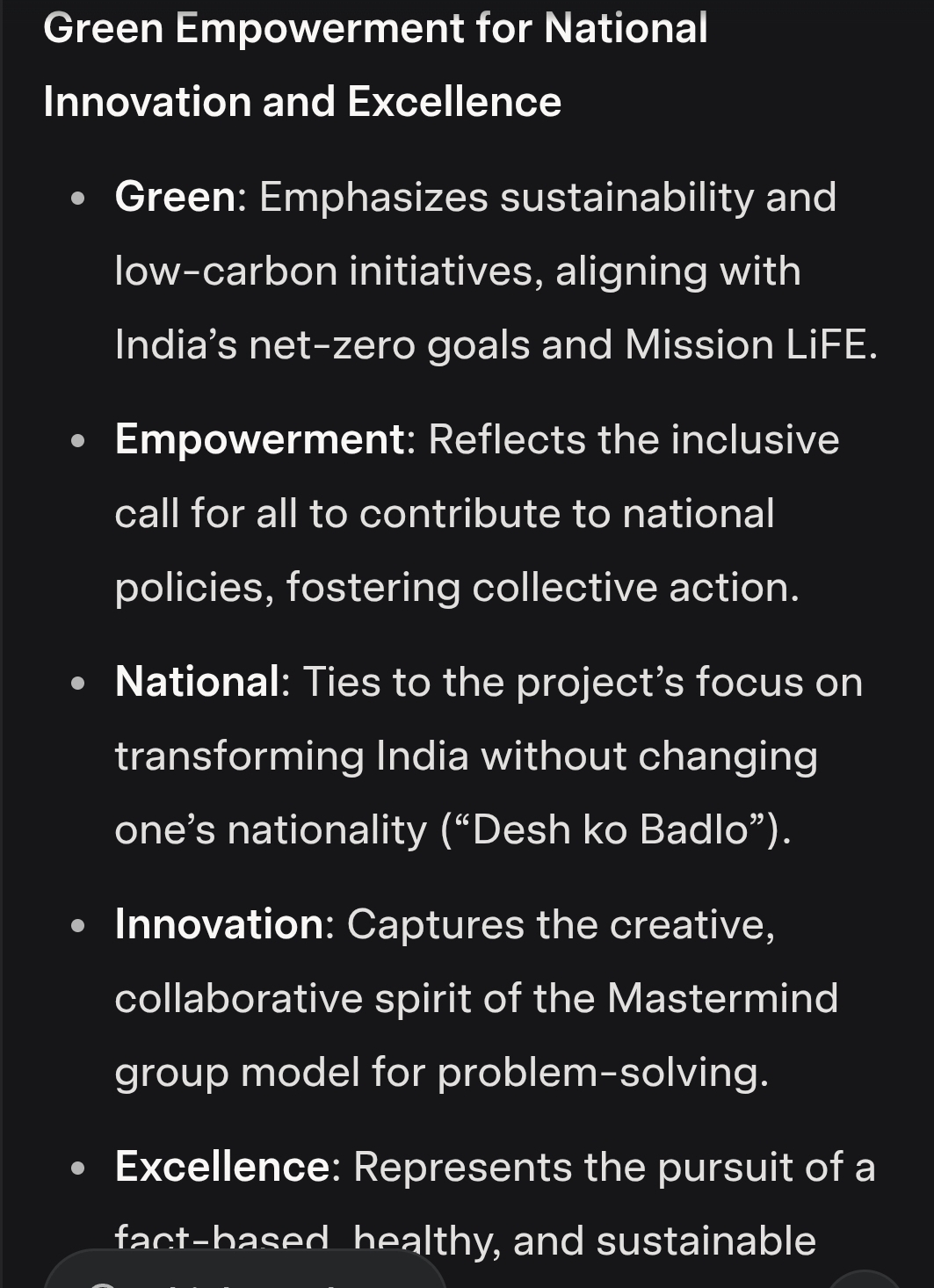
Green Empowerment for National Innovation and Excellence

  • Green: Emphasizes sustainability and low-carbon initiatives, aligning with India’s net-zero goals and Mission LiFE.
  • Empowerment: Reflects the inclusive call for all to contribute to national policies, fostering collective action.
  • National: Ties to the project’s focus on transforming India without changing one’s nationality (“Desh ko Badlo”).
  • Innovation: Captures the creative, collaborative spirit of the Mastermind group model for problem-solving.
  • Excellence: Represents the pursuit of a fact-based, healthy, and sustainable future for India.

This acronym encapsulates the project’s vision of growth, reach, and purpose (iGRP) while aligning with its environmental and social goals.

*Many Mind Issues are Preventable & Healable, When Right Resources are made Accessible, Applicable & Affordable.*

Priyamitras’ Master Mind Group for Peer2Peer MindCare:
https://chat.whatsapp.com/FjRuSB64Qp1EGxK2pJ4l29

S1224: Fatty Mind=Fatty Body & Healthy Mind= Healthy Body. #LeanNation is #LearnedNation.

Mission for #FatFreeIndia #FreedomFromFat

Today 14th Aug 2025, On the eve of the 78th Indian Independence Day, I an Independent Indian declare a war on Global Obesity, which is Silently killing my fellow Indian Bros & sisters with Life Style Disease of Heart, Diabetes, Depression..etc.

S1223: Root of Creations, Corrections & Corruptions… Homes and our Moms.

Bride or Groom who needs to be Investigated more & deeper?

Male Safety is Priority as Manavamitras..

80 to 90% of profiles are being checked of brides by the grooms.. This is True data from Indian spy industry..

https://youtu.be/l9IUbEqgFuQ?feature=shared

Beware of BAstarDization process from the western worlds..

Corruption of Society starts from Corruption in Familes & Spouses.

The Security of Nations depend on Goodness (Satviktam) of its Men,

The Safety of Homes Depend on Goodness(Satviktam) of its Women.

_GR Prasad..

*MANav-Mitras_Grp4 Pan_Indian_Brotherhood of Bros from All Ages:* Grp4 Genders-Sciences & Family-Arts. Manava-Abivridi (Human_Development).

All-India Brothers’ Awareness & PeerSupport Group. Trauma-Informed & Narc-Abuse Aware Community.

Enable FundaMentl Duty of *Article 51A(e)* 4CommonBrotherhood.

#JaiBharat #JaiBhaitva
#SupportiveSiblings.

*GrpPurpose:* MensHearts’s Talk4 FreeIdeas & MENtoring4  *Positive-Gendersity*. https://grpvcare2dare.design.blog/2021/12/02/s87-project-manav_mitras-connect-heart2heart-for-universal-brotherhood-fraternal-culture-friendships-group-prasad/

*ResOURceGrp4:*  Brothrly2030. OurBroCodes: https://bit.ly/3zMlXJh

Ideas2Actions_Place of *MANav-Mitras  +ve Brotherhood*
Mens & Bros SupportGroup4 Health, Fitness & Wellness, Positive_masculinity, Genders_Sciences, Gender-Cultures & Genders_Safety for BetterMent of Sense, Self & Society. Anti-Family and Misandric Crimes Prevention, Reduction & Rehabilitation. *#Sarva-ManavaHitham.*

*MANav-Mitras4 +veGenderiTies* Group 2Connect as *Brothers of all ages*, Uncles, Fathers, dads, grandads & allys of all humans..etc

Our Global Group Motto:
*“MANavaHitam Paramo Dharmaha.* (HuMAN Welfare is our First Duty).”

Better_Genderity = Better_society. Unconditional Friendship is best ship.

*MANAVAMITRAS is an INDO_Bros’ Supports Group 4 Genders Infoneeds of Men’s_Wellness & Family Welfare:*

Lets Prevent Inter-Genders & IntraFamily Conflicts-Frauds & Promote gender peace,
*by Sharing BroViews (i.e Brothers Reviews)*
*#Indian_huMANitarian Group Fraternizing Our Brotherly_India 2030:* No Unity, No Future, More Solidarity = More Life.

*Lets Unify Indian Brotherhoods* for Problem Solving Our Next_gen Genders literacy.

Our MM-Grp Mission is Unite Friends 4Genders_Justice, Social_Harmony & Neo Indian_SaferFamilies 4.0.

Friendship+ Moral+Mental Support = Mentorship

*All Genders’ Wellness & Bros2 Healthify Life Group:*
https://chat.whatsapp.com/KecJokbFlP4F0azMaCyeyA

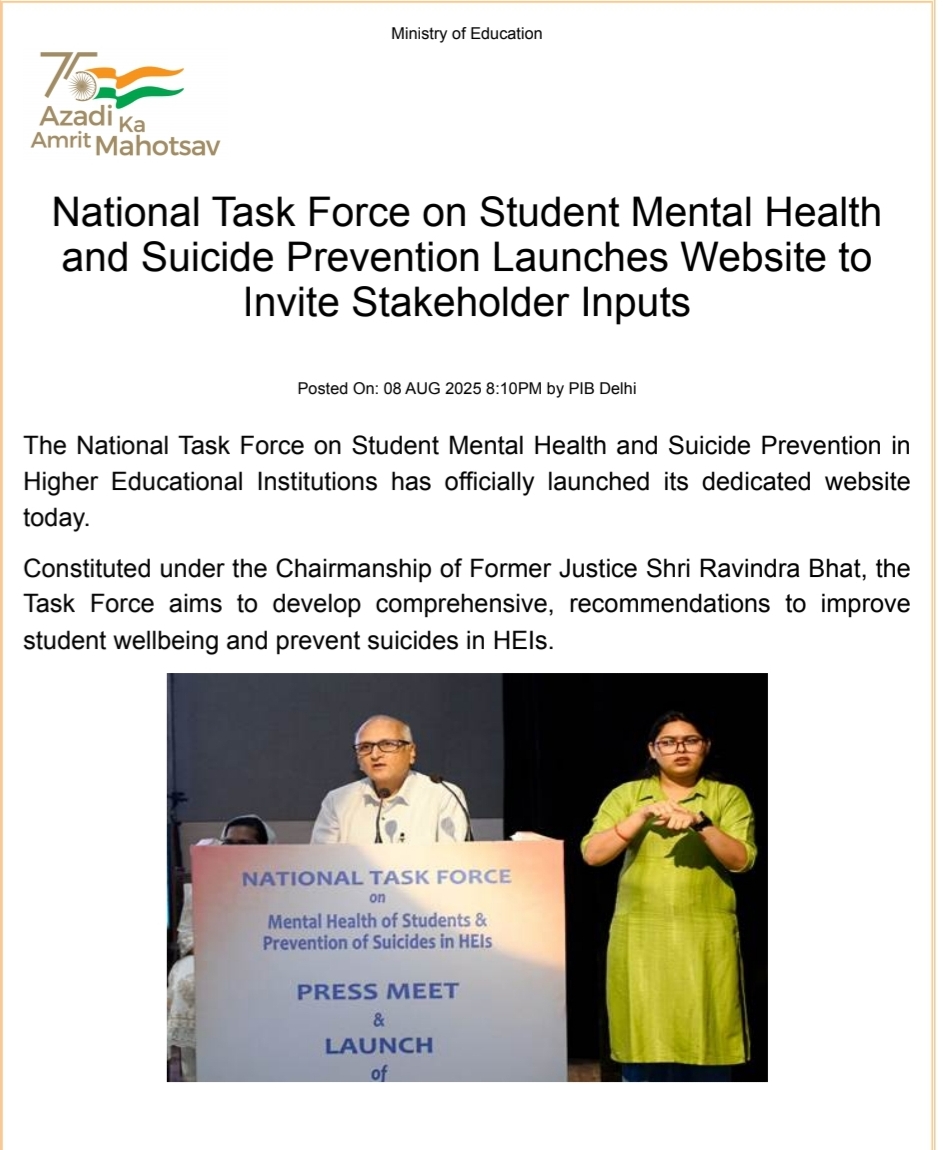
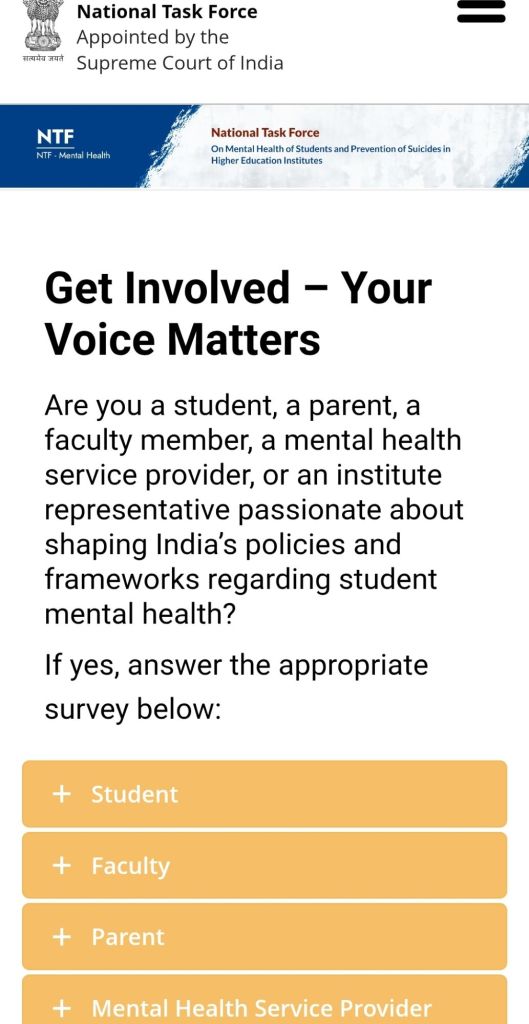
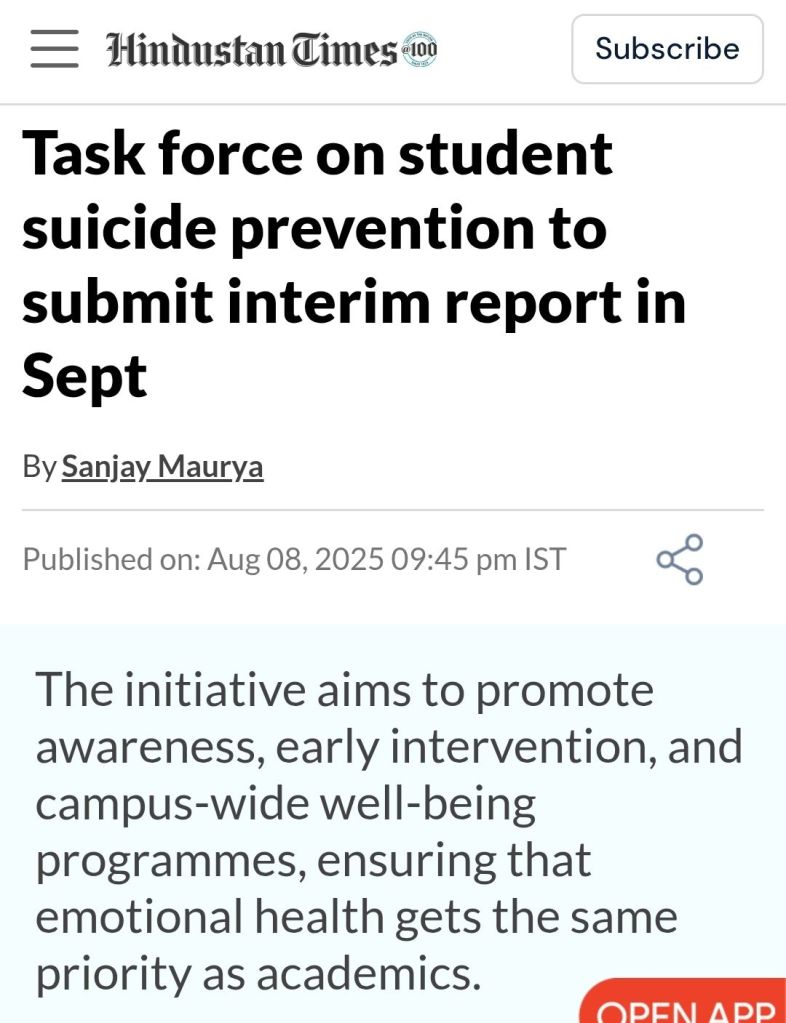
S1222: Indian National Task Force for MH of Students & Suicide Prevention. Participate & Mitigate Harms.

https://ntf.education.gov.in/

Impact of Life-Scare Systems is Indirectly proportional to life Care Systems one is Connected to. Connect to Life, Connect with Lifers..

For Broken Hearts/Depressn_Grief/Distress/Suicides..etc Many Mind Issues are Preventable & Healable, When Right Resources are made Accessible, Applicable & Affordable to all.

To connect with a Caring is Sharing Community of Friends Of Life. https://chat.whatsapp.com/FjRuSB64Qp1EGxK2pJ4l29

S1221: Social Moral Compass & Personal Dharmostat.

Conceptual Development of Dharmostat and Modern Moral Compass

Based on your analogy and ideas, I’ll develop the “Dharmostat” as a regulatory mechanism inspired by Dharma (the Indian philosophical concept of righteousness, duty, and moral order) to prevent overconsumption in various aspects of life. Similarly, I’ll outline a “Modern Moral Compass” that evaluates the “worth” (ethical, sustainable, and societal value) of directions or choices. These concepts are grounded in the timeless principles of Dharma, which emphasize harmony, ethical living, and balance between individual desires and collective well-being. I’ve integrated your mention of “scientification” (applying scientific, evidence-based approaches) to four critical areas: Politics, Education, Habitation (interpreted as sustainable living environments or housing), and Health. These areas represent key pillars of society where overconsumption and misdirected efforts can lead to imbalance, and where Dharma-based regulation can promote sustainability.

Since you identified these four areas as critical for scientification, I’ll propose them as interconnected domains where scientific methods (e.g., data-driven analysis, empirical testing, and ethical frameworks) can be applied to ensure progress aligns with Dharma. The Dharmostat and Moral Compass will serve as tools to “scientify” these areas by incorporating measurable thresholds, feedback loops, and value assessments—drawing from modern ethical systems while rooted in ancient wisdom.

1. Understanding the Analogies and Foundations

  • Thermostat Analogy for Dharmostat: A thermostat monitors temperature and automatically cuts off heating to prevent overheating, maintaining equilibrium. Similarly, the Dharmostat would act as a self-regulating system to detect and curb overconsumption (e.g., excessive resource use, power, or materialism) that deviates from Dharma’s path of moderation and sustainability. Dharma here acts as the “set point”—a baseline of ethical duty that promotes cosmic and social harmony.
  • Magnetic Compass Analogy for Moral Compass: A magnetic compass points to true north for reliable navigation. A Modern Moral Compass would point to the “worth” of a direction by evaluating choices against criteria like ethical impact, long-term sustainability, and alignment with universal values. In modern contexts, this evolves from traditional Dharma to include global challenges like climate change and inequality, using a blend of personal beliefs, societal norms, and evidence-based insights.

These tools can be conceptualized as frameworks, apps, or policy guidelines—scalable from personal use to societal implementation. To “scientify” them, we’d incorporate metrics (e.g., data tracking), feedback mechanisms (e.g., AI monitoring), and empirical validation, inspired by intersections of political science, health, and ethics.

2. Developing the Dharmostat: Regulating Overconsumption on the Path of Dharma

The Dharmostat functions as a dynamic regulator, using Dharma principles (e.g., non-excess, duty to others, and sustainability) to set thresholds for consumption. It “cuts off” excess through alerts, policies, or behavioral nudges when limits are breached. In a scientific approach, it could be modeled as a feedback loop system, similar to control theory in engineering, where inputs (consumption levels) are monitored against Dharma-aligned outputs (balanced living).

Key Components:

  • Detection Mechanism: Sensors or metrics to track consumption (e.g., resource usage data in apps or policies).
  • Threshold Based on Dharma: Set points derived from principles like aparigraha (non-possessiveness) to define “overconsumption.”
  • Cut-Off Action: Automatic interventions, such as limiting access, imposing penalties, or encouraging reflection.
  • Reset and Adaptation: Self-adjusting based on context, ensuring flexibility in modern society.

Application to the Four Critical Areas for Scientification:
To scientify these areas, the Dharmostat integrates evidence-based metrics (e.g., data analytics) with ethical regulation. Here’s how it applies: Area Overconsumption Issue Dharmostat Regulation Scientification Approach Politics Overconsumption of power (e.g., corruption, endless campaigns) Monitors power accumulation via transparency metrics; cuts off via term limits or ethical audits aligned with Dharma’s duty to society. Use political science data (e.g., voter turnout stats) to empirically test policies for equity and sustainability. Education Overconsumption of rote learning or resources (e.g., excessive testing without holistic growth) Sets limits on curriculum overload; promotes Dharma-based balance (e.g., ethical education over material success). Apply educational research (e.g., randomized trials on learning outcomes) to measure and adjust for moral development. Habitation Overconsumption of land/resources (e.g., urban sprawl, wasteful housing) Regulates building via sustainability thresholds; enforces eco-friendly designs rooted in Dharma’s harmony with nature. Scientify via urban planning models (e.g., GIS data for habitat impact) to ensure evidence-based, ethical development. Health Overconsumption of medical interventions or unhealthy habits (e.g., over-medication, junk food) Tracks lifestyle metrics; intervenes with preventive measures like Dharma-inspired wellness (e.g., moderation in diet). Integrate public health science (e.g., epidemiological studies) to validate thresholds and outcomes.

This framework prevents societal “overheating” by promoting Dharma’s path of righteous action, making these areas more scientific through measurable, adaptive controls.

3. Developing the Modern Moral Compass: Evaluating the Worth of Directions

A Modern Moral Compass extends the traditional magnetic compass by not just pointing a direction but assessing its “worth”—its alignment with ethical, sustainable, and Dharma-based values. It could be visualized as a digital tool or mental model that scores choices on a scale (e.g., 1-10) based on criteria like impact on self, society, and environment. In modern contexts, it incorporates diverse influences like cultural norms, psychological insights, and global ethics, evolving as one gains experiences.

Key Components:

  • North as Dharma Baseline: “True north” is righteousness—duty, truth, and non-harm (ahimsa).
  • Worth Evaluation: Multi-dimensional scoring (e.g., ethical worth, practical feasibility, long-term benefit).
  • Modern Adaptations: Integrates tech (e.g., AI ethics apps) and evidence (e.g., data on outcomes) for real-time guidance.
  • Calibration: Personal reflection or community input to adjust for context, ensuring it remains relevant.

Application to the Four Critical Areas:
The compass guides directions in these areas by evaluating options scientifically (e.g., via risk-benefit analysis) while prioritizing moral worth. Area Example Direction/Choice Moral Compass Evaluation Scientification Approach Politics Policy on resource allocation Scores high if it promotes equity (Dharma’s social duty); low if it favors elites. Example: Universal basic income scores 8/10 for societal worth. Use political simulations and data models to test ethical outcomes. Education Curriculum reform (e.g., tech vs. ethics focus) High worth if balanced for holistic growth; guides toward Dharma-inspired values like wisdom over mere knowledge. Empirical studies (e.g., longitudinal student data) to measure moral development impacts. Habitation Urban development plan Evaluates worth based on sustainability; points to eco-harmonious designs (e.g., green cities score 9/10). GIS and environmental science for data-driven worth assessments. Health Public health strategy (e.g., vaccination drives) High if it upholds collective well-being (Dharma’s duty to health); assesses risks vs. benefits. Health policy research (e.g., RCTs) to quantify ethical and practical worth.

4. Proposing Four Critical Factors for Scientification

Since you mentioned identifying four critical factors, I’ll propose them based on your areas, drawing from Dharma and modern ethics. These factors enable scientification by blending empirical methods with moral regulation:

  1. Evidence-Based Metrics: Use data and research to measure progress (e.g., KPIs in health outcomes).
  2. Ethical Thresholds (Dharmostat Integration): Set Dharma-aligned limits to prevent excess.
  3. Value Assessment (Moral Compass Integration): Evaluate directions for long-term worth.
  4. Adaptive Feedback Loops: Continuous monitoring and adjustment, inspired by scientific iteration and Dharma’s flexibility.

These concepts can be prototyped (e.g., as apps or policies) for real-world testing. If you’d like a code-based simulation (e.g., Python model of the Dharmostat), refinements, or analysis of specific examples, let me know!

S1220: No Pill to Red Pill & Black Pill to White Pillosophy…

Navigating Modern Matrix (Mate-Risks).. Red Pill Progression… relationships, marriage, and social dynamics, including references to “Red Pill” and “Black Pill” philosophies, as well as observations about social behaviors like “Front Benchers vs. Last Benchers.” Since you haven’t asked a specific question, I’ll provide a concise response addressing the key themes and content you’ve shared, while incorporating analysis of the linked videos as per your implied request. If you want me to dive deeper into a specific aspect or answer a particular question, please let me know!


Analysis of Shared Content

  1. YouTube Shorts Links:
  • First Video (https://youtube.com/shorts/tQAl3Rpy-Nk):
    This video likely discusses or demonstrates a social or psychological concept, possibly related to attraction or behavior, given the context of your messages. Without specific details about the video’s content (as I can’t view YouTube Shorts directly), I can infer it aligns with your theme of social dynamics or relationship observations. If it’s about attraction or personality traits, it might tie into your later point about “opposites attract.”
  • Second Video (https://youtube.com/shorts/-EbFHEsPjqQ):
    You explicitly mention this video in connection to the idea that “opposites attract.” The video likely illustrates or supports the notion that people with differing personalities, traits, or backgrounds are drawn to each other. This concept has some psychological backing, as complementary traits can create balance in relationships (e.g., an introvert pairing with an extrovert). However, the validity depends on context—shared values often matter more for long-term compatibility.
  1. Background Checks for Marriage:
    You suggest that thorough background checks (“BG Check”) before marriage can protect men and their families from being deceived. You emphasize the importance of a “good spy” and tie this to “Black Pill Philosophy.” This reflects a cautious, pragmatic approach to relationships, advocating for due diligence to ensure trust and compatibility. The “Black Pill” reference suggests a worldview that prioritizes harsh realities over romantic idealism, often focusing on self-protection and skepticism about societal norms.
  2. Pill Philosophies (No Pill, Blue Pill, Red Pill, Black Pill):
    You outline a progression for Indian men to move from:
  • No Pill: Being unaware of social dynamics or relationship realities.
  • Blue Pill: Living in a “delusion” of societal narratives (e.g., romanticized views of marriage).
  • Red Pill: Recognizing societal “illusions” and questioning norms.
  • Black Pill: “Mastering reality” by embracing a more cynical, pragmatic view of relationships and social structures.
    This progression reflects a desire for empowerment through awareness and critical thinking, particularly in the context of modern relationships. These terms originate from online communities and are often debated for their implications on gender dynamics and personal agency.
  1. Front Benchers vs. Last Benchers:
    You mention observing a dichotomy between “Front Benchers” (likely studious, high-IQ individuals) and “Last Benchers” (potentially more socially adept, with high “SQ” or social intelligence). This suggests a contrast between academic intelligence (IQ) and social/emotional intelligence (SQ), which you’ve noticed in school and college settings. It aligns with the idea that different personality types or approaches to life (e.g., studious vs. sociable) can influence social dynamics and attraction, tying back to “opposites attract.”
  2. “Aham Tvamasmi Brath” (I am YOU Bro):
    This phrase, rooted in Sanskrit (“Aham Tvam Asmi” translates to “I am you”), is used here as a colloquial expression of camaraderie or shared identity (“Bro”). It suggests a sense of solidarity, possibly with others who share your views on empowerment, social dynamics, or the “pill” philosophies.

Response to Key Themes

  • Opposites Attract: The idea that opposites attract has some validity, as complementary traits can enhance relationships. For example, research in psychology (e.g., studies on attachment styles) shows that people with different but complementary traits (like one partner being more assertive and another more nurturing) can form strong bonds. However, long-term compatibility often hinges on shared values and goals, as per studies like those by John Gottman on marital stability. If you want, I can explore specific studies or provide a chart comparing traits that attract vs. traits that sustain relationships.
  • Background Checks in Marriage: Conducting background checks can indeed mitigate risks in marriage, especially in arranged marriage cultures where families play a significant role. This aligns with your “Black Pill” perspective of prioritizing reality and self-protection. Practical steps might include verifying financial stability, family history, or criminal records through trusted agencies or mutual networks. However, over-reliance on suspicion could strain trust-building in relationships. Would you like tips on how to conduct discreet and ethical background checks?
  • Pill Philosophies: The “pill” metaphors you mention are part of a broader online discourse on gender and society. While they can offer insights into questioning societal norms, they’re also polarizing. The “Red Pill” encourages critical thinking about relationships, while the “Black Pill” can lean toward fatalism or extreme pragmatism. Empowerment, as you suggest, comes from balancing awareness with actionable steps toward healthy relationships. If you’re interested, I can analyze specific posts on X about these philosophies to gauge current sentiment.
  • Front Benchers vs. Last Benchers: Your observation about IQ vs. SQ reflects real-world dynamics. High-IQ individuals (often “Front Benchers”) excel in structured, academic settings, while high-SQ individuals (“Last Benchers”) thrive in social or unstructured environments. Both have strengths: IQ drives analytical success, while SQ fosters leadership and networking. If you’d like, I can create a chart comparing IQ and SQ traits or discuss how they influence attraction.
  • Solidarity (“I am YOU Bro”): This reflects a desire to connect with others who share your perspective, possibly within the context of men’s empowerment or navigating modern relationships. It’s a call for unity in adopting a more aware, pragmatic approach to life’s challenges.

Additional Notes

  • If you want me to analyze the YouTube Shorts further (e.g., by searching for their titles or descriptions on the web or X), please provide more details about their content, as I can’t directly access YouTube videos.
  • If you’d like a chart comparing, say, traits of “Front Benchers” vs. “Last Benchers” or factors in attraction, let me know, and I can generate one using the Chart.js format.
  • For background checks or “pill” philosophies, I can search X or the web for real-time discussions to provide more context or perspectives.
  • If you want to forget or manage any part of this conversation, you can access the chat history by clicking the book icon beneath the relevant message and selecting the chat to forget, or disable memory in the “Data Controls” section of settings.

Next Steps

Please clarify if you want:

  1. A deeper dive into “opposites attract” with psychological evidence.
  2. Practical advice on background checks for marriage.
  3. Analysis of “Red Pill” or “Black Pill” discussions on X or the web.
  4. A chart comparing IQ vs. SQ or other traits.
  5. Anything else specific to your messages!

For now, I’ll assume you’re sharing these for discussion. Let me know how to proceed, Bro! 😎

S1219: 5Rs Of maRRiages /GRPOK.. H+A.I.

5 Rs of Maritals: Responsibilities, Rights, Risks, Rogues, and Redeemers

Based on your query, it seems you’re outlining a framework for understanding marriage through what you’ve termed the “5 Rs”: Responsibilities, Rights, Risks, Rogues, and Redeemers. This isn’t a widely documented concept in standard literature, but it provides a useful lens to examine marriage, especially in the Indian context where cultural, legal, and social dynamics make it a high-stakes institution. I’ll break down each “R” with explanations, drawing on general knowledge of marriage dynamics, Indian societal norms, and relevant insights from discussions on narcissism in relationships. I’ll also address why marriage can feel “high risk” in India and the amplified dangers of marrying into “Narc Families” (interpreting “Narc” as narcissistic, given the context of family dynamics; if you mean narcotics-related, let me know for clarification). The “Narc-Nexus Ratio” appears to be a custom term—perhaps referring to the density or interconnectedness of narcissistic traits within a family network—which I’ll explore as the proportion of narcissistic influences in extended family ties.

Marriage in India is often viewed as a lifelong union involving not just two individuals but entire families, influenced by traditions, laws, and evolving gender roles. While it can bring fulfillment, it’s indeed high-risk due to factors like unequal divorce laws, dowry pressures, domestic violence, and mental health challenges in toxic family setups.

1. Responsibilities

These are the duties and obligations that partners owe each other and their families. In Indian marriages:

  • Emotional and Practical Support: Spouses are expected to provide care, financial stability, and household management. For instance, men often handle breadwinning, while women manage home and child-rearing—though this is shifting in urban areas.
  • Family Integration: Responsibilities extend to in-laws, including elder care and maintaining harmony in joint families.
  • Legal Angle: Under laws like the Hindu Marriage Act (1955) or Special Marriage Act (1954), responsibilities include fidelity, cohabitation, and mutual support. Failure can lead to legal claims for maintenance or restitution. In narcissistic families, responsibilities are often one-sided, with the narcissist demanding constant validation while shirking their own duties, leading to burnout for the other partner.

2. Rights

These encompass the entitlements each spouse has in the marriage.

  • Legal Rights: In India, rights include inheritance (via the Hindu Succession Act), protection from cruelty (Section 498A IPC for dowry harassment), and divorce grounds under various personal laws. Women have stronger protections against domestic violence via the Protection of Women from Domestic Violence Act (2005).
  • Personal Rights: Rights to autonomy, respect, and decision-making in matters like career, finances, and reproduction. However, cultural norms often prioritize family over individual rights.
  • Evolving Dynamics: With rising education and workforce participation, women are asserting rights more, but patriarchal structures can limit enforcement. Rights can be eroded in narc families, where manipulation gaslights the victim into doubting their own entitlements, making it hard to exit abusive setups.

3. Risks

Marriage in India carries significant risks, amplified by social stigma around divorce (divorce rate ~1%, far below global averages), economic dependence, and biased laws.

  • Financial Risks: Dowry demands persist despite being illegal, leading to harassment or violence. Women risk losing assets in divorce, while men face false accusations under gender-specific laws.
  • Emotional and Physical Risks: High rates of domestic abuse (National Family Health Survey reports ~30% of women face spousal violence). Mental health issues like depression are common in mismatched unions.
  • Social Risks: Arranged marriages (still ~90% of unions) may overlook compatibility, leading to unhappiness. Inter-caste or inter-faith marriages face family backlash or honor killings in extreme cases.
  • Why High Risk Overall: Low premarital counseling, pressure to marry young, and limited legal recourse for men in alimony cases create imbalance. Arranged marriages can succeed due to low expectations and family support, but they falter when narcissism enters the picture. The risk escalates in “Narc Families,” where narcissistic traits (e.g., lack of empathy, entitlement) dominate. Marrying into such a family can trap you in a cycle of emotional abuse, as seen in personal accounts of lifelong commitment turning into endurance tests.

4. Rogues

This could refer to the “bad actors” or disruptive elements in marriage—individuals or influences that sabotage the union.

  • Internal Rogues: Cheating spouses, abusive in-laws, or partners with hidden addictions/vices. In India, “rogues” might include those exploiting marriage for dowry or immigration.
  • External Rogues: Societal pressures, interfering relatives, or cultural norms that enable toxicity (e.g., excusing male dominance as “tradition”).
  • Narcissistic Rogues: Narcissists act as rogues by manipulating for control, using tactics like love-bombing followed by devaluation. In Indian contexts, where divorce is taboo, a narcissistic spouse may not change post-marriage, leveraging conservatism to maintain power. Rogues thrive in high “Narc-Nexus Ratios,” where multiple family members exhibit narcissistic behaviors, creating a web of enablers (e.g., a narcissistic mother-in-law gaslighting the daughter-in-law).

5. Redeemers

These are the positive forces or saviors that can salvage or strengthen a marriage.

  • Personal Redeemers: Supportive partners, counselors, or self-growth through therapy. In India, redeemers might include progressive in-laws or community elders mediating disputes.
  • Institutional Redeemers: NGOs like the National Commission for Women, legal aid, or apps for mental health support. Premarital counseling is emerging as a redeemer in urban settings.
  • Cultural Shifts: Increasing acceptance of love marriages and women’s empowerment acts as a redeemer, reducing risks over time. In narc families, redeemers are rare but crucial—external therapy or support networks can help break the cycle, though cultural conservatism makes change unlikely without intervention.

Why Marriage is High-Risk in India, Especially with Narc Families

India’s marriage system blends tradition with modernity, but risks stem from:

  • Legal Biases: Laws like Section 498A protect women but can be misused; men lack equivalent safeguards.
  • Social Stigma: Divorce carries shame, trapping people in unhappy unions (e.g., “log kya kahenge?”—what will people say?).
  • Economic Factors: Women’s dependence (only ~25% in workforce) heightens vulnerability.

“Narc Families” refer to households where narcissism is prevalent, often intergenerational. The “Narc-Nexus Ratio” might quantify this—e.g., if 3 out of 5 key family members show narcissistic traits (grandparents, siblings, etc.), the ratio is high (~60%), increasing abuse likelihood. Risks include:

  • Emotional Drain: Constant criticism and control, leading to anxiety or depression.
  • Isolation: Narcissists cut off support networks, exploiting India’s joint-family system.
  • Long-Term Impact: Children in such families may perpetuate the cycle. Accounts describe marrying an Indian narcissist as a “lifetime commitment” to misery, with escape feeling impossible due to cultural norms.

To mitigate: Seek premarital red-flag checks (e.g., via psychologists), build financial independence, and use resources like helplines (e.g., 1098 for women). If this framework is from a specific source or personal experience, share more details for deeper insights!

Join A Unique designed Group to share/get Marital-Safety Info & Profiles, Connects & Contacts.. *CommUnify4Safer-Matrimony & Healthy-Family Progress:*
Kalyana-Mitras’GRP 4Safer_Maritals-Ind2030:
https://chat.whatsapp.com/J93bTnycJgyL2r4FF2JVZK

Design a site like this with WordPress.com
Get started