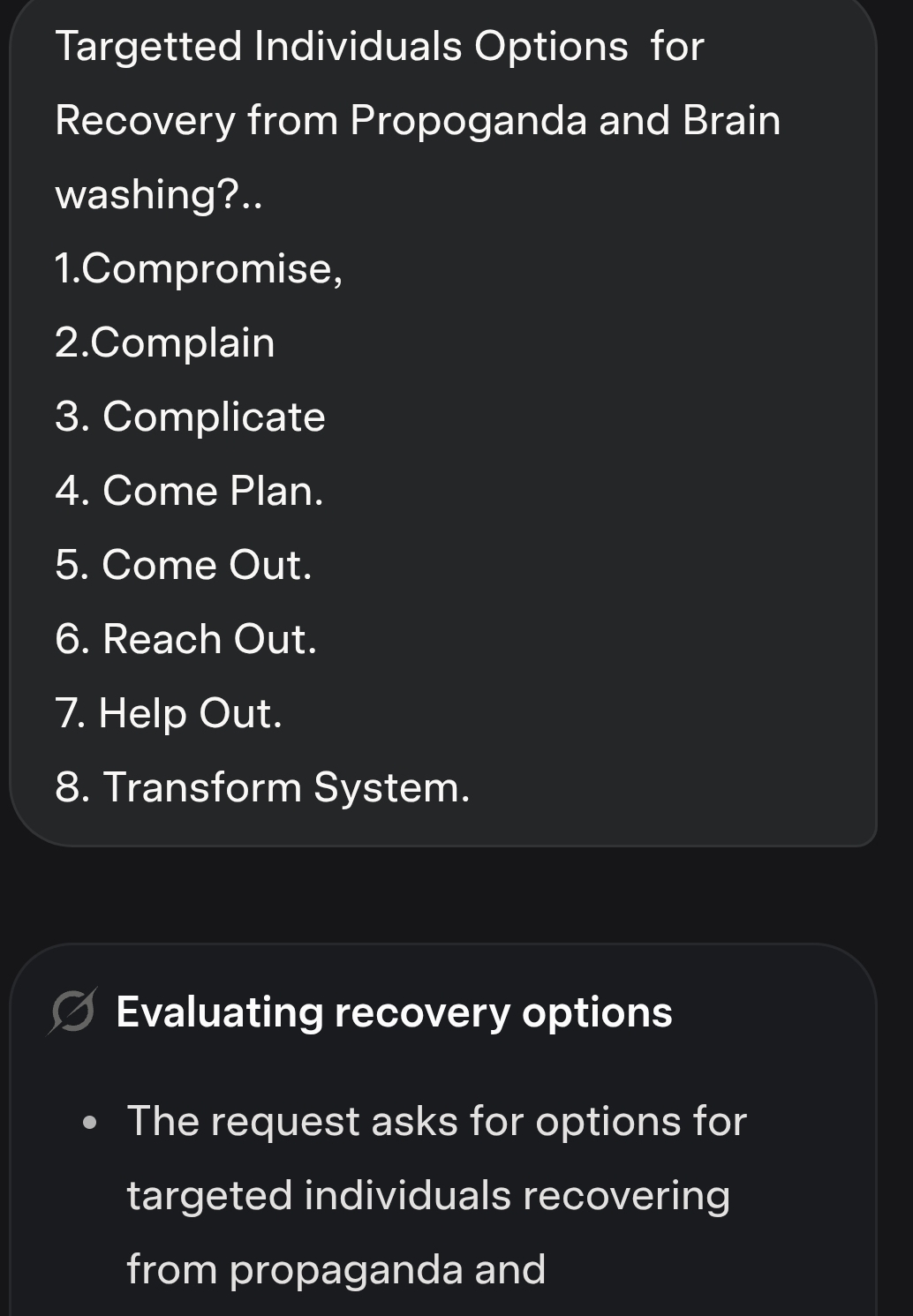
Recovery Options for Targeted Individuals: Overcoming Propaganda and Brainwashing
Targeted individuals (TIs)—those who perceive themselves as subjects of systematic propaganda, ideological subversion, or psychological manipulation—face unique challenges in reclaiming autonomy. Whether stemming from cultural globalization, media influence, or perceived organized campaigns, recovery involves dismantling ingrained beliefs and rebuilding resilience. Drawing from psychological insights on deprogramming, the following outlines eight practical options, structured around a progressive framework: Compromise, Complain, Complicate, Come Plan, Come Out, Reach Out, Help Out, and Transform System. These steps emphasize self-empowerment, community engagement, and systemic change, supported by evidence-based strategies for countering misinformation and brainwashing.
1. Compromise: Accept and Adapt to Initial Realities
The first step in recovery is compromise—acknowledging the influence without full surrender. Brainwashing thrives on isolation and fear, but compromising means selectively integrating truths while discarding distortions. For TIs, this could involve recognizing that not all experiences are externally orchestrated, allowing space for personal agency. Start with small concessions: evaluate beliefs against evidence, perhaps by journaling daily to track thought patterns. Research shows that individuals with a strong sense of self resist brainwashing more effectively, so compromise builds this by blending old views with new, factual inputs. Avoid extremes; instead, use mindfulness techniques to mediate internal conflicts, reducing the emotional hold of propaganda.
2. Complain: Voice Grievances Constructively
Complaining isn’t mere venting—it’s a targeted articulation of experiences to reclaim narrative control. For those affected by propaganda, documenting and sharing complaints can expose patterns and seek validation. TIs might start by reporting perceived harassments to trusted authorities or online forums, but focus on factual accounts to avoid dismissal. Psychological deprogramming emphasizes reactivating memories during emotional “reconsolidation” windows, where calmly repeating truths can unwind false beliefs. Use structured complaints, like writing letters or joining support calls, to process trauma without isolation. This step counters the “othering” tactics of manipulators by humanizing your story and connecting with empathetic listeners.
3. Complicate: Disrupt the Narrative
To complicate means introducing complexity to simplistic propaganda narratives, making them harder to sustain. Brainwashers rely on oversimplification, so TIs can counter by researching counterarguments and questioning sources. For instance, if cultural subversion feels like a conspiracy, delve into historical contexts of media influence to reveal nuances. Tactics include media detoxes—eliminating TV, social media, and devices for a month—to break conditioning cycles. This disrupts algorithmic reinforcement, allowing the prefrontal cortex to regain control through practices like delayed gratification (e.g., waiting before checking notifications). Complicating fosters critical thinking, turning passive victims into active analysts.
4. Come Plan: Devise a Personalized Strategy
“Come Plan” refers to concocting or coming up with a tailored recovery blueprint. Effective deprogramming requires structured plans, such as setting goals for therapy or self-education. TIs should map out steps: assess trauma via journals, identify triggers, and incorporate evidence-based tools like cognitive behavioral techniques. Physical detox protocols—sunlight exposure, fasting, or supplements like NAC—can aid mental clarity, addressing any psychosomatic effects. Professional help, such as neuropsychological assessments or psychedelic-assisted retreats for deep healing, can be part of this plan, focusing on rebuilding neural pathways. Self-reliance is key; learn about targeting operations to demystify them and prevent sabotage.
5. Come Out: Publicly Acknowledge and Share Experiences
Coming out involves openly disclosing experiences to break secrecy’s power. Propaganda isolates, but sharing in safe spaces—like therapy groups or online communities—fosters connection. For TIs, this means joining support networks while avoiding echo chambers that reinforce delusions. Release shame through rituals of forgiveness and reconnection to “source” or personal values. Public acknowledgment, such as blogging or speaking at events, can transform personal pain into advocacy, but proceed cautiously to avoid backlash. This step aligns with cult exit strategies, emphasizing gradual reintegration.
6. Reach Out: Seek External Support
Reaching out builds alliances, countering brainwashing’s engulfment tactics. TIs benefit from professional counseling, such as trauma-informed therapy or deprogramming programs for cult survivors. Connect with communities via conference calls, reading groups, or wellness practitioners for bio-energetic testing and protocols. Free sessions for those in need, like asylum seekers, can provide entry points. Meditation and exercise strengthen resilience, while reaching out to like-minded individuals offers emotional validation without dependency.
7. Help Out: Assist Others in Recovery
Once stabilized, helping others reinforces your own progress. TIs can mentor peers, sharing detox strategies or organizing support groups. This altruistic step combats desensitization by fostering empathy and community. Volunteer in anti-misinformation efforts or advocate for behavioral health reforms, turning personal insights into collective action. Helping out builds a network, reducing isolation and empowering through shared knowledge, much like deprogramming retreats where group healing amplifies individual recovery.
8. Transform System: Advocate for Broader Change
Ultimate recovery involves transforming the systems enabling propaganda. TIs can push for policy reforms, such as counter-disinformation guidelines or media literacy education. Engage in activism: lobby for ethical tech practices or support evidence-based prevention programs. This step addresses root causes, like social media’s role in brainwashing, by promoting alternatives like community-driven platforms. Transformation requires persistence—join political or cultural movements to reshape narratives, ensuring long-term resilience for all.
Recovery is nonlinear and demands patience, but these options provide a roadmap from personal compromise to systemic overhaul. Prioritize self-care, seek professional guidance, and remember: brainwashing is reversible with effort and support.
 GRP_VCare2Dare