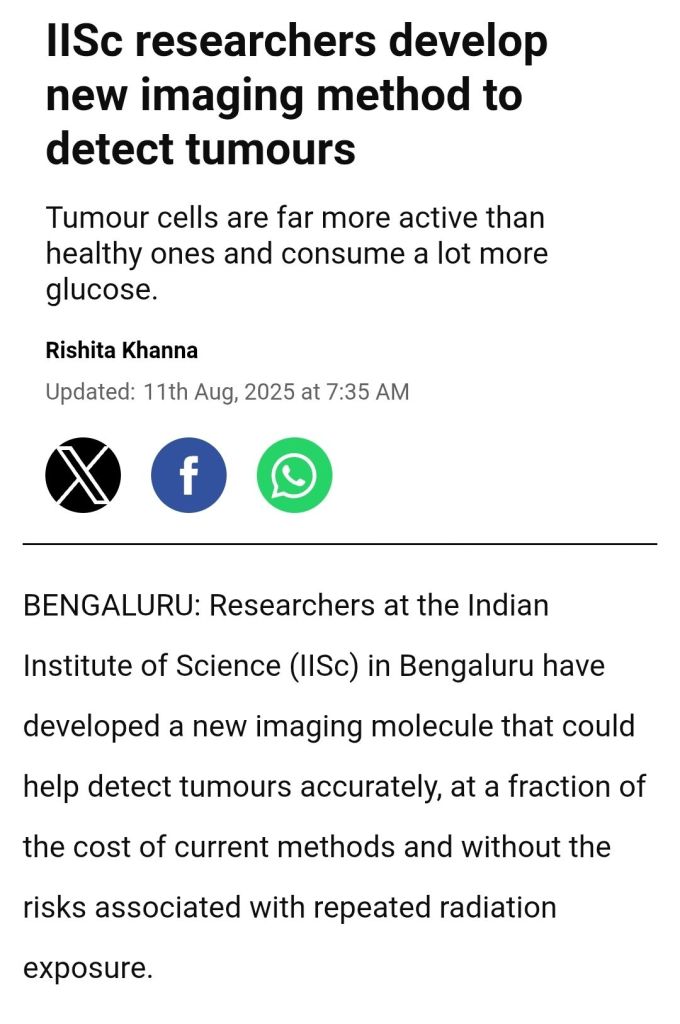
Inspired by above News, Like Tumours are manytimes signs of Cancerous Biologies, Similarly Rumours are signs of Cancerous Ideologies.. Detections helps in having a Healthy Body, misinfo too needs detection for Healthy Society.. Thus this endeavour to end asatyam by knowing Satyam..
Three-Step Process to Detect Rumours or Misinformation in Society
Developed by G.R. Prasadh Gajendran, an IIScian Alumnus, this three-step process—
- Information-Networking,
- Discrete Diagnosis,
- Investigated & Assessed Assortment—builds on the In.Di.A method and Trulse-Index concepts to empower individuals and communities to identify and counter rumours or misinformation effectively.
Step 1: Information-Networking
Gather information from diverse and credible sources to build a comprehensive understanding of the claim or narrative.
- Objective: Establish a broad network of information to contextualize the rumour or claim.
- Actions:
- Identify the source of the rumour (e.g., social media post, news article, or interpersonal communication).
- Cross-reference with primary sources like official statements, government websites (e.g., pib.gov.in), or peer-reviewed journals.
- Engage with trusted communities, such as SAINTians or fact-checking groups (e.g., factchecker.in or smhoaxslayer.com), to collect perspectives.
- Use platforms like WhatsApp groups (e.g., Wise-Electrs or SAINTians) to share and verify information with rational, truth-seeking peers.
- Example: If a rumour claims a new policy affects Bengaluru residents, check official government portals, local news like The New Indian Express, and discuss with informed peers in a group like https://chat.whatsapp.com/C9zU4gcKP2L7DnEI3oY5Ks.
Step 2: Discrete Diagnosis
Analyze the collected information to assess its truthfulness, separating facts from fiction using a structured approach.
- Objective: Evaluate the credibility and intent of the information to determine its Trulse-Ratio (Truth-to-False ratio).
- Actions:
- Apply the Trulse-Index framework: Categorize content as Yes (True), No (False), Maybe (Needs Evidence), or Undeterminable.
- Check for biases, funding, or motives behind the source using tools like mediabiasfactcheck.com.
- Verify claims against third-party fact-checkers (e.g., factchecker.in or pib.gov.in/factcheck.aspx).
- Assess the logical consistency of the narrative using critical thinking methods like the Socratic Method or the CRAAP Test (Currency, Relevance, Authority, Accuracy, Purpose).
- Example: For a claim about a health policy, review the manifesto or official document (e.g., via eci.gov.in), check the source’s bias, and calculate a Trulse-Ratio (e.g., 7:3 if 7 points are factual and 3 are speculative).
Step 3: Investigated & Assessed Assortment
Investigate discrepancies and compile a final assessment to share actionable insights with the community.
- Objective: Conclude the validity of the rumour and disseminate findings to promote awareness and prevent misinformation spread.
- Actions:
- Conduct deeper inquiries into conflicting information using credible databases or expert consultations (e.g., academic journals or SAINTian community members).
- Summarize findings with a clear Trulse-Ratio (e.g., 90% Truth, 10% Fiction) and categorize the information as True, False, or Trulse (Factition).
- Share results with peers via platforms like WhatsApp groups (e.g., https://chat.whatsapp.com/K0b006XwUlA44ZrAfzWeOR) or public blogs to foster collective awareness.
- Encourage accountability by reporting persistent misinformation to authorities (e.g., lokayukta or fact-checking organizations) or engaging in public discourse to correct narratives.
- Example: If a rumour about a policy is found to be 20% true (e.g., partial alignment with a manifesto), publish a summary on a blog like grpvcare2dare.design.blog, detailing evidence and urging followers to verify claims before sharing.
Conclusion
By following the Information-Networking, Discrete Diagnosis, Investigate & Assessed Assortment process, individuals can systematically detect and counter rumours or misinformation. This method, inspired by the In.Di.A framework and Trulse-Index, empowers communities to foster a rational, truth-seeking society, aligning with the vision of a Safer India 2030.
Resources:
- Fact-checking: https://www.factchecker.in/, https://pib.gov.in/factcheck.aspx
- Community: https://chat.whatsapp.com/K0b006XwUlA44ZrAfzWeOR
- Blog: https://grpvcare2dare.design.blog/
 GRP_VCare2Dare