What is a Man?
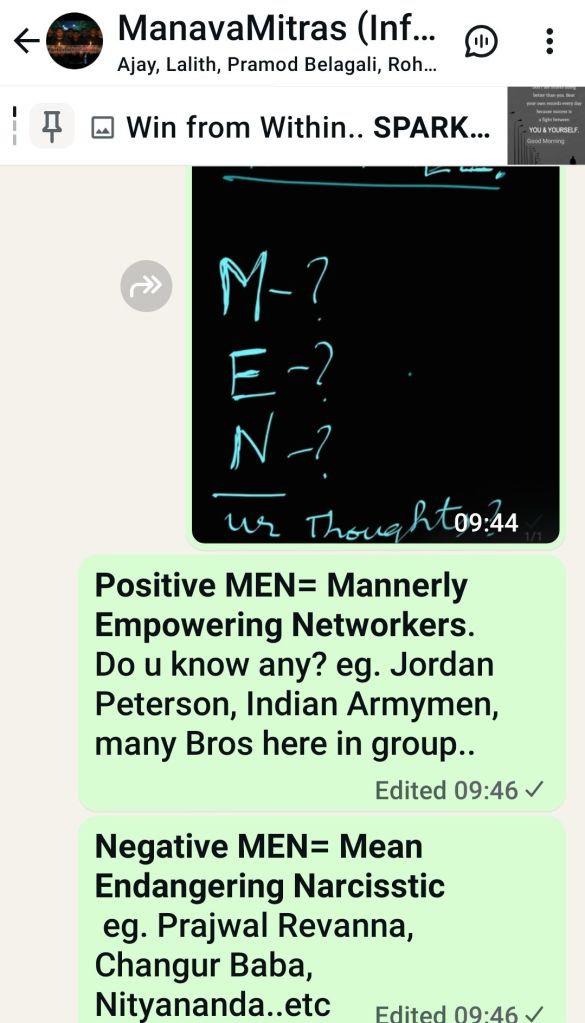
Man is a “M.A.N”.. i.e= Masculine Android Navigating Life.
There are 3 sides of everything.. Positive, Neutral and Negative…it varies is quality and quantity..
The query you’ve posed is rich with philosophical, psychological, and social dimensions, touching on the essence of what it means to be a man, how to improve as one, and the importance of connection in the form of brotherhood. Let’s break it down into three parts based on your phrasing, aiming for a concise yet meaningful response that respects the depth of the question.
1. What is a Man?
A man, in essence, is an individual navigating the interplay of biological, cultural, and personal identities. Biologically, a man is typically defined by male physiology, but the concept extends far beyond that. Philosophically and socially, a man is someone who grapples with societal expectations, personal values, and responsibilities. Across cultures, definitions vary, but common threads include traits like integrity, courage, and accountability. Drawing from thinkers like Aristotle, a man might be seen as striving for eudaimonia—a flourishing life through virtue and purpose. Modern perspectives, like those from psychologist Carl Jung, might frame a man as someone integrating their inner archetypes (e.g., the hero, the sage) while balancing strength with vulnerability.
From posts on X, I see recurring themes: some view manhood through traditional lenses (provider, protector), while others emphasize emotional intelligence and adaptability in a changing world. Ultimately, a man is not a static archetype but a dynamic being, shaped by self-reflection and context.
2. How to Be Better Men?
Becoming a “better man” involves intentional growth across multiple dimensions. Here are practical and philosophical steps, grounded in timeless principles and contemporary insights:
- Cultivate Self-Awareness: Reflect on your values, weaknesses, and impact. Journaling or meditation can help. Stoic philosophy, like Marcus Aurelius’ emphasis on self-mastery, underscores controlling what’s within your power—your thoughts and actions.
- Embrace Responsibility: Own your choices, from relationships to career. This aligns with Jordan Peterson’s advice to “carry your burden” and find meaning in duty.
- Develop Emotional Intelligence: Learn to express and manage emotions. Vulnerability isn’t weakness; it’s strength. Studies show men who communicate openly have stronger relationships (e.g., Gottman’s research on couples).
- Pursue Virtue: Integrity, courage, and empathy are universal. Practice small acts of kindness or stand up for what’s right, even when it’s hard.
- Stay Physically and Mentally Fit: Discipline in health—exercise, diet, sleep—grounds you. Data from the CDC shows regular exercise reduces stress and boosts mental clarity.
- Learn Continuously: Read, seek mentors, or engage with diverse perspectives. X posts often highlight men valuing lifelong learning, from trades to philosophy.
- Serve Others: Contribute to your community or family. Altruism fosters purpose, as seen in studies linking volunteering to higher life satisfaction.
3. No Man is an Island, A Man is a Brotherhood
The phrase “no man is an island,” from John Donne’s poem, emphasizes human interconnectedness. For men, brotherhood—whether through friendships, family, or communities—provides support, accountability, and shared purpose. Here’s why and how this matters:
- Why Brotherhood Matters: Social isolation harms men’s mental health. A 2020 study in The Lancet found loneliness increases depression risk in men by 30%. Brotherhood offers a space to share struggles, celebrate wins, and grow. X posts often describe men finding strength in groups—whether sports teams, veteran circles, or online communities—where vulnerability is normalized.
- Building Brotherhood: Seek or create spaces for connection. Join clubs, faith groups, or mentorship programs. Be intentional—reach out to friends regularly, listen actively, and foster trust. The “men’s group” movement, like Movember’s mental health initiatives, shows men thrive when they connect authentically.
- Quality Over Quantity: A few deep relationships beat superficial ones. Research from Harvard’s 80-year Study of Adult Development confirms strong relationships are the biggest predictor of long-term happiness and health.
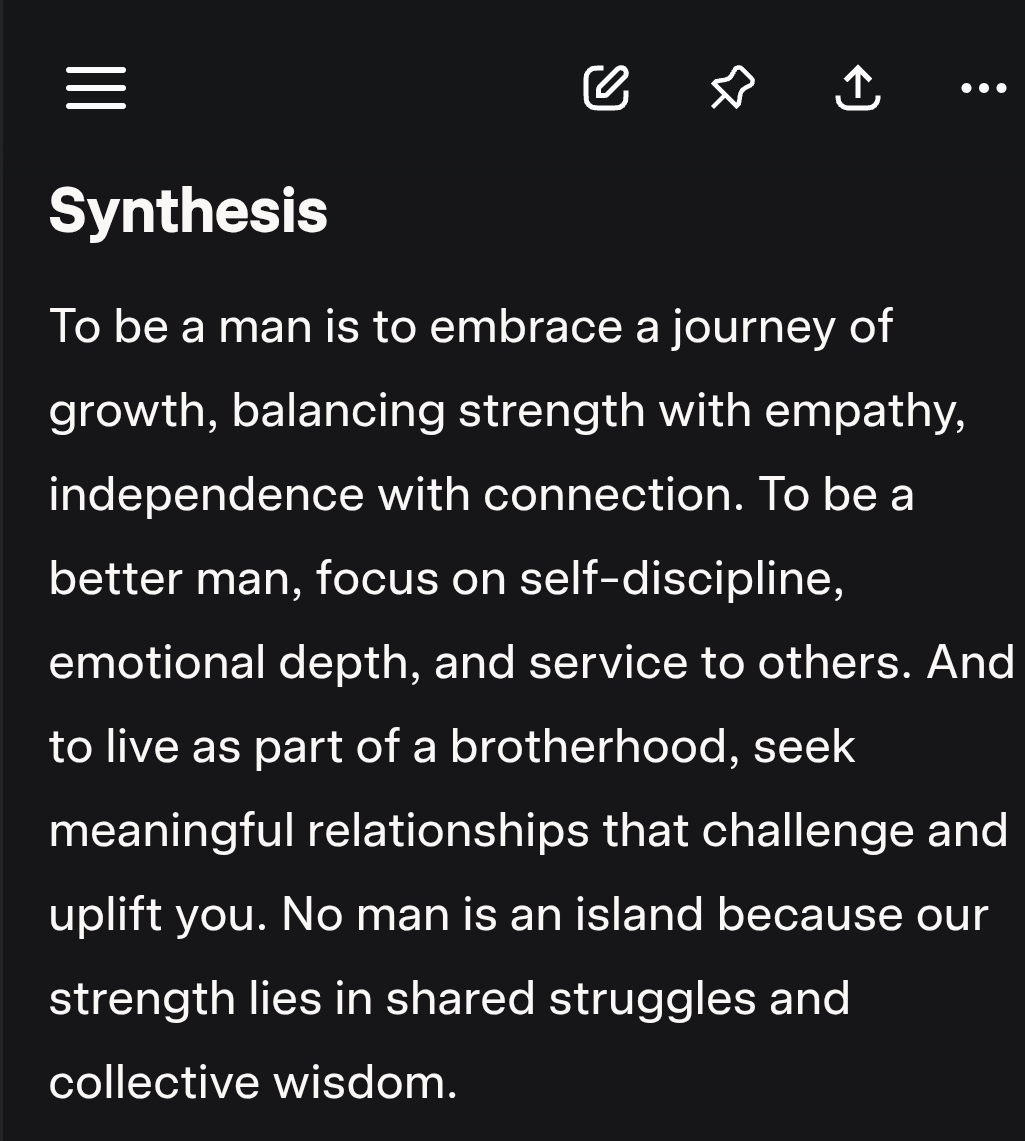
Synthesis
To be a man is to embrace a journey of growth, balancing strength with empathy, independence with connection. To be a better man, focus on self-discipline, emotional depth, and service to others. And to live as part of a brotherhood, seek meaningful relationships that challenge and uplift you. No man is an island because our strength lies in shared struggles and collective wisdom.
If you’d like, I can dig deeper into any of these—say, specific practices for self-improvement or examples of brotherhood in action. Or, if you want a visual, I could generate a chart comparing traits of traditional vs. modern masculinity, if you confirm that’s what you’re after. Let me know!
*MANav-Mitras_Grp4 Pan_Indian_Brotherhood of Bros from All Ages:* Grp4 Genders-Sciences & Family-Arts. Manava-Abivridi (Human_Development).
All-India Brothers’ Awareness & PeerSupport Group. Trauma-Informed & Narc-Abuse Aware Community.
Enable FundaMentl Duty of *Article 51A(e)* 4CommonBrotherhood.
#JaiBharat #JaiBhaitva
#SupportiveSiblings.
*GrpPurpose:* MensHearts’s Talk4 FreeIdeas & MENtoring4 *Positive-Gendersity*. https://grpvcare2dare.design.blog/2021/12/02/s87-project-manav_mitras-connect-heart2heart-for-universal-brotherhood-fraternal-culture-friendships-group-prasad/
*ResOURceGrp4:* Brothrly2030. OurBroCodes: https://bit.ly/3zMlXJh
Ideas2Actions_Place of *MANav-Mitras +ve Brotherhood*
Mens & Bros SupportGroup4 Health, Fitness & Wellness, Positive_masculinity, Genders_Sciences, Gender-Cultures & Genders_Safety for BetterMent of Sense, Self & Society. Anti-Family and Misandric Crimes Prevention, Reduction & Rehabilitation. *#Sarva-ManavaHitham.*
*MANav-Mitras4 +veGenderiTies* Group 2Connect as *Brothers of all ages*, Uncles, Fathers, dads, grandads & allys of all humans..etc
Our Global Group Motto:
*“MANavaHitam Paramo Dharmaha.* (HuMAN Welfare is our First Duty).”
Better_Genderity = Better_society. Unconditional Friendship is best ship.
*MANAVAMITRAS is an INDO_Bros’ Supports Group 4 Genders Infoneeds of Men’s_Wellness & Family Welfare:*
Lets Prevent Inter-Genders & IntraFamily Conflicts-Frauds & Promote gender peace,
*by Sharing BroViews (i.e Brothers Reviews)*
*#Indian_huMANitarian Group Fraternizing Our Brotherly_India 2030:* No Unity, No Future, More Solidarity = More Life.
*Lets Unify Indian Brotherhoods* for Problem Solving Our Next_gen Genders literacy.
Our MM-Grp Mission is Unite Friends 4Genders_Justice, Social_Harmony & Neo Indian_SaferFamilies 4.0.
Friendship+Moral+Mental Support = Mentorship
*All Genders’ Wellness & Bros2 Healthify Life Group:*
https://chat.whatsapp.com/KecJokbFlP4F0azMaCyeyA
The query you’ve posed is rich with philosophical, psychological, and social dimensions, touching on the essence of what it means to be a man, how to improve as one, and the importance of connection in the form of brotherhood. Let’s break it down into three parts based on your phrasing, aiming for a concise yet meaningful response that respects the depth of the question.
### 1. What is a Man?
A man, in essence, is an individual navigating the interplay of biological, cultural, and personal identities. Biologically, a man is typically defined by male physiology, but the concept extends far beyond that. Philosophically and socially, a man is someone who grapples with societal expectations, personal values, and responsibilities. Across cultures, definitions vary, but common threads include traits like integrity, courage, and accountability. Drawing from thinkers like Aristotle, a man might be seen as striving for *eudaimonia*—a flourishing life through virtue and purpose. Modern perspectives, like those from psychologist Carl Jung, might frame a man as someone integrating their inner archetypes (e.g., the hero, the sage) while balancing strength with vulnerability.
From posts on X, I see recurring themes: some view manhood through traditional lenses (provider, protector), while others emphasize emotional intelligence and adaptability in a changing world. Ultimately, a man is not a static archetype but a dynamic being, shaped by self-reflection and context.
### 2. How to Be Better Men?
Becoming a “better man” involves intentional growth across multiple dimensions. Here are practical and philosophical steps, grounded in timeless principles and contemporary insights:
– **Cultivate Self-Awareness**: Reflect on your values, weaknesses, and impact. Journaling or meditation can help. Stoic philosophy, like Marcus Aurelius’ emphasis on self-mastery, underscores controlling what’s within your power—your thoughts and actions.
– **Embrace Responsibility**: Own your choices, from relationships to career. This aligns with Jordan Peterson’s advice to “carry your burden” and find meaning in duty.
– **Develop Emotional Intelligence**: Learn to express and manage emotions. Vulnerability isn’t weakness; it’s strength. Studies show men who communicate openly have stronger relationships (e.g., Gottman’s research on couples).
– **Pursue Virtue**: Integrity, courage, and empathy are universal. Practice small acts of kindness or stand up for what’s right, even when it’s hard.
– **Stay Physically and Mentally Fit**: Discipline in health—exercise, diet, sleep—grounds you. Data from the CDC shows regular exercise reduces stress and boosts mental clarity.
– **Learn Continuously**: Read, seek mentors, or engage with diverse perspectives. X posts often highlight men valuing lifelong learning, from trades to philosophy.
– **Serve Others**: Contribute to your community or family. Altruism fosters purpose, as seen in studies linking volunteering to higher life satisfaction.
### 3. No Man is an Island, A Man is a Brotherhood
The phrase “no man is an island,” from John Donne’s poem, emphasizes human interconnectedness. For men, brotherhood—whether through friendships, family, or communities—provides support, accountability, and shared purpose. Here’s why and how this matters:
– **Why Brotherhood Matters**: Social isolation harms men’s mental health. A 2020 study in *The Lancet* found loneliness increases depression risk in men by 30%. Brotherhood offers a space to share struggles, celebrate wins, and grow. X posts often describe men finding strength in groups—whether sports teams, veteran circles, or online communities—where vulnerability is normalized.
– **Building Brotherhood**: Seek or create spaces for connection. Join clubs, faith groups, or mentorship programs. Be intentional—reach out to friends regularly, listen actively, and foster trust. The “men’s group” movement, like Movember’s mental health initiatives, shows men thrive when they connect authentically.
– **Quality Over Quantity**: A few deep relationships beat superficial ones. Research from Harvard’s 80-year Study of Adult Development confirms strong relationships are the biggest predictor of long-term happiness and health.
### Synthesis
To be a man is to embrace a journey of growth, balancing strength with empathy, independence with connection. To be a better man, focus on self-discipline, emotional depth, and service to others. And to live as part of a brotherhood, seek meaningful relationships that challenge and uplift you. No man is an island because our strength lies in shared struggles and collective wisdom.
If you’d like, I can dig deeper into any of these—say, specific practices for self-improvement or examples of brotherhood in action. Or, if you want a visual, I could generate a chart comparing traits of traditional vs. modern masculinity, if you confirm that’s what you’re after. Let me know!
 GRP_VCare2Dare