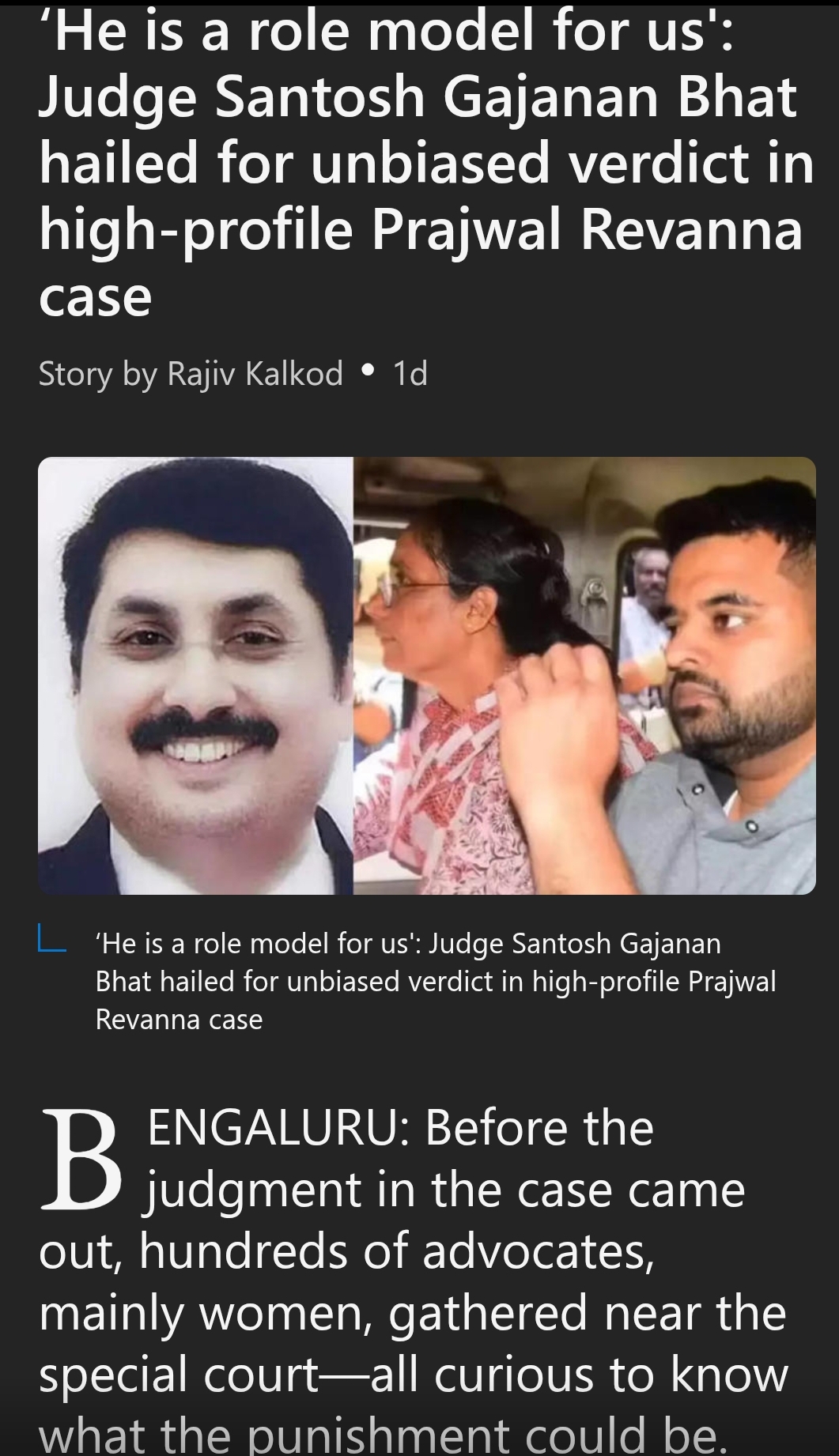
Life Lessons from Prajwal Revanna case, a former Indian politician convicted of heinous crimes, offers a complex lens through which to explore the transformation of an individual into a figure metaphorically akin to Ravana, the antagonist in the Indian epic Ramayana, known for his hubris, moral failings, and abuse of power. This analysis will address how Prajwal Revanna’s trajectory might be understood as a descent into such a character, the potential for prevention during childhood or adolescence, and broader strategies for raising children with positive values, akin to Rama, the Ramayana’s exemplar of virtue.
The discussion draws on psychological, sociological, and cultural perspectives, including insights from Indian traditions, while critically examining available information and avoiding speculation where evidence is lacking.
Part 1: Analyzing Prajwal Revanna’s Transformation into a “Ravana”
In the Ramayana, Ravana is depicted as a powerful but flawed figure whose intelligence and capabilities are overshadowed by his arrogance, lust, and misuse of authority. Prajwal Revanna, born into a prominent political family in Karnataka as the grandson of former Prime Minister H.D. Deve Gowda, exhibited a trajectory that, in public perception, parallels Ravana’s moral and ethical downfall due to his conviction for serious crimes, including rape and sexual harassment.
Factors Contributing to Prajwal Revanna’s Transformation
- Privilege and Power Dynamics:
Prajwal’s background as part of a Nepotism aided politically influential family likely afforded him significant privilege and a sense of impunity. Growing up in the Gowda family, with his grandfather, father, and uncle holding high political offices, he was immersed in an environment where power and influence were normalized. This mirrors Ravana’s position as the king of Lanka, where unchecked power fueled his transgressions. The “feudal mindset” noted in Hassan, where the family held sway, may have reinforced a belief that Prajwal was above accountability. Such environments can foster entitlement, a trait associated with narcissistic personality tendencies, where individuals prioritize their desires over others’ rights. - Lack of Moral Accountability:
The absence of early consequences for inappropriate behavior can embolden individuals to escalate their actions. Prajwal’s crimes, including recording non-consensual acts, suggest a profound lack of empathy and ethical grounding. This aligns with Ravana’s disregard for Sita’s autonomy in the Ramayana. If Prajwal faced no significant pushback for early boundary violations—whether in personal or social contexts—this could have normalized deviant behavior over time. - Cultural and Social Influences:
Indian society, while rich in values emphasizing respect and dharma (duty), also grapples with patriarchal norms that can enable male entitlement, particularly among the elite. The objectification of women, coupled with political power, may have created a toxic environment where Prajwal felt justified in his actions. The circulation of explicit videos in Hassan, allegedly recorded by him, points to a voyeuristic tendency and a sense of control over others, akin to Ravana’s possessive behavior. - Psychological Factors:
While no public diagnosis of Prajwal’s mental state exists, his actions suggest traits associated with psychopathy or narcissistic personality disorder, such as lack of remorse, manipulation, and exploitation. These traits can develop from a combination of genetic predispositions and environmental factors, such as excessive indulgence or lack of corrective feedback during formative years. The absence of empathy, evident in his treatment of victims, mirrors Ravana’s inability to consider others’ suffering.
Missed Opportunities for Prevention in Childhood or Adolescence
Preventing the development of such negative traits requires intervention during critical developmental stages. Several factors could have contributed to Prajwal’s path and potential points of intervention include:
- Family Environment and Role Modeling:
The Gowda family’s political dominance may have exposed Prajwal to a culture of entitlement rather than accountability. If parents or caregivers model ethical behavior, empathy, and respect for others, children are more likely to internalize these values. In Prajwal’s case, the family’s alleged involvement in related crimes (e.g., his parents’ role in a kidnapping case) suggests a possible lack of positive role models. Teaching accountability, humility, and respect for boundaries could have countered early signs of entitlement. - Discipline and Consequences:
Indian cultural practices, such as those outlined in the Manusmriti, emphasize rituals (sanskars) to instill good qualities and remove negative habits from childhood. Consistent discipline that reinforces consequences for harmful behavior is crucial. If Prajwal exhibited early signs of boundary violations or disrespect, timely intervention through counseling or structured discipline could have redirected his behavior. - Education and Socialization:
Prajwal’s education, including a mechanical engineering degree and brief studies abroad, indicates access to resources but not necessarily moral education. Programs fostering empathy, gender sensitivity, and ethical decision-making could have helped. Indian traditions, such as those in the Ramayana, emphasize dharma, which could have been integrated into his upbringing to prioritize duty over desire. - Addressing Patriarchal Norms:
Growing up in a patriarchal society, Prajwal may have internalized norms that devalue women. Early exposure to gender equality education, as advocated in modern child-rearing practices, could have challenged these views. Community programs or school curricula emphasizing respect for all individuals might have mitigated the development of exploitative tendencies. - Mental Health Support:
If Prajwal displayed early signs of narcissistic or antisocial behavior, psychological intervention during adolescence could have been pivotal. Access to mental health services, though stigmatized in India, can address underlying issues before they manifest as harmful actions.
Part 2: Raising Children to Embody Rama’s Virtues
Rama, the protagonist of the Ramayana, is revered as Maryada Purushottama (the ideal man) for his adherence to dharma, compassion, humility, and respect for others. Raising children to emulate Rama involves fostering positive traits through intentional parenting, education, and societal support, particularly in the Indian context where cultural and spiritual frameworks can guide development.
Strategies for Nurturing Positive Values
- Instilling Dharma Through Role Modeling:
Parents and caregivers must model ethical behavior, as children learn by observing. Demonstrating respect, honesty, and empathy in daily interactions teaches children to prioritize duty and compassion. For example, parents can share stories from the Ramayana, highlighting Rama’s sacrifices for family and society, to inspire similar values. - Promoting Empathy and Emotional Intelligence:
Encourage children to understand others’ perspectives through activities like storytelling, role-playing, or community service. Programs that teach emotional regulation and empathy, such as those integrated into modern Indian school curricula, can prevent the development of self-centered traits. - Structured Discipline and Sanskars:
The Manusmriti outlines 16 sanskars (rituals) to guide individuals from conception to adulthood, emphasizing virtues and moral growth. Modern adaptations, such as celebrating milestones like Vidyarambha (start of education), can instill a sense of purpose and responsibility. Consistent discipline that balances love with accountability helps children internalize consequences without fostering entitlement. - Education on Gender Equality and Respect:
Countering patriarchal norms requires early education on gender equality. Schools and families can teach boys and girls to respect each other’s autonomy and dignity. Workshops on consent and healthy relationships, tailored to adolescents, can prevent the normalization of exploitative behaviors. - Encouraging Community and Social Responsibility:
Rama’s commitment to his people reflects a sense of social duty. Involving children in community activities, such as volunteering or cultural events, fosters a sense of belonging and responsibility. In India, initiatives like the National Service Scheme (NSS) can engage adolescents in positive social contributions. - Mental Health Awareness and Support:
Addressing mental health early can prevent the escalation of negative traits. Schools should incorporate mental health education, and parents should seek professional help if children show signs of aggression, lack of empathy, or entitlement. The unmet need for childhood psychiatric services in India underscores the urgency of this approach. - Balancing Privilege with Humility:
For children from privileged backgrounds, like Prajwal, parents must emphasize humility. Exposing them to diverse socioeconomic realities through travel, community engagement, or storytelling can prevent elitism. Rama’s exile and interactions with diverse characters in the Ramayana exemplify humility despite royal status.
Practical Steps for Parents and Society
- Parenting Workshops: Offer community-based programs to educate parents on fostering empathy and discipline, drawing on both modern psychology and Indian cultural values.
- School Curricula: Integrate lessons from epics like the Ramayana into moral education, emphasizing Rama’s virtues as a model for behavior.
- Community Role Models: Highlight local figures who embody Rama-like qualities, such as social workers or ethical leaders, to inspire children.
- Mental Health Resources: Advocate for accessible counseling services in schools and communities to address early behavioral issues.
Conclusion
Prajwal Revanna’s descent into a “Ravana” reflects a combination of unchecked privilege, lack of moral accountability, and societal factors that enabled harmful behavior. Prevention during his childhood or adolescence could have involved stronger role modeling, consistent discipline, gender equality education, and mental health support. To raise children like Rama, parents and society must prioritize empathy, dharma, and humility through intentional upbringing, education, and community engagement. By blending Indian cultural values, such as those in the Manusmriti and Ramayana, with modern psychological insights, we can foster individuals who uphold justice and compassion, steering them away from the path of Ravana.
 GRP_VCare2Dare