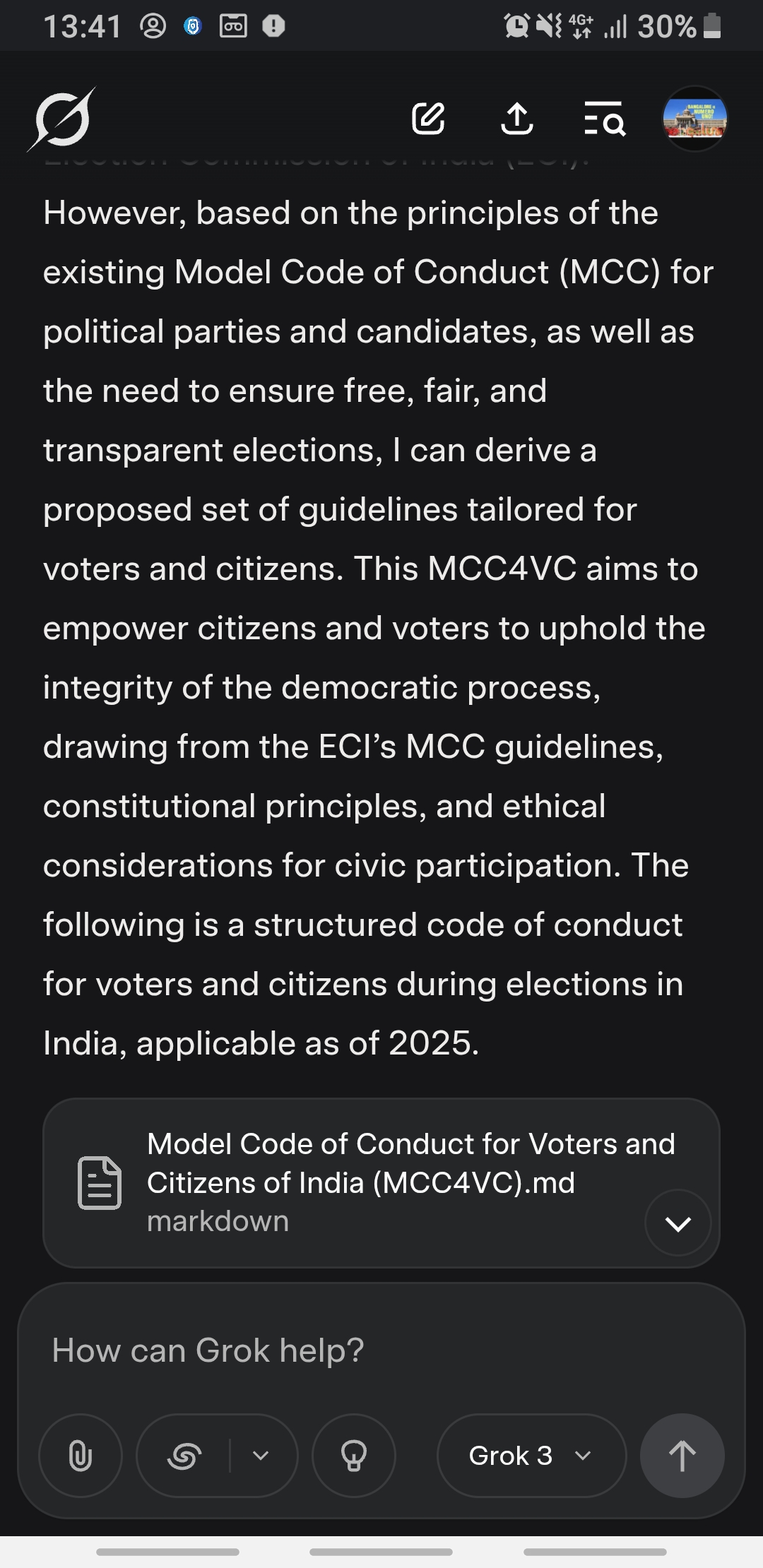
Proposed Model Code of Democratic Conduct for Voters and Citizens (MCC4VC) of India is not an officially recognized document by the Election Commission of India (ECI). However, based on the principles of the existing Model Code of Conduct (MCC) for political parties and candidates, as well as the need to ensure free, fair, and transparent elections, I can derive a proposed set of guidelines tailored for voters and citizens. This MCC4VC aims to empower citizens and voters to uphold the integrity of the democratic process, drawing from the ECI’s MCC guidelines, constitutional principles, and ethical considerations for civic participation. The following is a structured code of conduct for voters and citizens during elections in India, applicable as of 2025.
Model Code of Conduct for Voters and Citizens of India (MCC4VC)
Preamble
The Model Code of Conduct for Voters and Citizens (MCC4VC) is a set of ethical guidelines designed to ensure that voters and citizens of India contribute to free, fair, transparent, and peaceful elections. While the Election Commission of India (ECI) enforces the Model Code of Conduct (MCC) for political parties and candidates, this MCC4VC outlines the responsibilities and expectations for citizens and voters to uphold the democratic process as enshrined in the Constitution of India under Article 324. It aims to foster integrity, accountability, and active participation in elections.
Objectives
- To promote informed, ethical, and independent voting.
- To ensure voters and citizens refrain from activities that undermine the fairness of elections.
- To encourage active participation in reporting violations and maintaining electoral integrity.
- To uphold the principles of equality, transparency, and non-discrimination in the electoral process.
Guidelines for Voters and Citizens
1. General Conduct
- Exercise Voting Rights Responsibly: Every eligible voter shall exercise their right to vote freely and independently, without influence, coercion, or inducement. Voting is a fundamental duty to strengthen democracy.
- Respect Democratic Principles: Refrain from actions that promote hatred, tension, or division based on caste, religion, language, or community during the election period.
- Maintain Peace and Order: Avoid participating in or encouraging activities such as protests, demonstrations, or gatherings that disrupt public peace or the electoral process.
2. Polling Day Conduct
- Access Polling Stations Lawfully: Only enter polling stations if you are a registered voter, an authorized polling agent, or possess a valid pass issued by the ECI. Do not attempt to influence others within 100 meters of polling stations.
- Avoid Corrupt Practices: Refrain from accepting or offering bribes, gifts, or inducements to influence voting decisions. Report any such attempts immediately to the ECI or its designated observers.
- Respect Election Silence: During the 48-hour period before the close of polls, refrain from engaging in or promoting electioneering activities, including discussions or campaigns that may influence voters.
- Report Violations: Use tools like the cVIGIL app to report violations of the MCC, such as bribing, intimidation, or unauthorized campaigning, to ensure swift action by the ECI.
3. Interaction with Political Parties and Candidates
- Maintain Independence: Do not allow political parties, candidates, or their supporters to unduly influence your voting decision through promises, inducements, or intimidation.
- Respect Privacy and Property: Do not permit the use of your land, building, or property for election-related activities (e.g., banners, posters, or slogans) without explicit consent. Report unauthorized use to the ECI.
- Avoid Disruptive Actions: Refrain from disrupting public meetings, processions, or rallies organized by political parties or candidates, even if you disagree with their views.
4. Use of Media and Information
- Verify Information: Critically evaluate election-related information, including manifestos, speeches, and advertisements, to avoid being swayed by misinformation or divisive propaganda.
- Refrain from Spreading Rumors: Do not share unverified information, rumors, or content that may create communal tension or influence voters unfairly.
- Engage Ethically on Social Media: Use platforms responsibly to discuss elections, avoiding hate speech, personal attacks, or content that violates the MCC.
5. Role in Promoting Transparency
- Participate in Voter Education: Engage with the ECI’s Systematic Voters’ Education and Electoral Participation (SVEEP) program to enhance voter literacy and awareness.
- Know Your Candidates: Use tools like the KYC App to access information about candidates’ backgrounds, including criminal antecedents, to make informed choices.
- Support Accessibility: Assist persons with disabilities (PwDs) and elderly voters (above 85 years) in accessing polling stations or utilizing facilities like postal ballots, as permitted by the ECI.
6. Ethical Responsibilities
- Uphold Constitutional Values: Act in accordance with the ideals and principles of the Constitution of India, promoting equality, justice, and fraternity in all election-related activities.
- Report Electoral Offenses: Immediately report offenses such as voter impersonation, intimidation, or corrupt practices to ECI observers or through the cVIGIL app.
- Respect Others’ Rights: Respect the right of every individual to express their political opinions peacefully, without resorting to violence, coercion, or intimidation.
Enforcement and Reporting
- The MCC4VC is a voluntary ethical framework for citizens and voters, complementing the ECI’s MCC for political parties and candidates.
- Violations of election laws (e.g., bribery, impersonation, or intimidation) are punishable under the Indian Penal Code (now Bharatiya Nyaya Sanhita), the Code of Criminal Procedure, and the Representation of the People Act, 1951.
- Citizens can report MCC violations using the cVIGIL app, available on Android and iOS, or by contacting ECI observers appointed for each constituency.
- The ECI may take appropriate action against individuals or groups found to be undermining the electoral process, including legal action for serious offenses.
Duration
The MCC4VC is applicable from the date of announcement of the election schedule by the ECI until the completion of the electoral process, including the declaration of results.
Conclusion
The MCC4VC empowers voters and citizens to actively contribute to the integrity of India’s democratic process. By adhering to these guidelines, citizens can ensure that elections remain free, fair, and transparent, strengthening the foundation of the world’s largest democracy. Citizens are encouraged to familiarize themselves with these guidelines and utilize ECI resources, such as the cVIGIL and KYC apps, to uphold electoral integrity.
 GRP_VCare2Dare