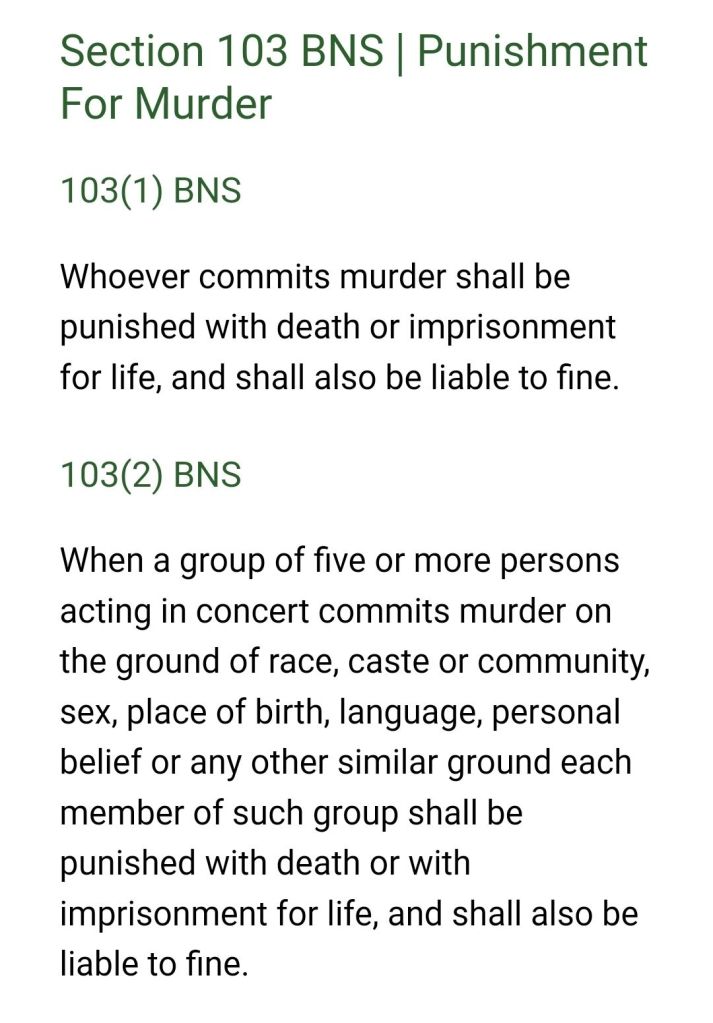
BNS.103 will just maximum give Death or life imprisonment or 14+years of Imprisonment with fine and after it, the system may release the murderers depending on Court proceedings (bail..eg Kannada Actor Darshan Murder case)..
The murderers will be dead, In prison or out and the cycle (of Cheat, Marry & Kill, Jail or Bail) in society continues?… Most suffering like in this case is by the Men & their families..
How can complete justice be done so the Husband’s family is compensated from the murderer Wife’s Assets of her ancestral wealth (fined fully). also the muderers need mental correction for Narc-Criminality & Victim+Society needs family counselling for grief & Narc Abuse/CPTSD Social Support which is lacking in Indian Society.
Below is an updated and comprehensive analysis that incorporates familicide (the death & killing of family members, often including a spouse, children, or other relatives) alongside mariticide (killing of a husband by a wife) and spousicide (killing of a spouse, encompassing both Suicide, mariticide and uxoricide). The analysis builds on the Raja Raghuvanshi case and extends to broader strategies for preventing deaths, abuse, and crimes within families in India, focusing on psychological, social, cultural, and systemic interventions.
Given the cultural and socioeconomic context of India in 2025, the recommendations are tailored to address unique challenges such as Love or arranged Fraud_marriages, patri-Matriarchal norms, and resource constraints.
Preventing Familicide, Mariticide, Spousicide, and Family Abuse in India: Strategies for 2025
Introduction
Familicide, mariticide, suicide, spousicide, elopicide and family Narc abuse represent severe forms of intra-family violence, with devastating consequences for individuals and communities. Familicide involves the killing of multiple family members, often a spouse, children, or extended relatives, typically by a family member driven by motives such as control, despair, or revenge. Mariticide (killing of a husband by a wife) and spousicide (killing of a spouse, including mariticide and uxoricide, the killing of a wife by a husband) are subsets of family violence, often linked to infidelity, financial disputes, or domestic abuse. In India, these crimes are shaped by cultural factors like fraud arranged marriages, misandry, Matri-patriarchal norms, and social stigma, as exemplified by the Raja Raghuvanshi murder case (2025), where Sonam Raghuvanshi allegedly orchestrated her husband’s killing during their honeymoon.
This analysis outlines comprehensive strategies to prevent deaths, abuse, and crimes within Indian Innocent or fraud families, addressing root causes and leveraging systemic reforms.
The Raja Raghuvanshi Case: A Contextual Anchor
Case Summary
Raja Raghuvanshi, a 29-year-old businessman from Indore, was murdered around May 23, 2025, in Meghalaya during his honeymoon. His wife, Sonam Rags_Kia_Vanshki (24), allegedly (Police & People Evidences) conspired with her lover, Raj Kushwaha(21), and three hired accomplices (Akash Rajput, Vishal Singh Chauhan, and Anand Kurmi/Patel) to kill him. Raja’s body was found on June 2 in a gorge near Weisawdong Falls, with a bloodstained machete as a key clue. Sonam surrendered on June 9 in Ghazipur, Uttar Pradesh, and the accomplices were arrested in Madhya Pradesh and Uttar Pradesh. The case highlights motives of infidelity (Sonam’s affair with Kushwaha) and financial gain (control over family wealth), rooted in the pressures of an arranged marriage.
Relevance to Familicide
While the Raghuvanshi case is a mariticide, it reflects dynamics that could escalate to familicide, such as betrayal, sexual, financial motives, and disregard for family life, honor or bonds. Had the conspiracy extended to other family members (e.g., Raja’s relatives over inheritance disputes), it could have qualified as familocide. The case underscores the need for early intervention by MedicoLegal Maritologists to prevent inter & intra-family violences from escalating.
Understanding Familicide, Mariticide, Spousicide, and Family Abuse
Definitions and Patterns
- Familicide: The killing of multiple family members, often by a male head of household, driven by motives like financial ruin, perceived betrayal, or mental health crises. Examples include cases where a parent kills their spouse and children before committing suicide, often due to shame or control (e.g., John List, 1971, USA, who killed his wife, mother, and three children).
- Mariticide: The killing of a husband by a wife, as in the Raghuvanshi case, often linked to infidelity, financial gain, or escaping an unwanted marriage. Motives may overlap with familicide when extended to other relatives.
- Spousicide: Encompasses mariticide and uxoricide, with uxoricide being more common in India due to dowry disputes and patriarchal violence. The National Crime Records Bureau (NCRB) reported in 2019 that love affairs and extramarital relationships were significant murder motives in India.
- Family Abuse: Includes physical, emotional, financial, or sexual abuse within families, often a precursor to homicide. In India, domestic violence is prevalent, with 32% of women reporting abuse in the 2019–21 National Family Health Survey (NFHS-5).
Common Risk Factors in India
- Cultural Pressures: Arranged marriages, as in the Raghuvanshi case, can lead to emotional disconnect or resentment, especially when personal desires (e.g., Sonam’s affair) conflict with familial expectations.
- Patriarchal Norms: Rigid gender roles often empower men to exert control through abuse or uxoricide, while women may resort to mariticide to escape oppressive marriages.
- Economic Stress: Financial disputes, as seen with the alleged Rs 9 lakh transfer in the Raghuvanshi case, can escalate tensions, particularly in affluent families or those facing economic distress.
- Mental Health Issues: Untreated conditions like depression, personality disorders, or substance abuse increase the risk of violence. Sonam’s calculated behavior suggests possible antisocial traits.
- Social Stigma: Divorce and separation are stigmatized, pushing individuals toward extreme measures like murder to resolve marital conflicts.
Strategies to Prevent Familicide, Mariticide, Spousicide, and Family Abuse in India
1. Strengthening Family Relationships
Pre-Marital and Family Counseling
- Objective: Identify and resolve conflicts before marriage and within families to prevent escalation to violence.
- Actions:
- Mandatory Counseling for Arranged Marriages: Require pre-marital counseling to assess compatibility, discuss prior relationships, and set expectations. In the Raghuvanshi case, counseling could have revealed Sonam’s disinterest or affair, potentially halting the marriage.
- Family Mediation: Offer counseling for extended families to address tensions, such as inheritance disputes or in-law conflicts, which can lead to familicide.
- Parenting Support: Provide programs to teach non-violent discipline and stress management, reducing risks of abuse or familicide involving children.
- Implementation: Partner with NGOs, religious institutions, and community health workers to deliver counseling in urban and rural areas. Leverage India’s ASHA workers to reach remote communities.
Education on Healthy Family Dynamics
- Objective: Promote mutual respect, communication, and non-violence within families.
- Actions:
- School Curricula: Integrate modules on healthy relationships, conflict resolution, and gender equality in schools to shape attitudes early.
- Community Workshops: Conduct sessions on family communication, focusing on managing financial stress and emotional conflicts, which are common precursors to violence.
- Media Campaigns: Use platforms like X, television, and radio to share stories of healthy families and destigmatize seeking help for marital or family issues.
- Implementation: Collaborate with the Ministry of Education and media outlets. Engage influencers to amplify messages on social media.
2. Addressing Cultural and Social Barriers
Normalizing Divorce and Family Dispute Resolution
- Objective: Provide socially acceptable alternatives to violence for resolving family conflicts.
- Actions:
- Legal Reforms: Simplify divorce and separation processes, reducing legal barriers. Fast-track divorce for irreconcilable differences could have given Sonam an alternative to murder.
- Destigmatization Campaigns: Promote acceptance of divorce and single-parent households through media and community leaders, reducing pressure to stay in toxic relationships.
- Mediation Centers: Establish family dispute resolution centers to handle conflicts over inheritance, dowry, or custody non-violently.
- Implementation: Expand initiatives like the Ministry of Women and Child Development’s One Stop Centres and collaborate with legal aid organizations to support families.
Challenging Patriarchal Norms
- Objective: Dismantle gender roles that perpetuate control, abuse, and violence.
- Actions:
- Gender Equality Education: Promote equal partnership in families, challenging male dominance and female subservience that fuel uxoricide and abuse.
- Women’s Empowerment: Enhance access to education, employment, and financial independence for women, reducing dependency on abusive or unwanted marriages.
- Engaging Men: Educate men on healthy masculinity, discouraging controlling behaviors that may provoke retaliation or escalate to familicide.
- Implementation: Leverage programs like Beti Bachao Beti Padhao and engage men’s groups to foster gender equity.
3. Enhancing Mental Health Support
Accessible Mental Health Services
- Objective: Address psychological issues that contribute to family violence and homicide.
- Actions:
- Expand Infrastructure: Increase funding for mental health services under the National Mental Health Programme, focusing on rural access. Train community health workers to identify risks like depression or personality disorders.
- Screening Programs: Integrate mental health screenings into pre-marital counseling, family planning clinics, and routine health check-ups to detect issues early, as Sonam’s manipulative behavior might have been flagged.
- Crisis Hotlines: Establish 24/7 helplines for family members experiencing distress, offering immediate counseling to de-escalate conflicts.
- Implementation: Partner with NGOs and private healthcare providers to scale services. Use telehealth platforms to reach remote areas.
Support for Abuse Victims
- Objective: Protect victims and prevent abuse from escalating to homicide.
- Actions:
- Safe Shelters: Expand shelters for victims of domestic violence, ensuring safety for women, children, and extended family members at risk of familicide.
- Legal Protections: Strengthen enforcement of the Protection of Women from Domestic Violence Act, 2005, with swift restraining orders and penalties for abusers.
- Awareness Campaigns: Educate families about recognizing and reporting abuse, using platforms like X to share resources like India’s 181 Women Helpline.
- Implementation: Collaborate with police, NGOs, and community leaders to create a robust support network.
4. Strengthening Law Enforcement and Community Vigilance
Proactive Policing
- Objective: Enhance prevention and detection of family-related crimes.
- Actions:
- Specialized Training: Train police to recognize warning signs of familicide, mariticide, and spousicide, such as sudden financial transactions or reports of infidelity, as in the Raghuvanshi case.
- Digital Forensics: Prioritize real-time analysis of call records, financial transactions, and social media for early intervention. Sonam’s communication with Kushwaha was a key clue.
- Community Policing: Deploy officers to engage with communities, particularly in high-risk areas, to monitor family disputes and prevent escalation.
- Implementation: Strengthen State Crime Records Bureaus and cybercrime units. Allocate budgets for advanced forensic tools.
Community Engagement
- Objective: Leverage community networks to prevent and report family violence.
- Actions:
- Vigilance Networks: Encourage neighbors, relatives, and community leaders to report signs of abuse or distress, as the guide Albert Pde did in the Raghuvanshi case.
- Family Mediation Boards: Establish local boards to resolve disputes over marriage, inheritance, or dowry, preventing escalation to violence.
- Tourist Safety Protocols: In tourist areas like Meghalaya, train guides and locals to monitor for suspicious behavior, such as strangers accompanying families.
- Implementation: Partner with Gram Panchayats and tourism boards to foster vigilance. Train community leaders as first responders.
5. Financial and Digital Oversight
Monitoring Financial Transactions
- Objective: Detect financial motives behind family crimes.
- Actions:
- Bank Alerts: Implement systems to flag large or unusual transactions, like the alleged Rs 9 lakh transfer in the Raghuvanshi case, especially in new marriages or family disputes.
- Family Oversight: Encourage families to monitor financial dealings, particularly in arranged marriages with significant wealth.
- Forensic Accounting: Train investigators to trace money trails in homicide or abuse cases, identifying payments to accomplices.
- Implementation: Collaborate with the Reserve Bank of India and financial institutions to establish monitoring protocols.
Digital Surveillance
- Objective: Identify planning or coordination of family crimes.
- Actions:
- Communication Tracking: Enhance police access to call and message records in suspected cases, respecting privacy laws. Sonam’s call logs were critical in her arrest.
- Social Media Monitoring: Analyze public X posts or other platforms for signs of distress or threats, ensuring legal compliance.
- Cyber Education: Educate families on securing devices to prevent manipulation or tracking by abusive relatives.
- Implementation: Work with telecom providers and the CyberCrime Portal to streamline investigations.
6. Legal and Policy Reforms
Stricter Penalties for Family Crimes
- Objective: Deter familicide, spousicide, and abuse through robust legal consequences.
- Actions:
- Legislative Changes: Increase penalties for conspiracy, contract killings, and family violence, emphasizing premeditation as in the Raghuvanshi case.
- Fast-Track Courts: Establish specialized courts for family-related crimes to ensure swift justice, deterring potential offenders.
- Witness Protection: Protect informants, such as family members or accomplices, to encourage cooperation in dismantling criminal networks.
- Implementation: Advocate for amendments to the Indian Penal Code and expand fast-track courts.
Transparency in Family Arrangements
- Objective: Reduce fraud or hidden motives in marriages and family dynamics.
- Actions:
- Mandatory Disclosures: Require disclosure of prior relationships, financial debts, or mental health issues during matchmaking to prevent conflicts, as in Sonam’s undisclosed affair.
- Prenuptial Agreements: Encourage agreements to clarify asset distribution, reducing financial motives for familicide or spousicide.
- Community Oversight: Involve elders or mediators in verifying marriage and family arrangements to ensure transparency.
- Implementation: Integrate disclosures into community matchmaking traditions and legal frameworks.
7. Research and Data Collection
Understanding Family Violence Trends
- Objective: Build evidence to inform prevention strategies.
- Actions:
- National Registry: Enhance the NCRB to track familicide, spousicide, and abuse cases with detailed motives, demographics, and outcomes for 2025.
- Criminological Studies: Fund research on risk factors like arranged marriages, dowry disputes, or mental health issues, using cases like Raghuvanshi’s as reference.
- Global Collaboration: Share data with international bodies like the UN to adopt best practices for family violence prevention.
- Implementation: Partner with the National Institute of Criminology and Forensic Science and academic institutions for robust data collection.
India-Specific Considerations
- Cultural Context: India’s diverse traditions, particularly arranged marriages and joint family systems, require culturally sensitive interventions. Engaging community leaders ensures acceptance of reforms like counseling or divorce normalization.
- Resource Constraints: Limited mental health and policing resources necessitate cost-effective solutions, such as training ASHA workers or leveraging community networks.
- Urban-Rural Divide: Urban areas may adopt modern interventions like telehealth, while rural areas need grassroots programs through Panchayats and NGOs.
- Gender Dynamics: While uxoricide is more prevalent due to patriarchy, mariticide and familicide cases like Raghuvanshi’s highlight the need for gender-neutral approaches to address all perpetrators and victims.
Critical Reflections from the Raghuvanshi Case
- Missed Opportunities: Sonam’s family knew of her affair but dismissed it, and Raja’s mother noted her disinterest. Pre-marital counseling and family mediation could have prevented the marriage or addressed conflicts.
- Cultural Pressures: The stigma of divorce and arranged marriage pressures likely pushed Sonam toward murder. Normalizing separation could have offered an alternative.
- Community Role: The guide’s testimony was pivotal, underscoring the importance of community vigilance in preventingソーシャルメディア detecting suspicious behavior in remote areas.
- Economic Factors: The financial motive (Rs 9 lakh) highlights the need for oversight in high-stake family arrangements to prevent exploitation.
Conclusion
Preventing familicide, mariticide, spousicide, and family abuse in India requires a holistic approach that addresses psychological, cultural, and systemic factors. By strengthening family relationships through counseling and education, normalizing divorce, enhancing mental health and legal support, improving policing and community vigilance, and promoting transparency, India can reduce intra-family violence. The Raghuvanshi case illustrates the tragic consequences of unaddressed conflicts in arranged marriages, emphasizing the urgency of these reforms. With coordinated efforts from government, communities, and individuals, India can foster safer families, preventing the escalation of disputes into deadly outcomes in 2025 and beyond.
 GRP_VCare2Dare