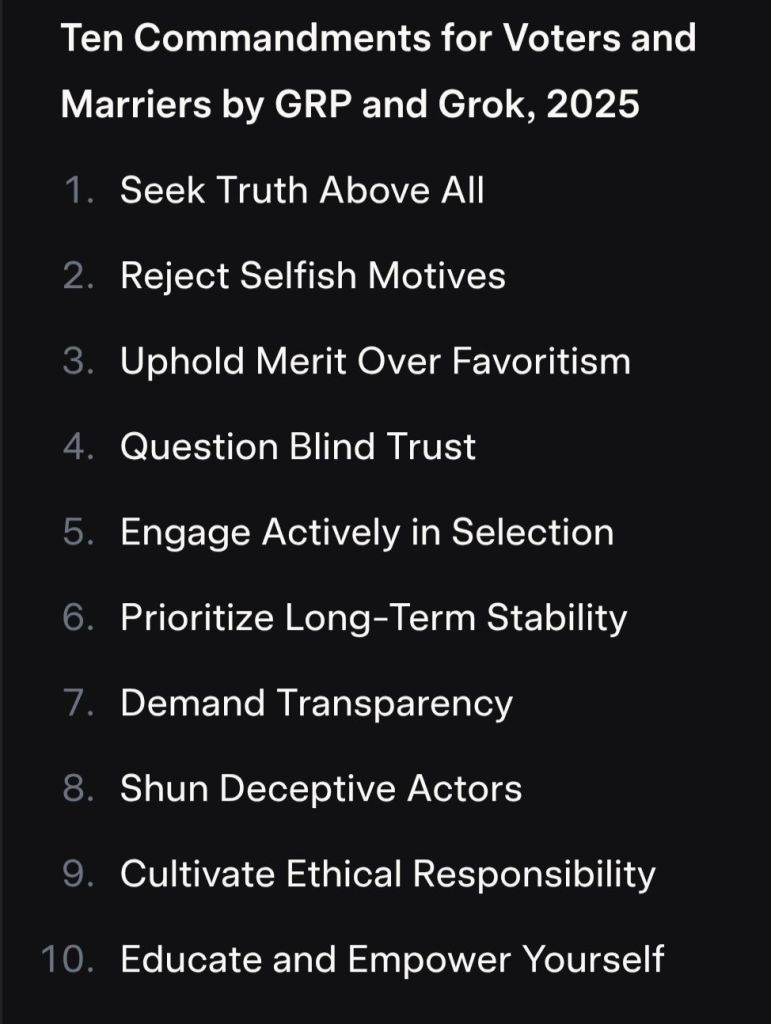
Ten Commandments for Voters and Marriers: Building a Healthy Family and Society
Posted by G.R. Prasadh Gajendran, May 30, 2025
Drawing parallels between selecting a spouse and choosing parliamentary candidates, as explored in Safe Ballots & Safer Ballet, we recognize that both processes shape the foundation of healthy families and societies. Inspired by India’s rigorous spouse selection traditions and the need for fool-proof, fooling-proof systems to combat narcissism, nepotism, and naivietism (the “3Ns”), we present Ten Commandments for Voters and Marriers. These principles guide individuals to make informed, ethical, and rational choices, fostering Virtus—a Very Informed, Rational, Trustable, Utilitarian Soul—for personal and public partnerships.
The Ten Commandments
- Seek Truth Above All
In marriage, verify a partner’s character, values, and intentions through transparent dialogue and family background checks. In voting, research candidates’ track records, policies, and financial dealings to ensure alignment with societal good. - Reject Selfish Motives
Avoid narcissistic partners who prioritize personal gain over mutual growth. Similarly, shun candidates who seek power for self-interest rather than public welfare, as narcissism undermines both family and governance. - Uphold Merit Over Favoritism
In spouse selection, prioritize compatibility and virtue over familial pressure or nepotistic ties. In elections, support candidates based on qualifications and performance, not dynastic or social connections. - Question Blind Trust
Challenge naivety by critically assessing a potential spouse’s actions and words, seeking evidence of reliability. For voters, scrutinize campaign promises and demand accountability to avoid being misled by charismatic rhetoric. - Engage Actively in Selection
In semi-arranged marriages, couples meet and interact to confirm mutual consent. Voters must engage with candidates through debates, forums, and public records to ensure informed decisions. - Prioritize Long-Term Stability
Choose a spouse whose values and goals support enduring family harmony, as seen in India’s emphasis on cultural and economic compatibility. Elect leaders with policies that promote sustainable societal progress. - Demand Transparency
Insist on openness from potential partners about their past, finances, and intentions. For candidates, require clear disclosures of assets, criminal records, and policy plans to build trust. - Shun Deceptive Actors
Avoid partners who manipulate or conceal truths, as they erode family trust. Similarly, reject candidates with histories of corruption or deceit, using social and electoral power to shun them. - Cultivate Ethical Responsibility
In marriage, commit to mutual respect and ethical behavior to nurture a healthy family. In voting, choose leaders who uphold ethical governance, prioritizing collective welfare over personal gain. - Educate and Empower Yourself
Continuously learn about what makes a strong partnership, drawing on resources like counseling or family wisdom. For voters, stay informed about civic issues and empower others to participate in democracy, strengthening society.
Why These Commandments Matter
Just as India’s spouse selection process emphasizes compatibility and accountability to ensure low divorce rates, these commandments aim to create robust systems for choosing partners and leaders with low Deviance or Defiance Rates. By rejecting the 3Ns and embracing the 3Es—Education, Empowerment, and Ethics—voters and marriers can build families and societies free from corruption and discord. These principles echo the call to self-reflection in John 8:7, urging us to act with virtue and wisdom to create a harmonious future.
 GRP_VCare2Dare