“Mal-Adoption risks” or Cuckoo-child Risk are risks to the adoptive parent or family from the Adapted child, whose parents Psycho-medical Genetic History isnt Known.
& Více Versa is the Mal Adopter-Risk by bad narc-parents Adopting known poor kid for enslaving child.
Basic Sense: Personality and Personality Disorders are Hereditary..
Rescued As A Newborn, Adopted Girl Kills Mother At 13 In Odisha
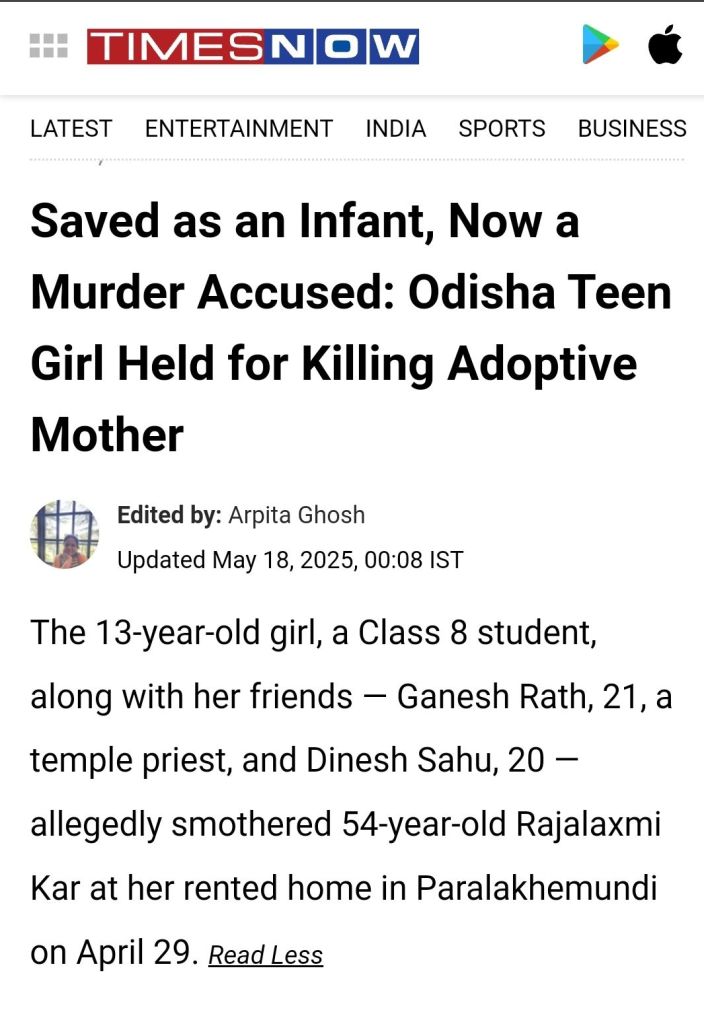
The term “Mal-Adoption risks” or “Cuckoo-Kid Risk” refers to potential challenges or dangers faced by adoptive parents or families when the psychological, medical, or genetic history of the adopted child is unknown. These risks can manifest in various ways, including behavioral issues, mental health challenges, or, in extreme cases, violent behavior, as highlighted in the tragic case from Odisha, India, where a 13-year-old adopted girl killed her adoptive mother. Below, I’ll address the concept of these risks, their potential causes, and insights based on available research, while referencing the specific case you provided.
Overview of Mal-Adoption Risks and “Cuckoo Risk”
The phrase “Cuckoo Risk” draws an analogy from the cuckoo bird, which lays its eggs in another bird’s nest, leaving the host to raise an offspring that may disrupt or harm the family. In adoption, this term is sometimes used to describe the potential for an adopted child with unknown psycho-medical or genetic backgrounds to exhibit behaviors that challenge or endanger the adoptive family. These risks can include:
- Behavioral and Emotional Problems: Adopted children may display internalizing disorders (e.g., anxiety, depression) or externalizing disorders (e.g., aggression, conduct disorders) at higher rates than non-adopted peers, often linked to pre-adoption adversity or genetic predispositions.
- Mental Health Challenges: Studies show adopted individuals are overrepresented in mental health settings, with conditions like ADHD, conduct disorders, or PTSD potentially stemming from genetic factors, prenatal exposure (e.g., to substances), or early trauma.
- Genetic Unknowns: Lack of knowledge about a child’s genetic history can lead to unanticipated health issues (e.g., predisposition to cancers, heart disease) or behavioral tendencies (e.g., schizophrenia, alcoholism) that adoptive parents are unprepared for.
- Attachment Issues: Early neglect or multiple foster care placements can lead to reactive attachment disorder, making it difficult for the child to form healthy bonds, which can strain family dynamics.
- Extreme Outcomes: In rare cases, unresolved trauma or psychological issues may lead to severe behavioral outcomes, including violence, as seen in the Odisha case.
The Odisha Case: Context and Insights
In the Odisha incident, a 13-year-old girl, rescued as a newborn and adopted, allegedly killed her adoptive mother after the mother objected to the girl’s multiple romantic relationships. The case, reported in May 2025, highlights a rare but extreme example of mal-adoption risk. Key details include:
- Background: The girl was abandoned at birth and adopted by the victim, who raised her for 13 years. The adoptive mother, a teacher, was reportedly stabbed multiple times by the girl following a heated argument over her relationships.
- Trigger: The conflict arose from the mother’s disapproval of the girl’s behavior, suggesting possible underlying issues such as defiance, emotional distress, or unresolved psychological challenges.
- Outcome: The girl was apprehended by police, and the case has drawn attention to the complexities of adoption, particularly when the child’s early history is unknown.
While this case is extreme, it underscores the potential for underlying psychological or behavioral issues to escalate if not addressed. The lack of information about the girl’s biological parents’ psycho-medical history likely left the adoptive mother unaware of any genetic predispositions or early trauma that could have contributed to the girl’s actions.
Potential Causes of Mal-Adoption Risks
Based on research, several factors contribute to these risks:
- Pre-Adoption Adversity:
- Trauma and ACEs: Adverse Childhood Experiences (ACEs) like neglect, abuse, or orphanage life can lead to long-term emotional and behavioral problems. Children adopted later in life or from foster care, as in the Odisha case, are at higher risk due to prolonged exposure to such adversities.
- Prenatal Factors: Exposure to substances (e.g., alcohol, leading to Fetal Alcohol Spectrum Disorder) or maternal stress during pregnancy can affect brain development, increasing risks of behavioral issues.
- Genetic Predispositions:
- Adoption studies show that genetic factors play a significant role in conditions like schizophrenia, alcoholism, and antisocial behavior. For example, children of biological parents with schizophrenia have a higher risk of developing it, even if raised by non-schizophrenic adoptive parents.
- Without genetic history, adoptive parents may be unprepared for conditions like ADHD or conduct disorders, as seen in a case where an adoptee’s ADHD was only diagnosed after psychotherapy.
- Attachment and Identity Issues:
- Children with unknown histories may struggle with identity formation, leading to feelings of rejection, loss, or confusion about “who am I.” This can exacerbate mental health issues, particularly during adolescence.
- Reactive attachment disorder, common in children with early neglect, can lead to difficulties forming bonds, potentially causing conflict within the adoptive family.
- Post-Adoption Environment:
- Lack of adoption-competent support, microaggressions, or failure to address adoption-related trauma can amplify negative outcomes. Warm parenting and family cohesion can mitigate these risks, but their absence may worsen them.
- In the Odisha case, the mother’s objection to the girl’s relationships may have been perceived as rejection, potentially triggering an extreme response if underlying issues were present.
Mitigating Mal-Adoption Risks
While risks exist, research suggests ways to reduce them:
- Genetic Testing: Genetic testing can provide insights into health predispositions, though it has limitations (e.g., not diagnosing specific conditions). Adoptees can use tests like 23andMe to learn about potential risks, though ethical concerns like privacy and stigmatization must be considered.
- Early Intervention: Trauma-informed therapy, family counseling, or inpatient treatment for severe cases can address behavioral issues early. Schools using trauma-informed practices can also help.
- Open Adoption: When possible, maintaining contact with birth parents (triad adoption) can provide medical history and reduce identity-related stress.
- Parental Education: Adoptive parents should be trained on childhood trauma, mental health, and adoption-specific challenges to better support their child.
- Support Systems: Access to adoption-competent therapists and medical providers who understand adoptees’ unique needs can improve outcomes.
The Odisha Case in Context
The Odisha case is an outlier, as most adopted children do not exhibit such extreme behavior. However, it highlights the importance of:
- Screening and Support: Had the adoptive mother had access to the girl’s psycho-medical history or early intervention for behavioral issues, the outcome might have been different.
- Adolescent Challenges: Adolescence is a critical period when genetic and environmental factors can amplify behavioral issues, as seen in adoption studies showing increased genetic influence on outcomes like drinking behavior or criminality during this stage.
- Trauma Awareness: The girl’s abandonment at birth and unknown early history suggest possible unresolved trauma, which may have contributed to her actions if not addressed.
Limitations and Considerations
- Rarity of Extreme Cases: While the Odisha case is shocking, research indicates that the vast majority of adopted children are psychologically healthy, with only moderate increases in mental health issues compared to non-adoptees.
- Unknown Details: The news reports lack details about the girl’s mental health history, prior interventions, or the family’s dynamics, making it hard to pinpoint the exact role of her unknown history versus other factors.
- Ethical Concerns: Labeling such risks as “Cuckoo Risk” can stigmatize adoptees, implying they are inherently dangerous, which is not supported by evidence. Most adoptees thrive in nurturing environments.
Conclusion
Mal-adoption risks, or “Cuckoo Risk,” stem from the interplay of unknown genetic predispositions, pre-adoption trauma, and post-adoption environmental factors. The Odisha case illustrates an extreme outcome, likely driven by a combination of unresolved psychological issues, adolescent identity struggles, and possibly genetic factors, though specifics are unclear. Adoptive parents can mitigate risks through genetic testing, trauma-informed care, and robust support systems. However, it’s critical to avoid overgeneralizing, as most adoptees do not pose such risks and can thrive with proper care. For further guidance, adoptive families can consult resources like adoptioncouncil.org or seek adoption-competent therapists.
If you’d like me to search for more recent cases or dive deeper into specific aspects (e.g., genetic testing options or adoption policies in India), let me know!
 GRP_VCare2Dare