31 Day Life Changing Course works.. May1 to May31.
Author Blog Intent: May We Improve every Day in Every Way in May.
More Happy People Spread Happiness & Sunshine More.. Make the World a less Bitter & more Better place 4 All of Us.
Join in for Life Transformation.
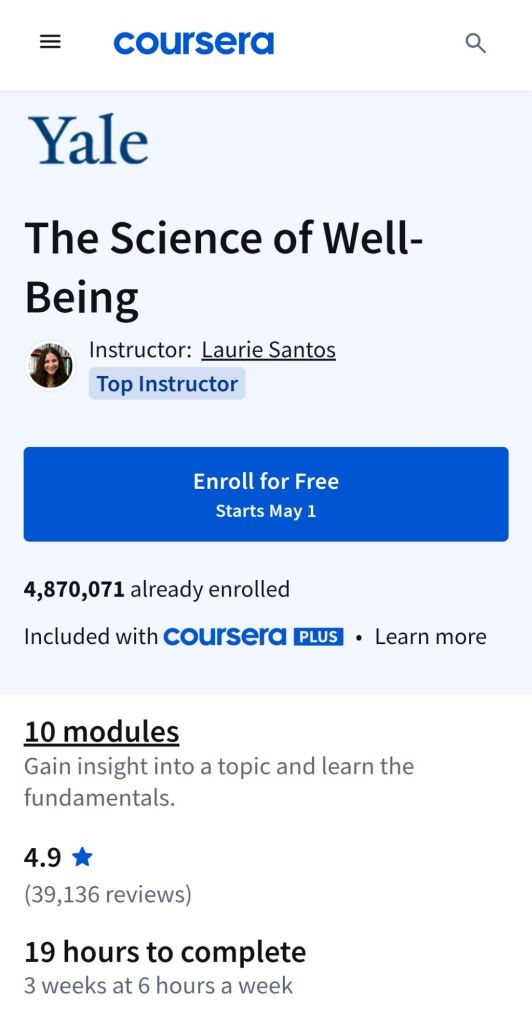
https://www.coursera.org/learn/the-science-of-well-being
To guide you on the path of “Find the Way of May” toward well-being and happiness, I’ll leverage insights from two Coursera courses: The Science of Well-Being by Yale University (which you linked) and The Science of Well-Being for Teens, also by Yale, to complement it with practical, accessible strategies. These courses, grounded in positive psychology, offer evidence-based practices to enhance happiness and well-being. I’ll create a structured, month-long plan for May 2025, blending their teachings into daily actions, reflections, and habits to help you cultivate joy and fulfillment. The plan will align with the theme of renewal and growth associated with May, a month of springtime vitality, and address your goal of finding well-being through learning and practice.
Overview of the Courses
- The Science of Well-Being (Instructor: Laurie Santos, Yale University)
- Focus: Teaches adults how to increase happiness using positive psychology research. It debunks myths about what makes us happy (e.g., wealth, status) and emphasizes practices like gratitude, kindness, social connection, and savoring.
- Key Practices: Includes “rewirements” (habit-forming assignments) such as gratitude journaling, random acts of kindness, social connection exercises, and mindfulness.
- Duration: ~19 hours, self-paced, typically 4-6 weeks.
- Relevance: Offers a scientific framework for adults to rewire habits and align with your goal of finding happiness through structured practice.
- The Science of Well-Being for Teens (Instructor: Laurie Santos, Yale University)
- Focus: Adapts the adult course for younger audiences, emphasizing practical tools for managing stress, building resilience, and fostering happiness in daily life. It’s more interactive and relatable for beginners.
- Key Practices: Includes gratitude exercises, mindfulness, goal-setting, and strategies to counter negative self-talk, with a focus on actionable steps.
- Duration: ~14 hours, self-paced, ideal for quick integration.
- Relevance: Its simplicity and focus on actionable habits make it a great complement for building a foundation in May, especially for someone new to well-being practices.
Both courses emphasize PERMA (Positive Emotion, Engagement, Relationships, Meaning, Accomplishment), a model by Martin Seligman, as a framework for well-being. They also highlight the “GI Joe fallacy” (knowing isn’t enough; practice is key) and the need for consistent action to rewire happiness habits.
“Find the Way of May” Plan
This 31-day plan for May 2025 integrates lessons from both courses into a journey of discovery, practice, and reflection. Each week focuses on a core well-being principle, with daily tasks to build habits and weekly reflections to track progress. The theme, “Find the Way of May,” evokes exploration and growth, encouraging you to embrace small, intentional steps toward happiness.
Week 1 (May 1–7): Understanding Happiness and Starting Gratitude
Theme: Lay the Foundation—Discover What Happiness Really Is
- Course Insights:
- Science of Well-Being: Week 1 introduces myths about happiness (e.g., money or grades don’t guarantee joy) and the importance of gratitude. The course cites studies showing gratitude boosts positive emotions and reduces stress.
- Teens Course: Module 1 emphasizes that happiness is a skill you can practice, starting with gratitude to shift focus from negativity.
- Daily Actions:
- May 1: Watch the introductory videos of The Science of Well-Being (Week 1, ~30 min). Reflect: What do you think makes you happy? Write down 3 misconceptions (e.g., “A better job will solve everything”).
- May 2: Start a Gratitude Journal (both courses). Each night, write 3 things you’re grateful for (e.g., a sunny day, a kind word). Keep it simple but specific.
- May 3: Watch Teens Course Module 1 (~20 min). Practice a 1-minute mindfulness exercise: focus on your breath and notice 5 sensations around you.
- May 4: Perform a Random Act of Kindness (Science of Well-Being). Examples: compliment a stranger, help a neighbor, or send a kind text. Note how it feels.
- May 5: Continue gratitude journaling. Reflect: How does focusing on gratitude change your mood? Spend 5 minutes savoring a positive memory (e.g., a fun moment with friends).
- May 6: Explore a hobby or activity you enjoy (e.g., painting, walking). This aligns with “flow” (engagement) from PERMA. Spend 15 minutes fully immersed.
- May 7: Weekly Reflection: Write 200 words on your week. Did gratitude or kindness feel natural? What surprised you about happiness myths? Plan to increase journaling to 5 nights next week.
- Goal: Build a gratitude habit and debunk happiness myths to set a positive tone for May.
Week 2 (May 8–14): Strengthening Social Connections
Theme: Connect and Thrive—Relationships Fuel Happiness
- Course Insights:
- Science of Well-Being: Week 2 highlights social connection as a top predictor of well-being. Studies show even brief interactions (e.g., chatting with a barista) boost mood.
- Teens Course: Module 2 encourages reaching out to friends and family to build support networks and counter loneliness.
- Daily Actions:
- May 8: Watch Science of Well-Being Week 2 videos (~30 min). List 3 people you want to connect with this month (e.g., a friend, family member, colleague).
- May 9: Reach out to one person from your list (call, text, or meet). Spend 10 minutes listening without interrupting. Note their impact on your mood.
- May 10: Practice Savoring (both courses). During a meal or walk, focus on sensory details (taste, smell, sounds) for 5 minutes to amplify joy.
- May 11: Watch Teens Course Module 2 (~20 min). Write a Gratitude Letter to someone who helped you (don’t send yet). Reflect on how it feels to express thanks.
- May 12: Try a Social Micro-Connection: Smile or chat briefly with a stranger (e.g., at a store). Continue gratitude journaling 5 nights this week.
- May 13: Revisit your hobby from Week 1 for 20 minutes. Invite someone to join you (e.g., a friend for a walk) to blend engagement and connection.
- May 14: Weekly Reflection: Write 200 words. How did connecting with others affect your happiness? Did micro-connections feel awkward or rewarding? Plan to deliver your gratitude letter next week.
- Goal: Strengthen relationships and practice savoring to boost positive emotions.
Week 3 (May 15–21): Building Resilience and Mindfulness
Theme: Inner Peace—Manage Stress and Stay Present
- Course Insights:
- Science of Well-Being: Week 3 covers mindfulness and time management to reduce stress. Research shows meditation lowers cortisol and improves focus.
- Teens Course: Module 3 teaches mindfulness and reframing negative thoughts to build resilience, especially under pressure.
- Daily Actions:
- May 15: Watch Science of Well-Being Week 3 videos (~30 min). Try a 5-minute guided meditation (use a free app like Insight Timer or a course resource).
- May 16: Practice Thought Reframing (Teens Course). Identify a negative thought (e.g., “I’m not good enough”) and reframe it (e.g., “I’m learning and improving”). Write it down.
- May 17: Deliver your Gratitude Letter (in person, call, or email). Reflect: How did the recipient react? How did you feel?
- May 18: Watch Teens Course Module 3 (~20 min). Do a 5-minute Body Scan meditation: lie down, focus on each body part, and release tension.
- May 19: Create a Time Affluence plan (Science of Well-Being). Block 30 minutes daily for something you enjoy (e.g., reading, exercise). Stick to it today.
- May 20: Combine mindfulness and gratitude: During your gratitude journaling, spend 2 minutes visualizing a happy moment from the day.
- May 21: Weekly Reflection: Write 200 words. How did mindfulness or reframing affect your stress? Did time affluence feel freeing? Commit to 10-minute daily meditation next week.
- Goal: Develop mindfulness and resilience to stay grounded and reduce negativity.
Week 4 (May 22–28): Finding Meaning and Accomplishment
Theme: Purpose and Progress—Live with Intention
- Course Insights:
- Science of Well-Being: Week 4 explores meaning and accomplishment, linking them to long-term happiness. Setting intrinsic goals (e.g., personal growth) outperforms extrinsic ones (e.g., fame).
- Teens Course: Module 4 encourages goal-setting and celebrating small wins to build confidence and purpose.
- Daily Actions:
- May 22: Watch Science of Well-Being Week 4 videos (~30 min). List 3 intrinsic goals for the next 6 months (e.g., “Learn a new skill,” “Deepen a friendship”).
- May 23: Break one goal into 3 small steps. Take the first step today (e.g., research a course, text a friend to plan a meetup). Celebrate with a small reward (e.g., a treat).
- May 24: Watch Teens Course Module 4 (~20 min). Practice Self-Compassion: Write a kind note to yourself about a recent struggle (e.g., “It’s okay to feel stressed; I’m doing my best”).
- May 25: Do a 10-minute meditation. Reflect: How does pursuing your goal align with your values (e.g., growth, connection)?
- May 26: Perform another Random Act of Kindness. Reflect on how kindness ties to meaning in your life.
- May 27: Revisit your hobby or a flow activity for 30 minutes. Note how it contributes to your sense of accomplishment.
- May 28: Weekly Reflection: Write 200 words. How do your goals give you purpose? Which practices (gratitude, mindfulness) feel most impactful? Plan to continue 2 habits post-May.
- Goal: Align actions with purpose and celebrate progress to sustain happiness.
Final Days (May 29–31): Reflect and Commit
Theme: The Way Forward—Sustain Your Happiness
- Daily Actions:
- May 29: Review your gratitude journal from the month. Highlight 5 entries that stand out. Reflect: How has your perspective shifted?
- May 30: Create a Happiness Maintenance Plan: Choose 3 practices (e.g., gratitude journaling, weekly social connections, daily meditation) to continue. Schedule them for June.
- May 31: Final Reflection: Write 300 words. How has “Find the Way of May” changed your well-being? What challenges did you face? What’s your vision for happiness moving forward? Celebrate with a meaningful activity (e.g., a nature walk, dinner with loved ones).
- Goal: Solidify habits and commit to long-term well-being.
Why This Plan Works
- Evidence-Based: The courses draw on studies (e.g., Lyubomirsky’s gratitude research, Fredrickson’s broaden-and-build theory) showing that gratitude, kindness, and mindfulness increase positive emotions and life satisfaction.
- Incremental Habits: Daily tasks are small (5–30 minutes), aligning with the courses’ emphasis on consistency over intensity. The “rewirement” approach ensures habits stick.
- Holistic Approach: Covers all PERMA elements (Positive Emotion, Engagement, Relationships, Meaning, Accomplishment) for balanced well-being.
- May’s Symbolism: The springtime theme of renewal inspires growth, making May ideal for starting fresh with happiness practices.
Practical Tips for Success
- Schedule Learning: Dedicate 1–2 hours weekly to course videos (e.g., weekends). Both courses are self-paced, so you can spread them across May.
- Use Tools: Keep a notebook or app (e.g., Notion, Evernote) for journaling and reflections. Set phone reminders for daily tasks.
- Stay Flexible: If a task feels overwhelming, scale it back (e.g., 1 gratitude entry instead of 3). The Teens Course emphasizes progress over perfection.
- Engage Community: Share insights with friends or online forums (e.g., Coursera discussion boards) to stay motivated. If part of a group like the one you mentioned, discuss your progress to inspire others.
- Track Mood: Use a simple 1–10 scale daily to rate your happiness. Both courses suggest tracking to see patterns (e.g., gratitude boosts mood).
Addressing Potential Challenges
- Time Constraints: If busy, prioritize high-impact tasks like gratitude journaling (5 min/night) or micro-connections (1–2 min). The Teens Course is shorter and great for quick wins.
- Skepticism: If you doubt happiness practices, recall the courses’ data: gratitude increases well-being by 10–15% in studies. Start small and track changes.
- Emotional Barriers: If journaling or connecting feels hard, begin with private tasks (e.g., mindfulness) and ease into social ones. The Teens Course offers tips for overcoming shyness.
Additional Resources
- Coursera Access: Enroll in The Science of Well-Being (free to audit, ~$49 for certificate) and The Science of Well-Being for Teens (also free to audit). Both are on Coursera’s platform.
- Supplementary Tools: Try apps like Headspace for meditation or Daylio for mood tracking, recommended in course discussions.
- Reading: For deeper insight, explore The How of Happiness by Sonja Lyubomirsky, cited in the courses, for practical strategies.
Connection to Your Context
Your interest in the Meerut case and inter-gender harmony suggests a desire to foster positive relationships and community well-being. This plan aligns with those goals by emphasizing kindness, social connection, and resilience—skills that can strengthen personal and communal bonds. Practices like gratitude and self-compassion can also help navigate emotional challenges from societal issues, promoting harmony in your interactions.
Next Steps
- Enroll Today: Sign up for both Coursera courses (links: The Science of Well-Being, Teens Course). Auditing is free, so you can start immediately.
- Begin May 1: Follow the daily plan, starting with gratitude journaling and course videos. Adjust tasks to fit your schedule.
- Check In: If you’d like, share updates or challenges with me, and I can refine the plan or offer tailored advice. I can also analyze X posts for well-being trends to complement your journey.
By hearing and practicing the lessons from these courses, you’ll “Find the Way of May” through intentional, science-backed steps toward lasting happiness. Let me know if you want a visual chart of the plan or more details on any practice!
*WeCare 4 BrainCare_InfoShare.* PMG is an Organization for
Interventions, Preventions & Rejuvenation. Let’s Apply Psychology & Lifeology for Daily Living.
*PRIYAMitras Socio-Emotional BrainCare: A Mission 4HOPE & IdeActions 4More “Hapeer_India 2030″:*
https://chat.whatsapp.com/FjRuSB64Qp1EGxK2pJ4l29
 GRP_VCare2Dare