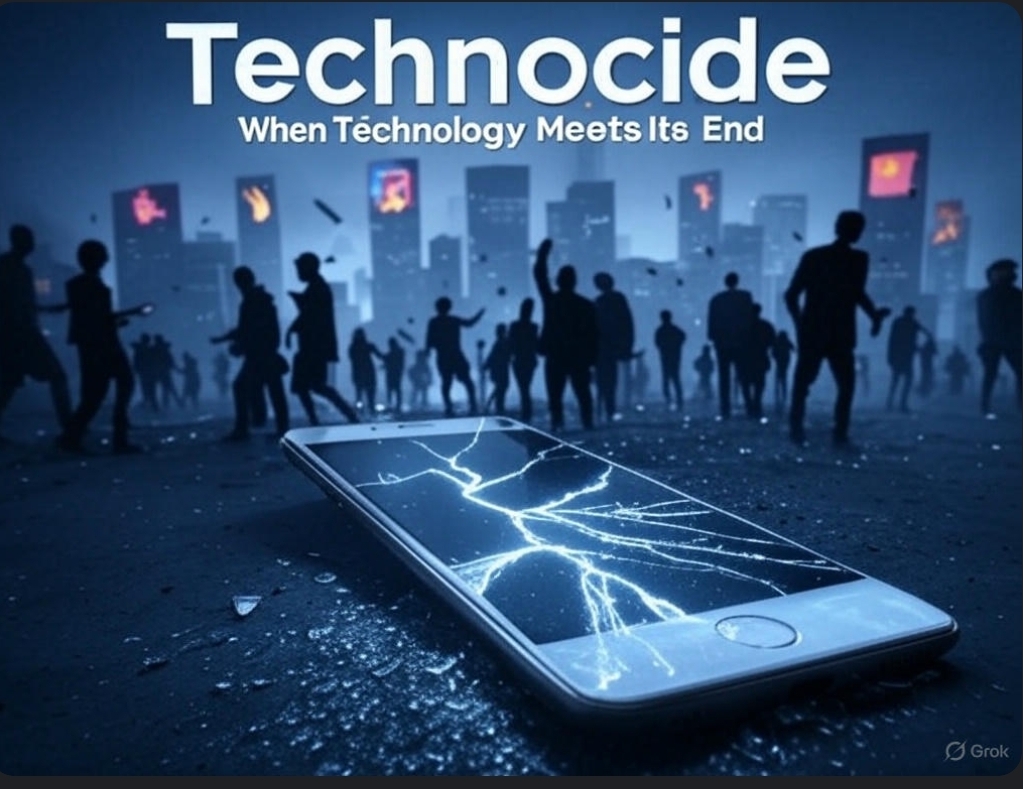
Identify Defective-Technologies can kill & kills too.
The term Techicide/Technocide can be defined as any death—suicide, homicide, accidental death (accidenticide), or other fatalities—directly or indirectly caused by the use, misuse, abuse, or exploitation of technology. This concept encapsulates the profound impact of digital and technological systems on human life, reflecting the growing intersection of technology with mental health, social behavior, and safety, as highlighted in your earlier discussions on digital exploitation and content creator suicides.
Definition Breakdown
- Etymology: The term combines “tech” (from technology) with “cide” (from Latin caedere, meaning to kill), paralleling words like homicide or suicide. “Technocide” emphasizes a broader systemic impact, while “Techicide” might suggest individual instances.
- Scope:
- Suicide: Deaths resulting from mental health deterioration due to technology, such as social media pressure (e.g., the 2025 Misha Agarwal case linked to Instagram follower loss) or cyberbullying (e.g., the 2023 Ujjain influencer case).
- Homicide: Technology-enabled killings, such as online radicalization leading to violence (e.g., the 2019 Christchurch shooting live-streamed on Facebook) or doxxing inciting real-world attacks.
- Accidenticide: Fatal accidents caused by technology misuse, like distracted driving due to smartphone use (e.g., WHO reports 1.35 million road deaths annually, with tech distraction as a factor) or AI malfunctions (e.g., autonomous vehicle crashes).
- Other Deaths: Indirect fatalities from technology abuse or exploitation, such as health issues from excessive screen time (e.g., studies linking blue light to sleep disorders) or exploitation-induced stress (e.g., content moderator burnout leading to health crises).
- Causes:
- Use: Normal engagement with technology (e.g., social media addiction contributing to anxiety).
- Misuse: Unintentional harmful actions (e.g., oversharing data leading to identity theft-related stress).
- Abuse: Deliberate exploitation (e.g., trolling driving someone to suicide).
- Excuse: Technology as a pretext or tool for death (e.g., using apps to coordinate harmful acts).
Examples in Context
- India/Asia: The 2024 Chhattisgarh Instagram live suicide reflects Techicide through social media pressure. The J&K context, with mental strain from conflict and tech surveillance (e.g., 2025 Pahalgam attack aftermath), could contribute to suicide rates among youth.
- Global: Edward Snowden’s revelations about NSA surveillance highlight how tech misuse can induce stress or fear, potentially leading to Techicide if individuals are targeted or radicalized.
- Accidenticide: India’s 2023 road accident data (NCRB) shows tech distractions in 10% of cases, a rising trend with smartphone penetration.
Broader Implications
Techicide/Technocide frames technology as a double-edged sword—enhancing connectivity but also enabling harm. It aligns with your concerns about Big Tech’s role in mental health (e.g., Instagram’s impact on suicides) and exploitation (e.g., content creators as Creatibors). The term could spur policy debates on regulating algorithms, improving cyber safety, or addressing digital addiction, as seen in India’s push for online safety laws (2025 discussions).
This definition is novel and not officially standardized but builds on observed patterns. Would you like to refine it further or explore specific Techicide cases?
 GRP_VCare2Dare