Ajmal Kasab (Pakistani Terrorist 2008) to Aaj ka Kashmir Attack(2025). What has India and World Learnt about Pakistani Terrorism?
How to Save Indian Citizens life ‘s and Make India & Kashmir Safer & not Suffer.
Develop the Ultimate Anti-terrorist GUN (Greatly United Nation). Unity is Strength & Solidarity is Stamina.
If India is United and Integrated well, no Terrorists from outside or inside can effect it.
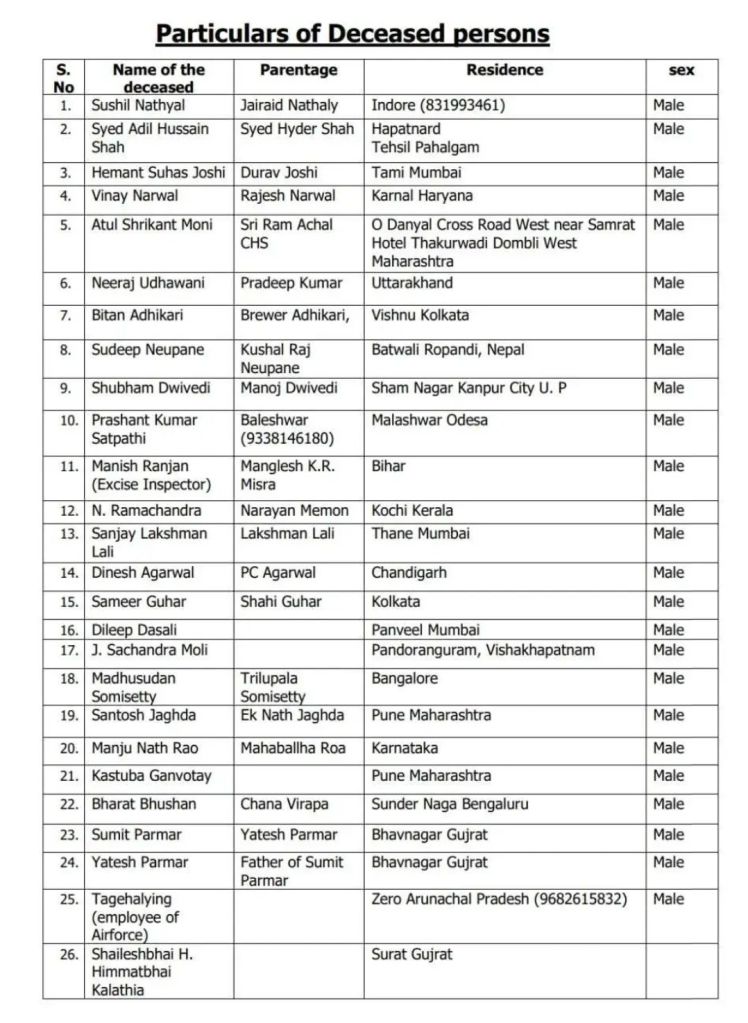
Terrorists Targetted People who were Non-Muslim Indians. (Specially Those Men Who couldn’t Recite Kalma and weren’t Circumcised, 1 exception is because he was an Indian Muslim who tried to question and prevent the attack).
Report on Pahalgam Terror Attack: Analysis and Recommendations
1. Problem with Proofs
The Pahalgam terror attack on April 22, 2025, in Jammu and Kashmir’s Baisaran Valley represents a severe escalation of violence targeting civilians, particularly tourists, in a region experiencing a tourism surge. The attack, claimed by The Resistance Front (TRF), a proxy of the Pakistan-based Lashkar-e-Taiba (LeT), resulted in the deaths of at least 26 people, including Manjunath Rao, a businessman from Karnataka’s Shivamogga district, and injured over 20 others. The incident has raised significant concerns about security lapses, the targeting of specific communities, and the political motivations behind the attack.
Proofs of the Problem:
- Casualties and Targeting: Manjunath Rao was killed in front of his wife, Pallavi, and son, Abhijey, in a meadow known as “Mini Switzerland.” Pallavi reported that the terrorists spared her life, instructing her to “tell Modi” about the attack, indicating a deliberate political message aimed at India’s leadership.
- Terrorist Claim and Motive: The TRF claimed responsibility, with reports suggesting the attackers confirmed victims’ Hindu identities before shooting, as evidenced by survivor accounts, including Pallavi’s and Asavari Jagdale’s, who noted victims were asked to recite Islamic verses.
- Scale and Timing: The attack, the deadliest since the 2019 Pulwama strike, occurred ahead of the Amarnath Yatra, a significant Hindu pilgrimage, and during a visit by US Vice President JD Vance, suggesting an intent to disrupt tourism and international relations.
- Security Lapses: The attack took place in a remote area accessible only by foot or pony, highlighting vulnerabilities in tourist security despite increased tourism post-Article 370 revocation.
- Political Exploitation: Posts on X and media reports suggest the attack is being framed as a tool in “Politics 3.0,” with accusations of Pakistan-backed terrorism and calls for unified citizen awareness.
The problem is multifaceted: a targeted attack on civilians, exploitation of religious identities, inadequate security in tourist areas, and a politically charged narrative risking further division.
2. Analysis with Evidences
The Pahalgam attack underscores systemic issues in Jammu and Kashmir’s security framework, the exploitation of terrorism for political ends, and the socio-economic impact on a tourism-dependent region. Below is an analysis supported by evidence.
Security Vulnerabilities
- Evidence: The Baisaran Valley’s remote location made it difficult for security forces to respond swiftly, requiring helicopters and ponies for evacuation. Despite a tourism boom (3.5 million visitors in 2024), security in high-traffic tourist zones appears underprepared, as noted by former J&K CM Mehbooba Mufti, who called for investigating “potential security lapses.”
- Analysis: The lack of real-time surveillance and rapid response mechanisms in remote tourist areas enabled the attackers to strike and flee. The timing, just before the Amarnath Yatra, suggests terrorists exploited known security gaps during peak tourist seasons.
Targeted Violence and Political Messaging
- Evidence: Pallavi’s account of the terrorists’ directive to “tell Modi” and reports of victims being asked their religion indicate a deliberate targeting of Hindus to provoke communal tensions and challenge the central government’s authority. The TRF’s claim and the attack’s timing during Vance’s visit suggest an intent to garner global attention.
- Analysis: The attack aligns with a strategy to destabilize Kashmir’s improving socio-economic landscape by targeting tourists, a symbol of normalcy post-2019. The message to Modi reflects an attempt to undermine India’s anti-terrorism narrative, framing the government as unable to protect citizens.
Socio-Economic Impact
- Evidence: Kashmir’s tourism sector, a major economic driver, saw 600,000 visitors in 2025 before the attack. Post-incident, tourists like Rakesh Sharma expressed intent to leave, fearing further violence. The attack’s ripple effect could deter visitors, impacting local livelihoods.
- Analysis: The tourism surge post-Article 370 revocation has been a cornerstone of J&K’s economic recovery. A single high-profile attack risks reversing this progress, as fear and negative media coverage could reduce tourist inflows, exacerbating economic strain.
Political Exploitation
- Evidence: X posts frame the attack as a Pakistan-backed assault on Hindus, with calls for “Citizens4Justice” and accusations of a “barbaric cult,” risking communal polarization. BJP leader Ravinder Raina’s claim of “Pakistani terrorists” and protests by Rashtriya Bajrang Dal burning Pakistan’s flag further politicize the incident.
- Analysis: The attack is being leveraged to fuel narratives of external aggression and internal division, potentially deepening mistrust between communities and strengthening hardline political positions. This risks overshadowing the need for unified, pragmatic counter-terrorism measures.
3. Solution with Proposal to Implement
To address the Pahalgam attack’s root causes and prevent future incidents, a comprehensive strategy combining enhanced security, community engagement, and counter-narrative efforts is proposed.
Solutions
- Strengthen Tourist Area Security:
- Deploy advanced surveillance (drones, CCTV) and rapid response teams in remote tourist zones like Baisaran Valley.
- Establish permanent security outposts near high-traffic areas, especially ahead of events like the Amarnath Yatra.
- Train local guides and pony operators as first responders to bridge response gaps in inaccessible areas.
- Counter Targeted Violence:
- Enhance intelligence-sharing between central and state agencies to preempt cross-border terrorist movements, as the TRF may have infiltrated from Kishtwar.
- Launch a public campaign promoting Kashmir’s history of communal harmony to counter narratives of religious targeting.
- Protect Tourism Economy:
- Provide immediate financial aid to affected families and businesses to stabilize the local economy.
- Initiate a global tourism campaign showcasing Kashmir’s safety and resilience, backed by visible security enhancements.
- Mitigate Political Polarization:
- Form a bipartisan task force to address terrorism without communal rhetoric, ensuring unified messaging.
- Regulate inflammatory social media content by collaborating with platforms like X to curb divisive narratives.
Proposal to Implement
Title: Kashmir Safe Tourism Initiative (KSTI)
Objective: Restore tourist confidence, enhance security, and promote unity in Jammu and Kashmir post-Pahalgam attack.
Implementation Plan:
- Phase 1: Immediate Security Overhaul (0-3 Months)
- Action: Deploy 50 drones and 100 CCTV cameras in Pahalgam and similar tourist zones, linked to a 24/7 control room in Srinagar. Establish 10 permanent security outposts in remote areas.
- Budget: ₹50 crore (central and state funding).
- Stakeholders: J&K Police, Indian Army, Ministry of Home Affairs.
- Metric: Reduce response time to incidents from 1 hour to 15 minutes.
- Phase 2: Community and Intelligence Strengthening (3-12 Months)
- Action: Train 1,000 local guides and pony operators as first responders. Enhance intelligence networks with ₹20 crore investment in cross-border surveillance. Launch “Kashmir United” campaign via TV, radio, and social media to promote harmony.
- Budget: ₹30 crore.
- Stakeholders: J&K Tourism Department, local NGOs, media agencies.
- Metric: Increase tourist arrivals to 1 million in 2026; reduce communal incidents by 50%.
- Phase 3: Long-Term Resilience (12-36 Months)
- Action: Form a bipartisan National Anti-Terrorism Task Force to coordinate policies. Partner with X and other platforms to flag divisive content. Roll out a global “Visit Kashmir” campaign with international influencers.
- Budget: ₹100 crore.
- Stakeholders: Ministry of Tourism, External Affairs, tech companies.
- Metric: Achieve 5 million annual tourists by 2028; zero major terror incidents in tourist zones.
Monitoring and Evaluation:
- Monthly reviews by a joint committee of J&K and central government officials.
- Public reporting via a dedicated KSTI website to ensure transparency.
- Annual surveys to gauge tourist confidence and local sentiment.
Expected Outcomes:
- Enhanced tourist safety, restoring Kashmir’s image as a secure destination.
- Reduced communal tensions through unified messaging.
- Sustained economic growth via tourism, supporting local livelihoods.
This proposal leverages immediate action and long-term planning to address the Pahalgam attack’s fallout, ensuring justice for victims like Manjunath Rao and a resilient future for Kashmir.
 GRP_VCare2Dare