Why India Needs a Men’s Commission
India urgently requires a National Men’s Commission to address the systemic challenges faced by men in a society where many industries are male-Overepresented yet homes and families remain gyno-centric and matriarchal in operations. This imbalance creates unique pressures on men, necessitating a dedicated body to advocate for their rights, mental health, and legal protections. Below is a detailed case for establishing a Men’s Commission, followed by a global perspective on countries with men’s helplines or similar initiatives.
The Case for a Men’s Commission in India
1. Gyno-Centric and Matriarchal Family Structures
- Matriarchal Dominance at Home: In many Indian households, women hold significant decision-making power, particularly in family dynamics, child-rearing, and household finances. This gyno-centric structure often places men in subservient roles at home, despite their breadwinner responsibilities. Men face expectations to provide financially while navigating familial pressures dictated by matriarchal norms, leading to stress and powerlessness.
- Lack of Voice in Families: Men frequently report feeling marginalized in family disputes, with societal norms prioritizing female perspectives in domestic matters. This dynamic exacerbates mental health issues, as men lack spaces to express grievances without stigma.
2. Industry Representation vs. Domestic Disadvantage
- Male-Dominated Industries: While men dominate sectors like IT, finance, and manufacturing, this representation masks vulnerabilities. Workplace pressures—long hours, job insecurity, and expectations of stoicism—combine with domestic responsibilities, leaving men overextended.
- No Support for Domestic Challenges: Unlike women, who have the National Commission for Women (NCW) to address workplace and domestic issues, men lack institutional support for navigating gyno-centric family structures. A Men’s Commission could bridge this gap, offering counseling and advocacy for men balancing professional and familial roles.
3. High Male Suicide Rates
- NCRB Data (2021): Of 1,64,033 suicides in India, 81,063 were married men compared to 28,680 married women. The pressure to fulfill financial obligations in male-dominated industries, coupled with matriarchal family expectations, contributes significantly to this disparity.
- Mental Health Stigma: Societal norms discourage men from seeking help, viewing vulnerability as weakness. A Men’s Commission could fund helplines, awareness campaigns, and therapy programs to address this crisis.
4. Legal Misuse and Bias
- False Accusations: Men’s rights groups, like the Save Indian Family Foundation, highlight misuse of laws such as Section 498A (anti-dowry) and domestic violence provisions. In matriarchal households, men often face baseless allegations, leading to legal harassment and social stigma. The Supreme Court in 2014 acknowledged 498A misuse, introducing safeguards, yet men remain vulnerable.
- Gender-Biased Laws: Divorce, custody, and alimony laws are perceived to favor women, leaving men without recourse. A Men’s Commission could advocate for gender-neutral laws, ensuring fairness in family courts.
5. Grassroots Demand
- Men’s Rights Movement: Organizations like Men Welfare Trust, Purush Aayog, and CRISP, alongside campaigns like the 2024 “Ride for Men’s Commission” (15,000 km), reflect widespread demand. Petitions on Change.org and protests at Jantar Mantar underscore the need for a platform to address men’s issues.
- NGO Helplines: The Save Indian Family’s SIF ONE helpline (8882 498 498) and Men Helpline Org (9911666498) receive thousands of calls monthly from men facing abuse, depression, or legal battles, indicating a gap that a government-backed commission could fill.
6. Promoting True Gender Equality
- A Men’s Commission would complement the NCW, ensuring both genders’ issues are addressed. In a society where men face unique pressures from matriarchal homes and high-stakes industries, ignoring their challenges undermines equality. A commission could research men’s issues, propose policies, and provide helplines, mirroring the NCW’s role.
Addressing Counterarguments
- Existing Institutions: Critics argue that the National Human Rights Commission (NHRC) or courts suffice. However, the NHRC’s broad mandate cannot address men-specific issues like matriarchal family pressures or legal misuse with the focus a dedicated commission would provide. The Supreme Court’s 2023 dismissal of a Men’s Commission PIL ignored the systemic nature of men’s challenges in gyno-centric homes.
- Resource Concerns: Funding a Men’s Commission is justified given the scale of male suicides and legal harassment. Resources could be allocated efficiently by modeling it on the NCW’s structure.
- Polarization Risks: A commission need not deepen gender divides. By promoting gender-neutral policies and dialogue, it could foster collaboration with the NCW, balancing advocacy for all.
Global Perspective: Countries with Men’s Helplines
No country has a formal “National Men’s Commission,” but several have helplines addressing men’s issues, driven by concerns like suicide and domestic violence. These provide models for India’s proposed commission:
- United Kingdom:
- Helplines: Mankind Initiative (01823 334244) supports male domestic abuse victims; CALM (0800 58 58 58) focuses on male suicide prevention.
- Context: Male suicides are 3-4 times higher than female rates, prompting NGO-led initiatives. The Equality and Human Rights Commission is gender-neutral but not men-specific.
- Australia:
- Helplines: MensLine Australia (1300 78 99 78) offers 24/7 government-funded support for mental health and domestic violence. Beyond Blue (1300 22 4636) addresses male mental health.
- Context: 75% of suicides are male, and 1 in 3 domestic violence victims are men (Australian Bureau of Statistics).
- Canada:
- Helplines: Canadian Centre for Men and Families and regional services like BC Men’s Resource Centre support men with abuse, custody, and mental health issues.
- Context: Male suicides are 3 times higher than female rates.
- United States:
- Helplines: National Domestic Violence Hotline (1-800-799-7233) supports men (1 in 7 men face DV, per CDC). 1in6 aids male sexual abuse survivors; National Suicide Prevention Lifeline (988) addresses male suicides (3-4 times female rates).
- Context: Men’s rights groups like the National Coalition for Men advocate for legal reforms.
- Ireland:
- Helplines: Men’s Aid Ireland (01 554 3811) supports male DV victims; Samaritans Ireland (116 123) addresses male suicides.
- Context: Male suicides are 4 times higher than female rates.
- Other Countries:
- New Zealand: Men’s Helpline (0800 636 357) supports mental health and DV issues.
- South Africa: NGOs like Men’s Foundation offer support; no government body exists.
Conclusion
India’s gyno-centric and matriarchal family structures, combined with intense pressures from male-dominated industries, create a unique crisis for men—evident in high suicide rates, legal harassment, and mental health stigma. A National Men’s Commission is essential to provide advocacy, helplines, and policy reforms, ensuring men’s voices are heard in a society that often overlooks their struggles. Global examples of men’s helplines demonstrate the feasibility and need for targeted support. Rather than polarizing gender discourse, a Men’s Commission could promote true equality by addressing systemic issues faced by men, complementing the NCW’s work. India must act to establish this body, leveraging NGO momentum and public demand to create a fairer, more balanced society.
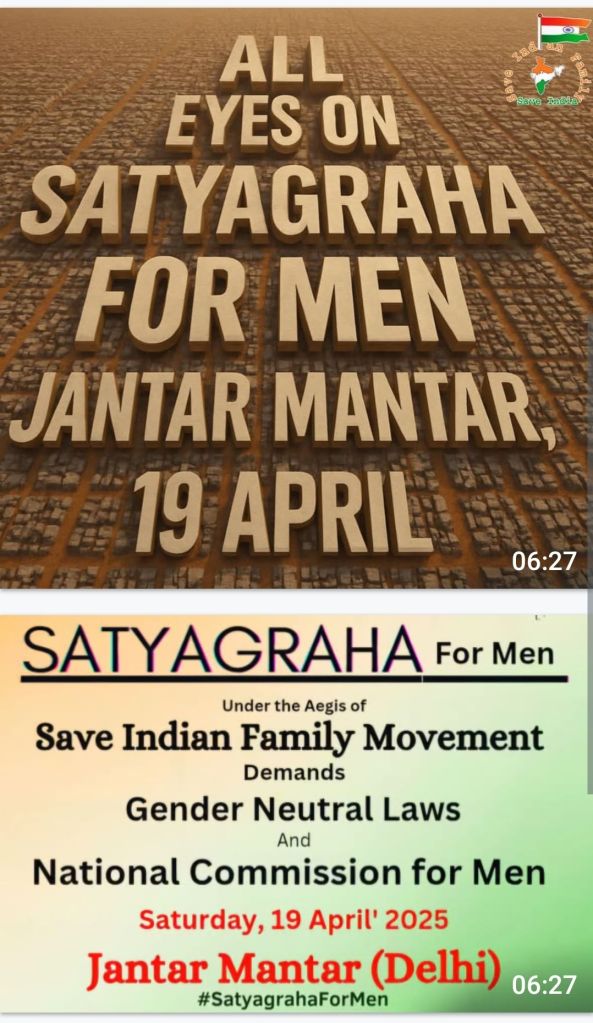
📢 Satyagraha For Men – Uniting for a Brighter Future! 🚹⚖️
Date: 19 April 2025
Location: Jantar Mantar, Delhi
Men across India deserve equal rights, fair treatment, and a voice. It is crucial that we unite to drive positive change. Join us in demanding a National Commission for Men, suicide prevention measures, gender-neutral laws, and meaningful reforms.
Be part of a movement that empowers men, promotes equality, and fosters a fair society. Join activists, NGOs, and concerned citizens from across India.
This is a call to action for real change!
How You Can Support:
– Attend and make your voice heard
– Invite friends and family to join the movement
– Share this event and amplify the message
Together, we can create a brighter future for all! 🚀 The time for silence is over. Join us and be the change!
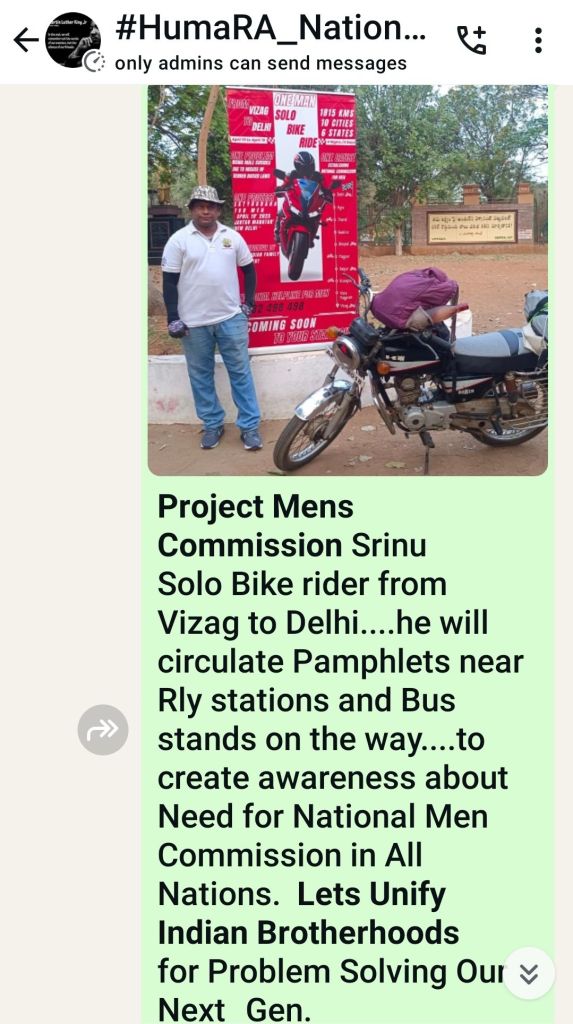
*Lets Unify Indian Brotherhoods* for Problem Solving Our Next_Gen.
Grp Mission is InterGenders Harmony & Neo Indian_SaferFamilies 4.0.
https://chat.whatsapp.com/KecJokbFlP4F0azMaCyeyA
 GRP_VCare2Dare