Smart Campaign of Empaths or Smear Campaign of Narcs, Defence of Public or Defamation in public?.. How to Know Difference?.
Distinguishing between a smart campaign of empathy, a smear campaign by a narcissist, a defense of the public, and defamation in public requires understanding the intent, methods, and impact of each. Here’s a breakdown to help you differentiate:
1. Smart Campaign of Empathy
Definition: A deliberate, strategic effort to promote understanding, compassion, or positive change by appealing to shared human values.
Characteristics:
- Intent: Genuine desire to uplift, educate, or support others without personal gain.
- Methods: Uses factual, respectful, and inclusive communication. Focuses on storytelling, emotional connection, and constructive dialogue.
- Tone: Positive, solution-oriented, and collaborative.
- Impact: Builds trust, fosters unity, and encourages collective action for a cause (e.g., charity drives, mental health awareness).
- Example: A campaign raising awareness about homelessness by sharing personal stories and offering solutions like community support programs.
How to Spot:
- Transparent motives with no hidden agenda.
- Focus on the issue, not personal attacks.
- Backed by verifiable facts or data.
2. Smear Campaign of a Narcissist
Definition: A manipulative tactic, often by someone with narcissistic traits, to discredit, humiliate, or destroy someone’s reputation for personal gain or control.
Characteristics:
- Intent: To dominate, control, or deflect blame. Driven by ego, envy, or revenge.
- Methods: Spreading lies, half-truths, or exaggerated claims. Uses gaslighting, triangulation (pitting people against each other), or public shaming.
- Tone: Vindictive, exaggerated, and emotionally charged. Often lacks evidence.
- Impact: Creates division, confusion, and harm to the target’s reputation or mental health.
- Example: A narcissist falsely accuses a colleague of misconduct to sabotage their career, spreading rumors without proof.
How to Spot:
- Inconsistent or unverifiable claims.
- Personal attacks rather than issue-based criticism.
- The accuser avoids accountability or shifts blame when confronted.
3. Defense of Public
Definition: Actions or statements made to protect the public from harm, misinformation, or injustice, often in response to a perceived threat.
Characteristics:
- Intent: To inform, protect, or advocate for the public’s well-being.
- Methods: Uses evidence, facts, and logical arguments. May call out harmful behavior but focuses on the issue, not personal destruction.
- Tone: Assertive but fair. Seeks accountability, not vengeance.
- Impact: Raises awareness, promotes justice, or prevents harm. Encourages transparency.
- Example: A whistleblower exposes a company’s unsafe practices to protect consumers, backed by documents and data.
How to Spot:
- Supported by credible evidence (documents, witnesses, data).
- Focuses on systemic issues or public safety, not personal grudges.
- The defender is open to scrutiny and dialogue.
4. Defamation in Public
Definition: Making false statements that harm someone’s reputation, either verbally (slander) or in writing (libel), often in a public setting.
Characteristics:
- Intent: To maliciously damage someone’s reputation, often for personal gain, revenge, or spite.
- Methods: Spreading false or misleading information as fact. May involve exaggeration or fabrication.
- Tone: Accusatory, sensational, and often reckless.
- Impact: Causes tangible harm (e.g., loss of job, relationships, or public trust). May lead to legal consequences.
- Example: Publicly accusing someone of a crime they didn’t commit, without evidence, leading to social or professional ostracism.
How to Spot:
- Claims lack credible evidence or rely on hearsay.
- The accuser refuses to retract or correct false statements when challenged.
- Harm to the target is disproportionate to the issue.
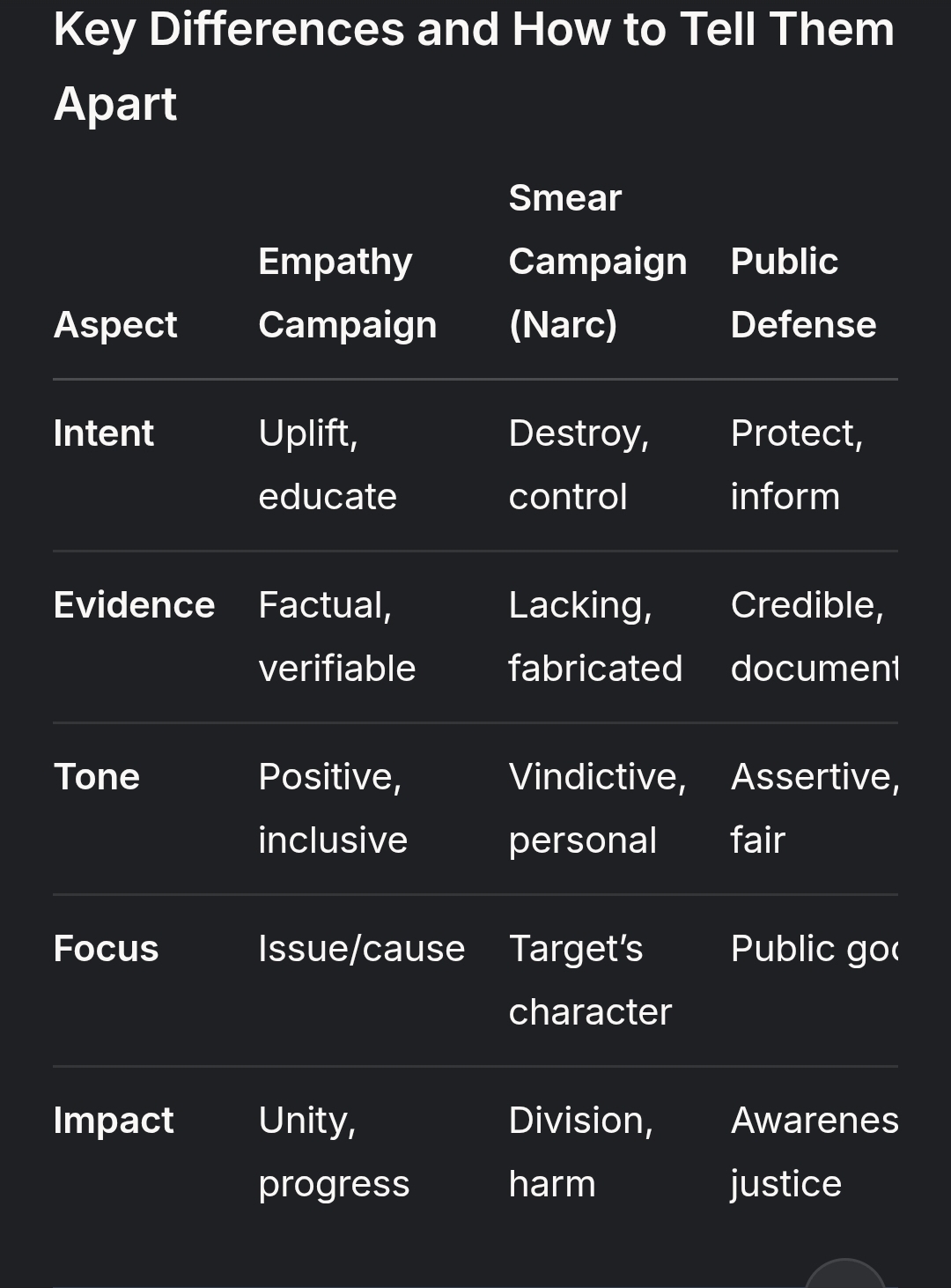
Key Differences and How to Tell Them Apart
AspectEmpathy CampaignSmear Campaign (Narc)Public DefenseDefamationIntent Uplift, educate Destroy, control Protect, inform Harm, mislead Evidence Factual, verifiable Lacking, fabricated Credible, documented False, unproven Tone Positive, inclusive Vindictive, personal Assertive, fair Malicious, reckless Focus Issue/cause Target’s character Public good Target’s ruin Impact Unity, progress Division, harm Awareness, justice Unjust damage
Practical Steps to Differentiate
- Check the Evidence:
- Look for verifiable facts, documents, or data. Empathy campaigns and public defenses rely on truth; smear campaigns and defamation often rely on rumors or distortion.
- Ask: Can the claims be independently confirmed?
- Evaluate the Intent:
- Consider the source’s motives. Are they seeking personal gain, revenge, or public good?
- Ask: Who benefits from this narrative, and why?
- Analyze the Tone and Language:
- Empathy campaigns are constructive and inclusive. Smear campaigns and defamation are personal, exaggerated, and divisive.
- Ask: Is the focus on solving a problem or attacking a person?
- Observe the Impact:
- Empathy campaigns and public defenses aim to build or protect. Smear campaigns and defamation aim to destroy.
- Ask: Does this unite people or sow discord?
- Consider the Source’s Behavior:
- Narcissists and defamers avoid accountability, deflect blame, or double down when challenged. Empathetic campaigners and public defenders are open to dialogue and correction.
- Ask: Does the source take responsibility for their claims?
- Cross-Check with Neutral Parties:
- Consult unbiased sources, such as fact-checkers, reputable media, or direct evidence, to verify claims.
- If possible, use tools like web searches or public records to confirm facts.
Additional Notes
- Context Matters: A single act (e.g., criticizing someone publicly) could fall into any category depending on intent and evidence. Always consider the bigger picture.
- Legal Line: Defamation is actionable in court if false statements cause provable harm. Smear campaigns may not always meet the legal threshold but are still harmful.
- Narcissistic Smear Campaigns: These often escalate when the narcissist feels threatened or exposed. They may enlist others (“flying monkeys”) to amplify their attacks.
- Public Defense vs. Defamation: The line can blur if a public defense includes false or reckless claims. Truth is a defense against defamation claims in most legal systems.
If you have a specific scenario or example, I can help analyze it further to determine which category it fits. Alternatively, I can search for real-time information or analyze relevant content if you provide more details. Let me know!
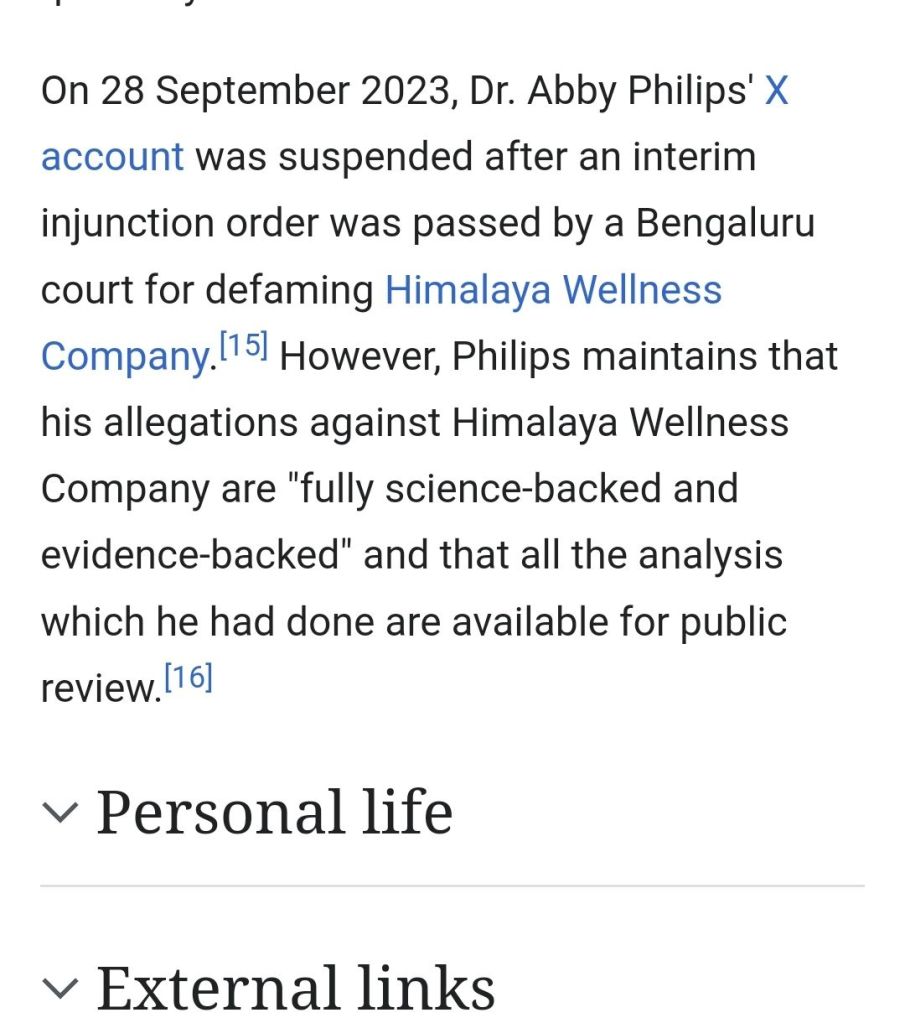
Case Study of an Influencer.
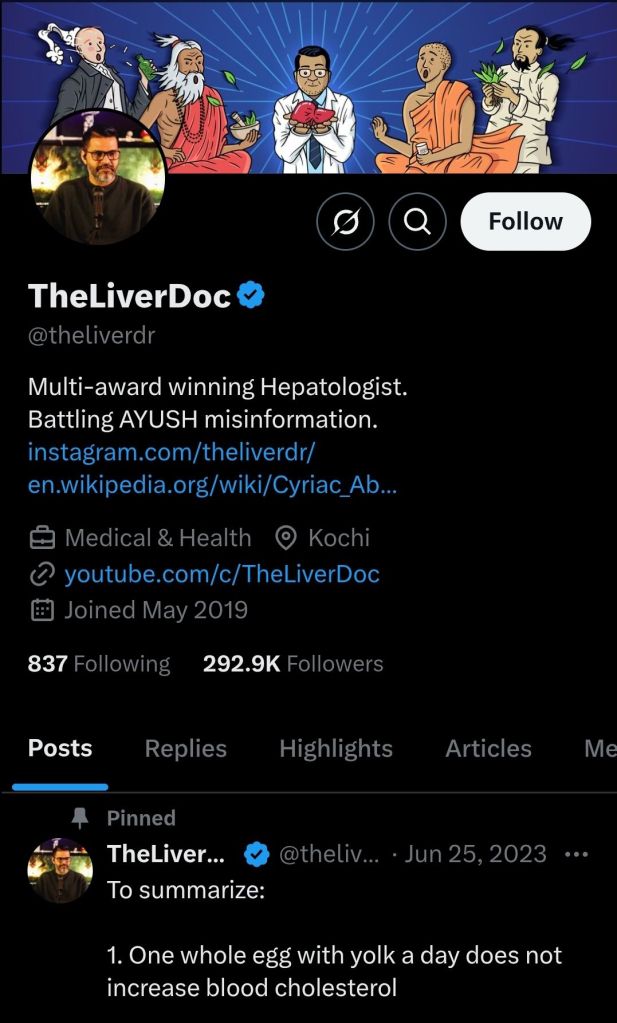
https://x.com/theliverdr?ref_src=twsrc%5Egoogle%7Ctwcamp%5Eserp%7Ctwgr%5Eauthor
 GRP_VCare2Dare