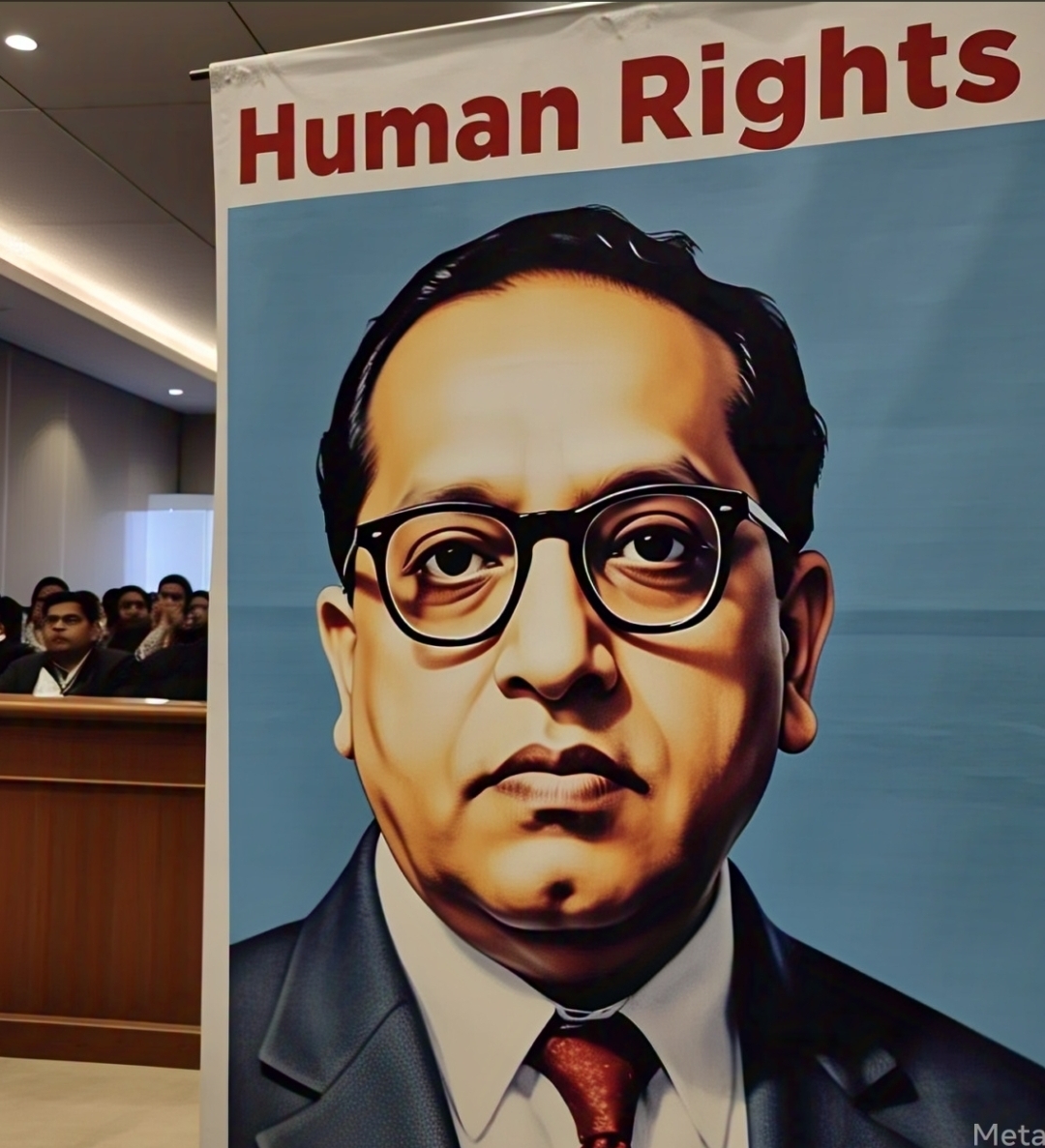
A Global Icon of Human Rights..
Dr. Bhimrao Ramji Ambedkar (1891–1956) was a towering figure in modern Indian history, embodying a rare blend of pragmatism, rationalism, Buddhism, and social science. Known as the architect of the Indian Constitution, Ambedkar’s multifaceted identity shaped his relentless pursuit of justice, equality, and human dignity. This blog post explores how these dimensions defined his life and legacy.
Pragmatist: Action Over Ideology
Ambedkar’s pragmatism was rooted in his focus on tangible outcomes over rigid dogma. Born into a marginalized Dalit family, he understood the harsh realities of caste oppression firsthand. His approach to social reform was practical—emphasizing education, political representation, and legal protections for the oppressed. As a pragmatist, he navigated complex political landscapes, forging alliances when necessary and challenging power structures strategically. His leadership in drafting the Indian Constitution reflected this: balancing idealism with the realities of a diverse, divided nation to create a framework for equality and justice.
Rationalist: Reason as a Guiding Light
A scholar trained at Columbia University and the London School of Economics, Ambedkar championed reason over superstition. He rejected caste as a baseless social construct, critiquing religious texts that justified hierarchy. His rationalism drove him to question orthodoxy, whether in Hinduism or colonial governance. In works like Annihilation of Caste, he used logical arguments to dismantle the intellectual foundations of discrimination, advocating for a society grounded in equality and critical inquiry.
Buddhist: A Spiritual Revolution
In 1956, Ambedkar embraced Buddhism, leading a mass conversion of nearly half a million Dalits. This was not mere religious choice but a profound act of defiance against caste oppression. He saw Buddhism’s emphasis on equality, compassion, and rationality as aligning with his vision for a just society. By reviving Navayana Buddhism, a modern interpretation free of superstition, he offered his followers a spiritual path that empowered them to reject caste hierarchies and reclaim dignity.
Social Scientist: Understanding Society to Change It
Ambedkar’s academic rigor made him a pioneering social scientist. His studies in economics, sociology, and law informed his activism. He analyzed caste as a system of economic exploitation and social control, drawing parallels with global issues of inequality. His Ph.D. thesis on India’s economy showcased his ability to blend theory with policy solutions. As a social scientist, he didn’t just diagnose India’s ills—he proposed remedies, from affirmative action to labor reforms, many of which remain foundational to Indian policy today.
A Legacy of Intersectionality
Ambedkar’s genius lay in synthesizing these identities. His pragmatism ensured his ideas were actionable; his rationalism kept them grounded in truth; his Buddhism infused them with ethical depth; and his social science gave them analytical clarity. Together, they fueled his fight against injustice, making him a global icon for human rights.
Today, Ambedkar’s legacy inspires millions. His life reminds us that transformative change requires not just vision but the courage to act, the clarity to reason, the compassion to include, and the knowledge to understand. As we navigate modern challenges of inequality and division, Ambedkar’s example remains a beacon for building a fairer world.
Dr. B.R. Ambedkar’s Patriotism and Nationalism
Dr. B.R. Ambedkar’s patriotism and nationalism were rooted in his vision of an India that was united, just, and egalitarian. His life’s work reflects a deep commitment to the nation, often encapsulated in the sentiment of “India Firstly & Lastly.” Below are key highlights of his patriotic and nationalist contributions:
Architect of the Indian Constitution
As the chairman of the Drafting Committee, Ambedkar played a pivotal role in shaping modern India’s identity. His efforts ensured the Constitution embodied principles of liberty, equality, and fraternity, aiming to unify a diverse nation under a shared democratic ethos. He saw the Constitution as a tool to forge a strong, inclusive India, prioritizing national unity over divisive social hierarchies.
Advocacy for Social Unity
Ambedkar’s nationalism was not blind allegiance but a call for reform to strengthen the nation. He believed that caste oppression and social inequality were barriers to true national unity. In speeches like those at the Round Table Conferences (1930–32), he argued that India could only stand strong if every citizen, regardless of caste or creed, was empowered. His famous quote, “I am an Indian firstly and lastly,” reflects his unwavering loyalty to the nation, coupled with a demand for justice within it.
Critique of Divisive Forces
In works like Thoughts on Pakistan (1940), Ambedkar analyzed threats to India’s unity, including communalism and separatism. His pragmatic nationalism sought to preserve India’s territorial and cultural integrity while addressing internal fractures. He warned that without social reform, political independence would be hollow, urging the nation to prioritize equality to fortify itself against external and internal challenges.
Leadership in National Movements
Ambedkar’s participation in the freedom struggle, though distinct from mainstream movements, was deeply patriotic. His work with the Depressed Classes and his push for their representation ensured that India’s marginalized were included in the national project. His leadership in the Mahad Satyagraha (1927) and the Poona Pact (1932) demonstrated his commitment to a united India where all citizens shared equal rights.
Embrace of Buddhism for National Renewal
In 1956, Ambedkar’s conversion to Buddhism was both a personal and national act. He chose Navayana Buddhism as a rational, egalitarian framework that could unify Indians beyond caste and religious divisions. He saw it as a way to rejuvenate India’s moral and cultural fabric, aligning with his vision of a strong, cohesive nation.
Legacy of “India Firstly & Lastly”
Ambedkar’s phrase “India Firstly & Lastly” symbolizes his belief that national interest superseded all else. Whether fighting for untouchables’ rights, drafting the Constitution, or critiquing policies that weakened India, his actions were driven by a desire to see India thrive as a sovereign, democratic republic. His patriotism was not jingoistic but grounded in the idea that a nation’s strength lies in the dignity of its people.
Conclusion
Dr. Ambedkar’s patriotism and nationalism were dynamic, blending love for India with a relentless push for reform. His life’s work—whether through legal frameworks, social activism, or spiritual renewal—embodied the principle of “India Firstly & Lastly,” ensuring the nation he envisioned was one where justice and unity prevailed.
To learn about Dr. B.R. Ambedkar’s life, patriotism, nationalism, and contributions, here are five authoritative resources that provide deep insights into his philosophy and legacy:
- “Dr. Babasaheb Ambedkar: Writings and Speeches” (Published by Dr. Ambedkar Foundation, Ministry of Social Justice & Empowerment, Government of India)
- Why: This multi-volume collection, available in print and online, compiles Ambedkar’s original writings, speeches, and letters, offering direct access to his thoughts on nationalism, caste, democracy, and social justice. It includes works like Annihilation of Caste and Thoughts on Pakistan, which highlight his vision for a united, equitable India.
- Access: Free PDFs are available on the Ministry of External Affairs website (mea.gov.in) or Dr. Ambedkar Foundation portals.
- “Dr. Ambedkar: Life and Mission” by Dhananjay Keer (Popular Prakashan)
- Why: Widely regarded as the definitive biography, this book details Ambedkar’s journey from a Dalit child facing discrimination to a national leader shaping India’s Constitution. It emphasizes his patriotic commitment to social reform and nation-building, capturing his “India Firstly & Lastly” ethos.
- Access: Available in bookstores, libraries, or online retailers like Amazon.
- B.R. Ambedkar’s Books (Key Titles: Annihilation of Caste, The Problem of the Rupee, The Buddha and His Dhamma)
- Why: Reading Ambedkar’s own works provides unfiltered insight into his nationalist vision and rationalist approach. Annihilation of Caste critiques social barriers to national unity, while The Buddha and His Dhamma reflects his effort to unify India through egalitarian principles. These texts showcase his patriotism as tied to justice and reform.
- Access: Available on drambedkarbooks.com, Amazon, or free via mea.gov.in.
- Columbia University Archives and Ambedkar’s Works at globalcenters.columbia.edu
- Why: Ambedkar’s time at Columbia shaped his intellectual foundation. The university’s archives and dedicated page offer essays, his Ph.D. thesis (The Problem of the Rupee), and details of his contributions to Indian nationalism through democratic ideals. It’s a unique lens on his global influences and patriotic vision.
- Access: Online at globalcenters.columbia.edu or Columbia’s digital library.
- India Office Records and Private Papers at the British Library (blogs.bl.uk)
- Why: These archives contain primary documents, including Ambedkar’s correspondence and records from the Round Table Conferences (1930–32), where he advocated for India’s unity and marginalized communities’ rights. They highlight his nationalist stance in negotiations with British authorities, aligning with his “India Firstly & Lastly” principle.
- Access: Digitized records are accessible via blogs.bl.uk or in-person at the British Library.
These resources offer a mix of primary sources, scholarly analysis, and historical records to understand Ambedkar’s patriotism and nationalism comprehensively. Let me know if you’d like help accessing any specific one!
 GRP_VCare2Dare