Marital tool to Unfool People for Safer Marriages. (KalyanaSutra 1.0 Vs Kamasutra 2.0). For Sustainable-Marriages: It does’nt matter much about difference & number of positions (Acts of Bodies & Organs) for sexual-satisfaction. What Really Matters MORE is Difference & number of Propositions (Facts in self & society) that interact for maritaLife-satisfaction.. (Minds & Families/Ideologies).
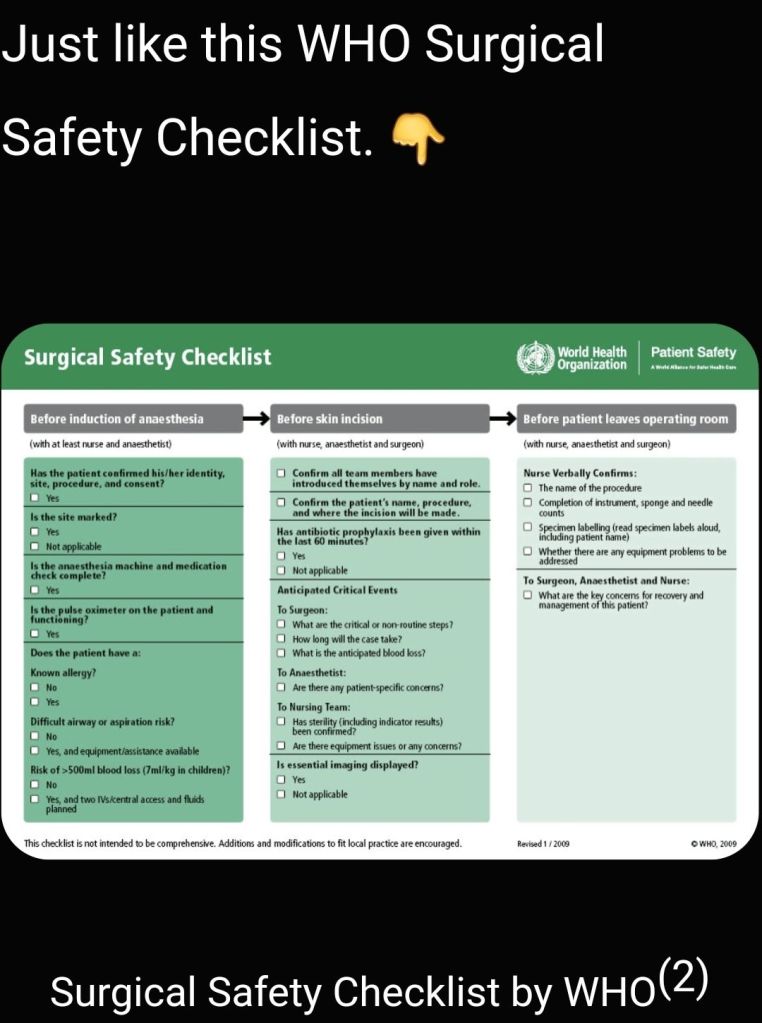
Like surgical safety checklist of WHO, Lets create a marital safety checklist for people selecting a spouse & Marital-Family. also including gender specific check items. eg. psycho-medical, financial, criminal, social, spiritual check points etc. This checklist would make right spouse compatibility choice and prevent divorceable risky marriages.
Getting FTR (First Time Right).. A Vision for Marital Fraud Free & Divorce Less Indo-World.
Just like unprepared, illtrained & unsupported candidates flunk or score low in Final exams, Unprepared, illtrained and unsupported Candidates have high probability to flunk marital exams. Preparation is Success.
Marital Safety Checklist
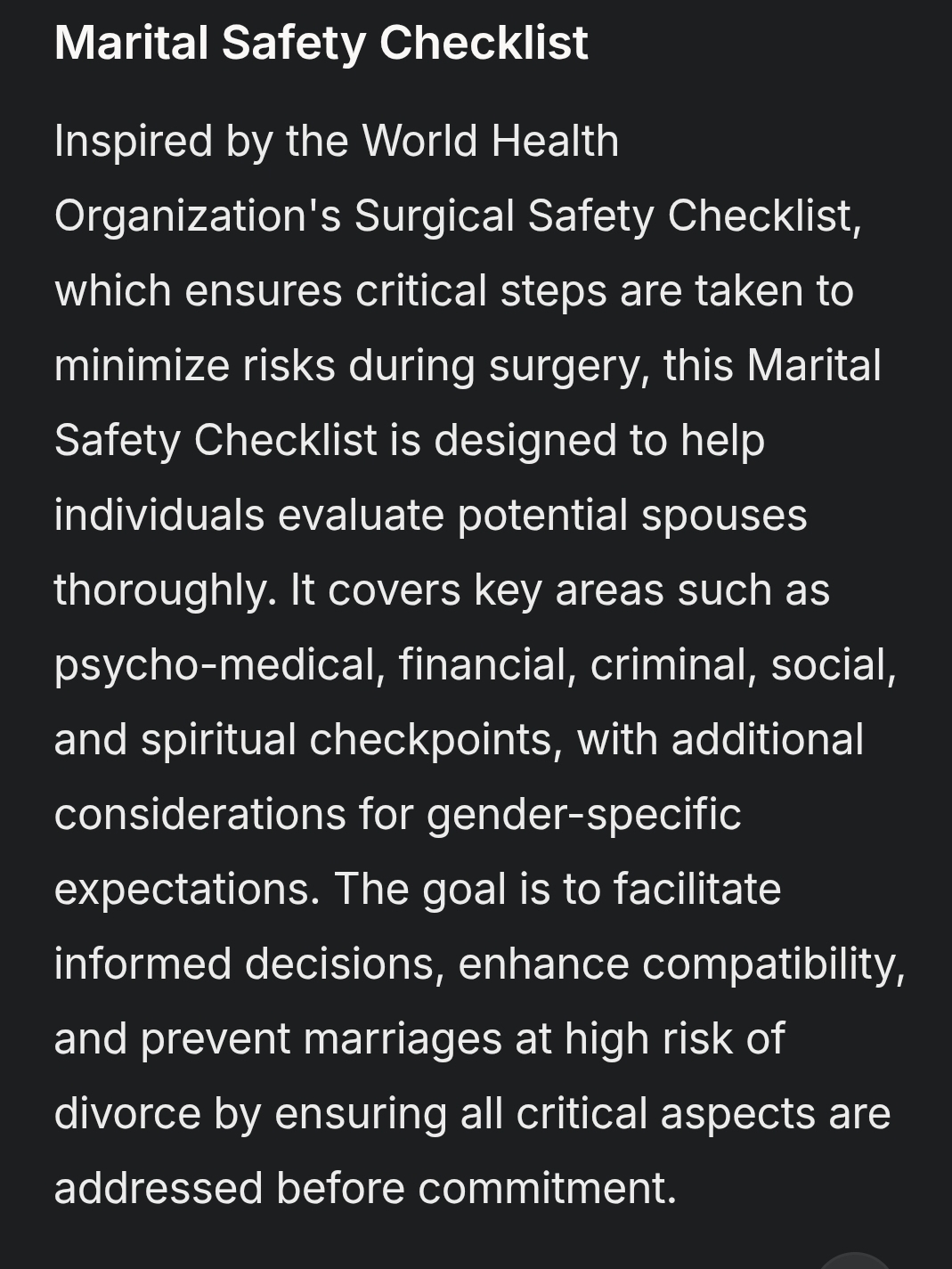
Inspired by the World Health Organization’s Surgical Safety Checklist, which ensures critical steps are taken to minimize risks during surgery, this Marital Safety Checklist is designed to help individuals evaluate potential spouses thoroughly. It covers key areas such as psycho-medical, financial, criminal, social, and spiritual checkpoints, with additional considerations for gender-specific expectations. The goal is to facilitate informed decisions, enhance compatibility, and prevent marriages at high risk of divorce by ensuring all critical aspects are addressed before commitment.
Before Proceeding with Marriage, Ensure the Following Have Been Addressed:
1. Psycho-Medical Assessment
- [ ] Disclosure of Mental Health Conditions: Have both parties shared any diagnoses (e.g., depression, anxiety, personality disorders) and their current treatment or management plans?
- [ ] Chronic Medical Conditions: Have any chronic illnesses (e.g., diabetes, heart disease) or relevant family medical history been discussed?
- [ ] Substance Use: Are both parties aware of each other’s habits regarding alcohol, drugs, or other substances, including any history of addiction?
2. Financial Assessment
- [ ] Income and Employment: Have both parties shared their employment status, occupation, income level, and job stability?
- [ ] Debts and Obligations: Are there any significant debts (e.g., student loans, credit cards) or financial responsibilities (e.g., supporting dependents) disclosed?
- [ ] Financial Habits: Have financial management styles (spender vs. saver) and goals (e.g., budgeting, saving plans) been discussed?
3. Criminal and Legal Background
- [ ] Criminal Record: Is there confirmation that neither party has a criminal history, particularly involving violence or dishonesty?
- [ ] Legal Obligations: Have any ongoing legal issues or obligations (e.g., child support, alimony) from previous relationships been disclosed?
4. Social Compatibility
- [ ] Family Dynamics: Have both parties observed how the other interacts with their family and discussed family relationships?
- [ ] Social Networks: Are both comfortable with each other’s friends and social circles?
- [ ] Lifestyle and Values: Do hobbies, interests, and social values (e.g., views on gender roles, parenting) align or complement each other?
5. Spiritual and Religious Beliefs
- [ ] Religious Affiliation: Have both parties discussed their religious beliefs, practices, and their importance in daily life?
- [ ] Spiritual Alignment: Are there agreements or mutual acceptance of any spiritual practices outside organized religion?
6. Communication and Conflict Resolution
- [ ] Communication Style: Are both parties comfortable with how the other expresses feelings and needs? Is communication open and honest?
- [ ] Conflict Management: Have they discussed how they handle disagreements and their willingness to compromise?
7. Relationship History
- [ ] Past Relationships: Have both disclosed the number and nature of previous serious relationships, including reasons for endings?
- [ ] Unresolved Issues: Is there assurance that no significant emotional baggage or unresolved conflicts remain from past relationships?
8. Family Planning and Children
- [ ] Desire for Children: Do both agree on whether to have children, how many, and when?
- [ ] Parenting Views: Have parenting philosophies (e.g., discipline, education) been discussed and aligned?
9. Cultural Background
- [ ] Cultural Values: Are both aware of each other’s cultural traditions and their significance?
- [ ] Intercultural Plans: Have potential challenges from cultural differences been identified and addressed?
10. Voluntary Consent
- [ ] Free Choice: Are both parties entering the marriage willingly, without pressure from family, society, or other external factors?
- [ ] Open Discussion: Have both had the chance to voice expectations and concerns freely?
11. Safety and Abuse Prevention
- [ ] No Abuse History: Is there no evidence of physical, emotional, or sexual abuse in past relationships or current behavior?
- [ ] Mutual Respect: Do both parties feel safe, valued, and respected in the relationship?
12. Legal and Administrative Preparations
- [ ] Marriage Type: Have both agreed on the form of marriage (e.g., civil, religious)?
- [ ] Legal Documents: Are necessary documents (e.g., marriage license, prenuptial agreement if applicable) prepared and understood?
13. Commitment and Future Planning
- [ ] Long-Term Goals: Have shared visions for the future (e.g., career, lifestyle) been discussed?
- [ ] Commitment Level: Are both committed to the marriage and willing to seek help (e.g., counseling) if challenges arise?
Gender-Specific Considerations
While many checklist items apply universally, certain topics may carry different expectations or implications based on gender, particularly in contexts where traditional roles persist. These should be discussed openly to ensure mutual understanding:
- Career and Family Balance:
- [ ] Have both parties discussed their career aspirations and how they will balance work with family responsibilities (e.g., potential career breaks for childcare)?
- Household Responsibilities:
- [ ] Is there agreement on how household chores and childcare duties will be shared, regardless of gender?
- Role Expectations:
- [ ] Have views on traditional gender roles (e.g., provider, caregiver) been clarified, and are they acceptable to both?
These questions are framed neutrally to apply to all genders, but they allow for exploration of any gender-specific expectations that might influence compatibility.
Confirmation
We, [Name] and [Name], have reviewed and discussed all items on this Marital Safety Checklist. We confirm that we have addressed each point to our satisfaction and are proceeding with marriage based on this understanding.
Date: _
Signature: _ Signature: _
Disclaimer
This checklist is a tool to guide discussions and assessments before marriage. It does not guarantee a successful marriage but aims to help individuals make informed choices by addressing key areas of compatibility and potential risk factors.
This Marital Safety Checklist provides a structured approach to spouse selection, ensuring that critical areas—psycho-medical, financial, criminal, social, spiritual, and beyond—are thoroughly evaluated. By including gender-specific considerations within a flexible framework, it promotes compatibility and reduces the likelihood of entering risky, divorce-prone marriages.
Below are the references and authoritative sources used to create the Marital Safety Checklist described in the text. The checklist is a conceptual tool inspired by the structure of the World Health Organization’s Surgical Safety Checklist but tailored to address key considerations for marriage. While it is not a direct adaptation of any single source, it draws upon widely recognized best practices and research from fields such as psychology, finance, law, sociology, and relationship science. The following list organizes the references by the checklist’s sections, providing credible and authoritative sources that align with each topic.
References and Authoritative Sources
1. Psycho-Medical Assessment
- Mental Health Conditions:
- Diagnostic and Statistical Manual of Mental Disorders (DSM-5). American Psychiatric Association. (2013).
Provides standardized criteria for diagnosing mental health conditions that may impact a relationship. - International Classification of Diseases (ICD-11). World Health Organization. (2019).
A global standard for classifying health conditions, including mental disorders relevant to marital well-being. - Chronic Medical Conditions:
- Chronic Disease Overview. Centers for Disease Control and Prevention (CDC). (2021).
Offers data and guidance on managing chronic illnesses, which can affect marital dynamics. - Global Status Report on Noncommunicable Diseases. World Health Organization. (2014).
Highlights the importance of understanding chronic health conditions in personal relationships. - Substance Use:
- Substance Abuse and Mental Health Services Administration (SAMHSA). (2020).
Provides resources on identifying and addressing substance use disorders, a critical factor in relationship health.
2. Financial Assessment
- Income, Employment, and Financial Habits:
- Financial Literacy and Education. Financial Industry Regulatory Authority (FINRA). (2021).
Offers guidance on financial responsibility and planning, essential for marital stability. - Managing Your Money. Consumer Financial Protection Bureau (CFPB). (2021).
Provides tools for budgeting and financial goal-setting, key to shared financial success. - Debts and Obligations:
- Debt Collection FAQs. Federal Trade Commission (FTC). (2021).
Explains how to understand and manage debts, a common source of marital stress.
3. Criminal and Legal Background
- Criminal Record and Legal Obligations:
- Background Checks. Federal Bureau of Investigation (FBI). (2021).
Details the process of reviewing criminal history, relevant for transparency in relationships. - Child Support Enforcement. U.S. Department of Health & Human Services. (2021).
Outlines legal obligations like child support that may affect a marriage.
4. Social Compatibility
- Family Dynamics and Social Networks:
- The Role of Family and Social Support in Relationships. Journal of Marriage and Family. (2018).
Research on how family and social networks influence marital satisfaction. - The Seven Principles for Making Marriage Work. Gottman, J., & Silver, N. (1999).
A widely respected book offering evidence-based insights on building strong relationships.
5. Spiritual and Religious Beliefs
- Religious Affiliation and Spiritual Alignment:
- Religion and Marriage. Pew Research Center. (2016).
Provides data on the role of religion in marriage and its impact on compatibility. - Interfaith Marriage and Marital Satisfaction. Journal of Family Issues. (2015).
Examines how religious differences affect marital outcomes.
6. Communication and Conflict Resolution
- Communication Style and Conflict Management:
- Hold Me Tight: Seven Conversations for a Lifetime of Love. Johnson, S. (2008).
Research-based guidance on emotionally focused communication in relationships. - The Relationship Cure. Gottman, J., & DeClaire, J. (2001).
Offers strategies for improving communication and resolving conflicts, grounded in decades of research.
7. Relationship History
- Past Relationships and Unresolved Issues:
- Attachment and Relationship Stability. Journal of Social and Personal Relationships. (2017).
Explores how past relationships influence current marital stability. - The Impact of Emotional Baggage on New Relationships. Psychology Today. (2019).
Discusses addressing unresolved issues from past relationships.
8. Family Planning and Children
- Desire for Children and Parenting Views:
- Family Planning. World Health Organization. (2020).
Global guidance on family planning and reproductive health decisions. - Parenting Styles and Child Outcomes. American Academy of Pediatrics. (2018).
Research on effective parenting approaches and their impact on family life.
9. Cultural Background
- Cultural Values and Intercultural Plans:
- Intercultural Marriage: Challenges and Opportunities. Journal of Cross-Cultural Psychology. (2019).
Studies the dynamics of navigating cultural differences in marriage. - Cultural Competence in Relationships. American Psychological Association. (2020).
Guidelines for understanding cultural influences in relationships.
10. Voluntary Consent and Safety
- Free Choice and Abuse Prevention:
- Understanding Consent. United Nations Entity for Gender Equality and the Empowerment of Women (UN Women). (2021).
Resources on ensuring voluntary consent in relationships. - Domestic Violence Prevention. National Domestic Violence Hotline. (2021).
Information on identifying and preventing abuse, critical for marital safety.
11. Legal and Administrative Preparations
- Marriage Type and Legal Documents:
- Marriage Laws by State. Legal Information Institute, Cornell Law School. (2021).
Details legal requirements for marriage across the U.S. - Prenuptial Agreements: What You Need to Know. American Bar Association. (2020).
Legal guidance on prenuptial agreements and their role in marriage planning.
12. Commitment and Future Planning
- Long-Term Goals and Commitment Level:
- The State of Our Unions. National Marriage Project. (2020).
Research on factors contributing to marital satisfaction and longevity. - Marital Satisfaction Over the Life Course. Journal of Marriage and Family. (2019).
Examines elements that sustain long-term marital success.
13. Gender-Specific Considerations
- Career, Family Balance, and Role Expectations:
- Gender Roles in Modern Marriages. Journal of Marriage and Family. (2021).
Research on evolving gender roles and their impact on relationships. - Work-Life Balance and Marital Satisfaction. American Psychological Association. (2018).
Studies the interplay of career, family, and marital well-being.
Disclaimer
The Marital Safety Checklist is intended as a general guide for individuals considering marriage and is not a substitute for professional advice. For specific concerns—whether psychological, financial, legal, or otherwise—individuals should consult qualified experts such as licensed therapists, financial advisors, or legal professionals.
These references provide a robust foundation of credible information and research that support the checklist’s aim of fostering compatibility and reducing the risk of divorce. They reflect evidence-based insights from authoritative organizations, peer-reviewed journals, and respected experts in relevant fields.
 GRP_VCare2Dare