Let’s Unite to “Educate, Agitate, Organize.” _ Dr.Ambedkar
Deeply Exploring & Explaining these 3 Words & Concepts their Roots, Shoots & Fruits.
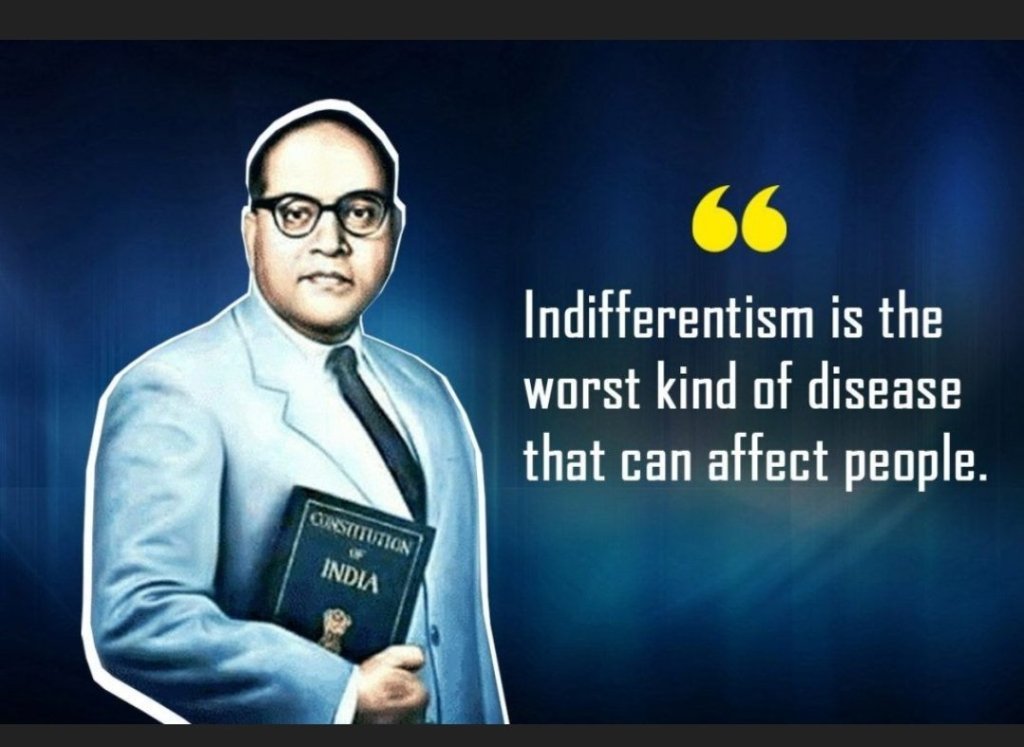
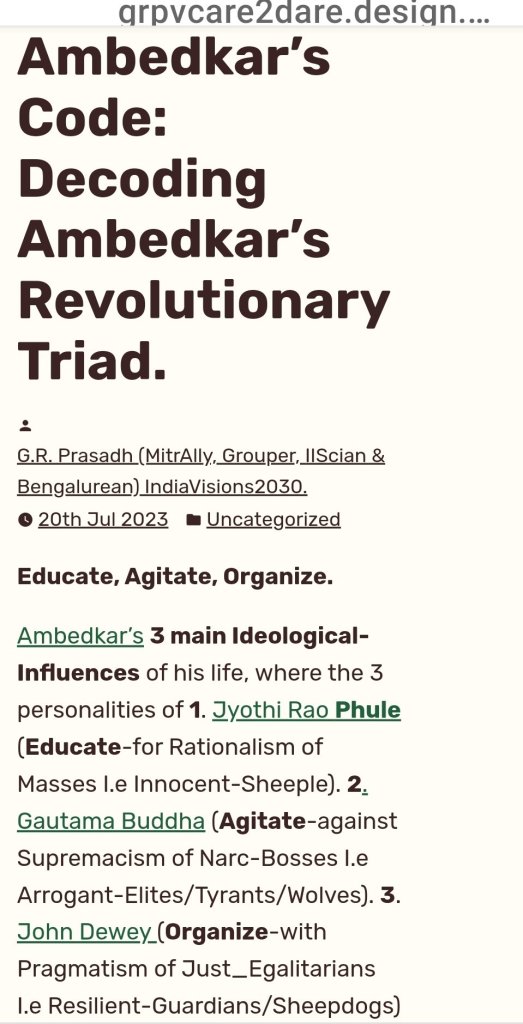
Ambedkar’s 3 main Ideological-Influences of life: Are the 3 positive personalities & related Eu-Ideologies of
1. Jyothi Rao Phule (Educate-for Rationalism of Masses I.e Innocent-Sheeple. JR Founded SatyaShodak Samaj in India).
2. Gautama Buddha (Agitate for Egalitarianism against Supremacism of Narc-Systems I.e Arrogant-Elites/Tyrants/Wolves Founder of Original Buddhism 1.0).
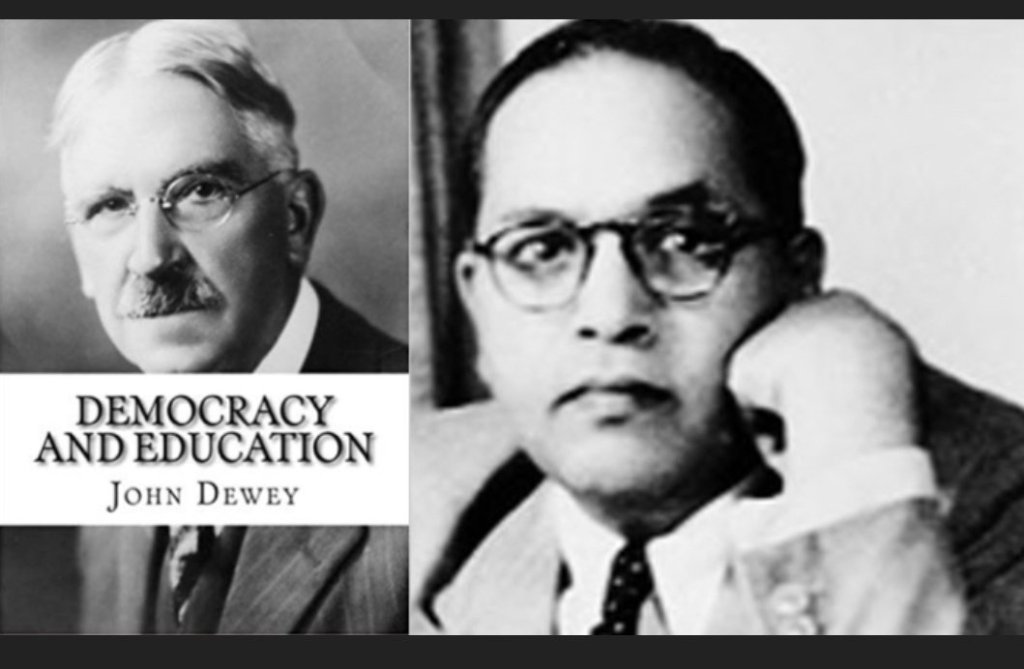
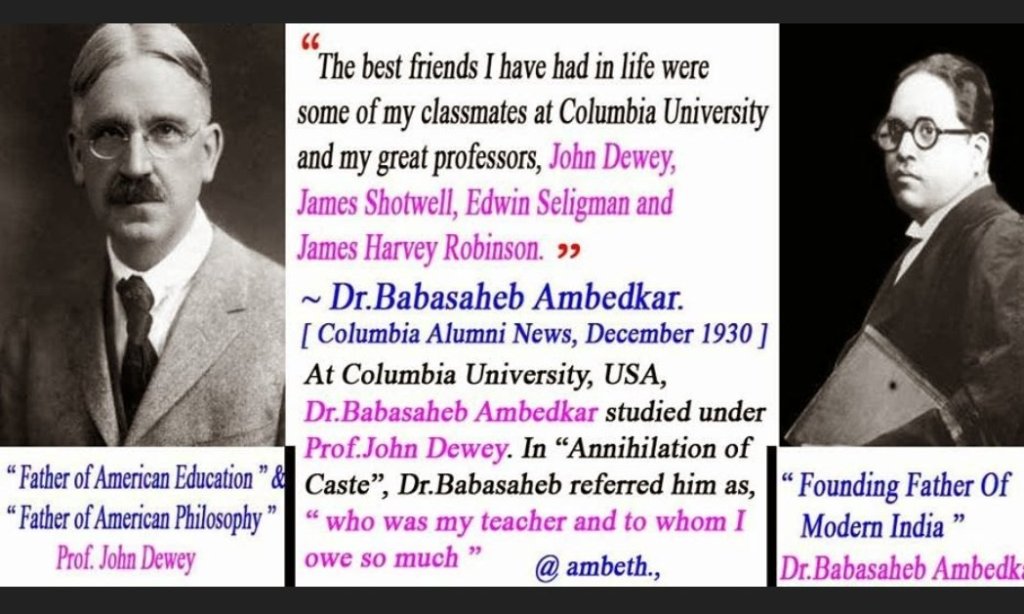
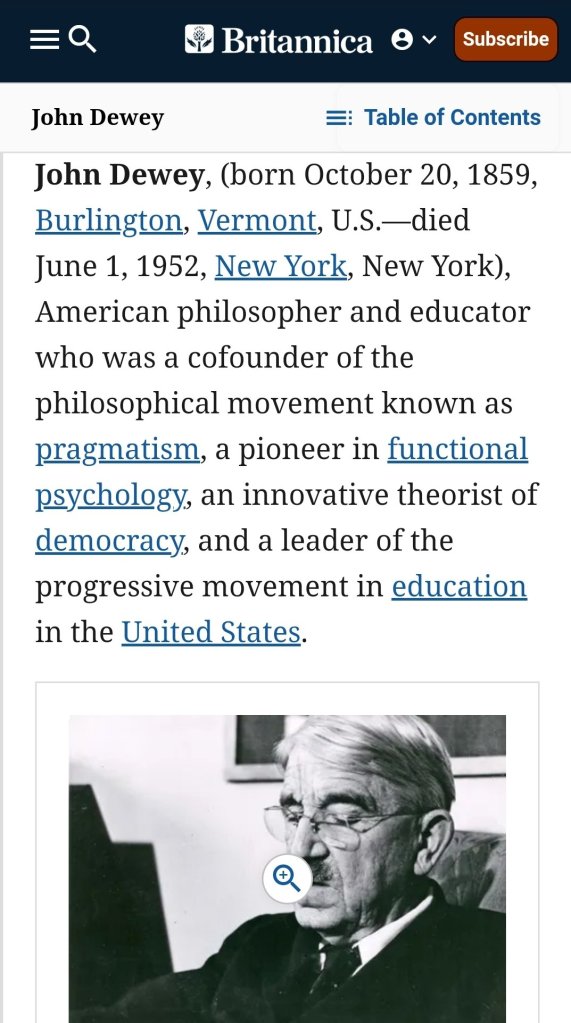
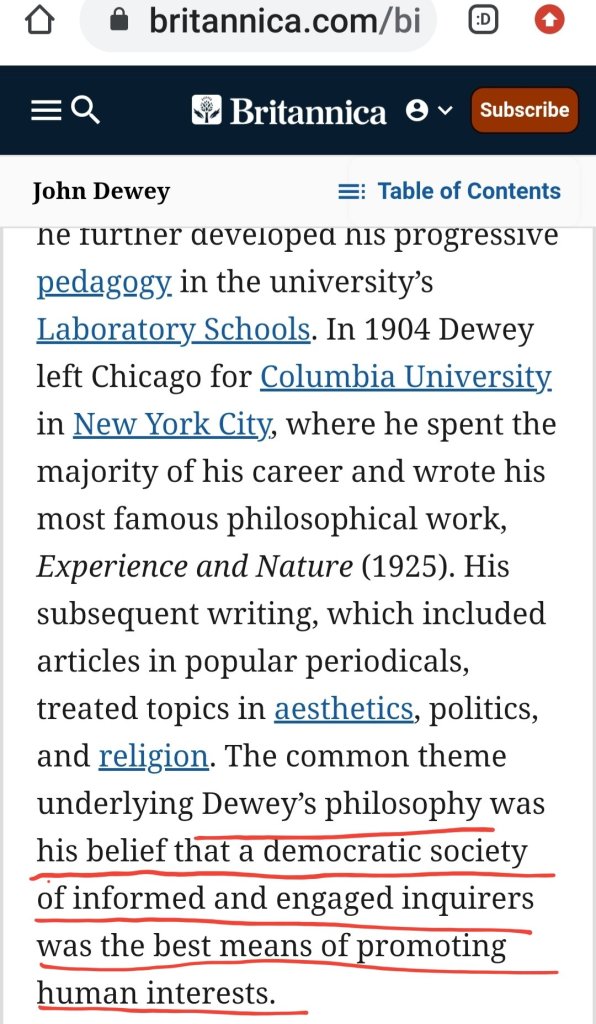
3. John Dewey (Organize-with Pragmatism of Just_Egalitarians I.e Resilient-Guardians/Sheepdogs). Philosopher & Research Academic Guide of Ambedkar.
All the 3 above Personalities were challengers of Status-Quo and Systems-Reformers, Which helped Dear_Ambedkar become Dr. Ambedkar.
Ambedkar’s Works Library. https://blogs.cul.columbia.edu/global-studies/2019/04/15/speaking-truth-to-power-dr-ambedkar-and-columbia-university/
Its cyclically a triad, Ambedkar wanted to positively impact all 3 spheres of 1. Education by Rationalism (in Societies-Culture for Equality), 2. Agitations by Egalitarianism in Politics for Justice. & 3. Organizations by Pragmatism in Constitutions & Religions for Fraternity of all Citizens.
Ambedkar was a voracious reader, researcher & Writer. He was a Democratic-Socialist by ideology of his guide Prof. John Dewey.
Extending the Trium.
“omne trium perfectum‘ https://virtualspeech.com/blog/rule-of-three-speech
1. Educate Civic-Socially,
2. Agitate Religio-Rationally, &
3. Organise Consti-Politically.
This is what Ambdekar did with
1. Educate with PES, https://www.brambedkar.in/peoples-education-society/
2. Agitate with Navayana. https://en.wikipedia.org/wiki/Navayana
3. Organise with Constitution & RPI.
1. https://www.bbc.com/news/world-asia-india-65175711
2. https://en.wikipedia.org/wiki/Republican_Party_of_India
The Mission to Transform India for a more Egalitarian, Ethical, Rational & Constitutional India was set as per Ambedkars Visions and Aspirations for the Egalitarians.
John Dewey’s Influence on Ambedkar.
https://www.forwardpress.in/2017/05/john-dewey-pragmatism-communication-and-bhimrao-ambedkar/
Below are 3 Projects Linked to Triumic_Slogan popularized in Dr. Ambedkar’s Message.
1. Educate: https://grpvcare2dare.design.blog/2023/08/03/s336-egalitarian-students-resources-page/
3. Organize: https://grpvcare2dare.design.blog/2021/12/06/s88-project-jaibhim-india_2030-groups-vision-for-indian_egalitarianism/
When we try to decode the enigma Babasaheb we find he was at core a “Rational-Pragmatic_Egalitarian” Rational(Phule) & Pragmatic(Dewey) Egalitarian(Buddha). He rejected most top 3+ Major Religions of his time and Chose a Rational: Atheistic-IndicReligion of Buddhism and tweaked for current times as Navayana or Navayanism for furthering the Causes of Justice, Equality & Fraternity. https://grpvcare2dare.design.blog/2023/07/20/s326-ambedkars-tri-slogan-tri-mantra-decoding-ambedkars-code/
Ally Place for Rationalism. *ResrcGrp:* Place 4 Rationalism, Scientific-Temper, Atheism& Secularism and sharing Concepts of open, deep-tech(A.I, ML..etc) & Free_Sciencers.
*SciTech_Mitras_Grp:*
Citizens-Mission 4 More Scientific & Rational-Ind🇮🇳ia /2030:
https://chat.whatsapp.com/DCQ5If3f8FuDy3JVJaBq8L
Why Buddhism? Chosen by Ambedkar over other 20 other Religions in India?
Below text is post by an our intellectual friend Mr Mangesh Dahieale from Secundarabad. Recommended reading.
Buddhist Approach to Knowledge Production
As we all know that the world is subjected to change, impermanence, decay, and death. All the physical things are undergoing change. However, when we study the biological entities, like life, it appears to be changing fast in terms of the individual species, but on the level of life, the DNA appears to be in existence forever, if we consider the deep history of life on the earth. The ability to replicate goes on with the information is repeated in all the life forms. Yes, the individual species does not long last, but the life as such goes on. This continuation of the information is due to replication, but the replication is subjected to environmental interactions. This dynamic interaction gives rise to knowledge that create resilient species to the change. This knowledge in the species is for the survival. The two key terms introduced by Darwin are ” Variance ” and ” natural selection ” which leads to evolution of the species without any creator.
Chiara Marletto, in her fascinating book the Science of Can and Can’t, explains that there is another resilient entity ( or let us call it system). That is, thinking, the world of ideas. The knowledge is produced by virtue of two operators, conjectures and criticism. The evolutionary equivalents of variance and natural selection are conjectures and criticism in the knowledge production. MarIetto’s book is about science and in itself a fascinating read. But we will cull these two important ideas of conjectures and criticism for our use here. It is the knowledge, in the biological system and human societies, that can create survival or continuation. Knowledge production is essential for the evolution of the societies and their continuation.
That no knowledge is final and nothing is infallible is the important feature of the knowledge production in Buddhism. The Buddha never accepted anything as infallible. This led to flowering of the philosophy, philosophical ideas, systems of thoughts in the Indian subcontinent. This led to creation of inquiring, inquisitive, and open society. In a nutshell, it helped to evolve human societies, before the thinking society was countered with the violent forces. The emergence of knowledge society has also helped the rival systems of thoughts to revise, rethink, and reformulate. The process of knowledge production came to the grinding halt in the Indian subcontinent only to be continued by the truth seekers (sants, derived from the Indic root reflecting truth, sat ) such as Kabir, Ravidas, to name a few, who majorly came from the masses.
The knowledge produced by the Buddhists is not lost to the time. It exists in the form of manuscripts available even today. The Buddhist thinkers today have access to the rich knowledge. But the environment has changed a lot, particularly, the man – made environment in terms of technologies, communication, habitation, and even climate.
The rival system of thoughts of Buddhism, the brahmanism tried to locate the source of all knowledge in the Vedas and continued to preach the sacredness and infallibility of the Vedas, thus creating a dead, fossilised, and hieratic philosophical system. It cannot survive the dynamic environment, but still is resilient, causing unprecedented damage to the humanity. Its modern avatars, Nazism and Fascism, were destroyed by force.
Karl Popper, one of the advocates of the fallibilism, that nothing is final or infallible, prefered evolutionary reforms over revolutions. The debate perhaps goes back to Thomas Paine and Edmund Burke during the French Revolution. It goes back to the Buddha’s time. To take sides is not easy. However, one can not discount the fact that production of knowledge, reconstruction of the past knowledge, and inquiring into possibilities of newer knowledge is critical for human race.
What is the Buddhist position on knowledge production ?
As the Buddha is evolutionary in his thinking, he encouraged thinking, which essentially involves questioning. In the Early Buddhist Texts, the Buddha is questioned by all sort of people. When the Buddha was alive, he interacted with the people, at times, counter questioning them directly or rhetorically. Questioning the Buddha and his answers have been handed down to us as the knowledge produced by the rigorous questions and answers. This implies that we can question the Buddha today with the new questions. The living Buddha is not there to answer but left enough behind to make conjectures ( like he did) and apply critical thinking (again what he did as well).
On limits of language/concepts and contemplating one’s own mind
The Buddha used language in an innovative ways. In the process of knowledge production, he invented new language, terms, conceptual frameworks. His most important insight was that there is a limit to language and concepts. However, they are necessary means to contemplate and understand.
The Buddha taught using languages and concepts to know the basis of all the experiences, the mind itself. Though the efforts are now made to know the mind empirically, the Buddha offered methods to know the mind. This knowledge to know the human mind is handed over to us, but with a caveat that one apply the methods. The methods lead to cessation of signs, languages, and stilling of mind which is source of all human experiences. This going beyond the grasp of language and conceptual framework is nirvana. This is the ultimate realization, but this experience when emerged out of it informs all the interactions with the world of humans and environment prompting higher planes of existence for all.
Like in Modern Times people Consumers of Telecom-Services can Change their Phone-Network with same Phone-Number called at MNP (Mobile Number Portability) similarly Religious-Services can be changed with Religious Member Portability (RMP) where religious services is dependent less by–chance of birth-clanhome or adopted-family but is more by-choice and by well-informed decision of existing-options. By Birth one can belong to parental-religion/nation and by choice one can get Visa or Religionship(Like Citizenship) of a rational and better serving religion.

 GRP_VCare2Dare